Insights
Playbooks, product thinking and the economics of modern logistics.

A recall is a search problem: from batch number to consignee before the day is over
A recall is rarely lost on the decision but in the hours spent finding who received the batch. What EU GDP asks for, and a drill that shows where you stand.

Own truck or bought-in freight: the decision most manufacturers make by habit
A manufacturer's own truck feels free because it is already paid for. What a delivery on it really costs, and why the choice belongs to each shipment.

Three clocks in every hire: off-hired, collected, ready to hire
A hire stops being billable, leaves site and can earn again at three different moments. Most invoice disputes and lost utilisation sit in the gaps between.

Stock on the shelf is not a promise: on hand, reserved, available and incoming
Forty-two on the shelf, thirty spoken for, sixty on order. Which number sales may promise from, and why late deliveries start with a correct stock figure.

Proof of delivery your customer can fetch without asking you
The POD request email is the quiet sibling of the where-is-my-shipment call. What a proof of delivery must carry for an auditor, and how customers can self-serve.

The workshop conversation: internal bay or external service?
An internal bay is a fixed cost that must earn its keep; an external workshop costs control and scheduling. How to frame the choice, and the hybrid most fleets run.

Price lists that quote themselves
Zone matrices, weight breaks, minimums and surcharges price consistently only when the system applies them — not "call for a quote."

Empty running in Europe: what the statistics actually say
Eurostat's own figures on empty vehicle-kilometres in EU road freight: the national/international split, the trend, and what the average hides.

A tablet in the cab, or the phone already in the pocket?
Dedicated tablets promise control and mostly deliver a second device to charge, update and lose. Where a mounted tablet still earns its place over BYOD.
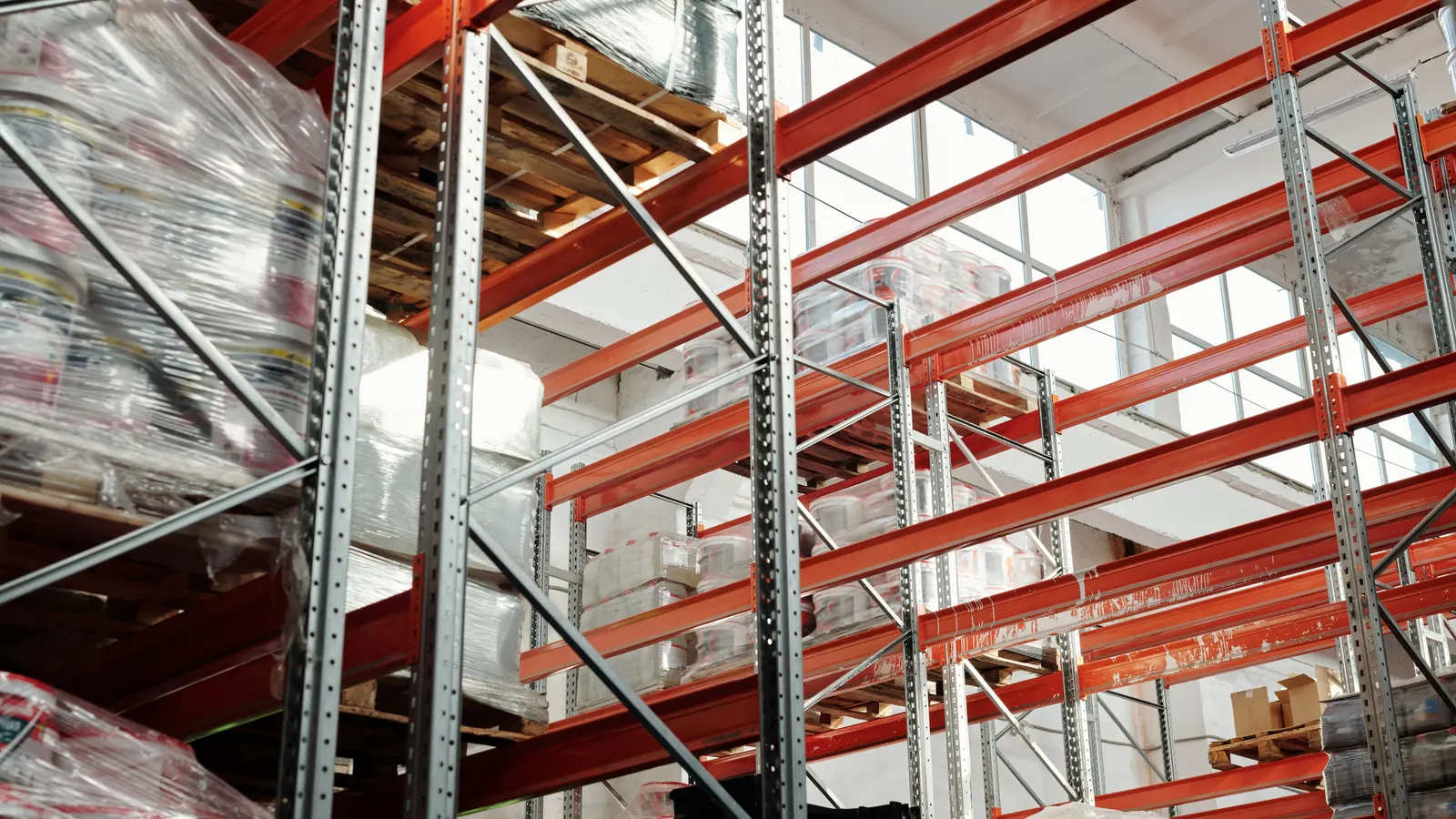
Standing orders: the recurring freight you re-book by hand
The Tuesday milk-run booked from scratch every Monday is toil with an error rate. What a saved shape buys you, and the review discipline it demands in return.

Detention and waiting time: charging for the hours you already lost
Two hours at a dock is real cost most carriers swallow. Contract for detention, capture arrival/departure evidence, and invoice it without souring the account.

The offline hour: what your operation does when connectivity drops
Tunnels and dead zones are routine, not exceptional. What a driver app must hold locally, what can be told later, and what genuinely cannot wait for a signal.
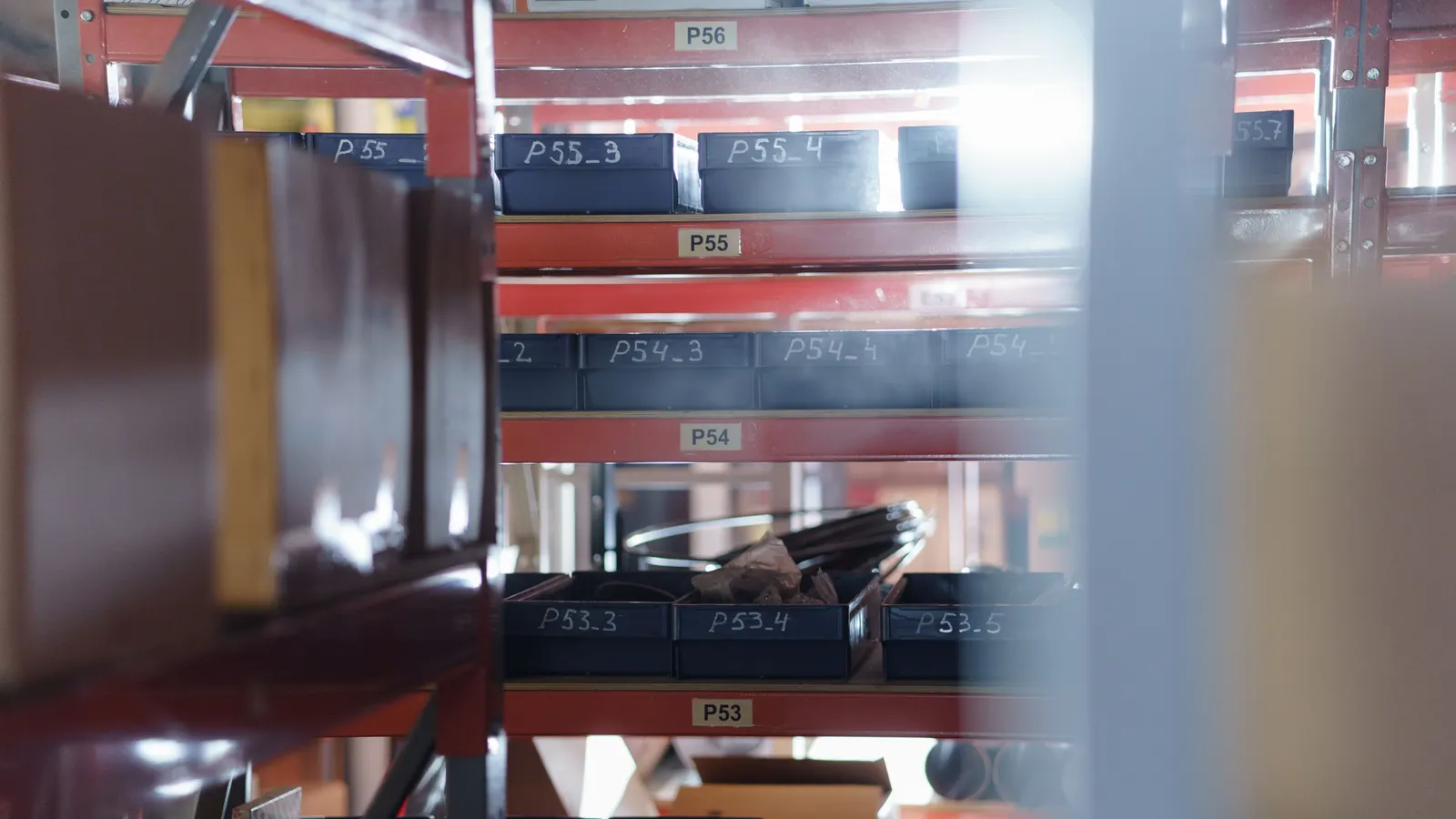
Workshop parts: a stockroom is a ledger you can walk into
Parts stock drifts when consumption is recorded at annoyance-time, not use-time. Work orders, honest reorder points, and a ledger easier to use than the shortcut.
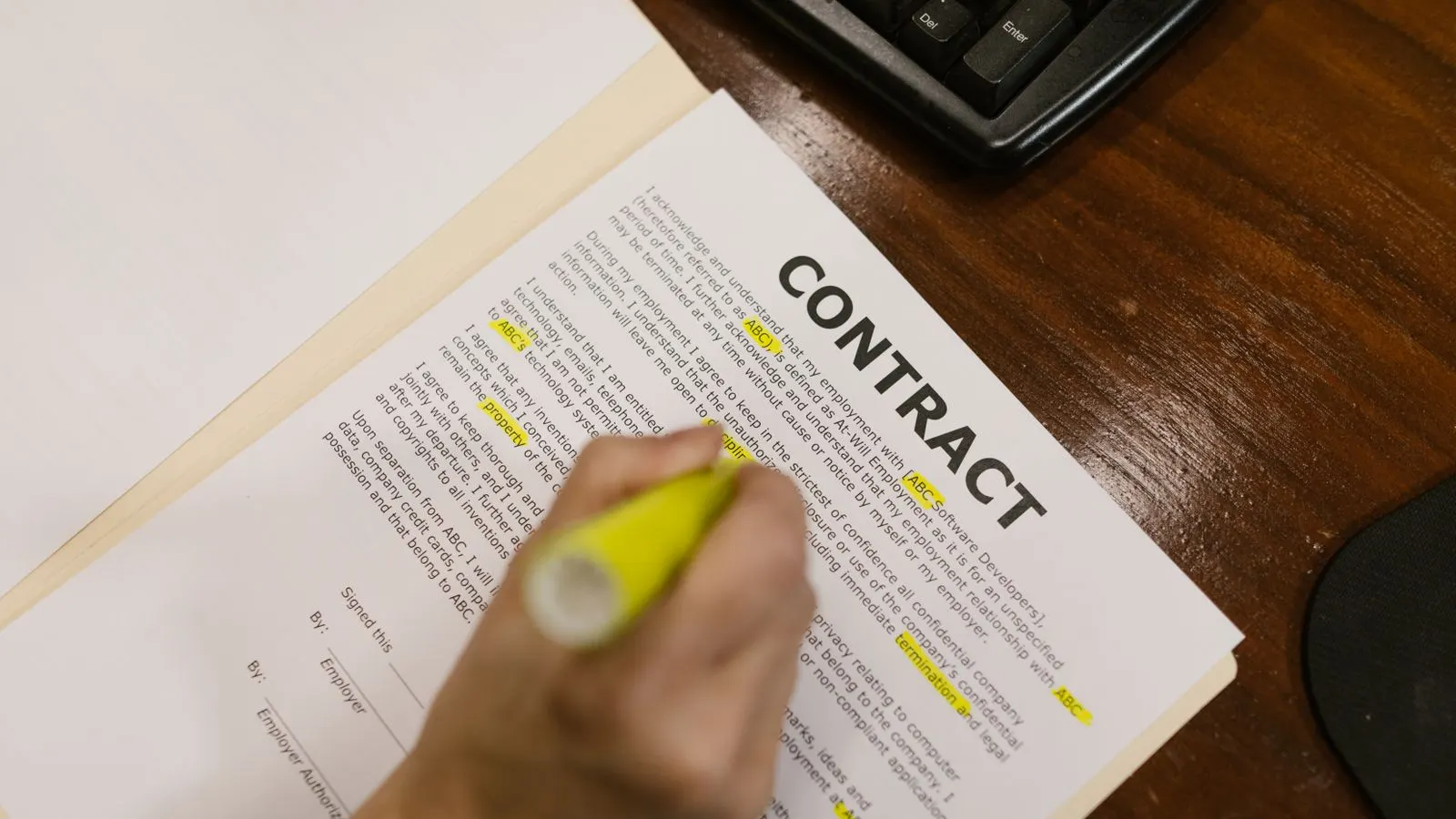
Reading an RFQ like a carrier, answering like a partner
Contract freight RFQs reward the bidder who shows data, not the lowest number. What to bring to the answer, and the clauses that predict an unprofitable contract.

One source of truth: what it means when you take it literally
Every vendor claims a single source of truth. The useful test is narrower: can two screens in your operation disagree about the same fact — and who wins?

Cabotage: the three-operation rule is only the beginning
Cabotage needs more than spare capacity. Follow how dispatch and drivers keep vehicle history and evidence together with navichain.

Calm in the cab. Control in dispatch.
When rest requirements and cabotage conditions are visible before commitment, dispatch can act early and drivers receive a plan they can actually execute.
Customer systems move the load. Who runs your business?
How a haulier can build its own operational view across customer systems without replacing everything that already works.
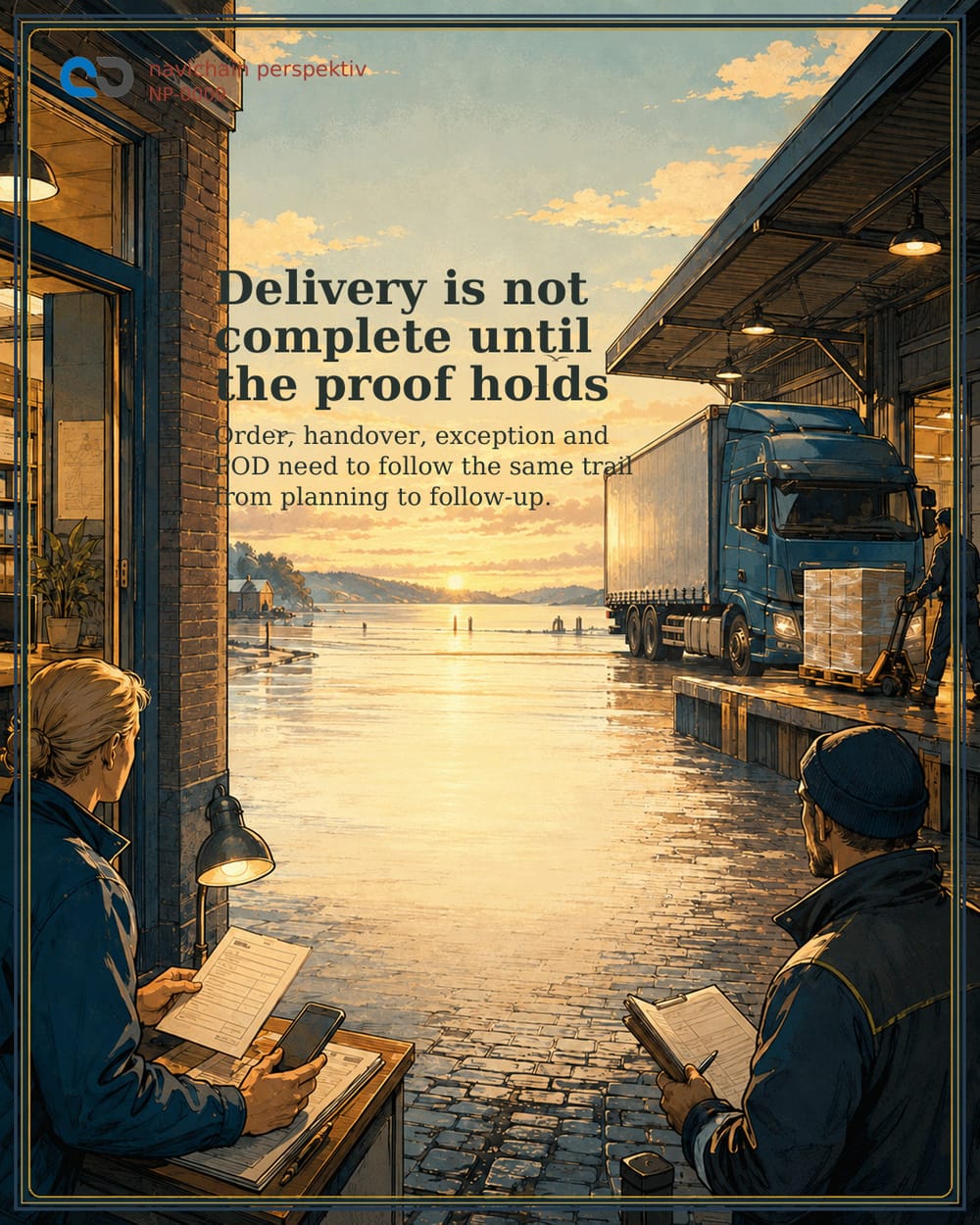
Delivery is not complete until the proof holds
How navichain connects the order, handovers, exceptions and proof of delivery into a usable transport record.
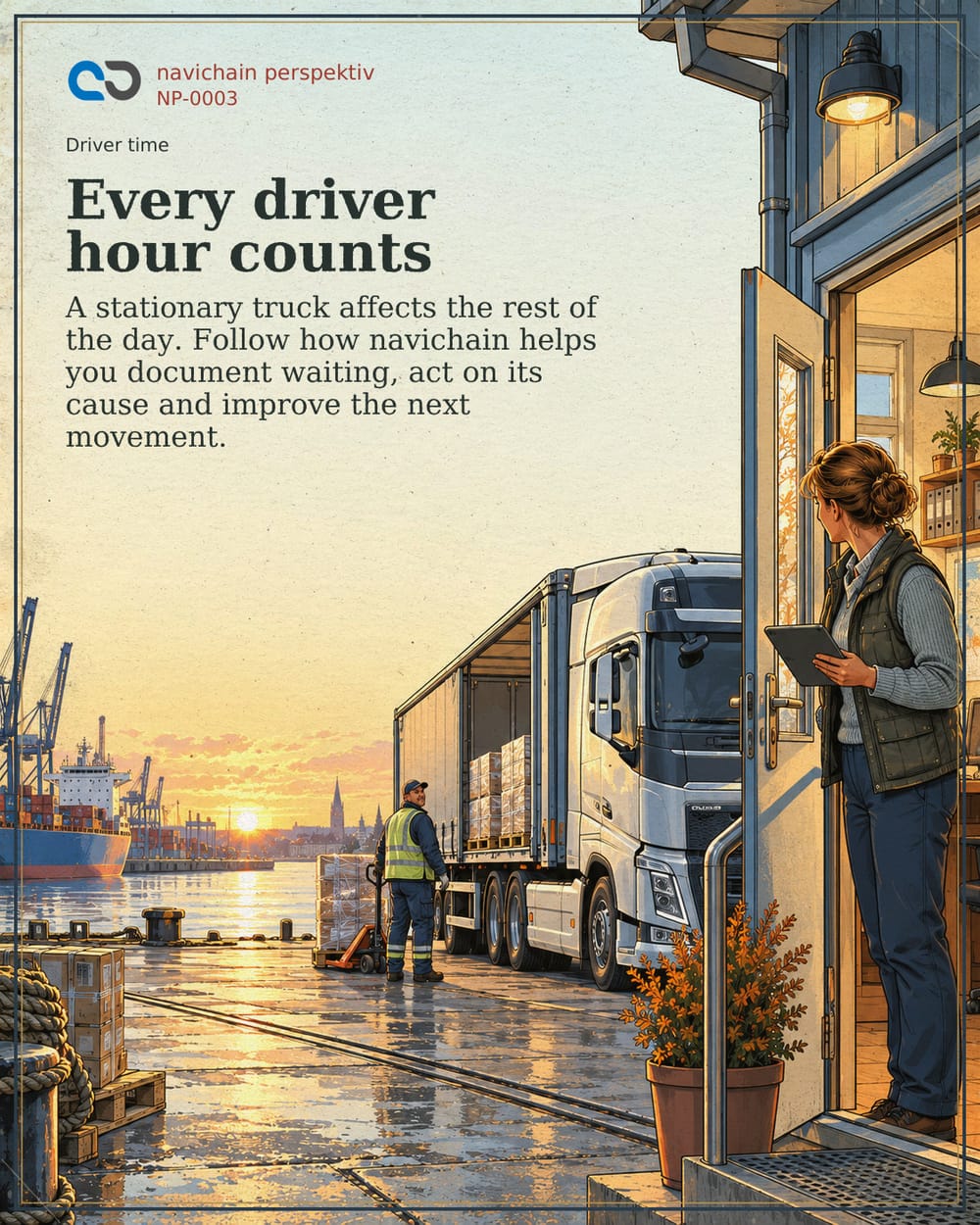
Europe is short of drivers. Can you afford to leave yours waiting?
A stationary truck affects the rest of the day. Follow how navichain helps you document waiting, act on its cause and improve the next movement.
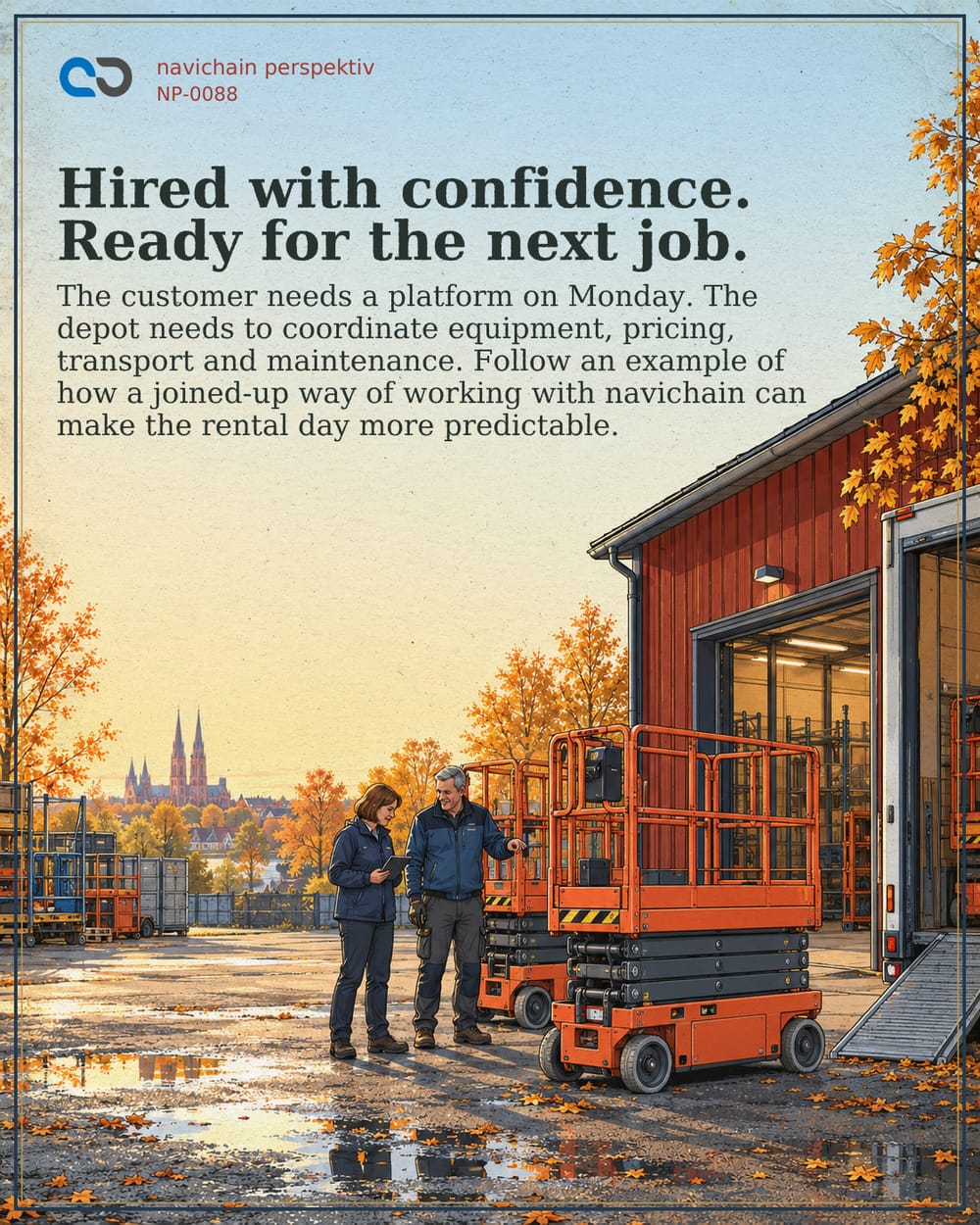
Hired with confidence. Ready for the next job.
Connecting equipment availability, rental pricing, allocation, delivery, purchasing and maintenance.

Is your transport information ready to leave the paper pile?
Follow a transport to Rotterdam. See how navichain helps connect bookings, instructions and proof of delivery, so the next person can find the right information.

Ordered is not delivered
A wholesaler keeps its promise only when sales, purchasing, warehouse and distribution operate as one connected flow.
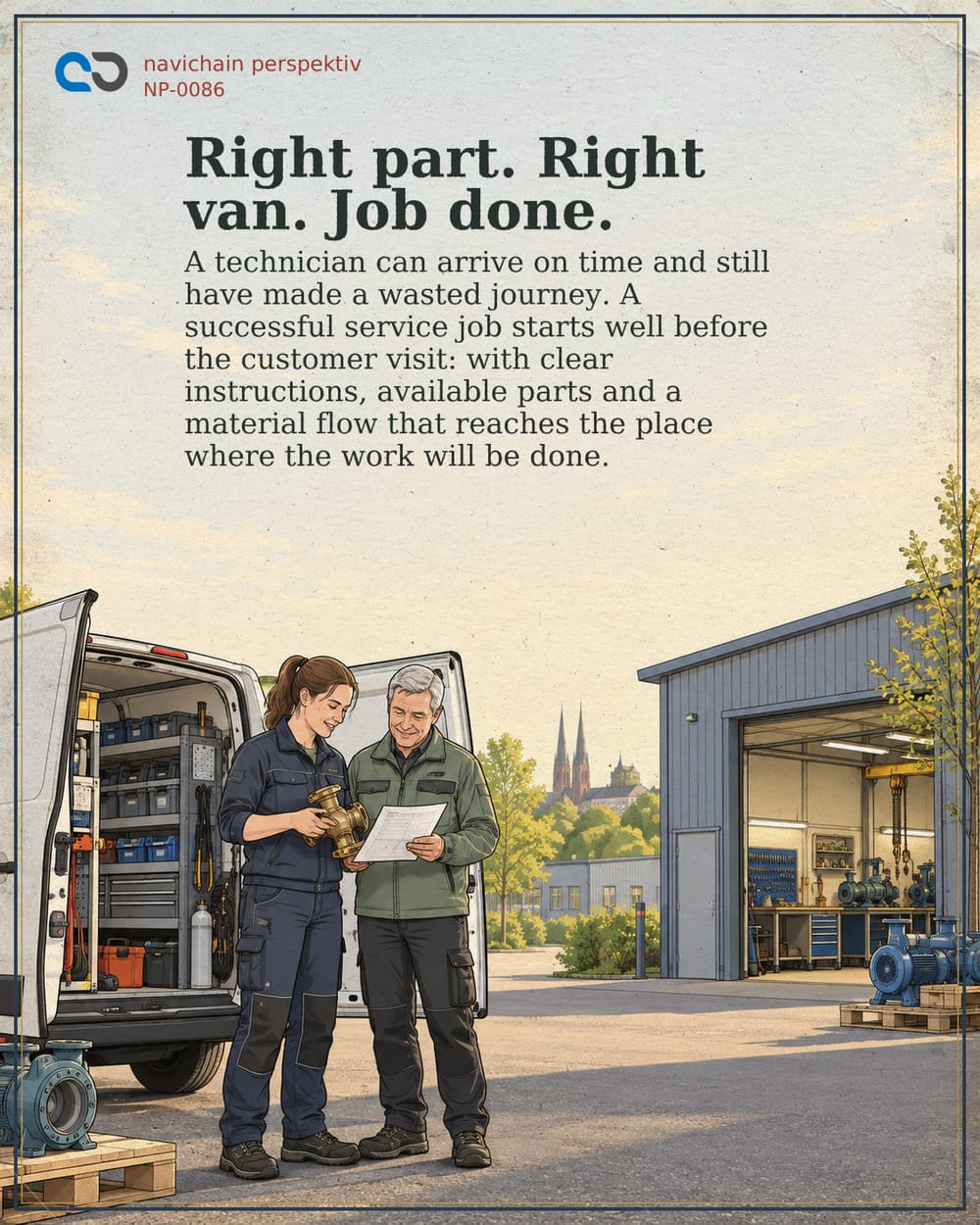
Right part. Right van. Job done.
A technician can arrive on time and still have made a wasted journey. A successful service job starts well before the customer visit.

The click is the start. Delivery is the promise.
How navichain connects web orders, purchasing, warehousing and distribution
The customer needs proof of delivery. Not the driver’s entire working day.
Make data protection part of the transport day with clear roles, relevant information and controlled access.
The customer's system controls the customer's flow — who controls the haulier's?
Keep customer ordering channels while using Navichain to support your own bookings, planning, execution and documentation.

The pallet is scanned. Is it ready for the next truck?
A beep identifies the goods. navichain connects receipt, location and the next transport in one workflow.
The road costs money before the truck moves
See how navichain helps you assess routes, tolls and fuel before quoting. A considered price starts with the conditions of the journey.
The truck should not live in another system
When a vehicle needs workshop attention, more than the maintenance list changes.
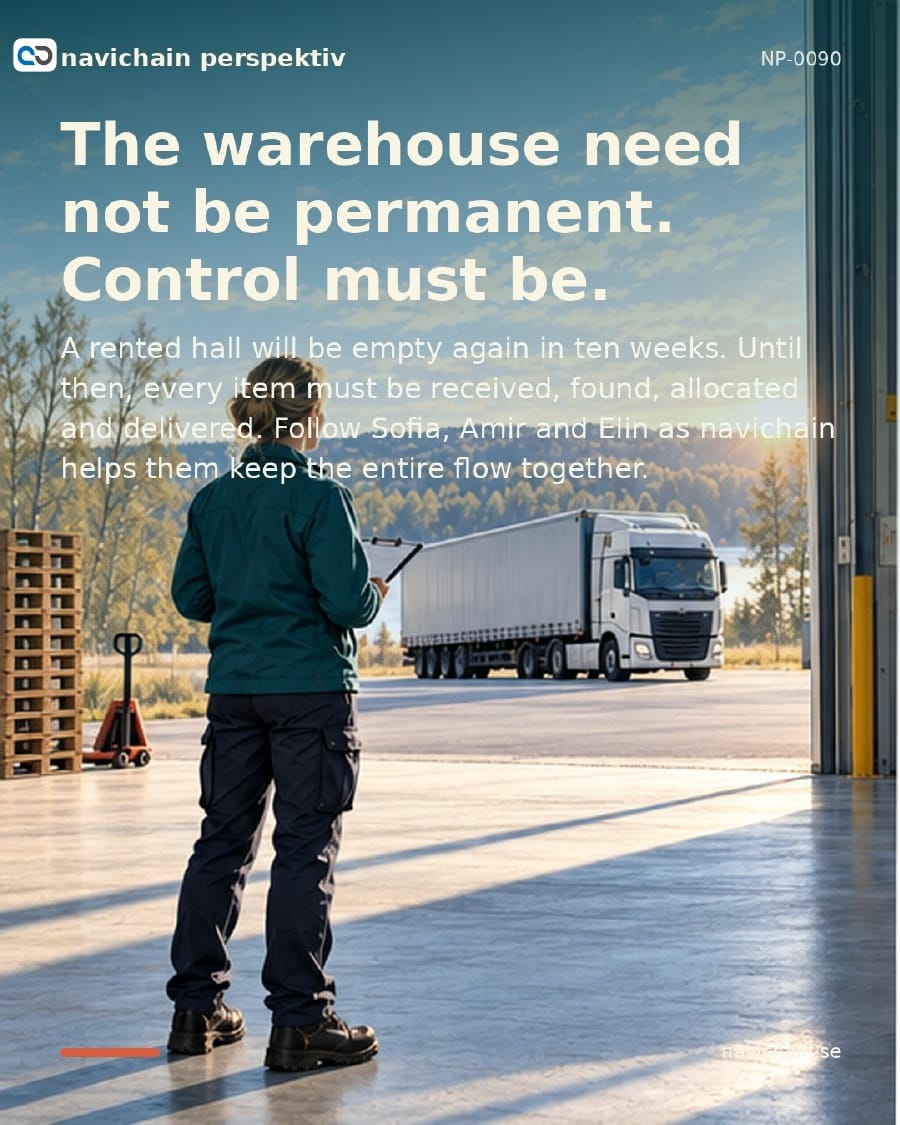
The warehouse need not be permanent. Control must be.
A rented hall will be empty again in ten weeks. Until then, every item must be received, found, allocated and delivered.

When delivery does not go to plan
Follow a delivery with damaged packaging. See how navichain helps drivers and the office connect the evidence, the decision and the next action.

Notifications your customers want (and the ones they mute)
Four events earn a message: booked, collected, delivered, problem. Everything else trains the customer to ignore you — including the one that mattered.

Cross-docking or storage? Two warehouse jobs that pretend to be one
Flow-through is measured in hours and touches, custody in days and accuracy. Deciding which job a consignment is — at intake, not at discovery.
The personal data a carrier forgets it holds
Driver cards, GPS traces, dashcam footage, consignee names, a signature on a doorstep. What the GDPR actually asks of a transport operator, with article numbers.

The truck you buy for December stands still in February
A six-week peak does not justify a vehicle you own for ten years. What handing a run to another carrier actually asks of your office, and where it goes wrong.

The dates that ground a truck are not the ones in your service plan
Roadworthiness, tachograph calibration, ADR and driver CPC each run on their own clock, and any of them can park a truck. One register, forward notice, an owner.

Five numbers a small fleet should look at every Monday
Utilisation, empty share, revenue per vehicle-day, DSO and unplanned downtime — why these five, and why adding more dashboards is usually less management.

The damage file you build before anything is damaged
A damage claim is decided by what was recorded at handover. The reservations, photos and weights worth capturing every time, and the clocks that start at delivery.

Drivers' hours are a planning constraint, not a driver problem
Nine hours a day, 56 a week, a 45-minute break after four and a half. The EU limits are arithmetic a dispatcher can do before the truck moves.
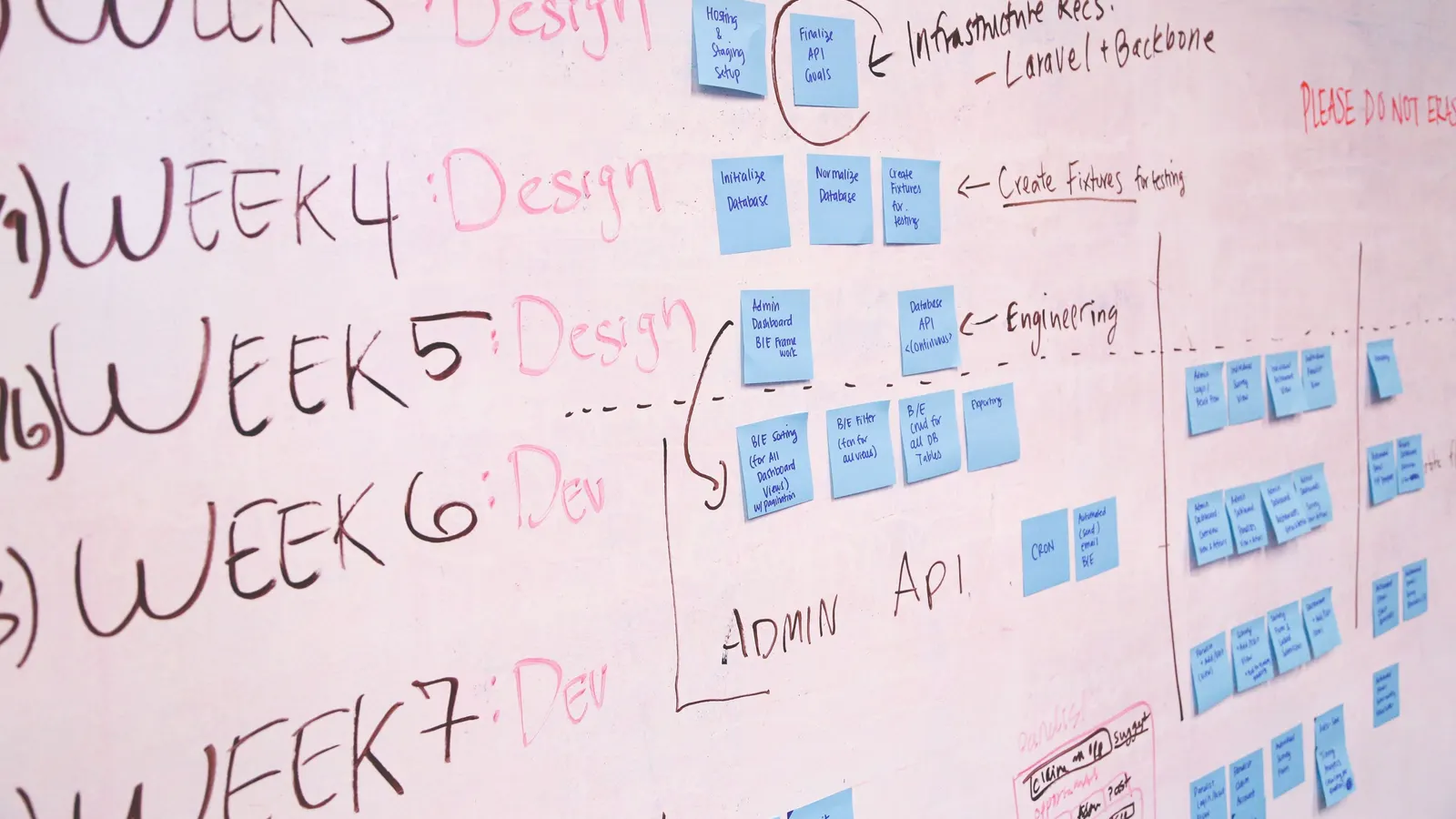
Why TMS implementations fail (and the failure is rarely the software)
Four patterns sink transport software projects: dirty master data, no named owner, a big-bang cutover, and old habits wearing new screens.

API or EDI? Choosing the right pipe for each partner
EDI is an agreement with batch semantics; an API is interactive and cheap to stand up. Which fits which partner, and why most carriers run both.

The first four weeks with a new customer decide whether the account is profitable
Winning the contract is the easy part. The four weeks after it — addresses, price list, booking channel, invoice format — decide what the account actually earns.
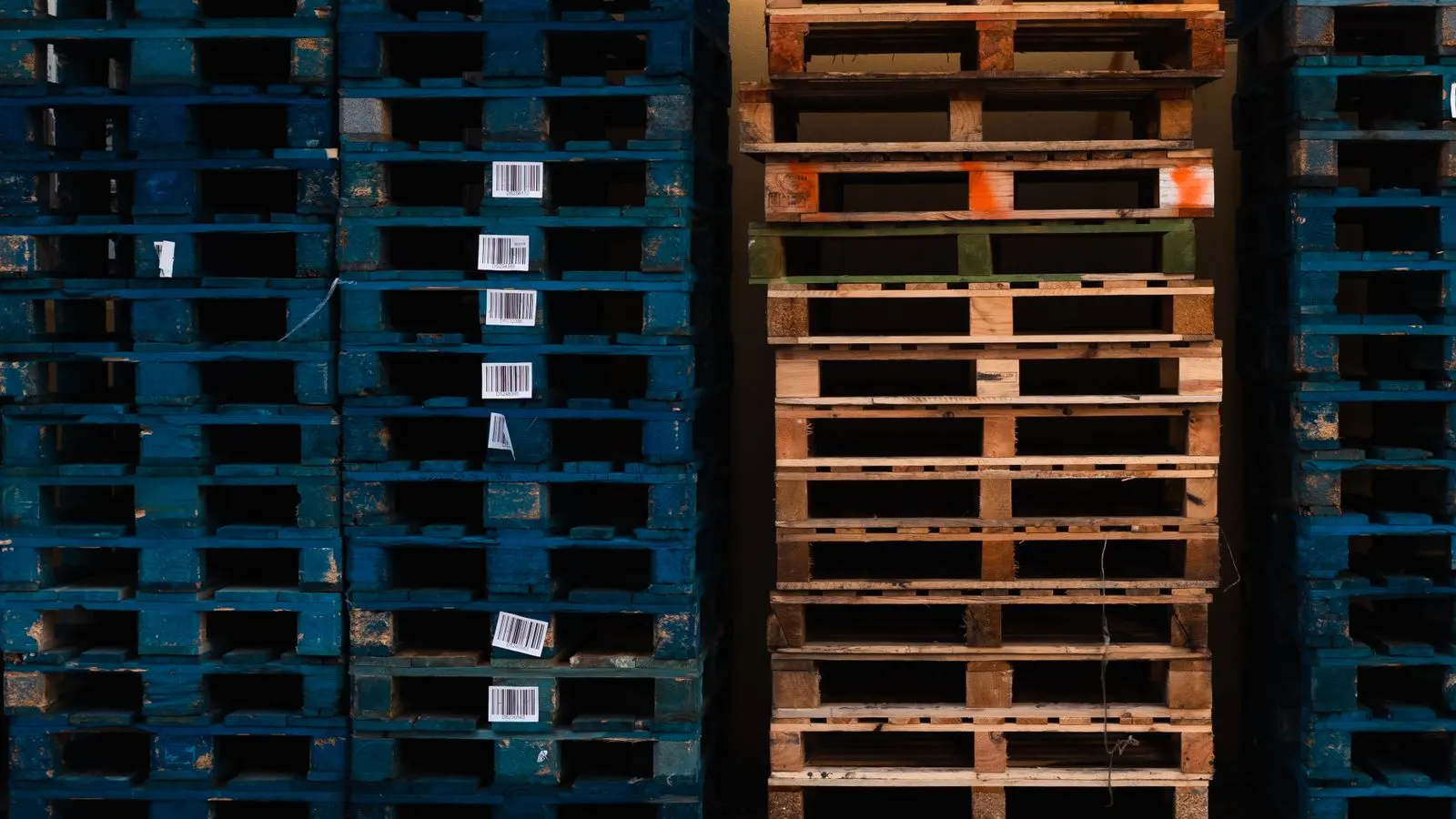
Barcodes in a small warehouse: cheap discipline that compounds
A label printer and a scanner turn a warehouse memory into a lookup anyone can do. What to label, what a barcode should encode, and when to scan it.
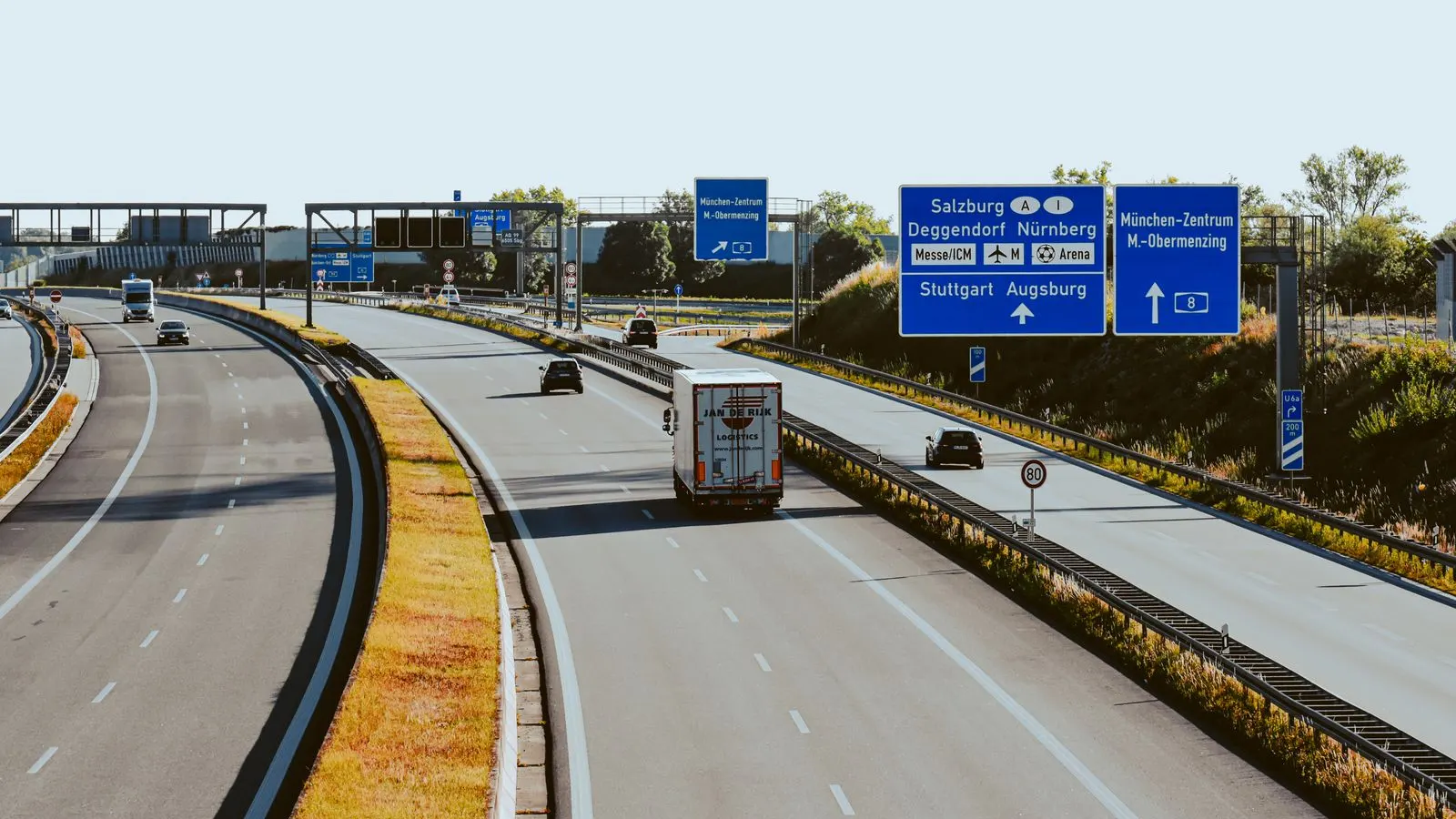
Cabotage in plain language: what the rules actually permit
Three operations in seven days, then four days out. What the EU cabotage rules permit as of August 2026, and what must be produced at a roadside check.

Your trailer fleet is an asset register nobody keeps
Trailers hold real capital and are usually tracked from memory. The four facts worth recording about each one, and how they end the Friday trailer hunt.

Fuel surcharges customers accept
A fuel surcharge survives negotiation when it is indexed to a published diesel price, arithmetically reproducible, and symmetric — it falls when diesel falls.

Multi-stop tours: what your consignment paperwork must not flatten
A tour with three deliveries is three consignments sharing a vehicle. What the CMR Convention keeps separate, and where flattening it into one booking bites.

Stop retyping invoices into your accounting system
The booking already holds the customer, the charges and the VAT. What a TMS-to-accounting integration actually transfers, and where the mapping needs care.
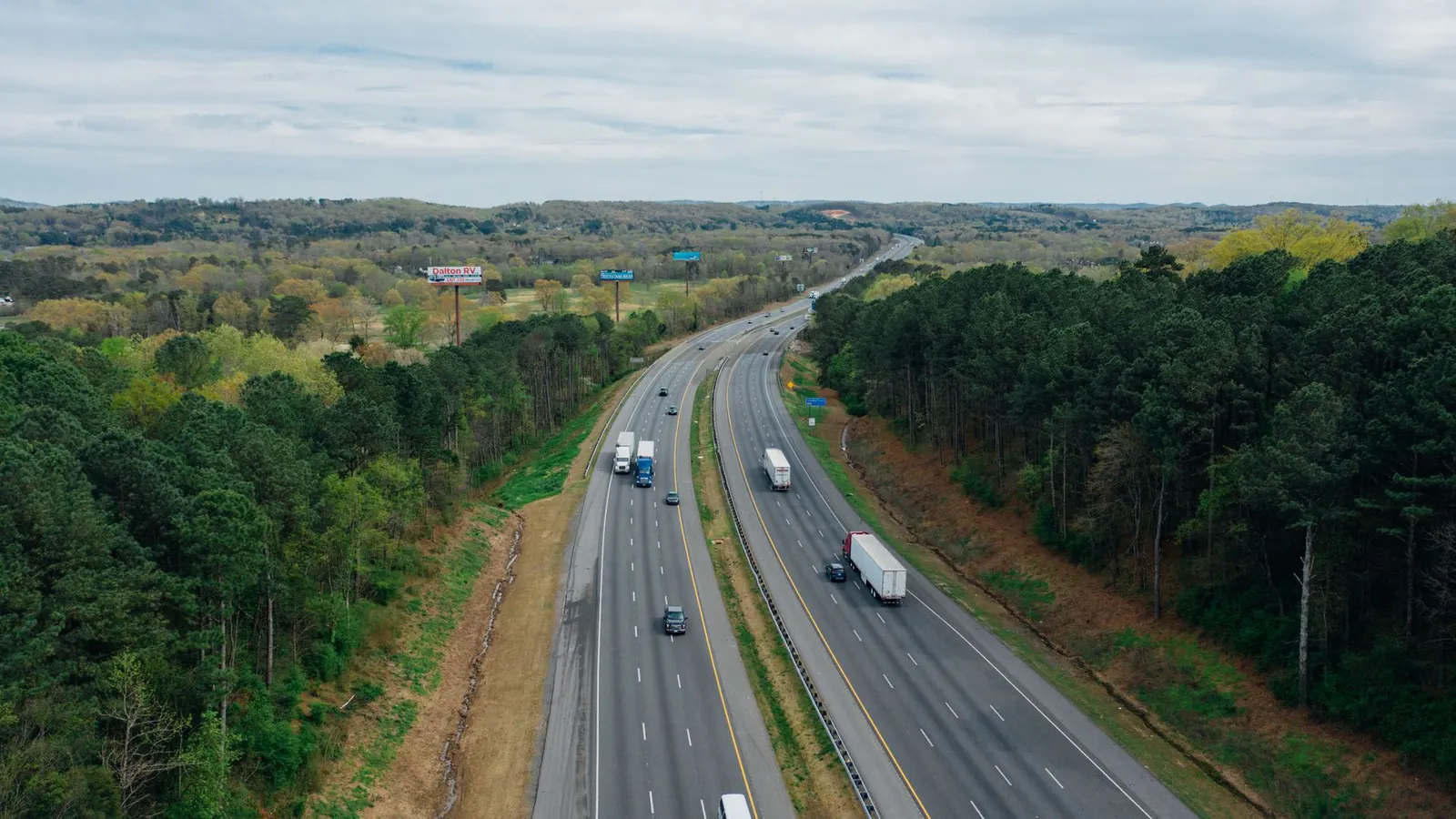
The empty kilometre: why backhauls are a planning problem, not a sales problem
Empty legs get treated as a gap in sales. Most of the fix is visibility — seeing the trailing empty leg at booking time, and knowing what may ride together.

Storing customer goods: the day your terminal became a warehouse
The informal hold these pallets until Thursday arrangement, and what it takes to run it properly: a goods receipt note, a defined clock, and a clean release.

Your customers do not want a tracking link, they want to stop calling you
The where-is-my-shipment call is a symptom, not a nuisance. What a customer portal has to show — bookings, tracking, POD and invoices — to actually stop it.

Daily vehicle checks drivers actually do
A walkaround check that takes eight minutes on paper gets ticked from the cab by week three. How to design one that drivers finish honestly.

Getting drivers to actually use the app
Driver app adoption is a design constraint, not a training problem: BYOD, one-tap status, no leftover paper, and honest behaviour when coverage fails.

eCMR and eFTI: what actually changes for road carriers on 9 July 2027
The EU eFTI Regulation obliges authorities to accept electronic freight information from July 2027. What that does and does not require of carriers.

Which countries accept eCMR today
The e-CMR Protocol is ratified one country at a time, so a lane is only paper-free when both ends and the transit states have joined. The verified list.

EDI for small carriers: what it is, when it pays, and when it does not
What EDIFACT really involves for a ten-truck operation — the three messages that actually flow, the setup nobody mentions, and where the break-even sits.
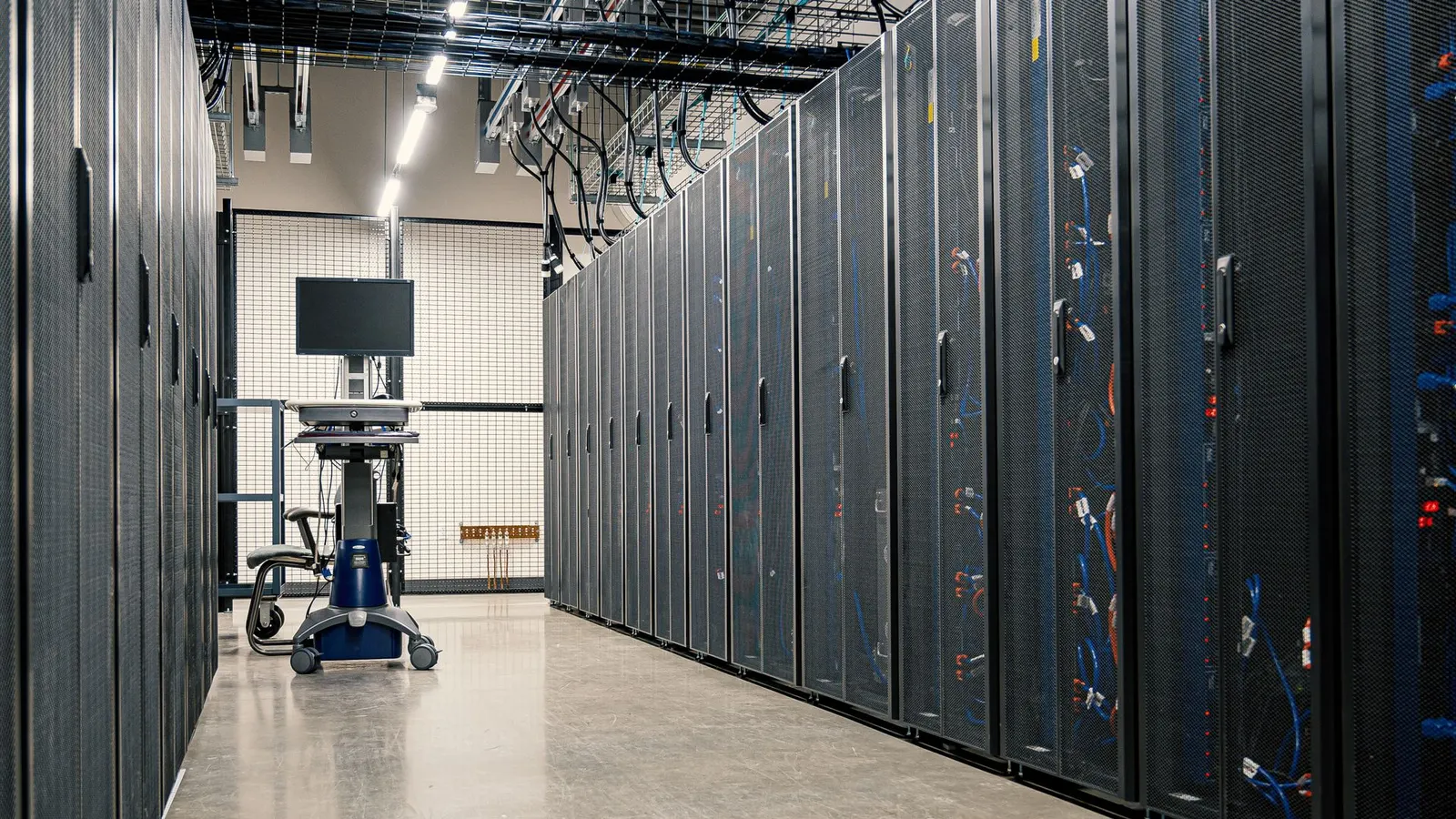
What "EU-hosted" actually means when a customer asks
A plain-language guide for carriers answering a procurement questionnaire: hosting jurisdiction, per-tenant isolation, export rights and what GDPR actually says.

GPS tracking without the second subscription
Three ways a small fleet gets vehicle positions — telematics hardware, a driver phone, or tracking inside the TMS — and what each really costs and answers.

Groupage for small carriers: when consolidation pays and when it costs
Consolidating part-loads lifts revenue per kilometre and multiplies handling, paperwork and claims risk. A break-even way to find where your own line sits.

The honest ETA: why "before lunch" beats "10:23"
A minute-precise ETA is a promise you cannot keep. What an arrival time can honestly say at booking, at dispatch and en route — and how to widen a window well.

How to choose a TMS in 2026: a working checklist for small and mid-size carriers
The questions that actually separate transport management systems — total cost beyond the licence, data exit, integrations and honest pricing models.

Invoice the day you deliver: the shortest lever on cash flow
Payment terms get negotiated hard. The gap between delivery and invoice gets given away for free. Where those days hide, and what closing them requires.

Vehicle downtime is a data problem before it is a workshop problem
Calendar cycles and odometer cycles live in different places, which is why small fleets service on instinct. And what to do with a cycle you cannot judge.

What proof of delivery actually costs you when it arrives on paper
Paper PODs ride in the cab until Friday and the invoice waits for all of it. The arithmetic of the delivered-to-invoiced gap, and how to close it.

Route planning that survives contact with Tuesday
The first plan is the easy one. What decides a planning tool is the cost of the second — moving a booking, knowing which vehicles are free, telling the customer.

The day the dispatch spreadsheet stops scaling
Excel dispatch works until concurrent edits, no driver link, no history and no customer view cost more than the tool saves. The symptoms that mark the crossover.

Stocktakes without stopping the warehouse
The annual wall-to-wall count freezes the warehouse and is stale by February. How counting a slice at a time against a movement ledger works instead.

Transport and warehouse in one system: what actually breaks when they are separate
Carriers who also store goods usually run a TMS beside a WMS. The gap between them is where custody, billing and customer trust quietly leak.

Truck-aware routing: why car navigation sends lorries under low bridges
A consumer GPS does not know your height, axle weight or ADR load. What truck routing must know about the vehicle, and why bridge strikes are a data problem.

Winter operations in the Nordics: planning for the season, not the forecast
The winter plan is a capacity decision made in October, not a scramble in December: buffer times, tyre readiness and daylight as planning inputs.