



A wholesaler keeps its promise only when sales, purchasing, warehouse and distribution operate as one connected flow.
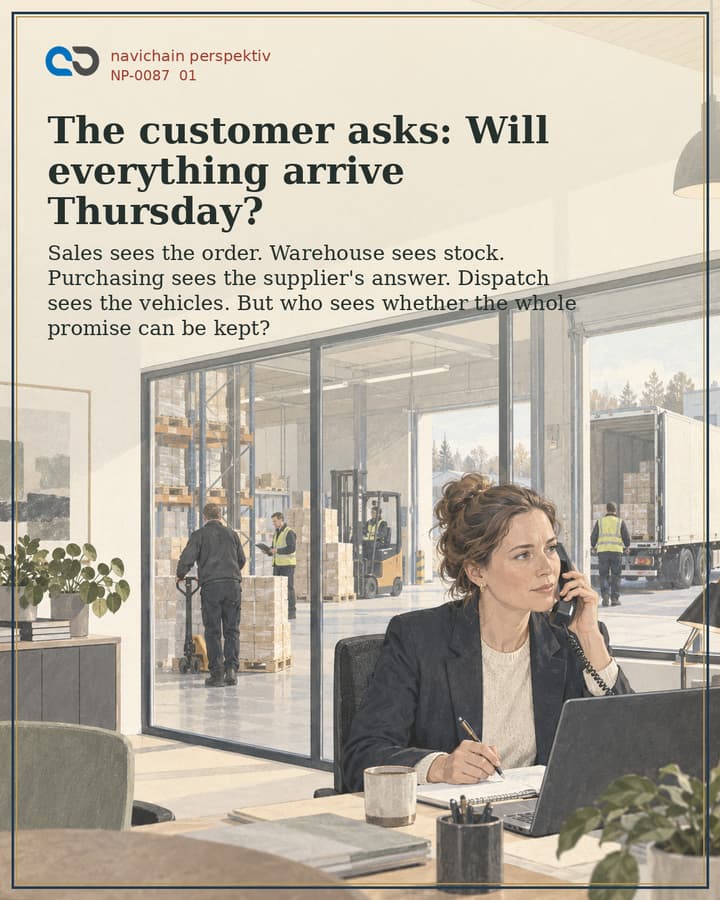
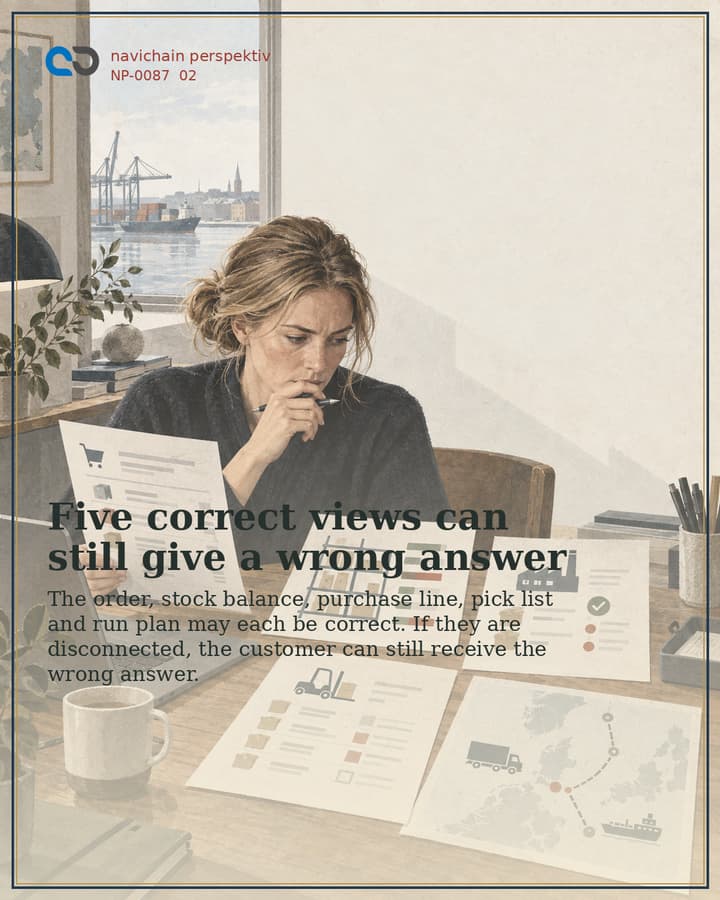
A wholesaler keeps its promise only when sales, purchasing, warehouse and distribution operate as one connected flow. Sales sees the order. Warehouse sees stock. Purchasing sees the supplier’s answer. Dispatch sees the vehicles. But who sees whether the whole promise can be kept? The order, stock balance, purchase line, pick list and run plan may each be correct. If they are disconnected, the customer can still receive the wrong answer.
Executive summary
A wholesaler keeps its promise only when sales, purchasing, warehouse and distribution operate as one connected flow. When receiving, picking, transport and delivery connect, the next role can continue without restarting or guessing. Efficient fulfilment means seeing what is available, what is missing, who acts and what the customer should be told.
The wholesaler’s real product is a promise
A wholesaler keeps its promise only when sales, purchasing, warehouse and distribution operate as one connected flow. Sales sees the order. Warehouse sees stock. Purchasing sees the supplier’s answer. Dispatch sees the vehicles. But who sees whether the whole promise can be kept? The order, stock balance, purchase line, pick list and run plan may each be correct. If they are disconnected, the customer can still receive the wrong answer. The order, stock balance, purchase line, pick list and run plan may each be correct. If they are disconnected, the customer can still receive the wrong answer. 1 When receiving, picking, transport and delivery connect, the next role can continue without restarting or guessing. 2
How you work in navichain
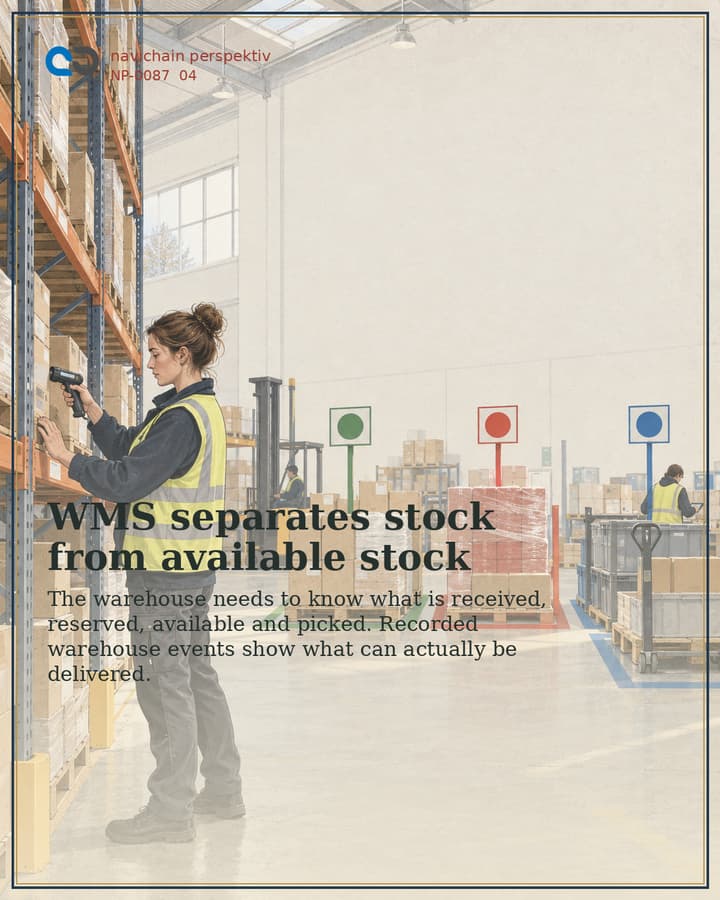
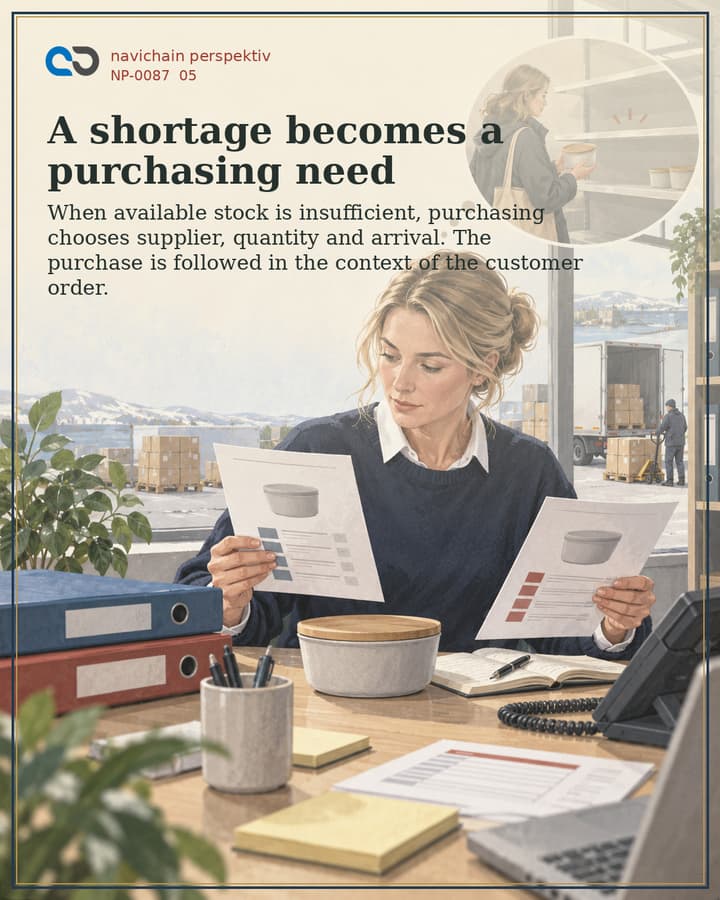
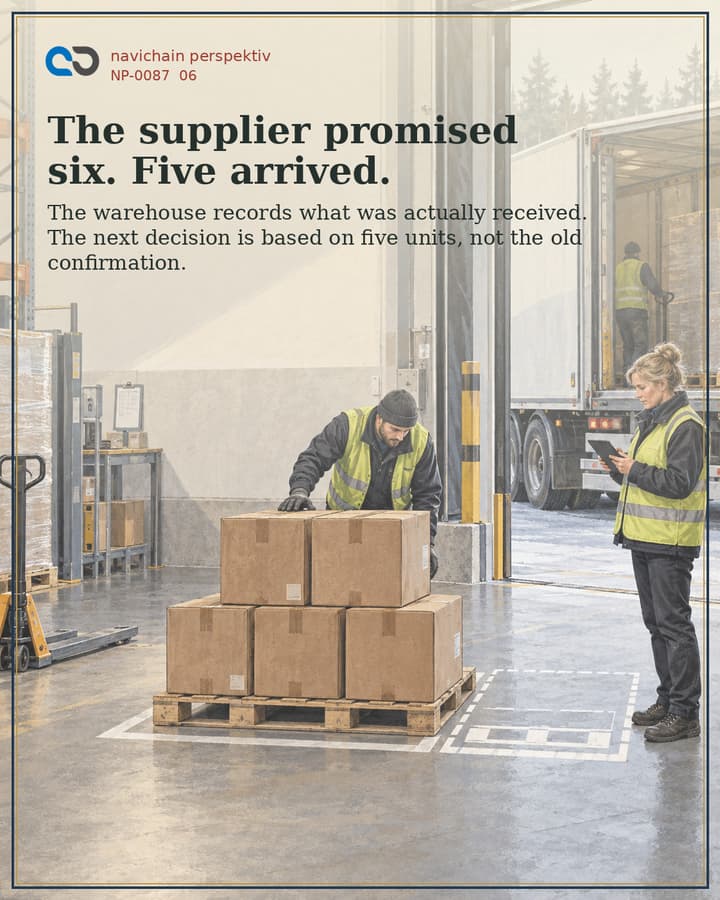
Sales records customer, products, quantities, address and delivery date. navichain lets the same order become the starting point for warehouse, purchasing and transport. The warehouse needs to know what is received, reserved, available and picked. Recorded warehouse events show what can actually be delivered. When available stock is insufficient, purchasing chooses supplier, quantity and arrival. The purchase is followed in the context of the customer order. The warehouse records what was actually received. The next decision is based on five units, not the old confirmation.
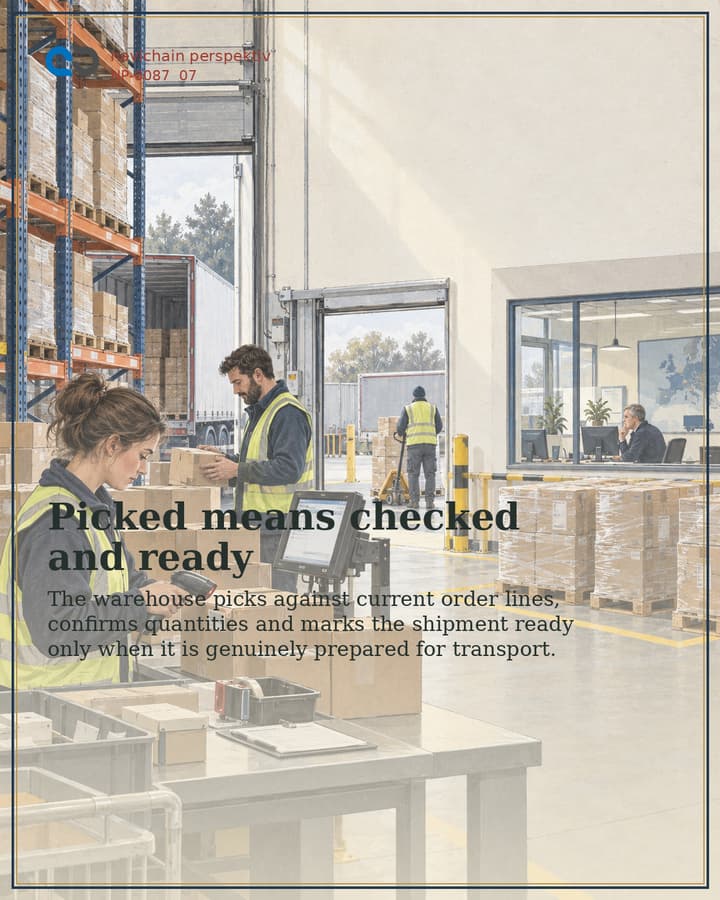
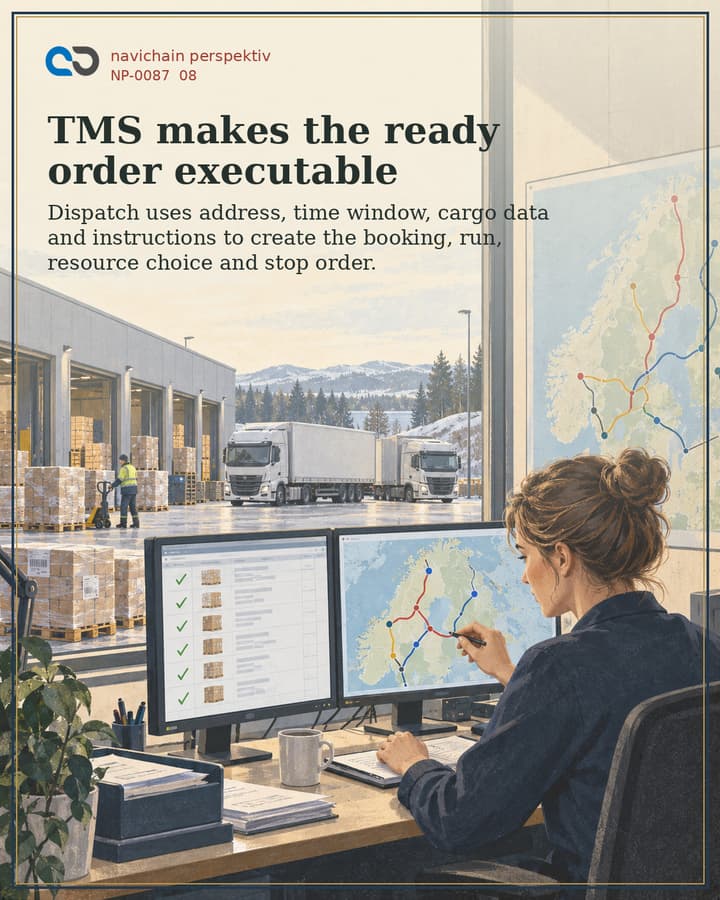
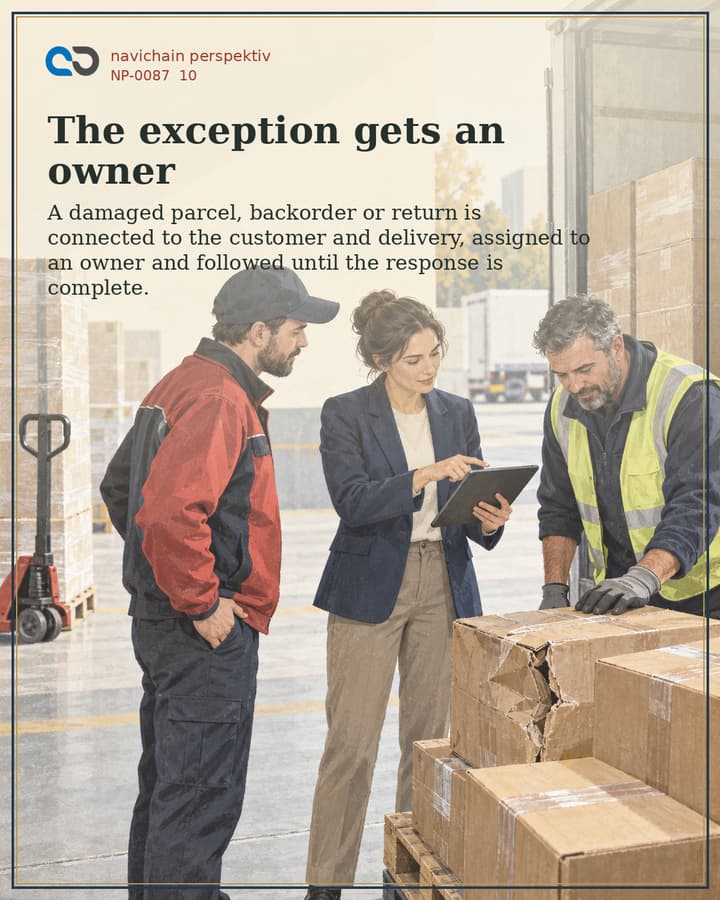
The warehouse picks against current order lines, confirms quantities and marks the shipment ready only when it is genuinely prepared for transport. Dispatch uses address, time window, cargo data and instructions to create the booking, run, resource choice and stop order. At collection and delivery, quantities, comments, photos, signature, position and time can provide useful evidence of what happened. A damaged parcel, backorder or return is connected to the customer and delivery, assigned to an owner and followed until the response is complete.
A realistic example
Example: an installation-products wholesaler must deliver four order lines on Thursday. Three are in stock; six units of the fourth are missing. The supplier sends five. The warehouse records the actual receipt, the customer accepts a partial delivery, and the shipment enters transport planning only when ready. The final unit remains visible as a backorder with an agreed action.
Value for every role
| Value for every role | How you work in navichain | Executive summary | | The sales order defines the promise | Sales records customer, products, quantities, address and delivery date. navichain lets the same order become the starting point for warehouse, purchasing and transport. | When receiving, picking, transport and delivery connect, the next role can continue without restarting or guessing. Efficient fulfilment means seeing what is available, what is missing, who acts and what the customer should be told. | | A shortage becomes a purchasing need | When available stock is insufficient, purchasing chooses supplier, quantity and arrival. The purchase is followed in the context of the customer order. | When receiving, picking, transport and delivery connect, the next role can continue without restarting or guessing. Efficient fulfilment means seeing what is available, what is missing, who acts and what the customer should be told. | | Picked means checked and ready | The warehouse picks against current order lines, confirms quantities and marks the shipment ready only when it is genuinely prepared for transport. | When receiving, picking, transport and delivery connect, the next role can continue without restarting or guessing. Efficient fulfilment means seeing what is available, what is missing, who acts and what the customer should be told. | | TMS makes the ready order executable | Dispatch uses address, time window, cargo data and instructions to create the booking, run, resource choice and stop order. | When receiving, picking, transport and delivery connect, the next role can continue without restarting or guessing. Efficient fulfilment means seeing what is available, what is missing, who acts and what the customer should be told. | | The driver proves the outcome | At collection and delivery, quantities, comments, photos, signature, position and time can provide useful evidence of what happened. | When receiving, picking, transport and delivery connect, the next role can continue without restarting or guessing. Efficient fulfilment means seeing what is available, what is missing, who acts and what the customer should be told. | | The exception gets an owner | A damaged parcel, backorder or return is connected to the customer and delivery, assigned to an owner and followed until the response is complete. | When receiving, picking, transport and delivery connect, the next role can continue without restarting or guessing. Efficient fulfilment means seeing what is available, what is missing, who acts and what the customer should be told. |
Executive summary
When receiving, picking, transport and delivery connect, the next role can continue without restarting or guessing. Efficient fulfilment means seeing what is available, what is missing, who acts and what the customer should be told. A wholesaler keeps its promise only when sales, purchasing, warehouse and distribution operate as one connected flow. At collection and delivery, quantities, comments, photos, signature, position and time can provide useful evidence of what happened. 3 When receiving, picking, transport and delivery connect, the next role can continue without restarting or guessing. 4
A practical way to start
Start with one product group, one warehouse, one delivery area and a small set of customers. Define when an order line is available, when a shipment is ready and which exceptions become service cases. Then map the data exchanged with the ERP, e-commerce platform or other specialist systems already in place.
- complete order lines on time
- time to confirmed delivery answer
- receiving discrepancies
- manual status questions
- time from exception to named owner
Related perspectives
- NP-0031 — WMS
- NP-0064 — TMS
Next step
Test your real wholesale flow Bring an order that needs purchasing, warehouse work, distribution and one exception. See how navichain can keep the customer promise connected. navichain.se/signup
Sources
- GS1: Electronic Data Interchange (EDI) — GS1, 2026-09-08.
- GS1: Benefits of standards in transport and logistics — GS1, 2026-09-08.
- Digitalisation in transport and logistics / DTLF — European Commission, 2026-09-08.
- Electronic freight transport information (eFTI) — European Commission, 2026-09-08.
- navichain documentation — navichain, 2026-09-08.