Delivery is not complete until the proof holds
By navichain team
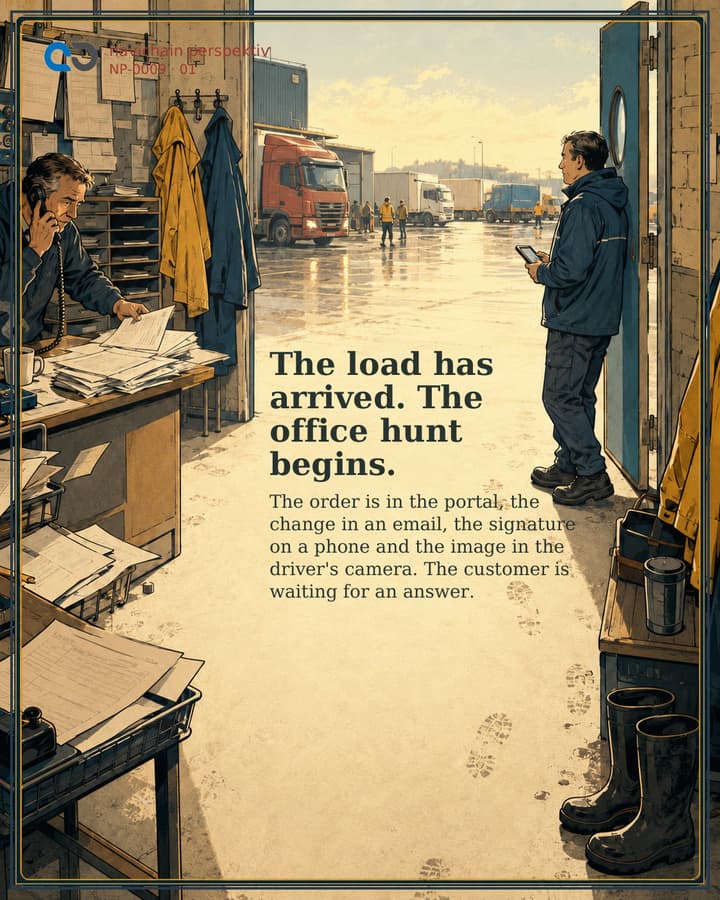


The truck has left the consignee. The freight is unloaded and the driver is already heading to the next job. Yet the delivery may be far from complete for dispatch and administration. The signature is on one phone, a photograph sits in a chat, a comment is buried in an email and the customer reference remains in a portal. When the customer asks what happened, somebody first has to reconstruct the journey.
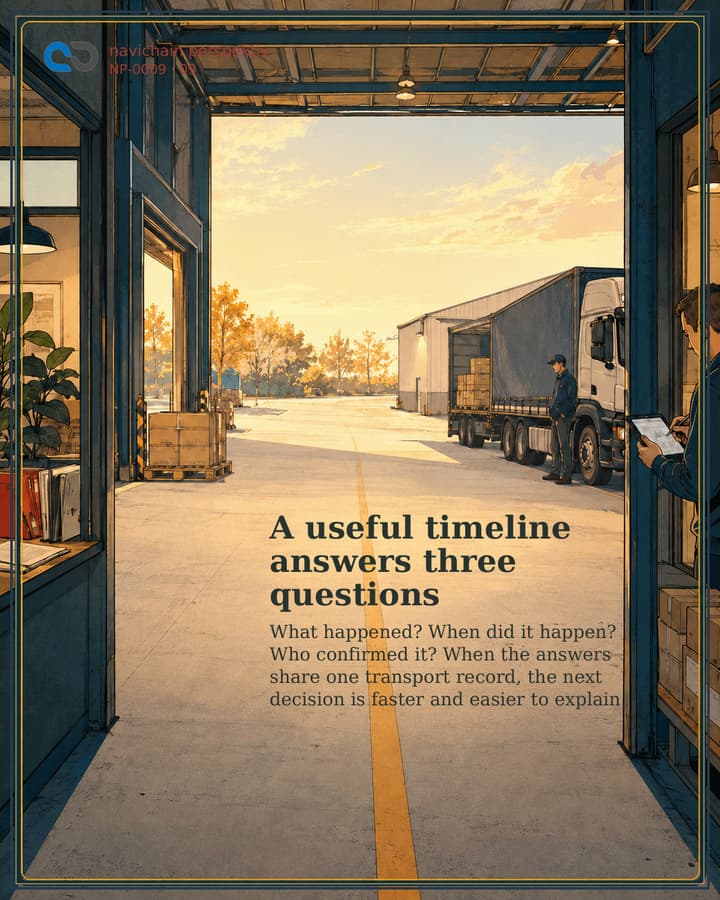
This is not primarily a document problem. It is a context problem. Proof of delivery becomes genuinely useful when it shows which order it belongs to, at which stop it was created, when the event occurred, who confirmed it and whether anything deviated from plan. navichain helps a haulier retain that thread from booking to completed work and usable evidence.
Summary
A transport passes through several hands: customer, dispatcher, terminal, driver, subcontractor and consignee. Every handover can open a gap between the planned assignment and the record of what actually happened. navichain lets the booking, run, stops, statuses, images, comments and signatures belong to the same transport workflow. The driver records the event where it occurs; the dispatcher decides the next action; the administrator uses the same material when the job is reviewed and prepared for invoicing.
The system does not replace human responsibility or the customer’s requirements. It makes the information available in one operational context. The result is less document chasing, clearer customer dialogue and a better starting point for handling exceptions without rebuilding the story from scratch.
A photograph is not proof until its context travels with it
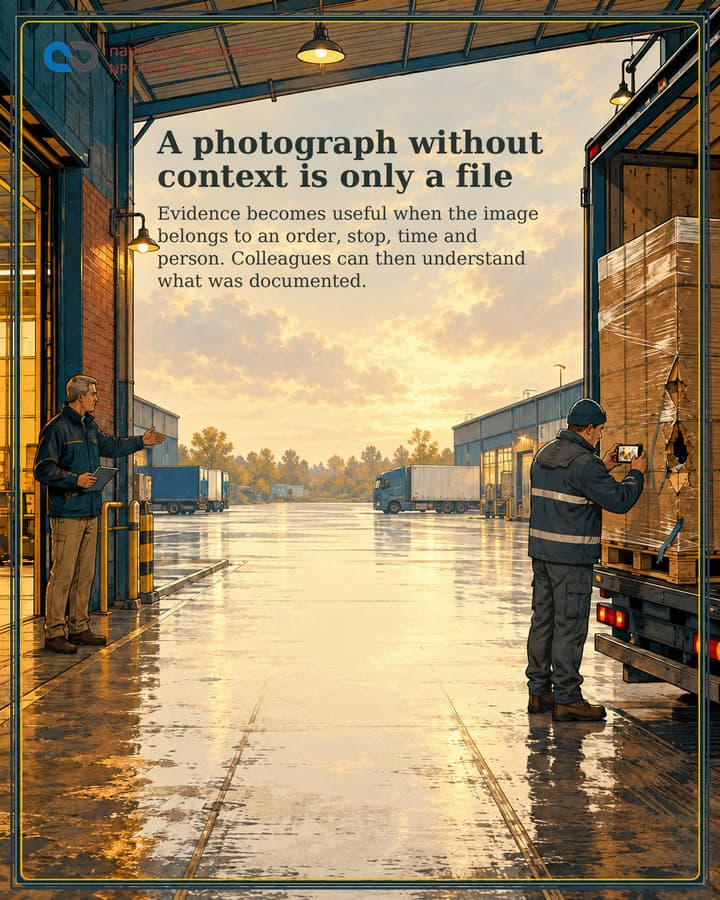
Imagine a distribution run with ten stops. At stop seven, the consignee finds a damaged pallet. The driver photographs the damage, records a reason and obtains the consignee’s confirmation. If the image remains only in the camera roll, the office may later be unable to tell which delivery it belongs to or whether it was taken before or after unloading. An accurate image can still be weak operational evidence.
In a connected workflow, the driver records the exception against the correct order and stop. Image, time, status and comment remain with the same record. The dispatcher sees what happened and decides whether to contact the customer, return the freight or arrange another delivery. navichain carries the information and history; an accountable person makes the decision.
The same underlying principle appears in GS1’s EPCIS standard: useful traceability relies on structured events that explain what happened, where and when it happened and in which business context.5 navichain is not presented as an EPCIS service in this scenario, but the standard illustrates why a loose photograph or signature is less valuable than an event attached to the right transport.
The handover is the fragile point
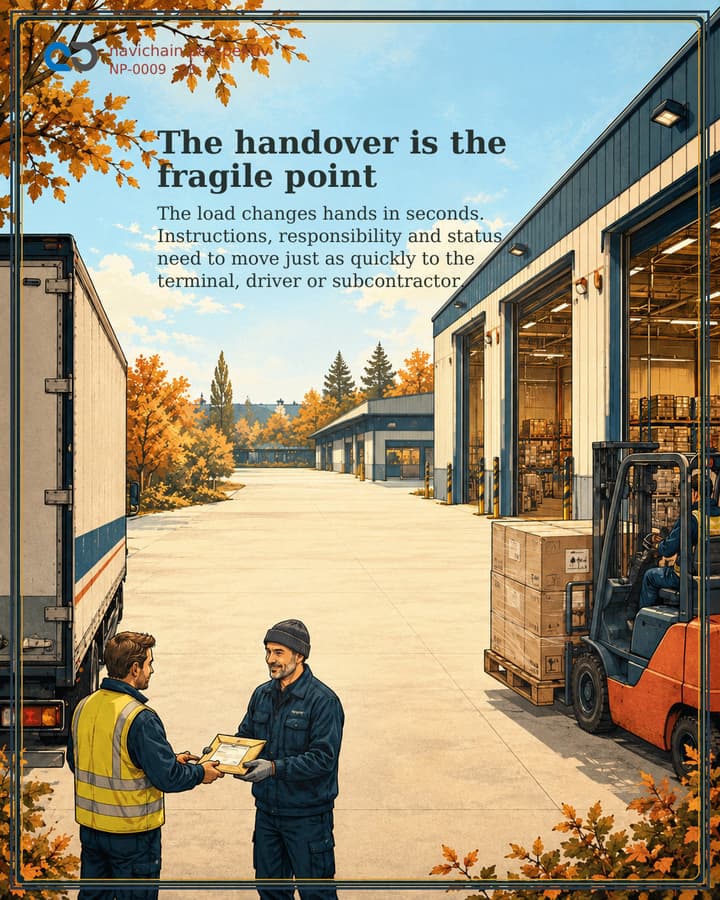
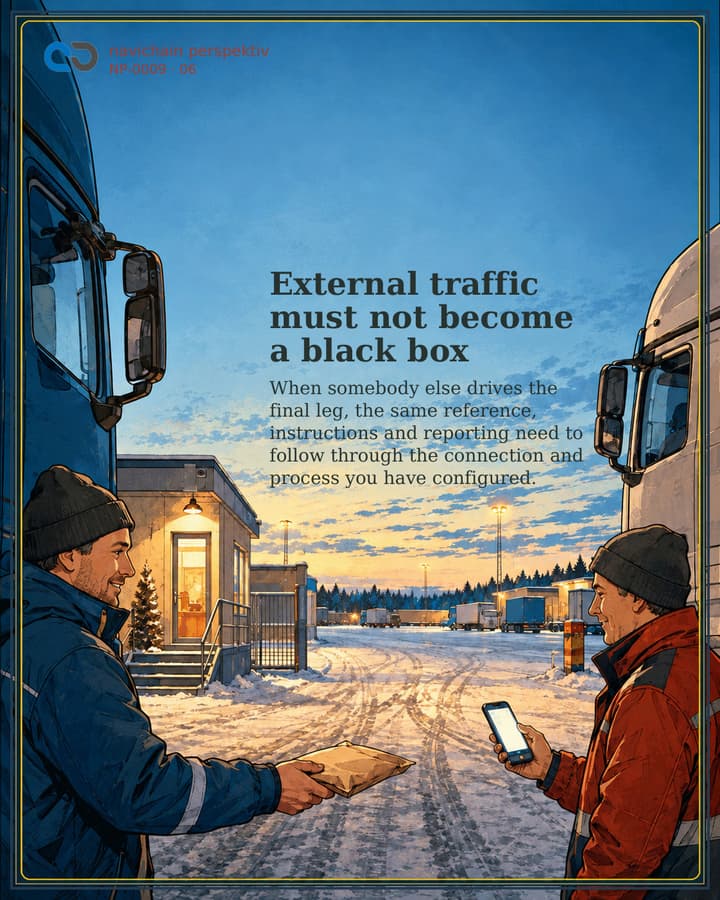
An order may begin in a customer portal or arrive through an integration. Dispatch plans the run, a terminal prepares the freight and a driver performs the stops. In some flows, a subcontractor takes the final leg. The physical load can move quickly while the information slows down whenever responsibility changes hands.
navichain gives each role access to the part of the transport required for the work. Dispatch keeps the booking and run together. The driver works with current stops and instructions and records status and proof. When external resources are involved, the same reference, instructions and reporting requirements need to travel through the collaboration and integration that have been configured.
The goal is to avoid creating a new identity for the same assignment at every handover. The customer’s reference can be retained while navichain maintains the haulier’s operational transport record. The next person can then continue where the previous person stopped instead of interpreting a screenshot, email or verbal message.
Capture the exception where it happens
Weak documentation rarely becomes visible while everything follows the plan. It is a refused delivery, missing handling unit, damage or waiting time that tests the evidence chain. The office then needs to understand the situation quickly without repeatedly interrupting the driver.
A practical workflow looks like this:
- The driver opens the correct stop in the working flow.
- The driver selects the relevant status or exception reason and adds a comment, photograph or signature when required.
- navichain associates the registration with the current transport and time.
- Dispatch reviews the material and decides the next action.
- Customer communication and onward planning can use the same documented event.
navichain’s own description of e-CMR and delivery evidence highlights digital signing and the ability to attach photographs to the documentation.1 For the haulier, the value goes beyond capture: information becomes searchable in relation to the assignment and useful to people who were not standing at the delivery door.
Electronic does not automatically mean understandable
Digital transport documentation is a clear European direction of travel. UNECE’s e-CMR guide explains how an electronic consignment note can support information exchange through the transport chain, while the Additional Protocol sets out the framework for the electronic equivalent of the CMR consignment note.2 3 The EU eFTI Regulation also establishes a legal framework through which economic operators can make freight transport information available electronically to competent authorities.4
But a document is not useful merely because it is digital. It must still be connected to the right assignment, version and event. For international flows, a carrier also needs to consider the rules, protocols and national implementations that apply to the particular transport.
navichain helps make documentation part of transport execution rather than a detached attachment stored without context. When the order, stop and delivery events stay together, the right material is easier to find and the actual execution is easier to explain.
Proof should reach the order without a document hunt
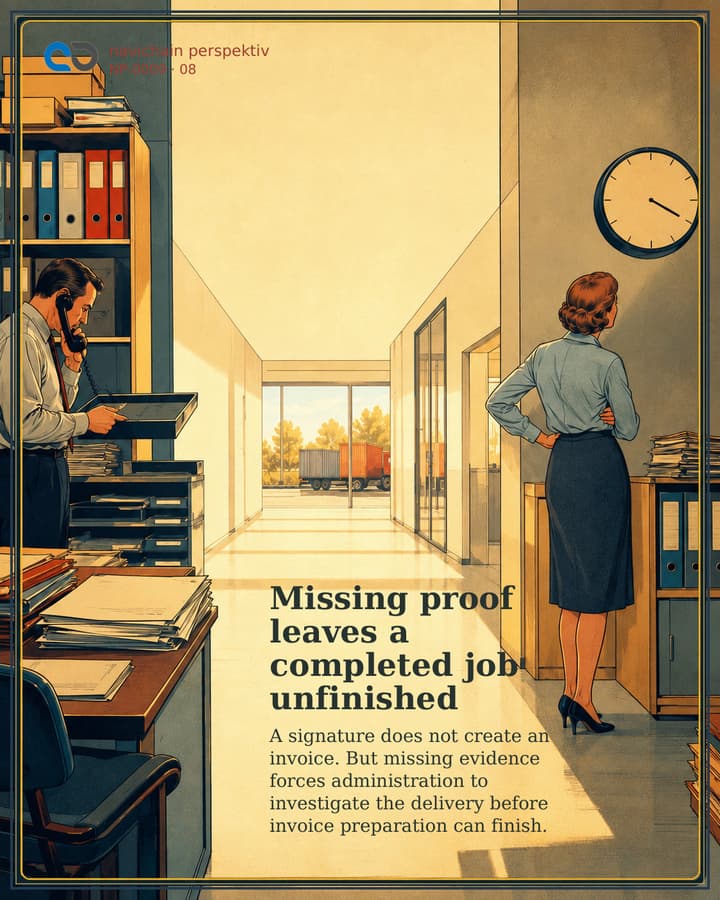
After the last run of the day, a second job often begins. The office checks what was delivered, which exceptions remain open and which assignments contain enough material to close. If evidence arrives through several channels, every order becomes a small investigation.
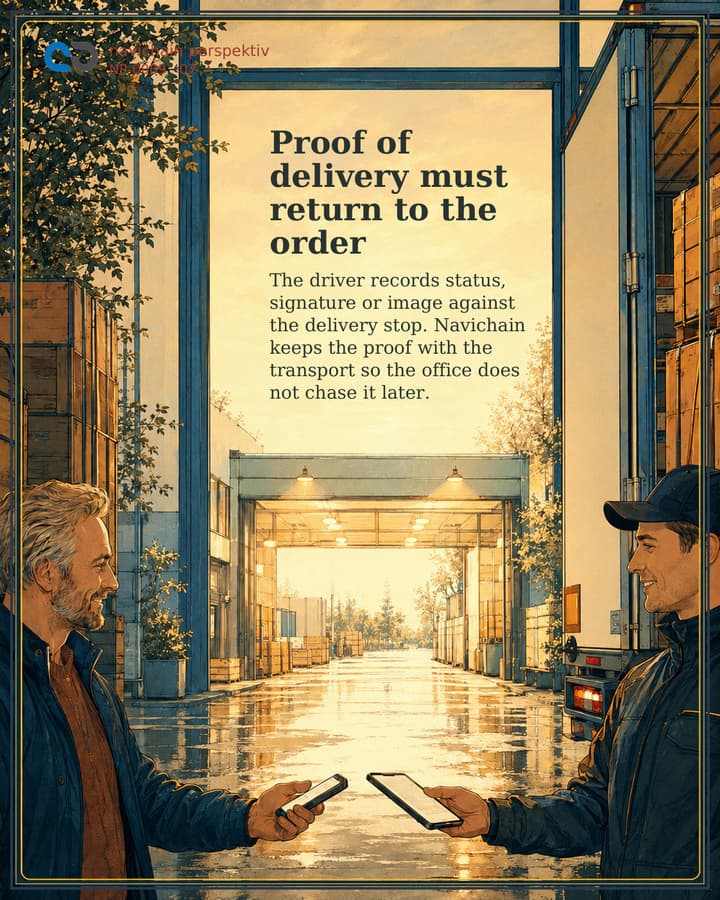
In navichain, delivery status and proof are recorded against the transport. That does not mean a signature automatically creates or sends an invoice. Invoicing is a separate business step governed by the company’s process, prices, checks and any configured integrations. The connected record does, however, help administration determine sooner whether the transport evidence is complete and what needs attention before invoice preparation.
That distinction matters. Good automation should not hide a commercial decision. It should reduce the search for facts so that the right person can make that decision with a clear record.
Give the customer an answer, not a telephone chain
When a customer asks about a delivery, they rarely care which internal system was used. They want to know whether the freight arrived, who received it and what happened if something went wrong.
When status, exception and POD belong to the same order, dispatch can answer from a connected picture. If a customer portal or integration is part of the configured solution, agreed information can also be made available through that customer flow. What is shared and when it is shared are defined by the customer relationship and the operating process.
This reduces duplicated effort on both sides. The customer does not have to call repeatedly, and the haulier does not have to search several channels for the same answer. If a claim arises, the parties also have a stronger starting point: they can discuss the documented event rather than competing recollections.
A realistic example: the damaged pallet
A haulier performs daily distribution for a wholesaler. The order arrives with the customer’s reference and is planned onto a run. Loading appears correct. At the consignee, damage is found on one of three pallets.
The driver opens the delivery stop, records the damage, takes photographs and notes that the consignee accepts two pallets but refuses the third. The consignee confirms the delivery according to the workflow agreed by the haulier and customer. navichain keeps the registration with the order and stop.
The dispatcher sees the exception, calls the customer and decides that the damaged pallet should return to the terminal. Administration can later see which units were delivered, why one was returned and what material is available. When the invoice evidence is prepared, nobody needs to start by asking the driver which photograph belongs to which order.
The example is not a promise of a particular outcome. It shows how roles can work around one event chain: the driver documents, dispatch decides and administration uses the connected record.
Start with a small pilot that can be assessed
The best starting point is not to digitise every document and customer flow at once. Choose a representative workflow in which evidence often arrives late or exceptions generate repeated calls.
Use two to five real transports and agree:
- which order reference must survive the entire journey;
- which statuses and exception reasons the driver should use;
- which images, signatures or comments are required;
- who decides the next action;
- when administration considers the evidence complete.
Then follow observable measures: manual corrections, time spent searching for documents, customer enquiries and time from delivery to invoice-ready evidence. The result shows both what navichain can simplify and which working practices need clarification.
A completed transport should leave an understandable story
The evidence chain is ultimately about trust. The driver should be able to document a stop without creating a separate administrative project. Dispatch should understand the exception while it can still be influenced. The customer should receive a clear answer. Administration should see what evidence exists without reconstructing the day.
navichain does not merely collect more files. It helps connect the planned assignment with the work that was actually performed. When order, handover, exception and POD follow the same trail, the delivery remains useful after the truck has moved on.
Create an account and test one of your own proof workflows in navichain.
Related perspectives
- NP-0006 — When delivery departs from the plan:** responsibility, documentation and the next action when reality changes.
- NP-0008 — Customer systems move the load. Who runs your business?:** how a haulier retains its own operational view across several customer systems.
- NP-0007 — The truck should not live in another system:** keeping transport, vehicle and operational decisions in one context.
Sources
- Underlaget du bygger innan något har skadats. navichain Insights. Describes navichain support for digital signing and photographic documentation in e-CMR work. Accessed 9 September 2026. Read the article.
2. Executive Guide on e-CMR. United Nations Economic Commission for Europe, 24 October 2023. Background on electronic consignment notes and information exchange in road transport. Read the guide.
3. Additional Protocol to the CMR concerning the Electronic Consignment Note. UNECE. Primary legal source for the electronic CMR consignment note. Read the protocol.
4. Regulation (EU) 2020/1056 on electronic freight transport information. Official Journal of the European Union, consolidated version of 9 January 2025. Read the Regulation on EUR-Lex.
5. EPCIS and Core Business Vocabulary. GS1. Standard for capturing and sharing event data about what, where, when and why in supply chains. Accessed 9 September 2026. Read about EPCIS.