Cross-docking or storage? Two warehouse jobs that pretend to be one
By navichain team
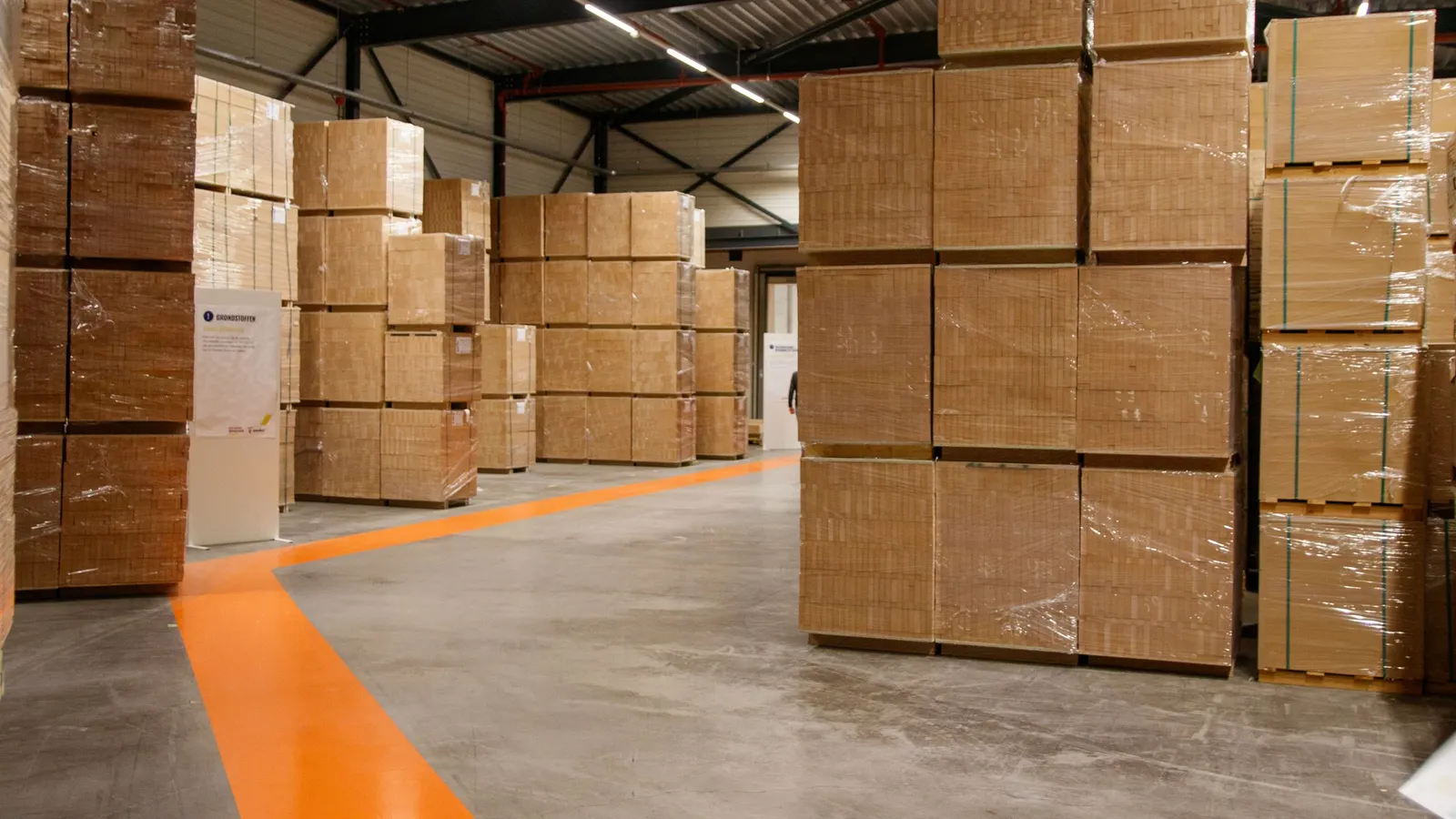
Walk most carrier terminals at four in the afternoon and you will find two businesses sharing a floor. Near the doors, pallets that came in this morning and leave tonight, staged in the order the outbound trucks will want them. Further back, against the wall, pallets that have been there long enough that somebody has started calling that corner “the customer’s area”. Nobody planned the second business. It grew out of the first, one favour at a time.
Both are legitimate work, and plenty of operators do both profitably. The expensive part is not doing both — it is not knowing, per consignment, which one you are doing. Cross-docking and storage are measured in different units, paid for in different ways, and made efficient by opposite habits. A floor that treats them as one job gets the wrong habit half the time.
Two jobs, two units of measurement
Cross-docking is a flow problem. The thing you are minimising is dwell: the hours between the goods arriving and the goods leaving, plus the number of times a forklift touches them in between. A good cross-dock consignment is touched twice — off the inbound vehicle, onto the outbound one — and the floor it briefly occupies is a lane, not a home. Value is created by consolidation and timing: you are buying a cheaper line-haul by filling a trailer, and the whole gain evaporates if the goods miss the departure.
Storage is a custody problem. The thing you are managing is certainty over time: what you hold, whose it is, where exactly it sits, in what condition, and for how many days. Touches barely matter — putting something away properly is worth the extra move, because the next person to want it may be a temp on their second day, six weeks from now. Value is created by accuracy and by the day count, because the day count is the invoice.
Put those side by side and every operational instinct inverts. Cross-docking rewards speed and staging discipline and punishes tidy put-away. Storage rewards addresses, counts and paperwork, and punishes “just leave it there for now”. Neither instinct is wrong. Applied to the wrong pallet, both are.
What it costs to mix them without deciding
The mixing failure runs in both directions, and each direction has a signature you can look for on your own floor.
Storage habits on a cross-dock pallet. The goods come in without a stated outbound, so the floor does what a good warehouse does: assigns a location, puts it away, records it. Three hours later the outbound is confirmed and everything is undone — a retrieval, a second staging, occasionally a missed departure because the pallet is now behind three others in a rack instead of sitting in a lane by the door. The cost is touches, and touches are the one thing cross-docking exists to avoid.
Cross-dock habits on a stored pallet. This is the more expensive direction, because it fails silently. A consignment is left in the staging lane “because it goes out Thursday”, Thursday moves, and now goods are in your custody with none of the things custody requires: no goods receipt note, no location, no owner recorded anywhere, no day count started. When the customer asks what you are holding, the honest answer is a walk round the floor. When the month closes, the storage is not on the invoice, because nothing ever started a clock. You have taken on the liability of a warehouse and none of the revenue.
The second failure is also where damage disputes go badly. A pallet with a receipt note describing its condition on arrival is a defensible position. A pallet that has been in the corner for eleven days with no record of when it arrived or what it looked like is a negotiation you will lose.
The decision belongs at intake
The fix is not a bigger building or a rule that the two never touch. It is that every consignment gets classified when it arrives — flow-through or custody — and that the classification is a fact in the system, not an opinion in somebody’s head.
That sounds bureaucratic and takes about four seconds. Booked freight already tells you: if the goods have an outbound booking on the day they land, they are cross-dock. If they do not, they are storage, and they should be receipted as storage that same shift, even if everyone believes they will leave on Thursday. Believing they will leave on Thursday is exactly the state that produces eleven-day unrecorded custody.
Three things are worth writing down once, for your own floor:
Where the staging area ends. A physical boundary, marked. Goods inside it are in flow and expected to leave today; goods outside it are held, with everything that implies. The line on the floor is what makes the question answerable by looking.
When the day count starts. Usually the day the goods are receipted into custody, counting a started day as a full one — but whatever you choose, choose it before you need to defend it to a customer, and make sure the system stamps it rather than an operator remembering it.
What happens when a cross-dock consignment misses its outbound. This is the case that creates the mess, so it deserves an actual rule: after the missed departure the consignment is reclassified as storage, receipted properly, and put away. It converts, visibly, instead of quietly becoming a different kind of goods while still wearing the label of the first kind.
An honest limit
If flow-through is your actual business — a scheduled cross-dock hub, inbound and outbound in fixed waves, hundreds of doors — you are running a different operation than this article describes, and it wants dedicated design: door scheduling, wave planning, a building shaped around the flow. Equally, if you are a pure storage operator with no fleet, the timing pressures here are not yours. The advice above is for the shape most road carriers actually have: mostly transport, a terminal that also holds goods, and a floor where the two jobs meet daily.
The point is small and worth repeating anyway. The two jobs are not hard to run together. They are only hard to run together undeclared — when the same pallet is treated as flow by the driver, as storage by the customer, and as neither by the invoice.
That is the seam navichain closes: customer goods taken into custody with a sealed, barcoded goods receipt note and a day count that starts itself, released against the booking that collects them, on the same data model as the transport that brought them in — so a consignment is one identity from dock to proof of delivery. The platform page shows how the warehouse and transport halves connect, and what breaks when they are separate makes the longer case for keeping them in one place.