Warehouse locations that make sense to a picker at 06:00
By navichain team
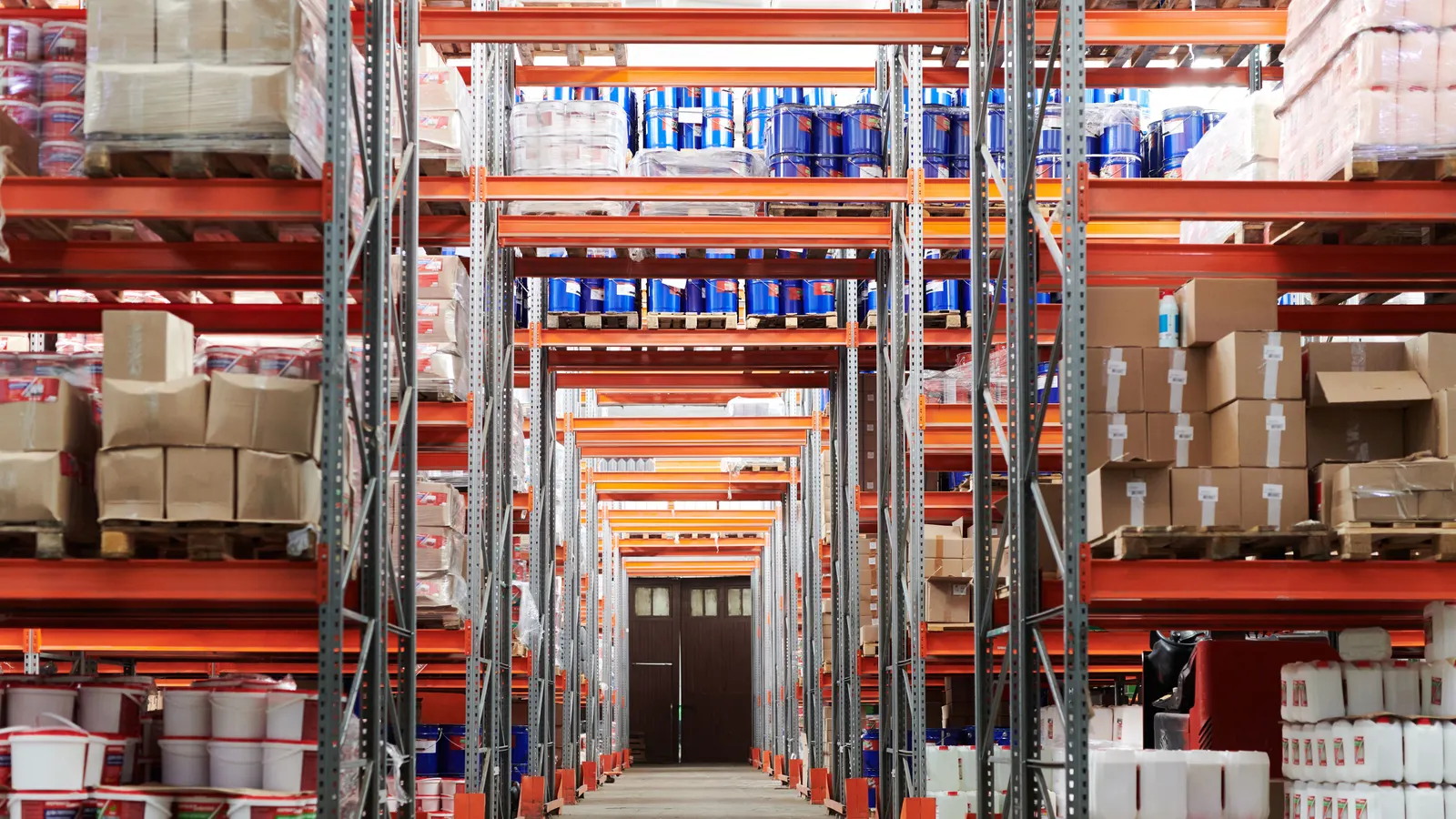
Ask a picker where something is and you rarely get a location code. You get “in the cold room, left side, past the red rack” or “where the big boxes used to be”. The system says B-07-03-2. Both are describing the same shelf, and the gap between them is where new staff lose half their first week, and where experienced staff put things back in the wrong place without noticing.
A location scheme has two readers. The system needs every location to be unique, scannable and sortable. People need to find it, quickly, early in the morning, without thinking. A good scheme serves both. A scheme designed only for the system gets worked around by the people, and a scheme that lives only in people’s heads cannot be scanned, sorted or handed to a temp.
What the system needs
The system’s requirements are strict but simple.
- Unique. One code, one place. Two shelves called “A1” in two buildings is a mis-pick waiting to happen.
- Structured. A code made of parts, usually zone, aisle, bay, level and sometimes position, so that “everything in aisle 7” is a filter, not a search.
- Fixed width. B-07-03-2, not B-7-3-2. With leading zeros, codes sort in the order they stand on the floor, and B-10 does not appear between B-1 and B-2 on a pick list.
- Scannable. Every location carries a barcode, so the system records where goods went instead of where someone remembered putting them. We covered barcodes in warehouse barcodes basics.
What people need
People navigate by landmarks, by habit and by walking order. A scheme that respects that is learned in a day; one that fights it is never really learned.
- Zones named the way people already talk. If everyone calls it the cold room, the zone code should obviously be the cold room, not Z4. A letter that stands for something is remembered; an arbitrary one is looked up.
- Numbers that follow the walk. Aisles numbered in the order you reach them from the dock, bays numbered in the direction people walk. If the pick list is sorted by location and the locations follow the walk, the route plans itself.
- Levels counted from the floor. Level 1 at the bottom, always. Nobody should have to know how many levels a rack has to find level 2.
- Sides that make sense. Odd numbers on one side of the aisle, even on the other, is a long-standing convention because it works: you know which way to look before you arrive.
- No look-alike characters. Avoid letters that read like digits: O and 0, I and 1, S and 5. At 06:00, under a warehouse light, they will be confused.
- Labels readable from where you stand. A label on level 5 has to be read from the floor or from a forklift seat. Size and placement matter more than design.
Locations that are not shelves
The places that most often lose stock are the ones nobody gave an address.
- Floor and block-stack areas. If pallets stand on the floor, the floor needs numbered spots, the same as a rack.
- The yard. A trailer used as overflow storage is a location. If it has no number, its contents are “outside somewhere”.
- Receiving and staging. Goods waiting to be put away, or picked and waiting for collection, are still stock. Give those areas location codes and goods in them stay findable.
- Quarantine, returns and damage. The corner where things wait for a decision is exactly where stock goes missing. It needs a location, and everything in it needs to be booked there.
A simple test: walk the building and point at every place goods can stand. If any of them has no code, that is where the next “we cannot find it” will come from.
Renaming a whole warehouse is a project
Sooner or later a scheme stops working: a new rack, a merged building, a legacy of three different naming habits. Renaming is worth doing. It is also easy to underestimate, because every label, every stock record and every person’s memory changes at once.
What tends to go well:
- Design the scheme on paper first, walk it with the people who pick, and change it before a single label is printed.
- One zone at a time, in a quiet period, not in the run-up to a peak.
- Map old to new in the system before you relabel, so stock moves with the name change rather than being re-entered.
- Old and new on the same label for a while. A few weeks of both reduces the first-week errors to almost nothing.
- Count the zone right after relabelling. It confirms the stock moved with the names, and it gives you a clean starting point.
Done like that, renaming takes a few weekends and the warehouse runs normally in between. Done in one go, it takes a few weeks of searching.
In navichain, the warehouse is drawn as a floor plan, with sections, racks, zones and yards with numbered spots, so every pallet has an address and not a guess. Every pallet is a handling unit that knows where it stands and what is on it, scanning any code (pallet, location, SSCC or GTIN) opens the right record, and one label format covers every pallet, location and order. The warehouse page shows the rest, and pricing shows what it costs.