Europe is short of drivers. Can you afford to leave yours waiting?
By navichain team


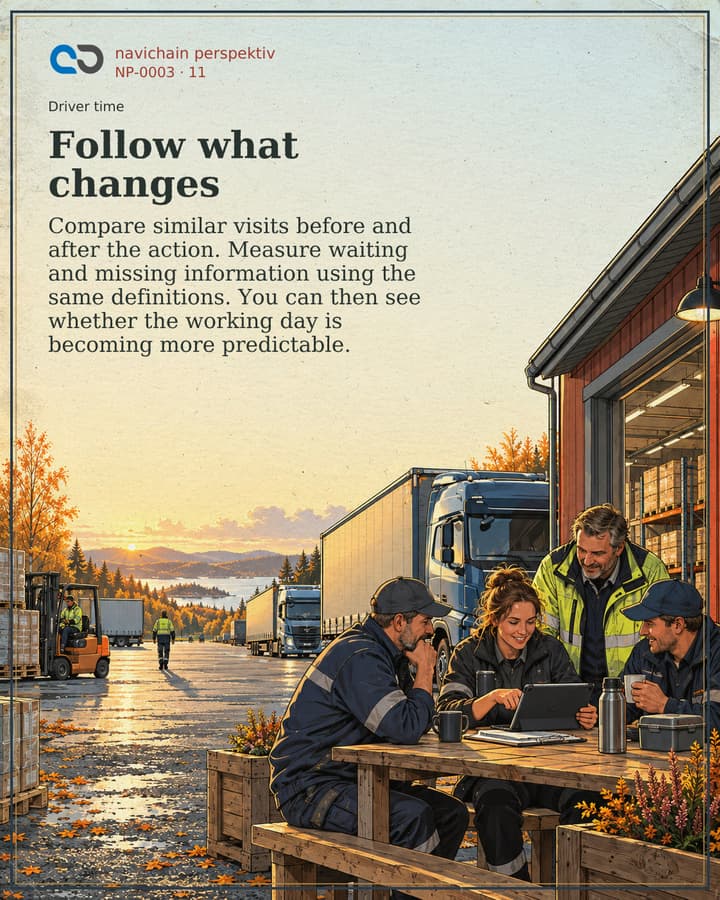
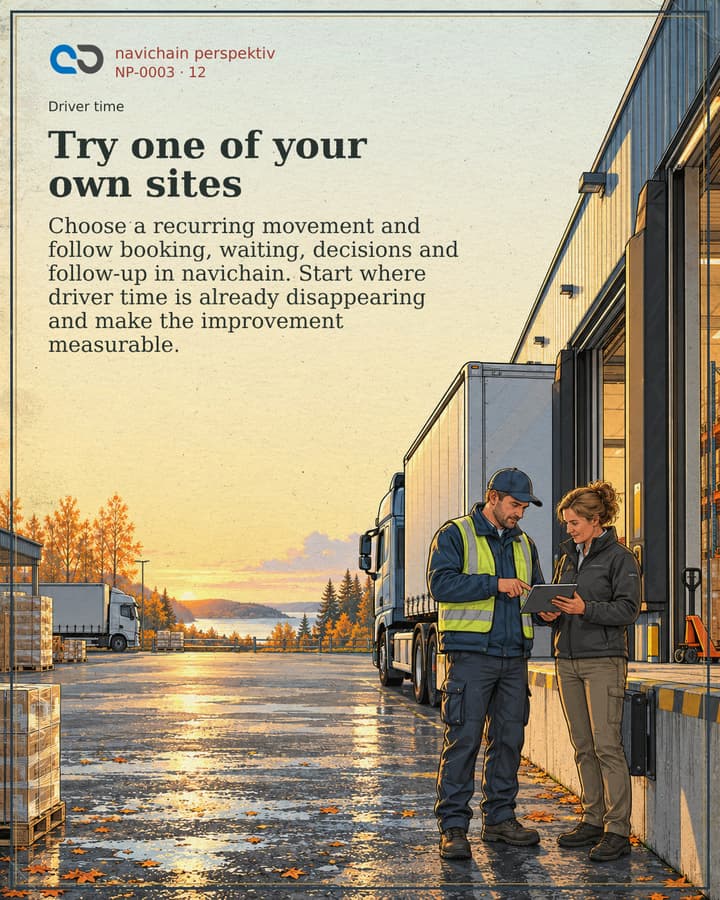
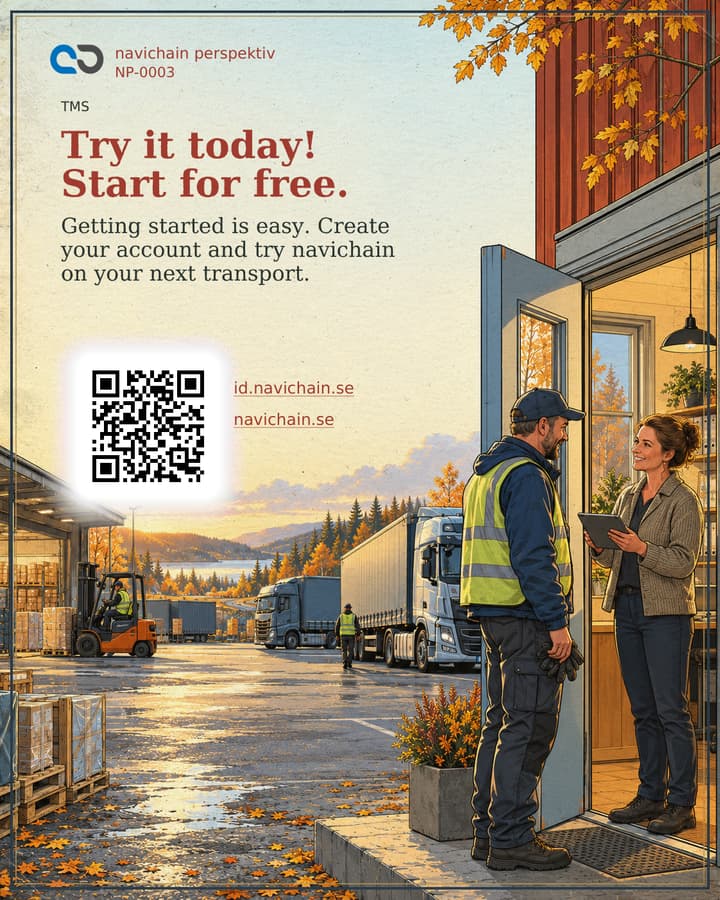
A stationary truck affects the rest of the day. Follow how navichain helps you document waiting, act on its cause and improve the next movement.
navichain perspektiv · NP-0003
Summary
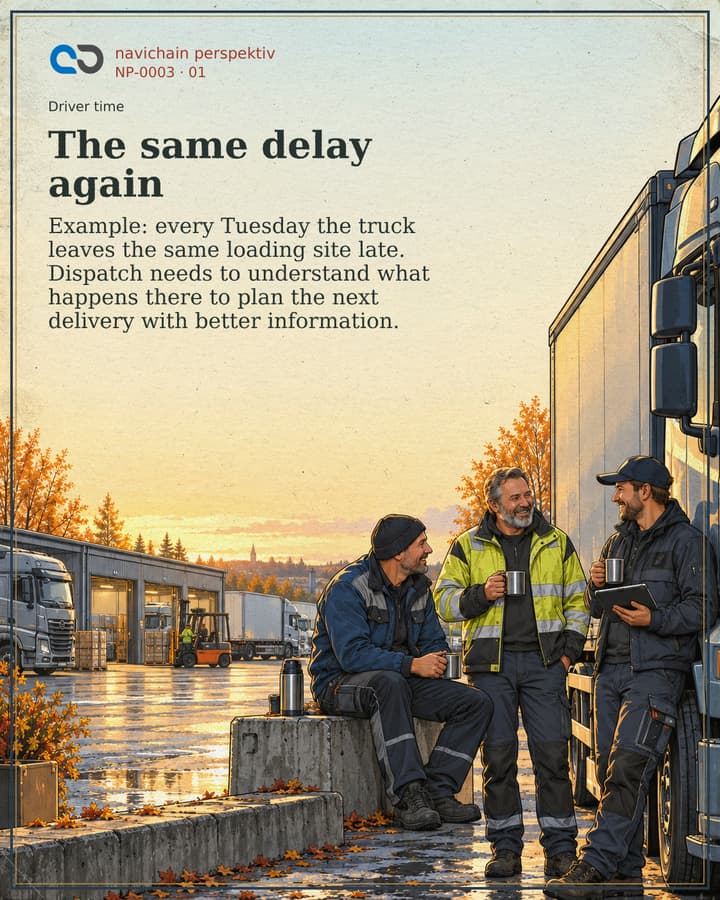
When the same truck leaves the same loading site late every week, you need more than a message saying the driver is waiting. You need to know when the delay started, what held up the work and how the next job is affected. Navichain’s bookings, transport planning, documents and tasks help you organise a shared workflow: the driver reports the event, dispatch acts and administration can retrieve the evidence later.1 Start with one site and a recurring movement. Separate waiting from handling, assign responsibility for exceptions and agree improvements with the customer. The aim is a more predictable working day and better use of existing capacity. Measure the change in comparable movements of your own, rather than assuming a saving.
Turn waiting time into useful information
IRU estimates 502,000 unfilled truck driver positions in Europe for 2025.3
Start before the truck leaves
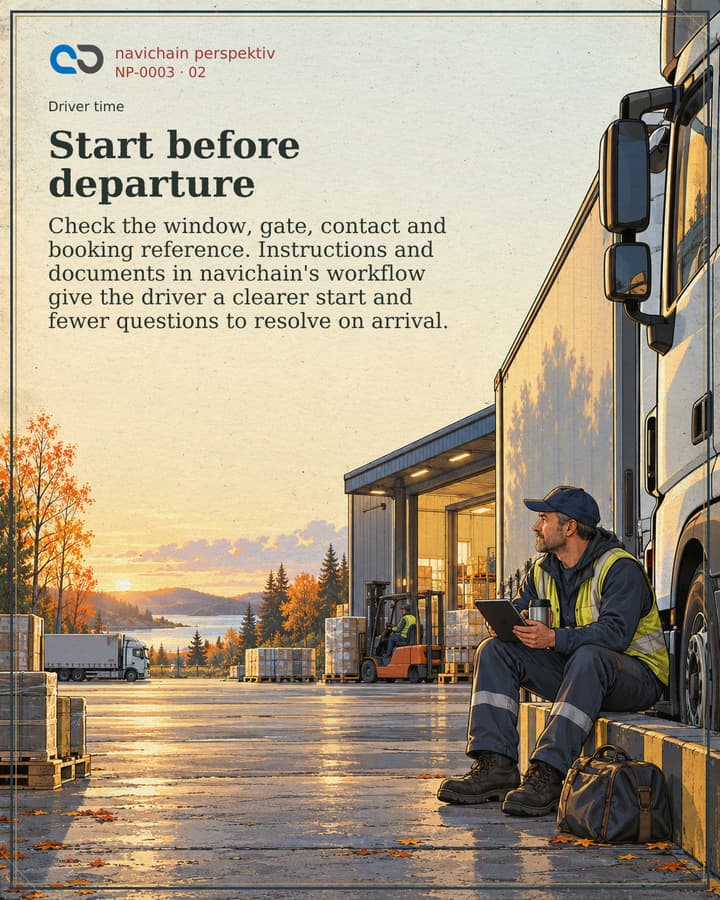
A driver can reach the correct address yet lack the gate, booking reference or receiving contact needed to proceed. Put relevant instructions into the booking and agree how the driver receives them. Navichain provides bookings, runs and documents in the same working environment.1 Dispatch checks the delivery window and contact details before departure. Driver and office then share a clear starting point when reality differs from the plan.
Describe what actually happened
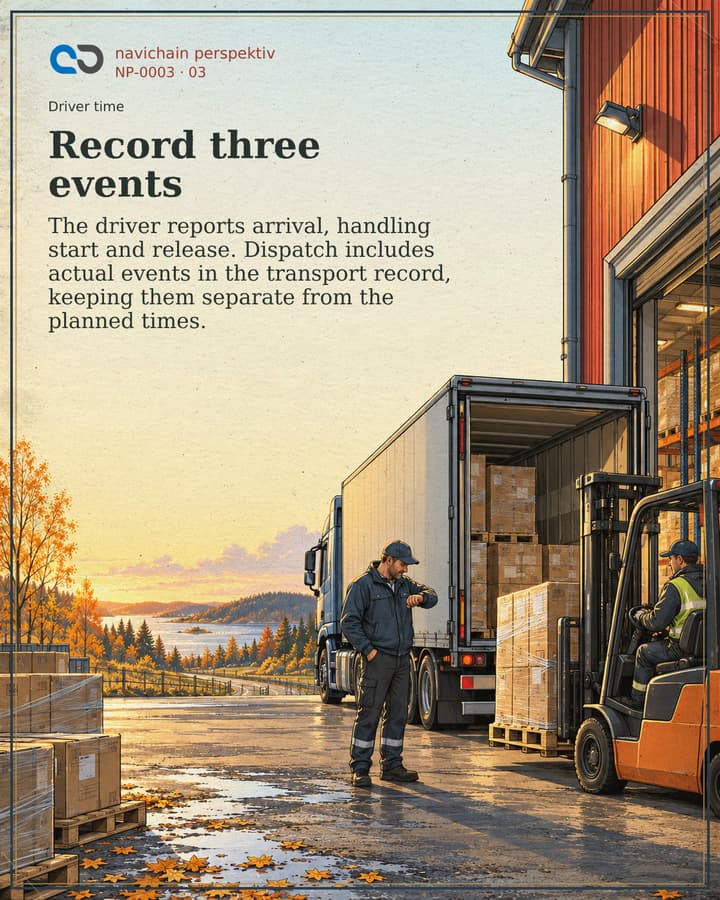
Agree which events to record: arrival, start of handling and release to leave. The driver reports actual events through your agreed routine; dispatch includes them in the transport record. Scheduled arrival is a comparison, not a substitute for actual arrival. Use the same definitions on each visit, otherwise identical timestamps can describe different events. Add the site, vehicle, job reference and a specific reason so that the duration has meaning.
Example: 75 minutes on site
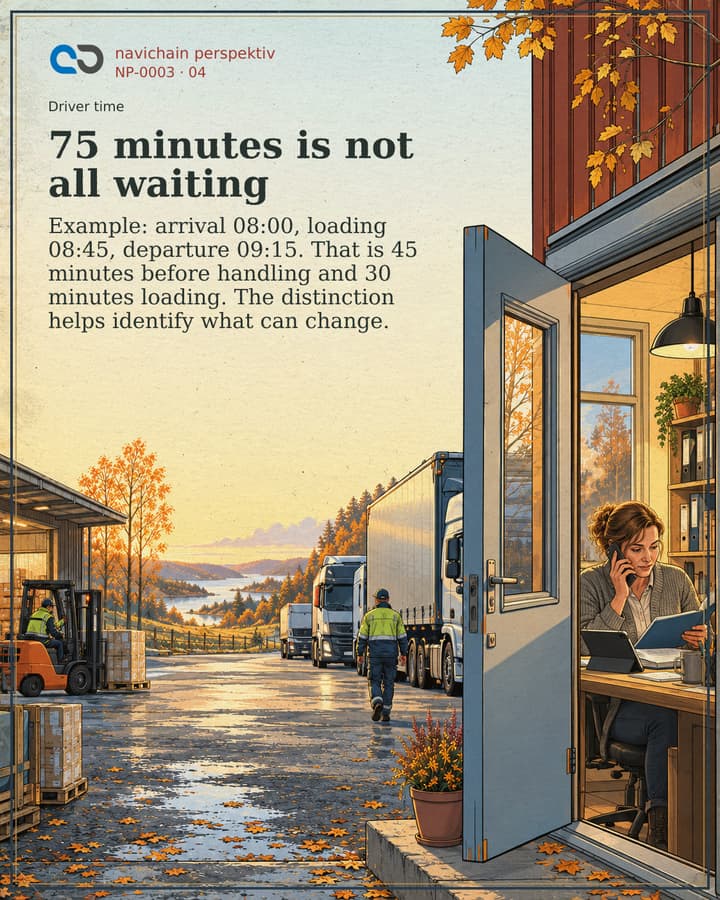
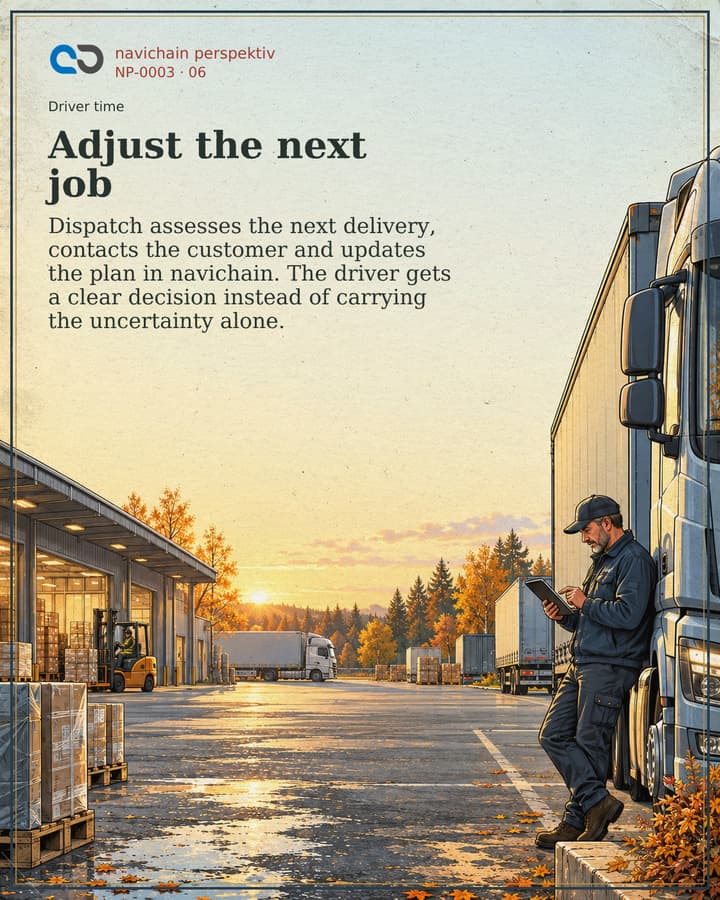
A truck has an 08:00 loading appointment and arrives on time. Loading starts at 08:45 and the truck is released at 09:15. In this illustrative example, 75 minutes on site comprise 45 minutes before handling and 30 minutes of loading. The driver reports that the goods were not ready on arrival. Dispatch discusses the next delivery with the customer and updates the day’s plan in navichain. Changing an old scheduled time does not make the truck punctual; the next decision needs to reflect reality.
Give the next person usable information
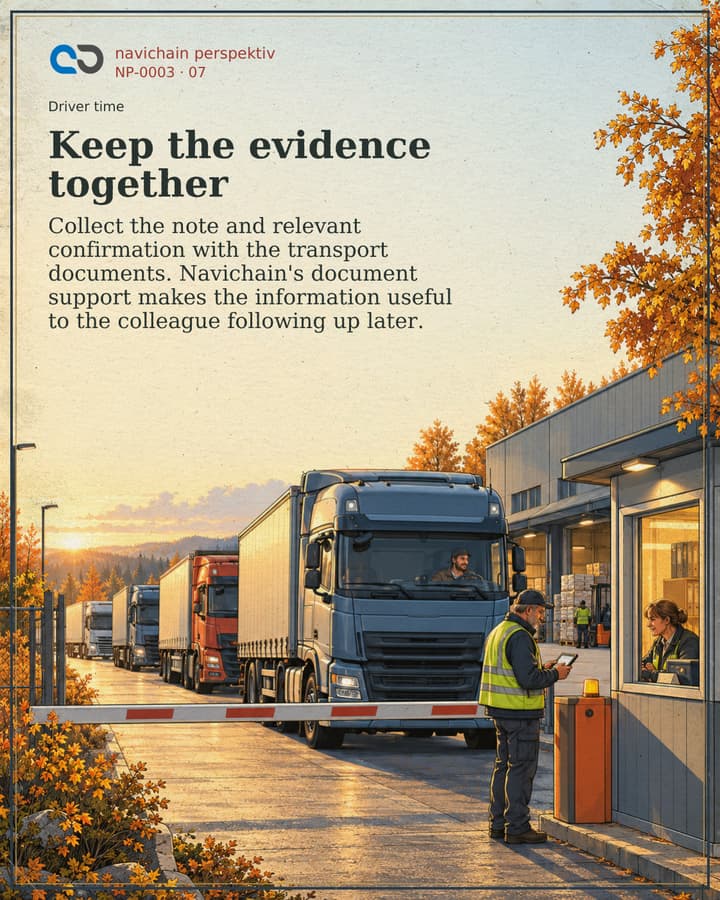
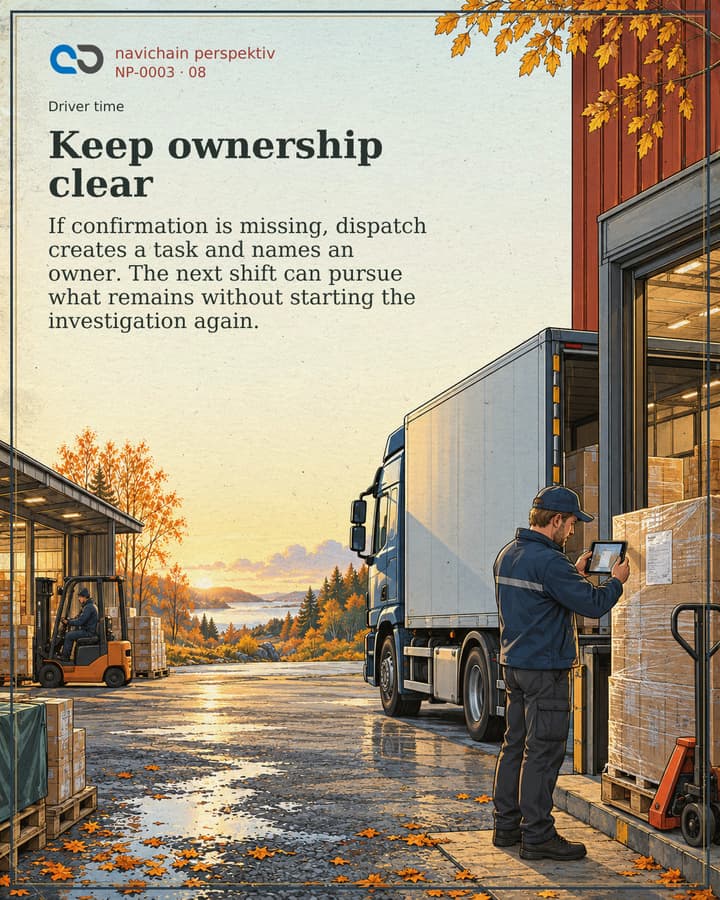
Navichain’s document and task functions help organise follow-up and missing information.1 If the sender’s confirmation is missing, dispatch creates a task, names an owner and states what needs completing. The colleague taking over has a concrete question to pursue. The driver does not need to retell the whole incident to administration several days later. A short factual note with the correct reference is more useful than a lengthy message disconnected from its transport.
Separate measurement from classification
Waiting that keeps a driver at the employer’s disposal can be working time.4 Record the circumstances correctly and use the applicable working-time and tachograph procedures. The commercial question is separate: which waiting does the customer agreement cover, what allowance is included and what evidence is required? The same documented event can support several decisions without every minute having the same meaning in every context.
Give invoice review the right minutes
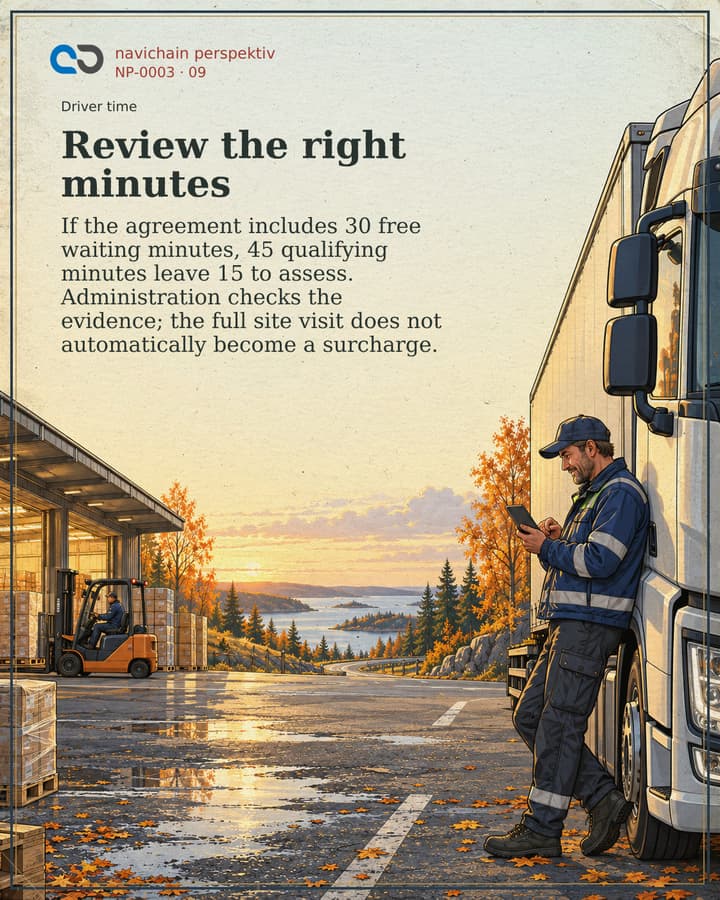
Suppose the example’s agreement includes 30 free waiting minutes and the 45 minutes satisfy its conditions. That leaves 15 minutes to assess for charging, not the entire 75-minute visit. Administration checks the agreement, reason and confirmation before approving an addition. Navichain’s booking and document records provide a shared starting point for that review.1 The customer receives an explanation they can follow, without the office reconstructing a telephone conversation from memory.
Improve next Tuesday
When the same site appears repeatedly, discuss a specific change: goods ready earlier, better references or another loading window. Assign someone to lead the conversation and a date to follow up. Compare similar visits using the same event definitions. Count both waiting and missing information. A shorter queue matters, but an earlier answer can also help dispatch protect the next job and give the driver a more manageable day.
Start small, follow the whole chain
Choose a loading site, a recurring movement and a responsible dispatcher. Agree timestamps and reasons with drivers, and evidence requirements with administration. Walk through a normal visit and a missing-information case before expanding the routine. Bring these examples to a navichain demonstration.2 The useful test is whether the information helps the next person act, and whether you can show what improved after an agreed change.
Related perspectives
Shared planning, driver time and route choice affect the same transport chain.
- NP-0001 — Your customer’s system runs their flow - but who runs yours?
- NP-0002 — Cabotage: the three-operation rule is only the beginning
- NP-0036 - The shortest route is not always driveable
Try it yourself
Try it today! Start for free.
Getting started is easy. Create your account and try navichain on your next transport.
id.navichain.se · navichain.se 5
References
- navichain documentation · 2026-08-29
- navichain · TMS / WMS · 2026-09-08 · Accessed: 2026-09-08
- IRU: driver shortages in Europe · 2026-06-30 · Accessed: 2026-09-08
- Your Europe: road transport workers · 2026-07-12 · Accessed: 2026-09-08
- navichain: plans · 2026-09-08 · Accessed: 2026-09-08