Cabotage in plain language: what the rules actually permit
By navichain team
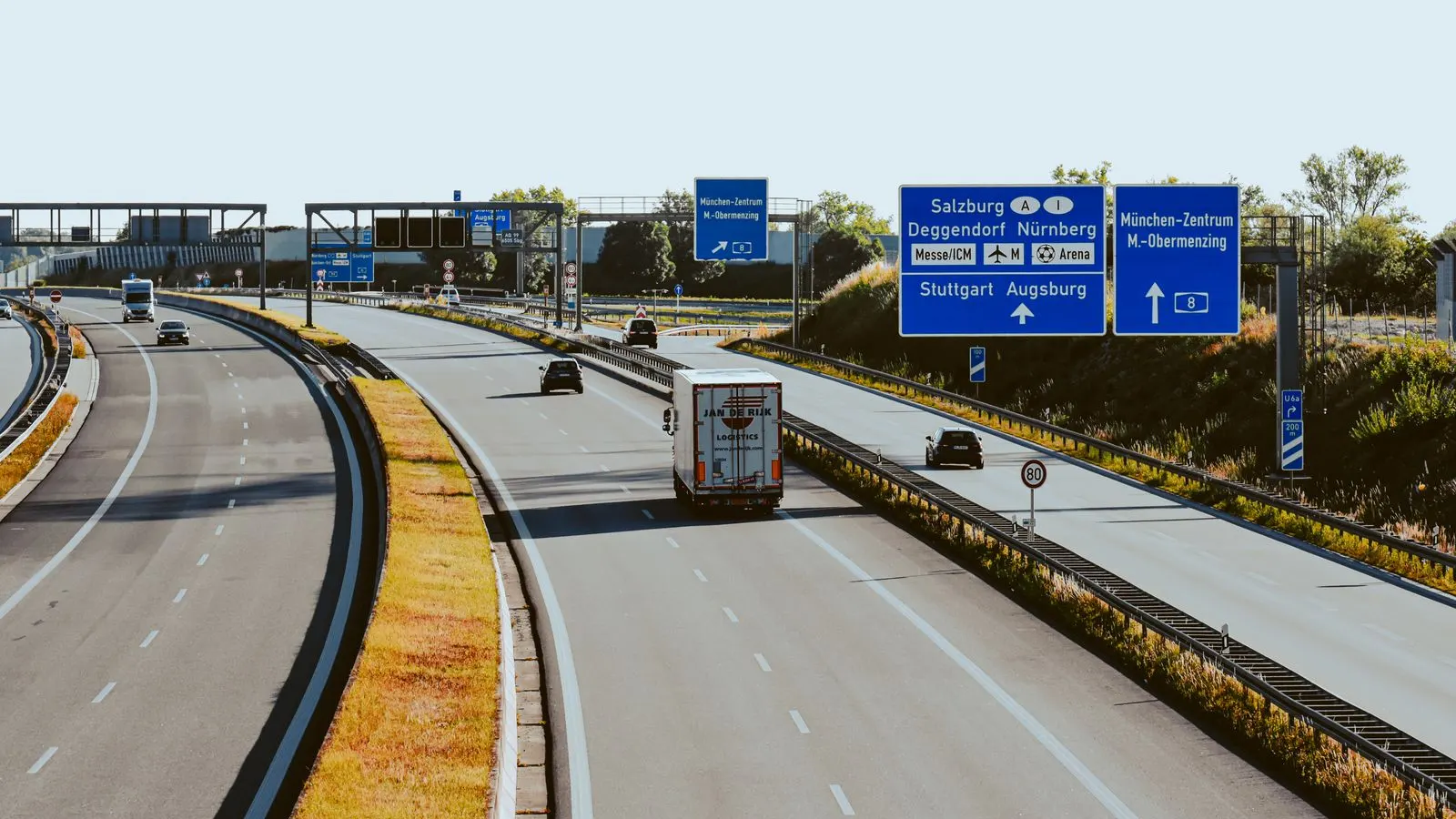
A truck on Swedish plates tips its last pallet in Hamburg on Monday morning. By Monday afternoon the dispatcher has three German domestic loads on offer and one question: how many of them can we legally take, and by when does the vehicle have to be out?
The answer sits in a single article of a single regulation, it is about two hundred words long, and almost nobody in the office has read it. What circulates instead is a folk version — “three in seven days” — which is correct as far as it goes and leaves out the part that now catches people.
This is a description of what the rules say, not legal advice. Everything below is quoted from the consolidated text in force as of 28 August 2026: Regulation (EC) No 1072/2009 in the consolidated version of 21 February 2022, the version that incorporates the Mobility Package amendments made by Regulation (EU) 2020/1055.
The entitlement, and where the clock starts
Article 8(2) is the whole of the famous rule:
Once the goods carried in the course of an incoming international carriage have been delivered, hauliers referred to in paragraph 1 shall be permitted to carry out, with the same vehicle […] up to three cabotage operations following the international carriage from another Member State or from a third country to the host Member State. The last unloading in the course of a cabotage operation before leaving the host Member State shall take place within 7 days from the last unloading in the host Member State in the course of the incoming international carriage.
Three things in that sentence are routinely remembered wrongly.
The entitlement is earned by an inbound loaded carriage. Cabotage rights are not something a Community licence carries around; they are created by having brought goods into the country and delivered them. Arrive empty and there is nothing to count from.
The clock starts at the inbound unloading, not at the first domestic job. Waiting two days for a decent load spends two of the seven. The window is a property of the trip, not of the work.
It follows the vehicle. The text says the same vehicle — in a coupled combination, the same motor vehicle. Swapping trailers does not reset anything, and neither does swapping drivers.
The four days that are newer than the folk version
Article 8(2a), inserted by Regulation (EU) 2020/1055 and applicable from 21 February 2022, is the part the shorthand omits:
Hauliers are not allowed to carry out cabotage operations, with the same vehicle […] in the same Member State within four days following the end of its cabotage operation in that Member State.
A cooling-off period, attached again to a vehicle and to one country. The vehicle is not grounded for four days; it is barred from that market for four days. It can run an international leg, and it can perform cabotage in a different Member State, provided it has earned the entitlement there in the ordinary way, with its own inbound carriage.
For planning, this is the rule that changes the shape of a trip. Three domestic loads squeezed into the end of a week are three loads and then a four-day problem — unless the movement back out of the country was decided at the same time as the movement in.
What has to be producible at the roadside
Article 8(3) sets the evidential test: the operations are deemed compliant only if the haulier can produce “clear evidence of the preceding international carriage and of each consecutive cabotage operation carried out”. The evidence has to show, per operation:
- the name, address and signature of the sender;
- the name, address and signature of the haulier;
- the name and address of the consignee, with signature and date of delivery;
- the place and date of taking over the goods, and the place designated for delivery;
- the description of the goods and the method of packing, dangerous goods particulars, number of packages and marks;
- the gross mass or quantity of the goods;
- the number plates of the motor vehicle and the trailer.
That is consignment-note data, item for item. A carrier who issues proper CMR notes already captures every line of it, which is worth saying plainly: the failure at the roadside is almost never capture, it is retrieval. The paperwork for the inbound German leg is in a folder in the office, or in a plastic wallet three trips old.
Two provisions work in the operator’s favour and are worth knowing by heart. Article 8(4) says that “no additional document shall be required in order to prove that the conditions laid down in this Article have been met” — the inspecting officer is entitled to the evidence listed above, and not to a bespoke national form. And Article 8(4a) requires that the evidence be presented “on request and within the duration of the roadside check”, adding that it:
may be presented or transmitted electronically, using a revisable structured format which can be used directly for storage and processing by computers, such as an electronic consignment note (e-CMR).
The same paragraph provides that the driver must be allowed to contact the head office, the transport manager or another person to supply evidence before the end of the check. Between those two sentences the regulation has already answered the question a lot of carriers are still solving with a folder: the record can live in a system, and it can be produced from the cab. That is a practical argument for electronic consignment notes that stands on its own, independent of the 2027 eFTI deadline.
The change that landed on 1 July 2026
If you run vans, one thing genuinely moved this summer. Regulation (EU) 2020/1054 extended the scope of the driving-time rules — Regulation (EC) No 561/2006 — to the carriage:
from 1 July 2026, of goods in international transport operations or in cabotage operations, where the maximum permissible mass of the vehicle, including any trailer, or semi-trailer, exceeds 2,5 tonnes
Cabotage is named explicitly. And because Article 3(1) of Regulation (EU) No 165/2014 requires tachographs in vehicles “to which Regulation (EC) No 561/2006 applies”, the tachograph obligation follows the same boundary. A 3.5-tonne van doing domestic work in another Member State is now inside the driver-hours regime, where two years ago it sat outside — a scope change that lands hardest on operators who bought vans precisely to stay out of it.
Cabotage is a planning constraint, not a roadside one
Everything above is knowable before the vehicle is committed. The date of the inbound unloading, the country, the vehicle, the count of domestic jobs already done and the date the last one ended are facts a transport system holds anyway. A seven-day window and a four-day exclusion are arithmetic over those facts — which means a run that breaches them was already a breach on the planning board, days before anyone stopped the truck.
The honest trade-off is that this is real bookkeeping, and it is the fiddly kind. It has to be kept per vehicle rather than per company, it has to survive trailer swaps and driver changes, and it has to be reconstructable months later when a question arrives by post. A spreadsheet can do it and reliably decays. Note too that Article 9 subjects a cabotage operation to the host Member State’s own laws on matters including transport contracts, weights and dimensions, driving times and VAT; posting-of-drivers obligations sit in separate legislation and are outside this article.
navichain treats this as one of the rules the system applies where the work happens rather than on a checklist: Regulation 1072/2009 is one of 26 regulations enforced at the point of assignment, planning and inspection, and the platform page names which screen applies which. Consignment notes are issued as sealed, hashed and timestamped documents, so the evidence Article 8(3) asks for is a lookup rather than a folder. The rules will not get simpler. The retrieval can.