The truck should not live in another system
By navichain team
A transport order can look fully planned while the truck needs workshop attention. What matters is how quickly the right people get usable information and can change the plan.
Summary
When a vehicle needs workshop attention, more than the maintenance list changes. Someone must identify the affected run, choose a replacement, check its suitability and give the driver clear instructions. If the information sits in separate tools, the dispatcher becomes the person who has to connect everything. This perspective follows an illustrative haulier whose driver discovers a defect before the first collection. navichain brings bookings, vehicle information, maintenance and delivery documentation into one platform, giving the people involved a shared operational context. The value lies in clear handovers: the workshop has a documented job, the dispatcher plans against the right conditions, and the driver receives a run that reflects the decision. Start with one of your own vehicle changes and follow what each role needs to know to keep the work moving.
Yesterday’s plan meets today’s vehicle
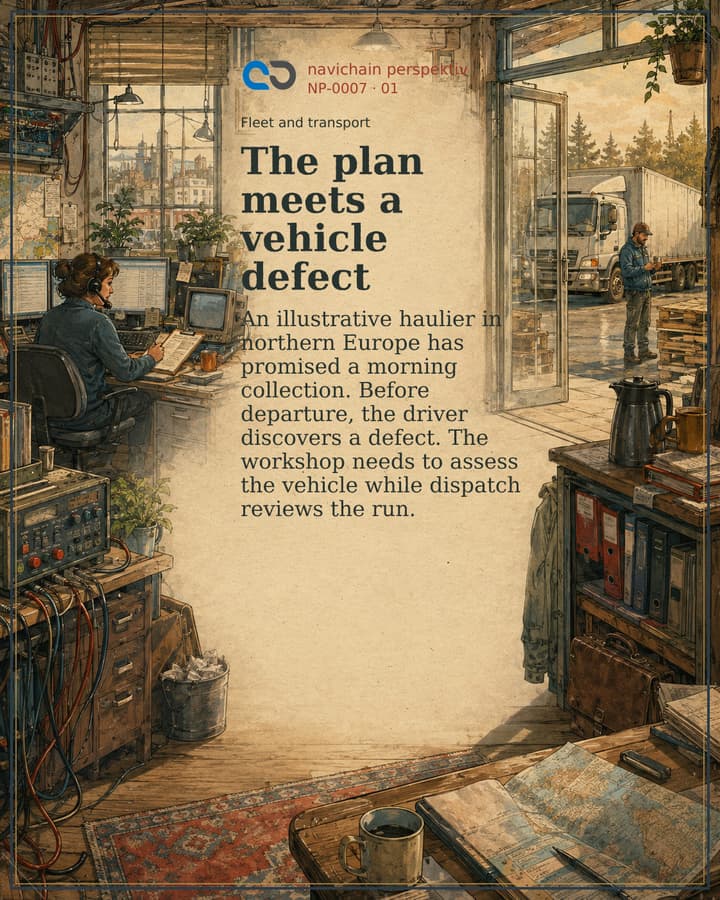
Imagine a haulier in northern Europe. A customer expects a morning collection and the booking has already been planned. During the pre-departure check, the driver discovers a defect that needs assessment. The workshop needs to understand the observation. The dispatcher needs to know what it means for the collection. The customer needs an update.
If the defect only reaches a separate spreadsheet, someone must remember to connect it to today’s plan. A verbal agreement may solve the immediate problem, but it becomes difficult to hand over when a colleague takes a break. The question is bigger than where the fleet register sits: can people follow what happened, what was decided and what remains to be done?
This is an illustrative scenario, not a measured customer case study.
Give a defect a path to action
DVSA’s roadworthiness guidance explains the relationship between driver checks, reported defects, repairs and records. It applies to England, Scotland and Wales. It also provides a practical example of why an observation needs ownership and follow-up, useful when considering how to organise an operation in another market. 2
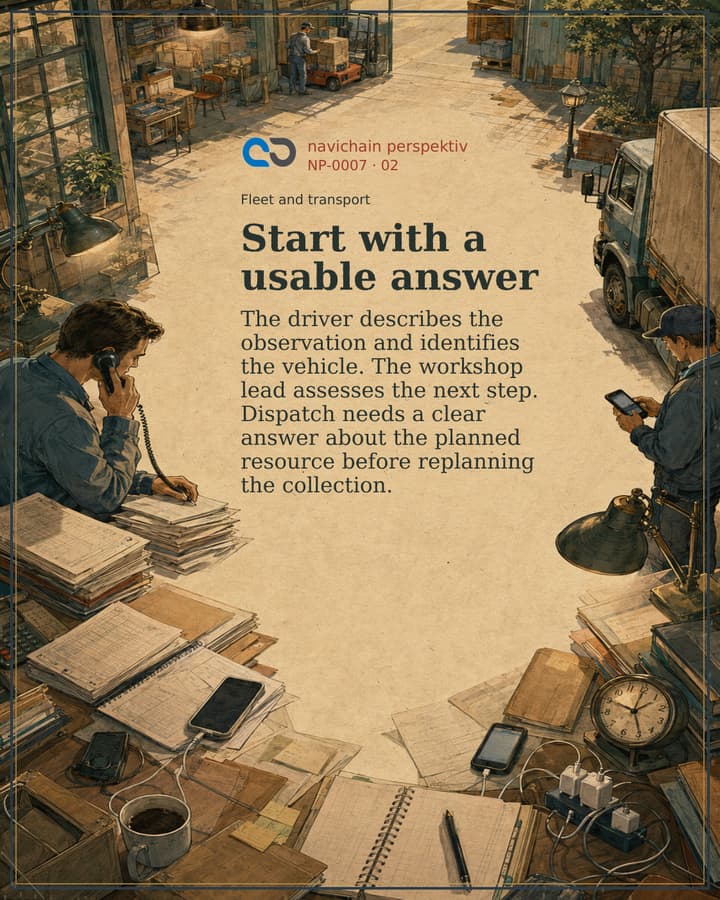
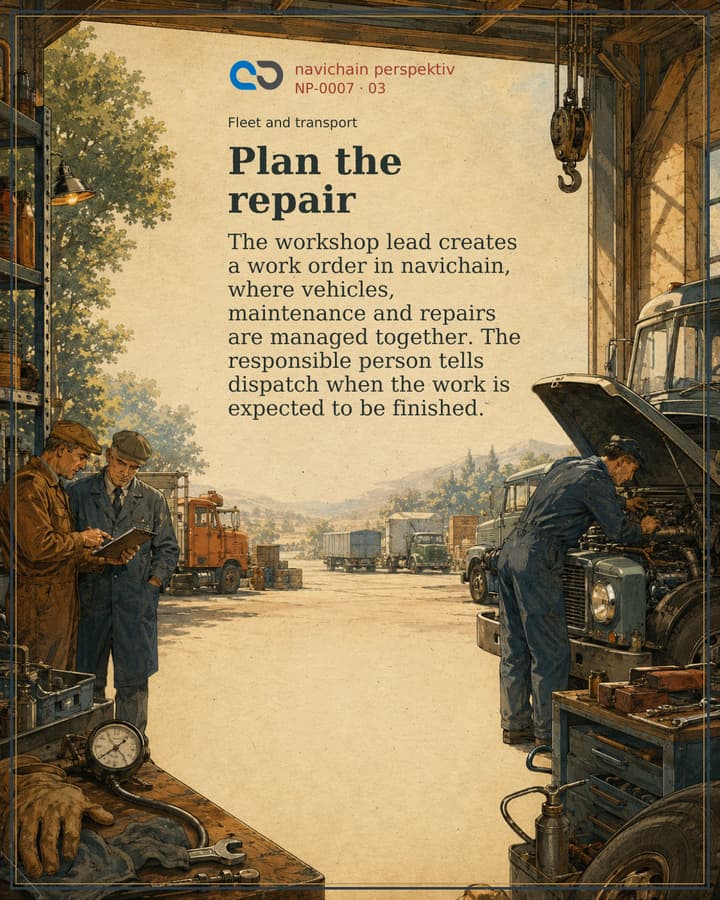
At the haulier, the driver starts by describing the defect and identifying the vehicle. The workshop lead assesses the work required and organises the response. navichain brings vehicle information and workshop functions, including work orders and maintenance, into the same platform as transport planning. 1
The handover must give the dispatcher a clear answer about the planned resource. A defect description without a next step is not enough to replan the collection. Agree who will respond, what the response must contain and how it will be recorded.
Start the vehicle change with the job
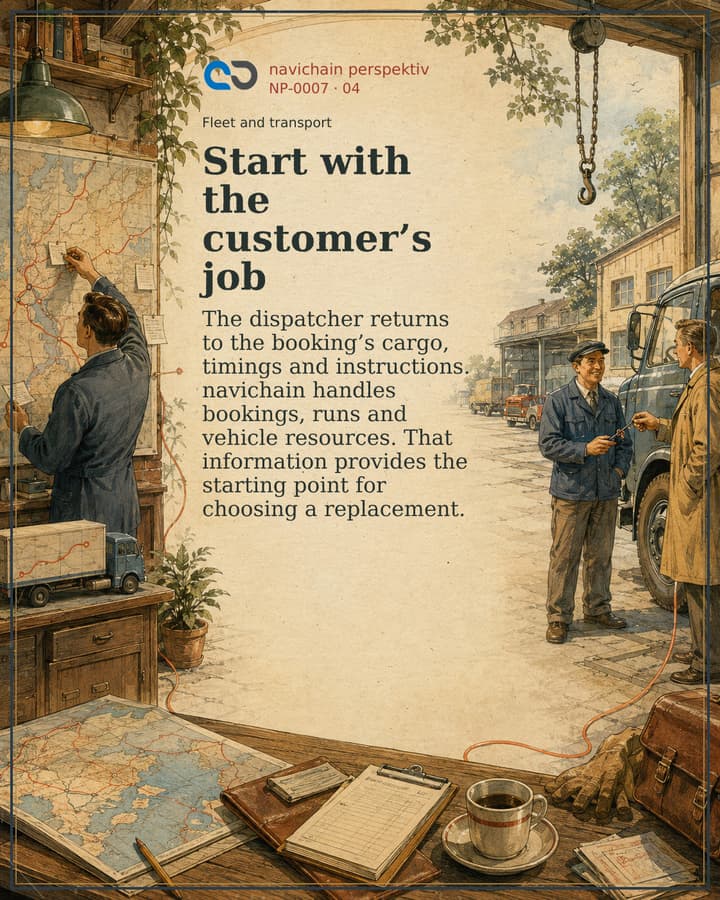
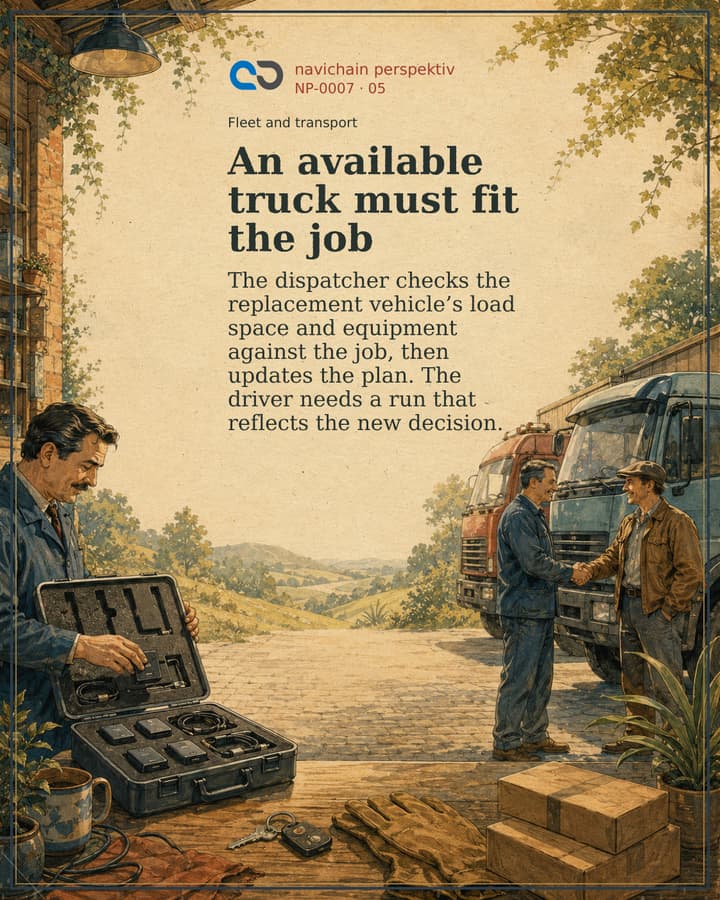
The dispatcher reviews the booking’s requirements: cargo, collection, delivery, timings and customer instructions. They then select a replacement resource and update the plan in navichain. The platform handles bookings, runs and vehicle resources. 1
In our example, the replacement vehicle differs from the original. Finding an available truck is therefore only the beginning. Does its load space suit the job? Is special equipment required? Can the driver reach the collection on time? Check the conditions that matter for this particular job before giving the customer a revised commitment.
A shared working environment earns its place here: the change must make sense to the driver who will carry out the run, not only to the person who moved the booking.
Plan for the vehicle that will actually travel
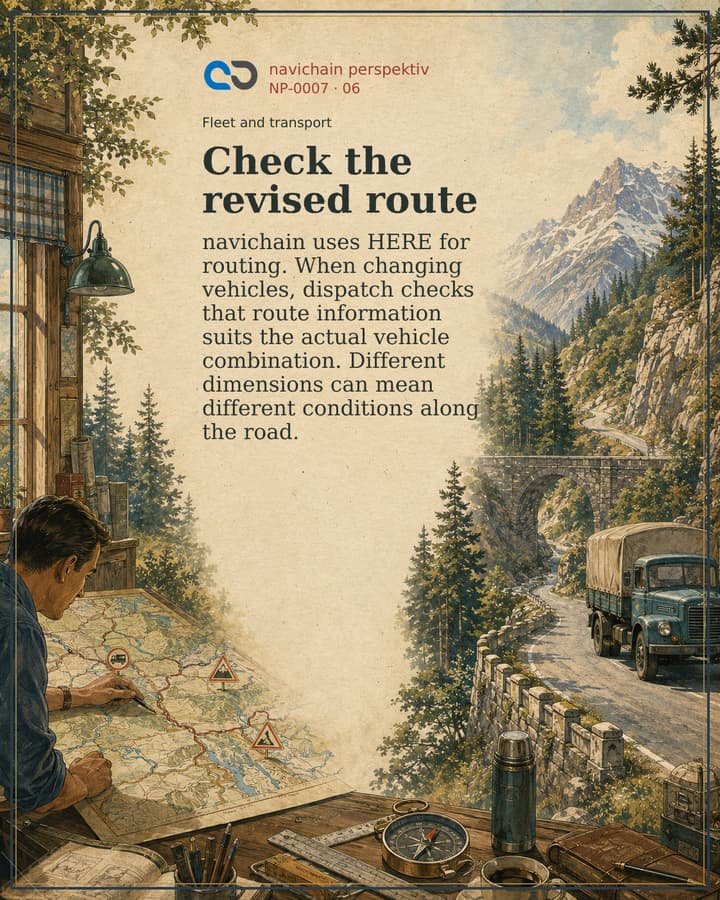
A vehicle change can also affect the route. HERE’s truck-routing documentation explains how vehicle properties are used to take restrictions into account. Height, weight and other relevant properties should therefore describe the actual vehicle combination. 3
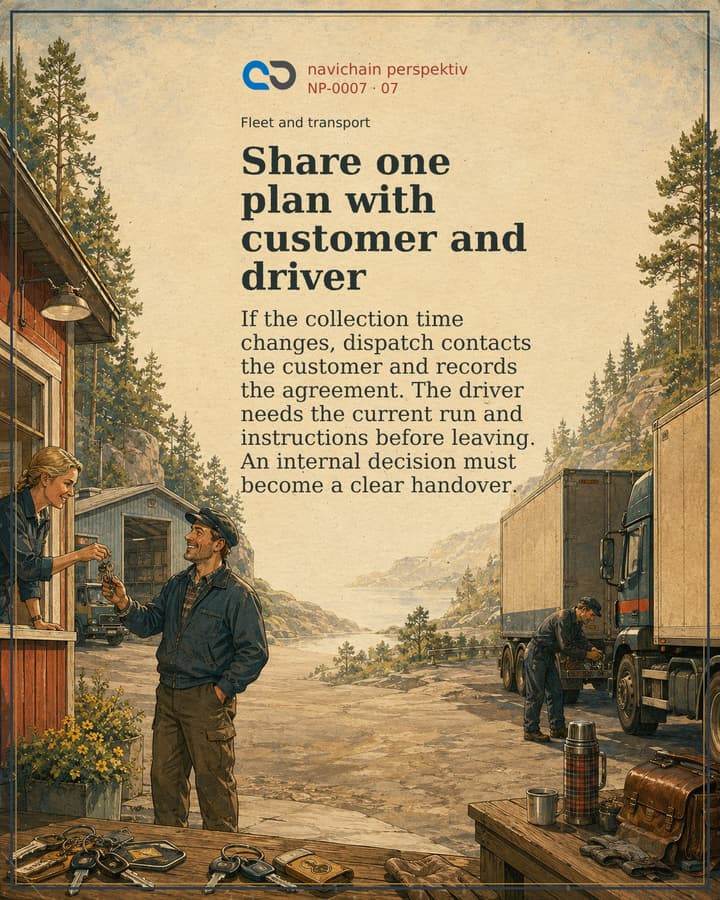
navichain uses HERE for maps and routing. 1 The dispatcher checks the route information for the replacement resource before handing over the run. If the revised plan affects the collection time, the customer is contacted and the agreement recorded.
The purpose is practical: changing a vehicle should result in a considered run, with appropriate instructions and shared expectations.
Keep the repair moving while the transport runs
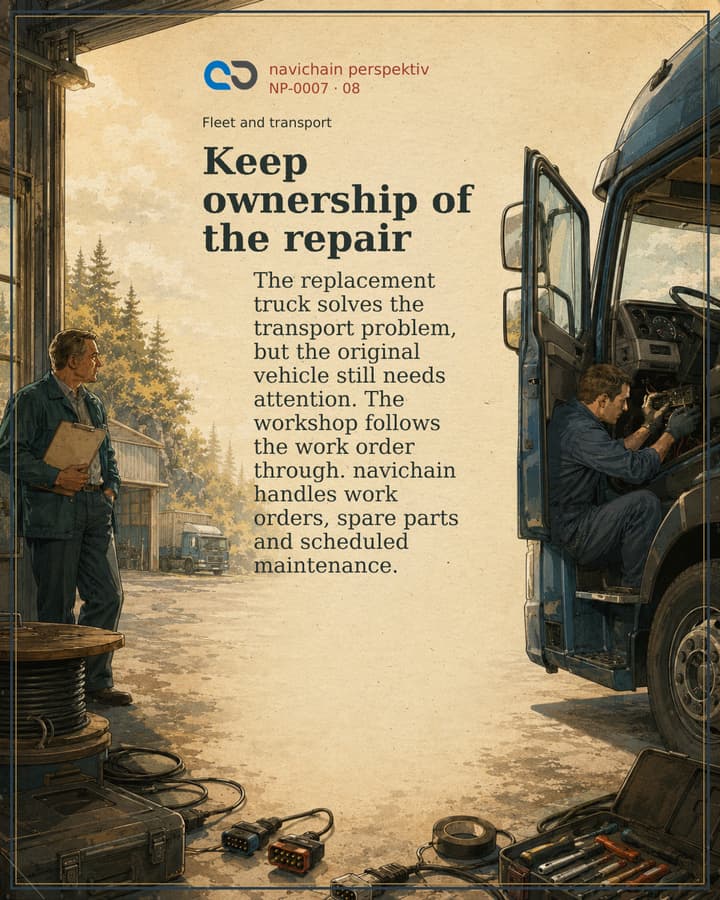
The replacement vehicle solves today’s transport problem, but the original defect still needs to reach a conclusion. The workshop continues with the work order. navichain’s workshop functions handle work orders, parts and maintenance based on time or distance. 1
Agree what information dispatch needs when the work is finished and who will provide it. Completion of workshop work and assignment of the next run are two events that need coordination. The responsible person needs to understand what has been done and the conditions for using the vehicle again.
The same approach helps with scheduled servicing. Discuss maintenance and upcoming jobs together so the workshop visit has a considered place in the working week.
Let delivery complete the transport story
Once the collection is replanned, the driver needs the current run and customer instructions. At delivery, they document what actually happens. navichain’s driver app supports status updates, photos and signatures. 1
The office can then continue working with the transport record. If something differs from the plan, the documentation should explain it clearly enough for the next person to act. A vehicle change should not obscure which delivery a document belongs to or what the customer was told.
That is how the story stays connected: the customer’s job remains the same even when resources and plans change.
Measure the handovers that otherwise disappear
Start with a few of your own vehicle changes. Measure the time from a defect being discovered to a clear planning decision. Count requests for information that should already be available: vehicle identity, work description, owner or revised instructions.
Also check whether the customer received an update in time and whether the next shift could take over without reconstructing the history. Compare your own results before and after changing the working method. You then have a basis for improvement grounded in your operation.
Try a transport that does not go to plan
Choose a representative job with dispatch, a driver and the workshop. Enter the relevant vehicle information, agree responsibility for defects and work orders, and walk through a vehicle change from the first message to delivery.
At every handover, ask what the next person needs to know, where the information is and who makes the decision. It is a concrete way to assess how navichain fits your working day.
Create a free account and try navichain.
Related perspectives
- NP-0005 — The road costs money before the truck moves:** how transport conditions affect the calculation before departure.
- NP-0006 — When delivery deviates:** how documentation and ownership help the next person act when a delivery changes.
Sources
- navichain platform capabilities. Publisher: navichain. Transport, Driver app, Fleet & workshop and Integrations & API sections. Publication date not stated. Accessed 8 September 2026. Read the product description.
2. Guide to maintaining roadworthiness: commercial goods and passenger carrying vehicles. Publisher: Driver and Vehicle Standards Agency, United Kingdom. Updated 28 April 2025. Accessed 8 September 2026. Read the guidance.
3. Truck routing. Publisher: HERE Technologies. Routing API v8 technical documentation. Publication date not stated. Accessed 8 September 2026. Read about vehicle-aware routing.