The road costs money before the truck moves
By navichain team

See how navichain helps you assess routes, tolls and fuel before quoting. A considered price starts with the conditions of the journey.
navichain perspektiv · NP-0005
Summary
When a customer asks for a price, distance and yesterday’s rate per kilometre can feel like enough. Yet the economics of a journey also depend on tolls, vehicle characteristics, fuel and working time. With navichain, you can calculate distance, tolls and fuel cost before quoting. That gives the dispatcher something concrete to assess while the commercial decision is still open. We follow an illustrative Danish haulier comparing two routes to Hamburg, then replacing the planned truck. The example shows why the assumptions behind a quotation need to survive the handover into planning. Start with a familiar lane, use current vehicle details and compare the estimate with the outcome. The next quotation can then benefit from what the previous journey taught you.
Two routes to Hamburg. Which job do you want to price?
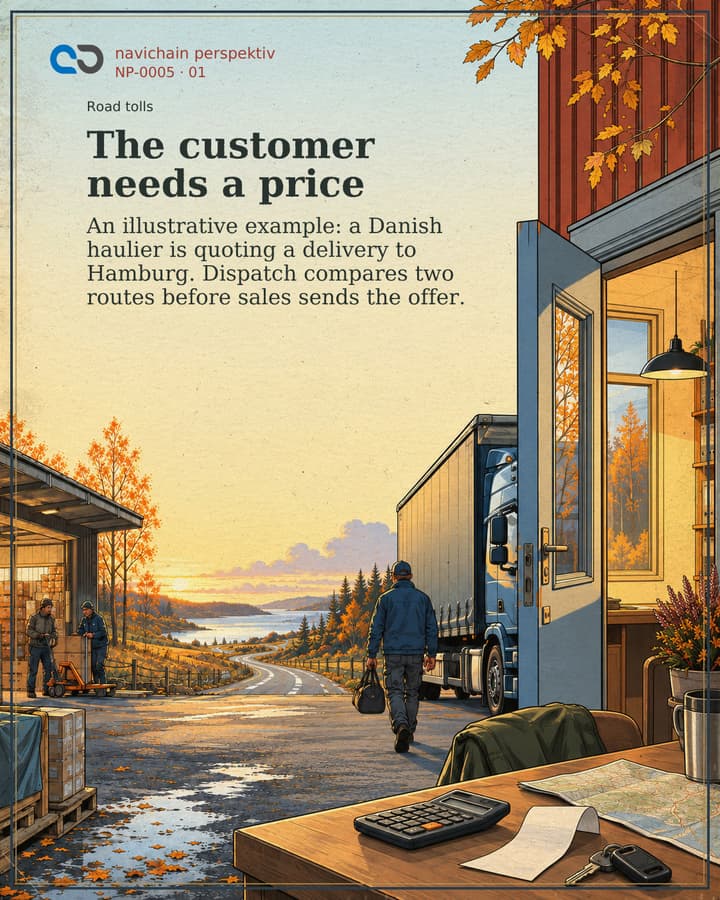
The customer needs a quotation before lunch. A Danish haulier has a truck available and two possible routes to Hamburg. One is shorter; the other may suit the delivery window better. In this illustrative example, the dispatcher must assess the alternatives before sales replies. The useful question is both operational and commercial: what can the haulier deliver, and on what cost assumptions?
Start with the vehicle behind the toll estimate
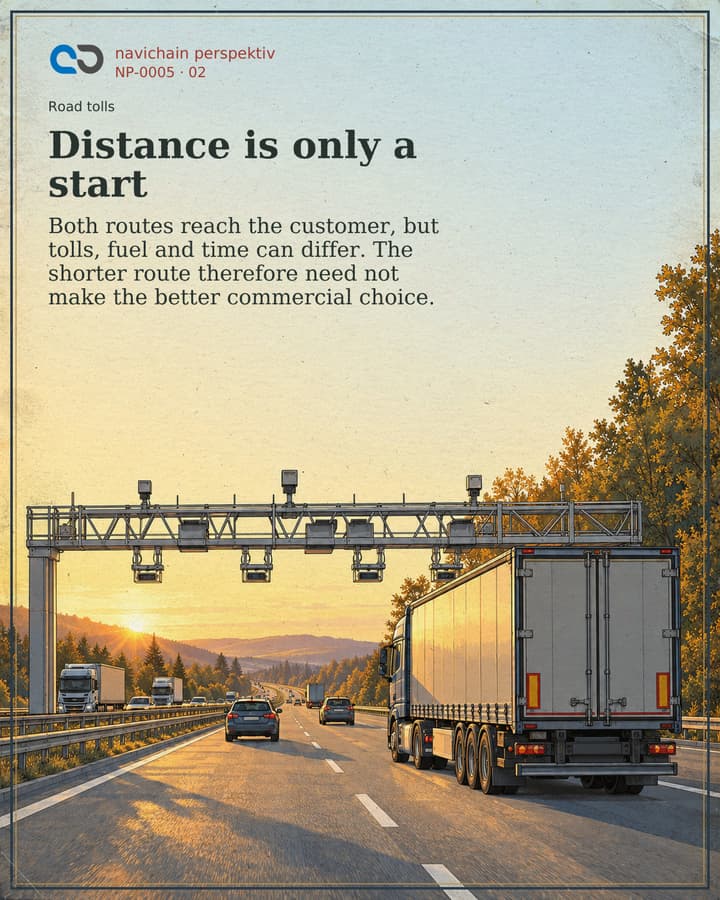
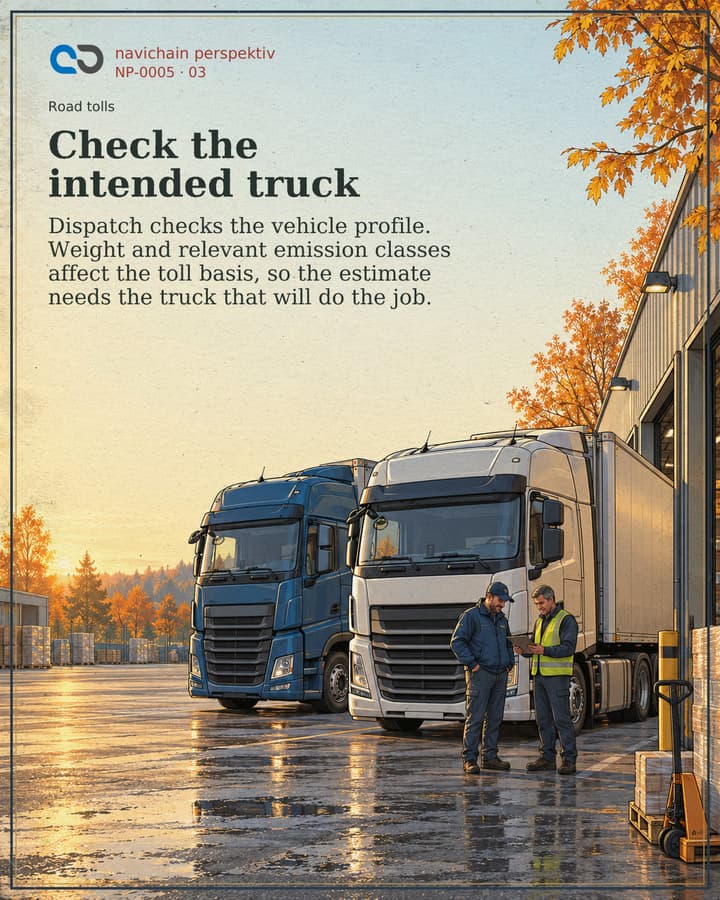
A per-kilometre charge can look straightforward while depending on several inputs. Denmark’s toll operator identifies CO₂ class, weight and travel in a low-emission zone as factors affecting the charge. 2 Toll Collect describes German tariffs in relation to weight, axles, pollutant class and CO₂ class. 3 For the dispatcher, distance alone therefore cannot establish a fair comparison. Check the vehicle profile actually used in the estimate. Details borrowed from another truck may produce a tidy figure built on the wrong assumptions.
Calculate while the price is still open
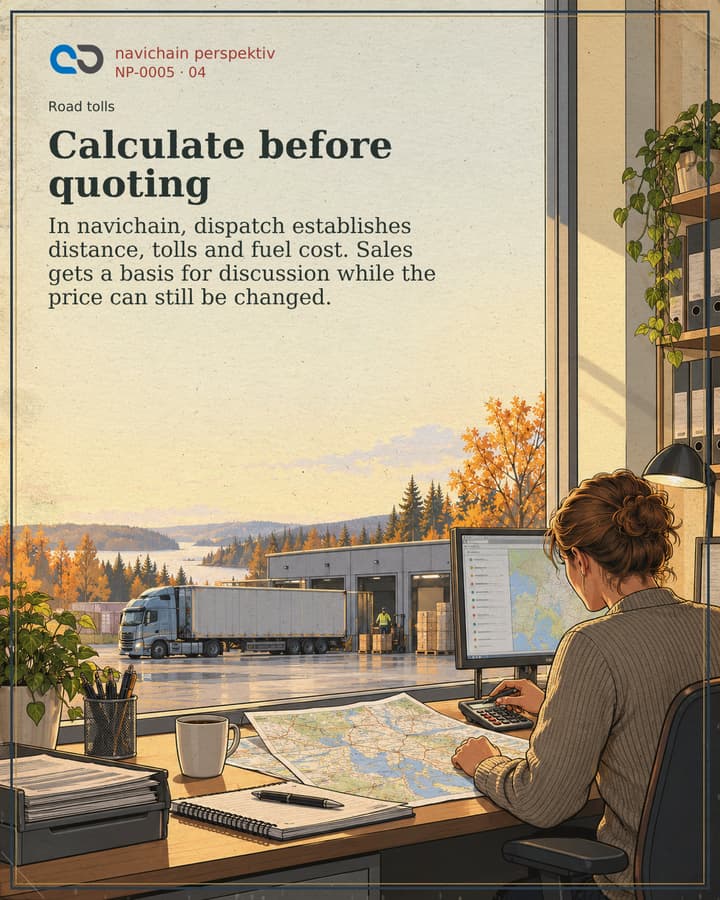
In navichain, the dispatcher can establish distance, tolls and fuel cost before quoting. The platform also describes truck-aware routing with HERE. 1 Begin with collection and delivery addresses, the relevant vehicle and the time requirements. Then review the displayed costs and the fuel assumptions you use. Sales has a basis to discuss with dispatch instead of relying on a vaguely similar past job. Seeing cost early matters because you can still change the route, the commercial price or the proposed service.
Compare like with like
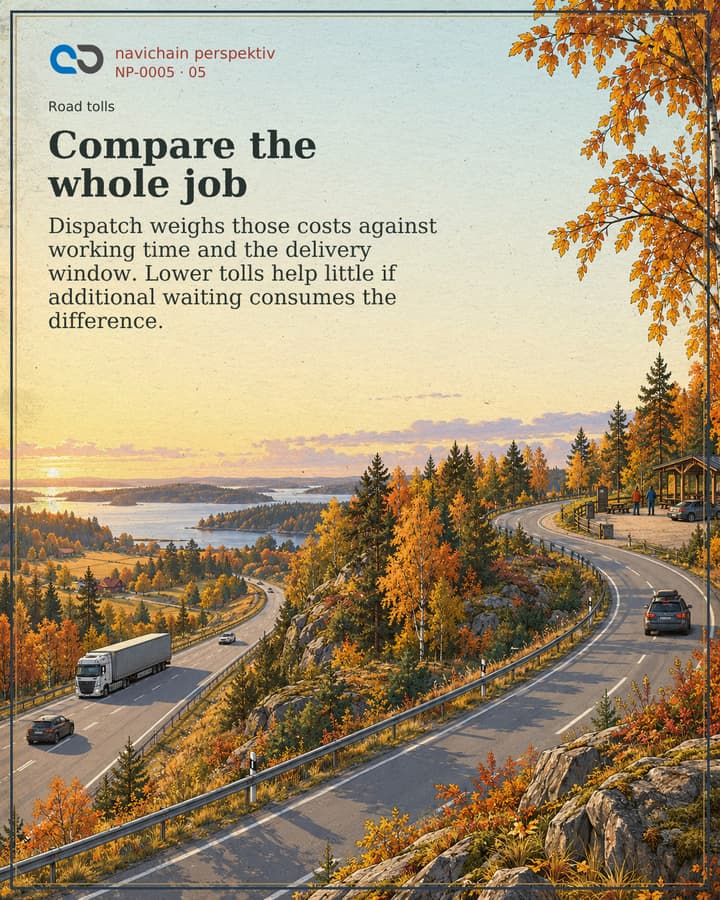
Both Hamburg options need the same load, vehicle assumptions and delivery requirements. The dispatcher considers distance, tolls and fuel alongside the haulier’s assessment of working time, waiting and other job costs. Include relevant ferry, bridge or other separate charges in the overall comparison. Lower tolls can be outweighed by additional time or distance. A quicker route may be worth more when it makes an agreed delivery window achievable. The business decides which balance to offer; a single low cost component does not make that decision for you.
Turn the estimate into a clear offer
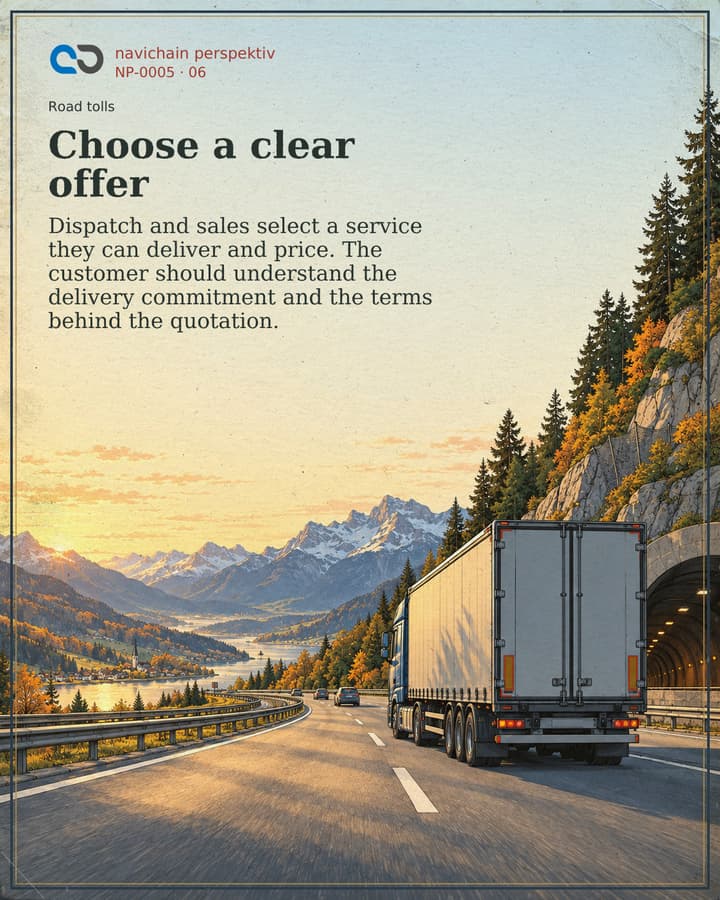
The estimate describes the resources the journey is expected to consume. The selling price must also reflect your margin and the terms agreed with the customer. Dispatch therefore passes the selected option and its assumptions to the person preparing the quotation. In navichain, an accepted quotation can become a booking without entering the job again. 1 Make the scope equally clear: the intended delivery time and how additional waiting will be handled, for example. Planning then receives a comprehensible commitment to deliver, and the customer understands the service being offered.
A replacement truck changes the question
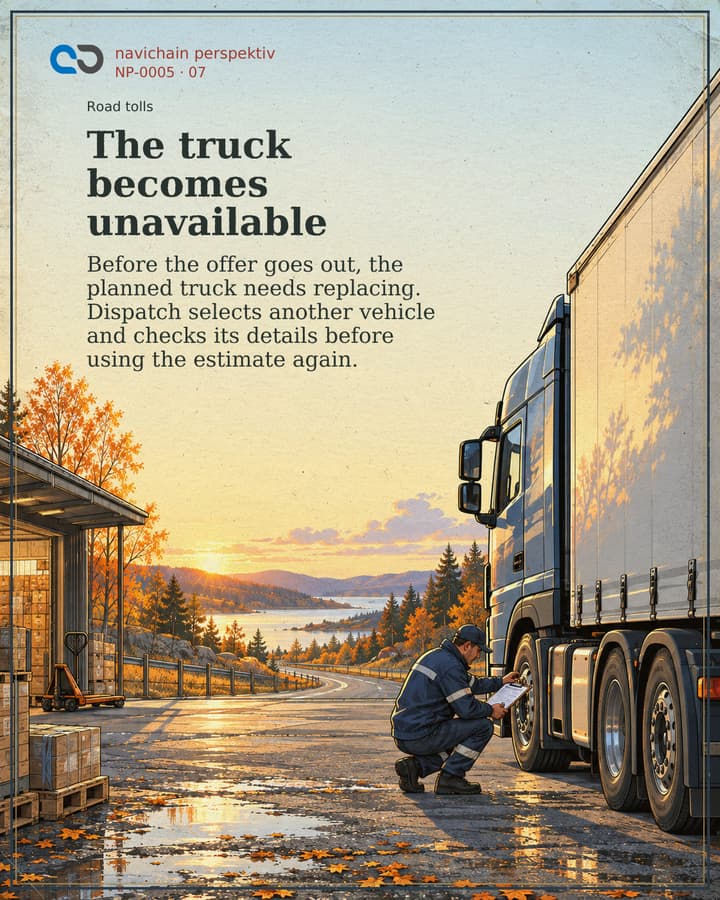
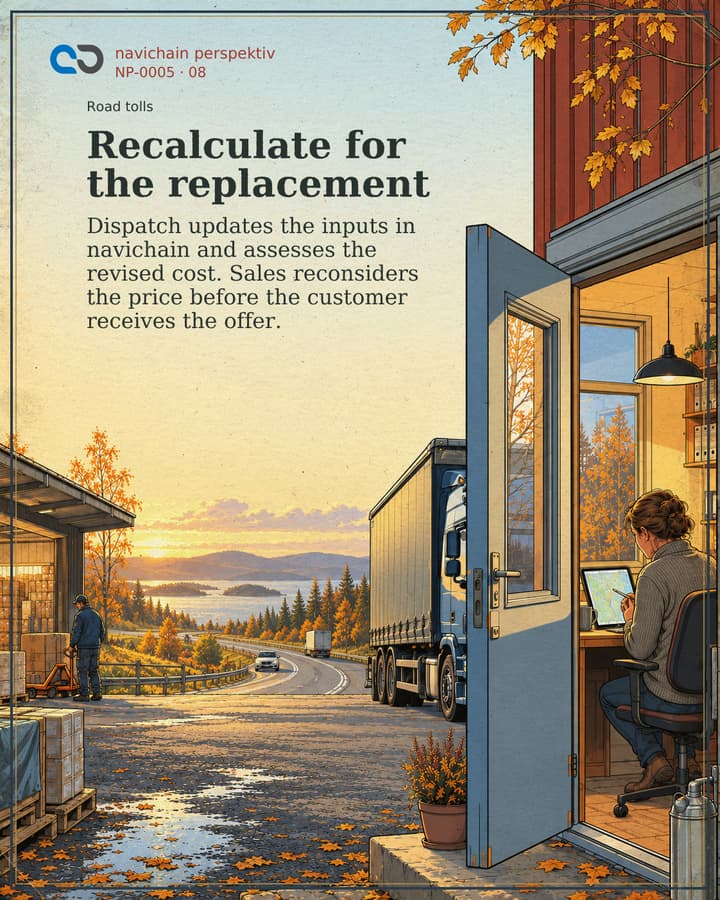
Before the quotation is sent, the intended truck becomes unavailable. The dispatcher selects a replacement, checks its profile and recalculates the route in navichain. Different vehicle characteristics can affect route suitability and the toll basis. Compare the revised cost with the first option and let sales reconsider the price before replying. If the change happens after acceptance, the responsible person instead assesses it against the agreement already in place. A revised estimate does not itself amend the customer’s agreed terms.
Plan the service you actually sold
Once the customer accepts, dispatch assigns the booking to a vehicle and driver. Navichain supports bookings, planning and vehicle and driver records. 1 At this handover, check that the delivery window, instructions and selected arrangement still match. A colleague taking over should understand why the route was chosen. Retain the decisive assumptions with the job information so the next person has something specific to reconsider when circumstances change. A selling price without its operational context leaves too much for that colleague to reconstruct.
Use the outcome to improve the next estimate
After the journey, the responsible person compares the original assessment with available toll, fuel and time outcomes. Use your established follow-up process and connect the comparison to the same job. Separate the causes: a different truck, waiting, a route change or a weak initial assumption. A difference becomes useful when you understand why it occurred. Update the relevant assumptions for the next similar quotation. The Hamburg job can then improve the next decision without turning one unusual journey into a universal pricing rule.
Start with a lane you know
Choose a recurring lane and let a dispatcher and salesperson work through it together in navichain. Compare two realistic routes, check the vehicle details and rehearse a replacement truck. Agree who updates the inputs and who decides the price. Then track how many quotations have a checked cost estimate, how often changes require recalculation and how estimates differ from outcomes on comparable jobs. Those observations show where the process helps and which assumptions need work, rather than relying on a promised saving before you have tried it.
Read also
NP-0004 follows the information behind the job. NP-0006 explores what happens when delivery deviates and the team needs to follow up.
- NP-0004 · Is your transport information ready to leave the paper pile?
- NP-0006 · When delivery deviates
Try it with your next assignment
Create an account and try navichain with a journey you know. Bring the vehicle details, compare two alternatives and see how the estimate can support your next quotation.
id.navichain.se · navichain.se
Sources
- navichain: routing, cost estimates, quotations and planning · navichain · Accessed: 2026-09-08
- Sund & Bælt / Vejafgifter: factors affecting Danish road tolls · Sund & Bælt / Vejafgifter · Accessed: 2026-09-08
- Toll Collect: vehicle characteristics and German toll rates · Toll Collect · Accessed: 2026-09-08