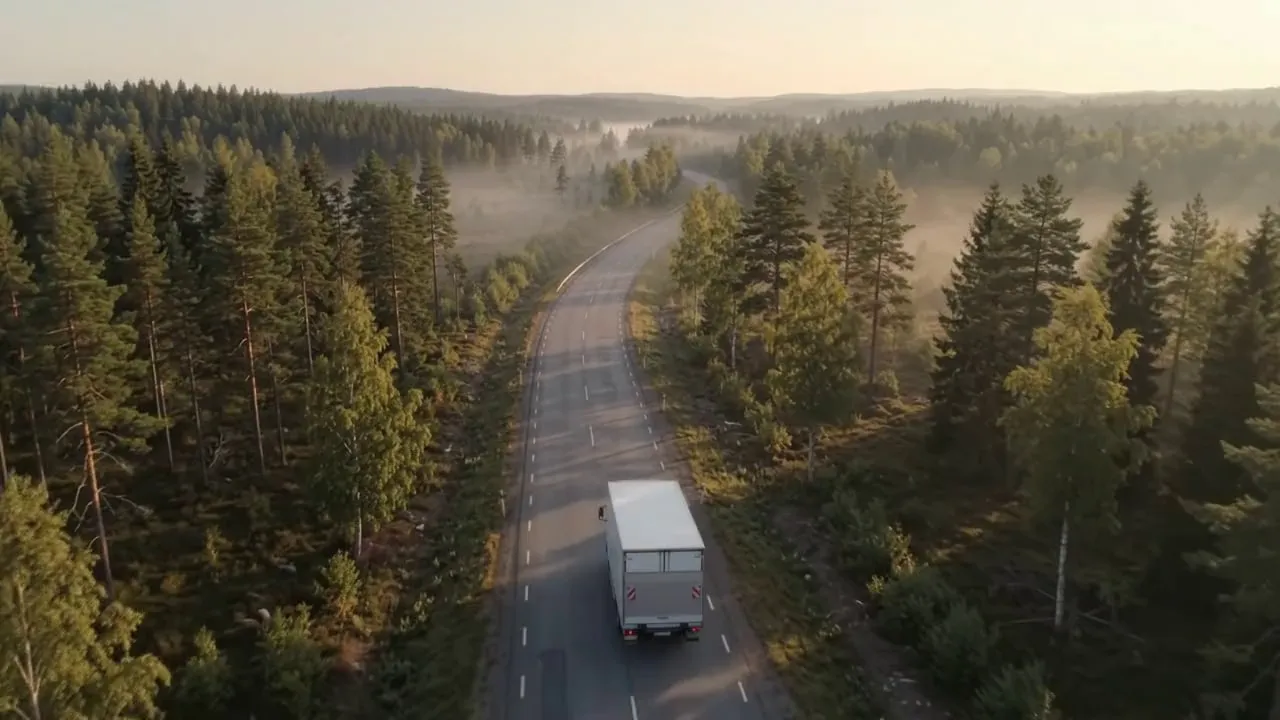
Unified logistics platform
One system for transport, warehouse, workshop, rentals, services and everything in between.
From the order to the invoice on the same data — checked against EU road transport rules while you plan, not after.
- EU data residency
- Digital eCMR built in
- Multi-tenant by design
| Booking | Status | Customer | Route | Carrier | Charges |
|---|---|---|---|---|---|
| #2708 | Confirmed | Hallberg Freight Ltd | SEMalmöGRThessaloniki | Nordvik Transport AB | 30,939.23 SEK |
| #2707 | Confirmed | Lindqvist Foods AB | SEKarlshamnGRAspropyrgos | Nordvik Transport AB | 4,972.38 SEK |
| #2706 | In transit | Blue Harbour Trading | SESkogåsPLGdańsk | Baltic Line Haulage | 3,977.90 SEK |
| #2705 | Planned | Kvarn & Söner AB | SEGöteborgNOOslo | Own fleet | 12,450.00 SEK |
Status at a glance. Every booking, from the first call to the signed delivery, in one list.
Priced before you quote. Distance, tolls and fuel costed on truck-aware routes.
Invoiced the week you deliver. Charges go straight from the booking to the invoice.
Start where your work is.
Pick the one that looks like your business. They share one record, so the next one joins without re-typing anything.
- 01Transport & haulageQuote, plan the day, track the fleet and prove every delivery.See how
- 02Warehouse & 3PLGoods in, stock you can promise, customer goods in custody and storage billed per pallet-day.See how
- 03Sales & wholesaleFrom the sales order through picking to a weighed, signed collection.See how
- 04RentalHire out vans, machines and equipment, deliver and collect them, and bill the time in between.See how
- 05Service & installationJobs at the customer’s site: visits, technicians in the app, labour and materials on the invoice.See how
- 06Workshop & fleetService plans, work orders, parts from the shelf and vehicles that stay roadworthy.See how
Follow the work from start to finish.
Every step writes to the same single source of truth, so nothing is re-typed and nothing gets lost between systems.

- 1 · Book
Orders arrive through the customer portal or the API — or from a PDF the AI reads — and are priced and confirmed without re-typing.
- 2 · Plan & dispatch
AI checks feasibility, cargo compatibility and vehicle fitness before a wheel turns.
- 3 · Execute & prove
Drivers follow geofenced stops, and every delivery is sealed with a digital eCMR.
- 4 · Settle & learn
Stock, invoicing and analytics update from the same shared data — instantly.
- 1 · Order
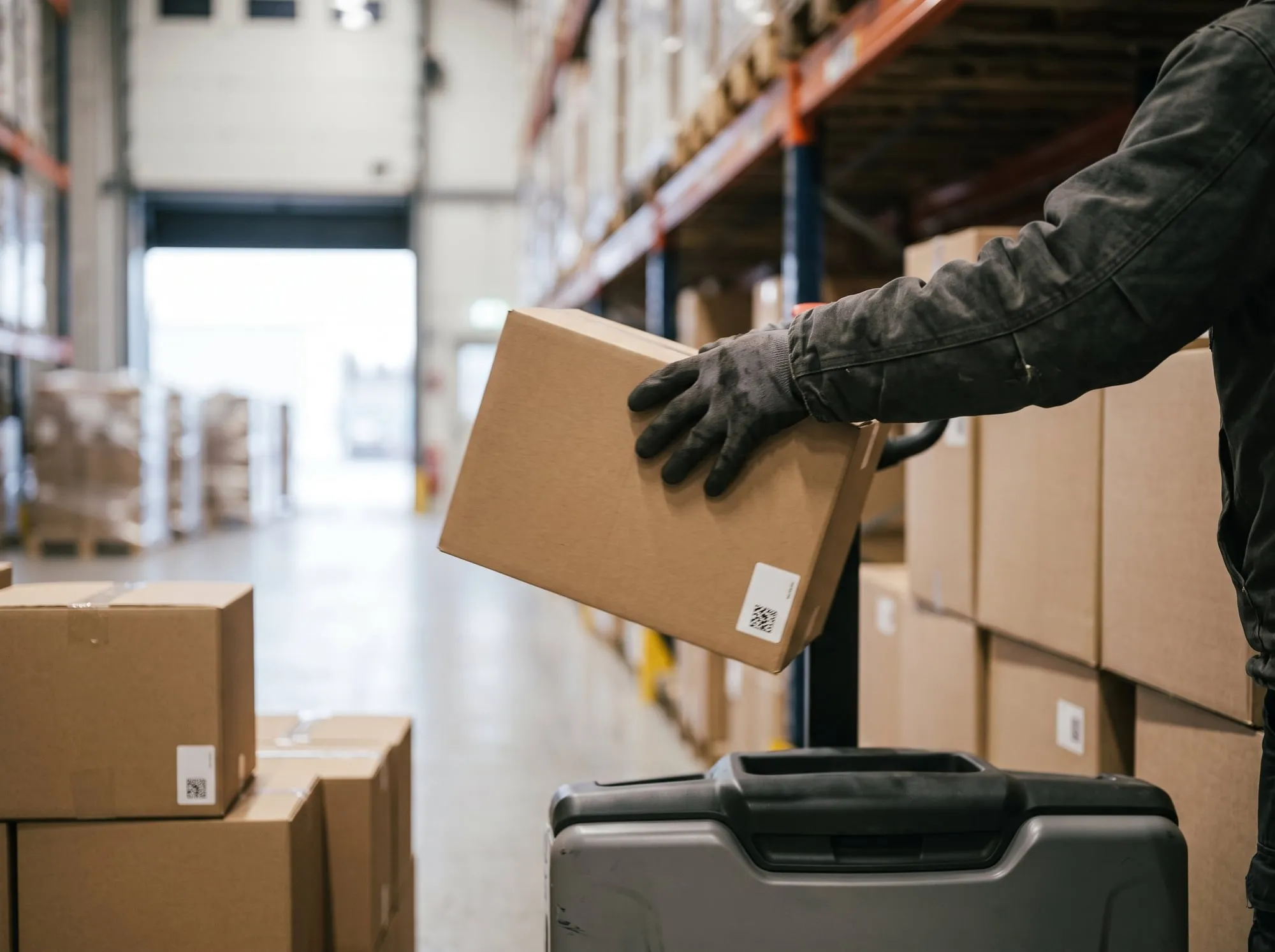
A sales order from the desk or the customer’s portal. Confirming it holds the stock, so it is never sold twice.
- 2 · Pick
Pick lists take whole pallets first, then the oldest stock — on paper or on a phone.
- 3 · Weigh & sign
At the dock: weigh the goods, and the collector signs the collection list.
- 4 · Invoice
Signing is the stock-out, and the charges follow what actually shipped — not what was ordered.
- 1 · Goods in
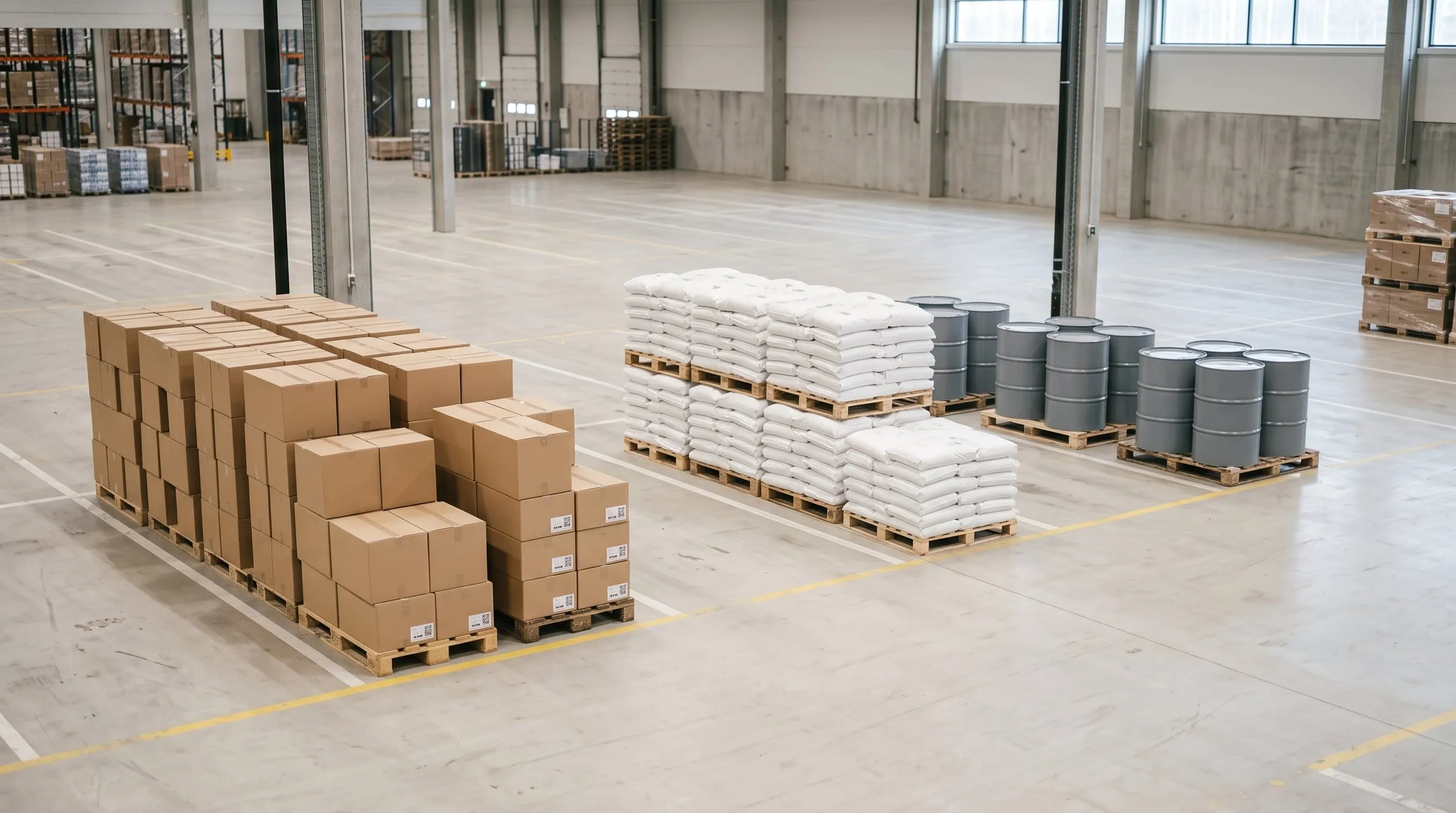
A customer’s goods received onto a real shelf, with a sealed, barcoded goods receipt note.
- 2 · In custody
Every pallet a handling unit: where it stands, what is on it and whose it is.
- 3 · Visible
The customer sees their own goods in their portal — and nobody else’s.
- 4 · Storage billed
Storage billed per pallet-day off the custody ledger — never twice.

- 1 · Defect
The driver’s daily check in the app opens a defect when something fails.
- 2 · Grounded
A critical defect grounds the vehicle, and a grounded vehicle cannot be dispatched.
- 3 · Work order
A work order to a mechanic or workshop; parts come off the shelf and the stock follows.
- 4 · Recorded
The repair stays in the vehicle’s maintenance history, with the parts it used.
The whole operation, not a slice of it.
Start with one module and switch on the rest as you grow. No migrations, no re-integration.
Transport
Build the day's runs in minutes instead of on a whiteboard. Drivers get their stops on the phone, and every delivery comes back signed — so you can invoice the same day it lands.
Learn more- Run planning
- Live tracking
- Digital eCMR
- Truck-aware routing, tolls and fuel
- Invoices straight into Fortnox or Visma eAccounting
- Price rules, charges and invoicing
Warehouse
Know what's on the shelf without walking out to check. Receiving, picking and counting all land in the same system your transport runs on — so you stop promising stock you haven't got.
Learn more- Lot-level stock
- Audited movements
- Purchase orders
- Goods receipt and put-away
- Picking, packing and stocktake
- Reservations that stop double-selling
Intelligence
Catch the problem before it costs you — the route that won't fit the driver's hours, the load that can't share a trailer, the truck about to fail its inspection.
Learn more- AI route optimization
- Fleet health
- Live dashboards
- Service plans, defects and inspections
- Alerts to the right person, by push or e-mail
- Ask navi — answers from your own data
An app for the office, the cab, the warehouse floor and your customers.
Your planners, your drivers and the customers you haul for each get their own way in — all reading and writing the same live data.
- 01
The web app
For planners, dispatchers and the back office
Plan runs, dispatch drivers and watch the fleet live · Warehouse, purchasing, invoicing and reporting · Dashboards on one shared set of numbers
- 02
navichain 365iOS & Android
For drivers, technicians and the warehouse floor
Today’s stops and service visits, navigation and one-tap status updates · Signatures, photos and failed-delivery reasons, captured on the spot · In the warehouse: find, receive, put away, pick, load and count — with the camera or a handheld scanner
- 03
Customer portal
For the customers you haul for
They book and track their own shipments — on web or in the app · Documents, proof of delivery and invoices, self-serve · API keys so bigger customers can integrate directly
Driver app included on every plan — two driver seats with every vehicle, no separate app fee. Get in touch →
Works with what you already run.
Invoices go to your accounting system and the payments come back; positions arrive from your vehicles; routes come from truck maps — nobody re-types anything.
- Fortnox
- Visma eAccounting
- Stripe
- Traccar
- Teltonika
- HERE Maps
- Nextcloud
Accounting
Invoices go straight into Fortnox or Visma eAccounting, and the payments booked there come back.
Payments
Customers pay an invoice by card through a Stripe link, and it is marked paid on its own.
Tracking
Teltonika and other Traccar-compatible trackers — or the driver’s phone — put each vehicle on the planning map.
Maps & routing
Truck-aware routes, distances, tolls and border crossings from HERE.
Documents
Your company’s files in a Nextcloud of its own, opened with your navichain sign-in.
The things buyers ask us first.
Straight answers on scope, data, integration and what it takes to get started.
Still wondering about something? Ask us directly →
What is Navichain?
Navichain is a unified logistics platform — a transport management system (TMS), warehouse management (WMS) and operational intelligence in one product. It covers the whole job from taking the order through planning, dispatch and proof of delivery to invoicing, so hauliers, 3PLs, e-commerce and manufacturers stop running their operation across four disconnected systems.
Can we start with just one module?
Yes. Most customers start with Transport and switch on Warehouse and Intelligence later. Because all three modules share one data model, turning one on is a setting — not a migration or a new integration project.
Will it work with the systems we already use?
Yes, where it counts. Invoices go to Fortnox or Visma eAccounting and the payments booked there come back; customers can pay by card through a Stripe link; vehicle positions come from Teltonika and other Traccar-compatible trackers, or the driver’s phone; routes and tolls come from HERE; and your documents can live in a Nextcloud of your own. Bigger customers can connect their own systems over our REST API.
Where is our data stored?
Within the EU. Every customer gets an isolated per-tenant database rather than sharing one pooled schema, and you can export your data at any time.
Do our drivers need a separate app?
Drivers use navichain 365, our free app for iOS and Android. It carries the day’s stops, one-tap status updates, signature and photo capture, daily vehicle checks and barcode scanning — and everything they do lands in the office’s live data immediately.
Can our own customers book and track shipments themselves?
Yes. The customer portal lets the companies you haul for book, track, download proof of delivery and see invoices without phoning your office. Larger customers can request API keys and integrate directly.
How long does onboarding take?
A single-module setup is typically live in days rather than months. Growth and Enterprise plans include guided onboarding and help importing your existing customers, addresses and price lists.
Is there a lock-in contract?
No. Billing is monthly with no lock-in. Your data stays exportable throughout.
Ideas for the people who keep freight moving.
Playbooks, product thinking and the economics of modern logistics.

A recall is a search problem: from batch number to consignee before the day is over
A recall is rarely lost on the decision but in the hours spent finding who received the batch. What EU GDP asks for, and a drill that shows where you stand.

Own truck or bought-in freight: the decision most manufacturers make by habit
A manufacturer's own truck feels free because it is already paid for. What a delivery on it really costs, and why the choice belongs to each shipment.

Three clocks in every hire: off-hired, collected, ready to hire
A hire stops being billable, leaves site and can earn again at three different moments. Most invoice disputes and lost utilisation sit in the gaps between.
Not ready for a demo? Start with the playbooks.
Practical guides on cutting admin, closing the gap between delivery and payment, and getting out of a fragmented toolset.
- The fragmentation trap
- The ROI of silence
- Supply-chain data sovereignty
- Smart run planning
Or just browse the insights →
See Navichain running your operation.
A 30-minute walkthrough on your real workflows. No slideware.
- 30 minutes on your real workflows
- EU-hosted and GDPR-ready
- Start with a single module