When delivery does not go to plan
By navichain team

Follow a delivery with damaged packaging. See how navichain helps drivers and the office connect the evidence, the decision and the next action.
navichain perspektiv · NP-0006
Summary
A delivery exception becomes costly to handle when the office first has to reconstruct what happened. A photograph without the right delivery reference, an unclear receipt or a customer decision left in a phone call gives the next person more questions. In navichain, drivers can document delivery with photos, comments and signatures, while dispatch follows incidents and corrective actions as tasks. We follow an illustrative delivery to northern France where damaged packaging is discovered during unloading. The story shows how observations, decisions and follow-up can remain connected without becoming confused. Start with a recurring delivery and agree what information the next person needs. Then track the time to a clear customer response and how often the documentation needs completing.
Damaged packaging at the unloading point
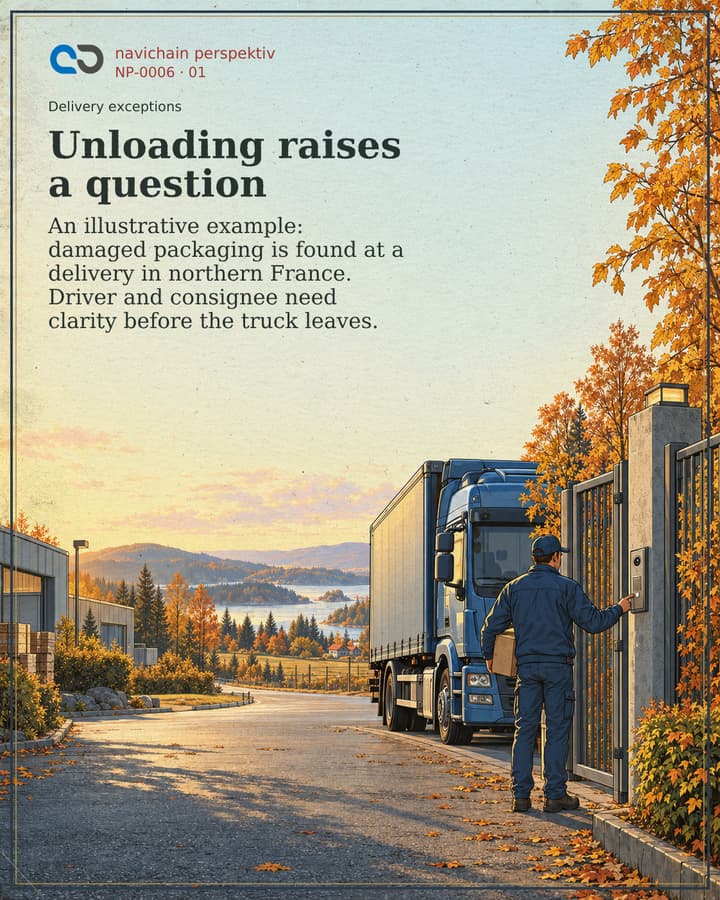
The truck has reached a consignee in northern France. During unloading, damaged packaging is discovered. The driver needs to record the observation, the consignee wants instructions and the office must be able to answer the customer. This is an illustrative example. How do you keep the event understandable before the truck leaves and another shift takes over?
Make the event understandable to someone who was not there
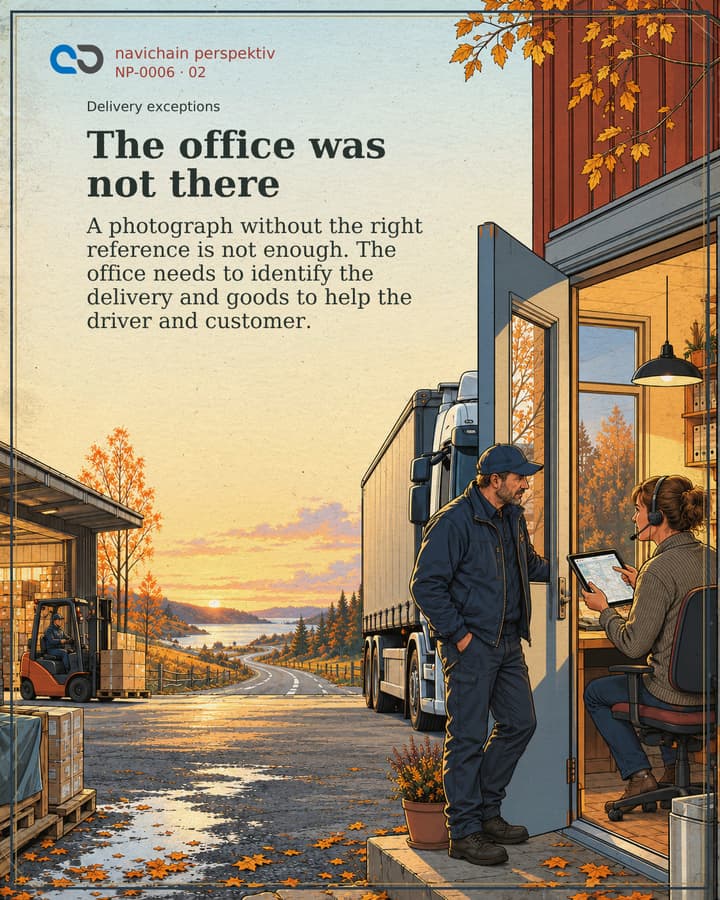
GS1’s traceability standard explains how identified objects and events gain context through information about what happened, when, where and within which process. 2 For your team, the practical question is whether a colleague can identify the delivery and goods in the photograph. Include the transport reference, affected packaging and stage of unloading. A vague damage message otherwise leaves someone else with a new investigation. Establish identity before collecting more pictures; the useful unit is an understandable event, not an isolated attachment.
Record the observation against the right delivery
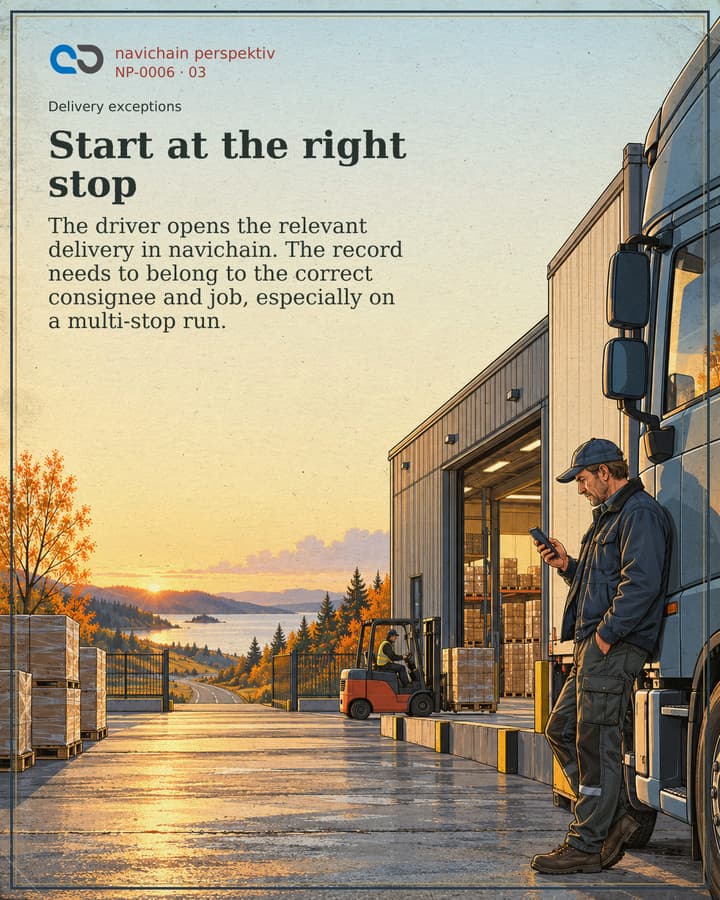
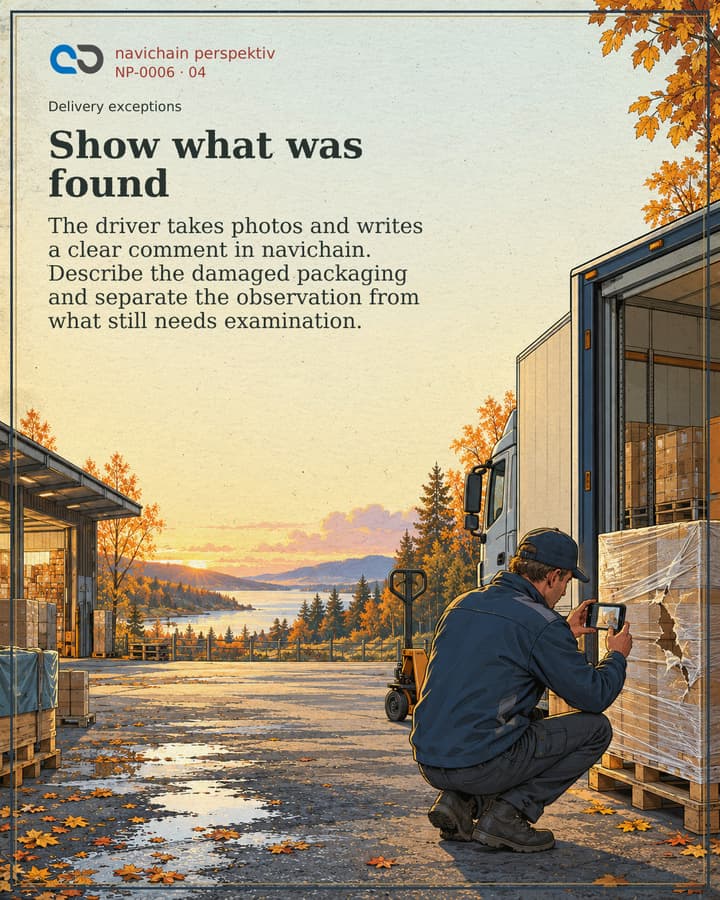
The driver opens the relevant stop in navichain and records a useful photograph and comment. Mobile support includes delivery status, images and signatures. 1 Take an overview that establishes the context and a detail image showing the observation. Describe what is visible and what still needs examination. Damaged packaging, for example, does not necessarily mean damage to the contents has been established. That distinction helps dispatch give an accurate update and choose a sensible next action.
Let the receipt reflect the actual handover
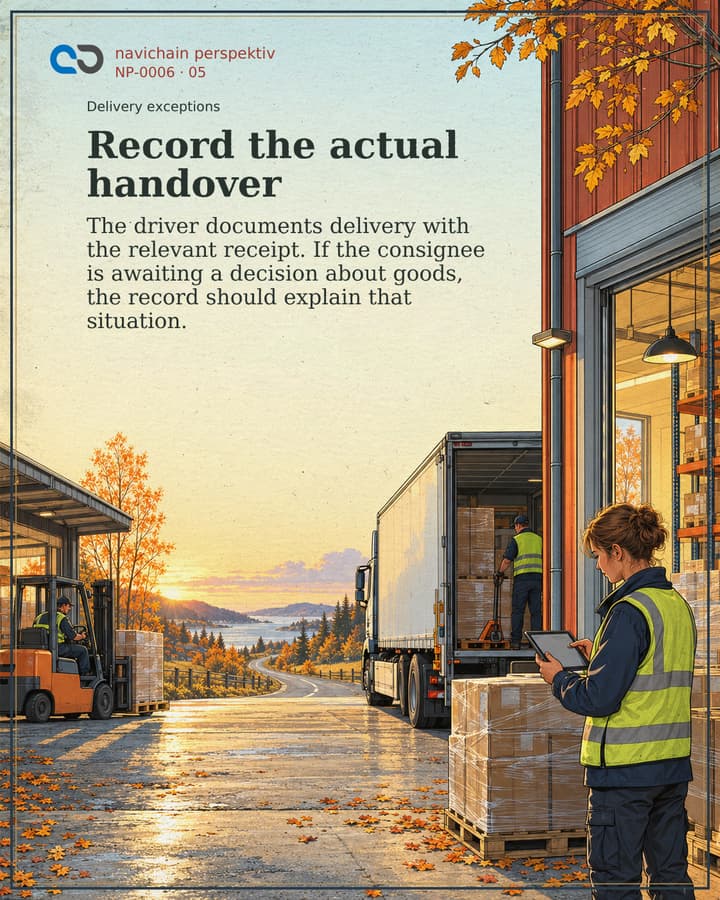
Driver and consignee need clarity about what was handed over and what was observed. If the consignee is waiting for a decision about some goods, the documentation should reflect that situation rather than describe an ordinary completed delivery. IRU presents eCMR as a way to improve transport information and reduce discrepancies at delivery and reception. 3 Make the receipt, comment and delivery reference support the same account. The photograph records the observation; the receipt needs to describe the handover.
Give dispatch a decision to make
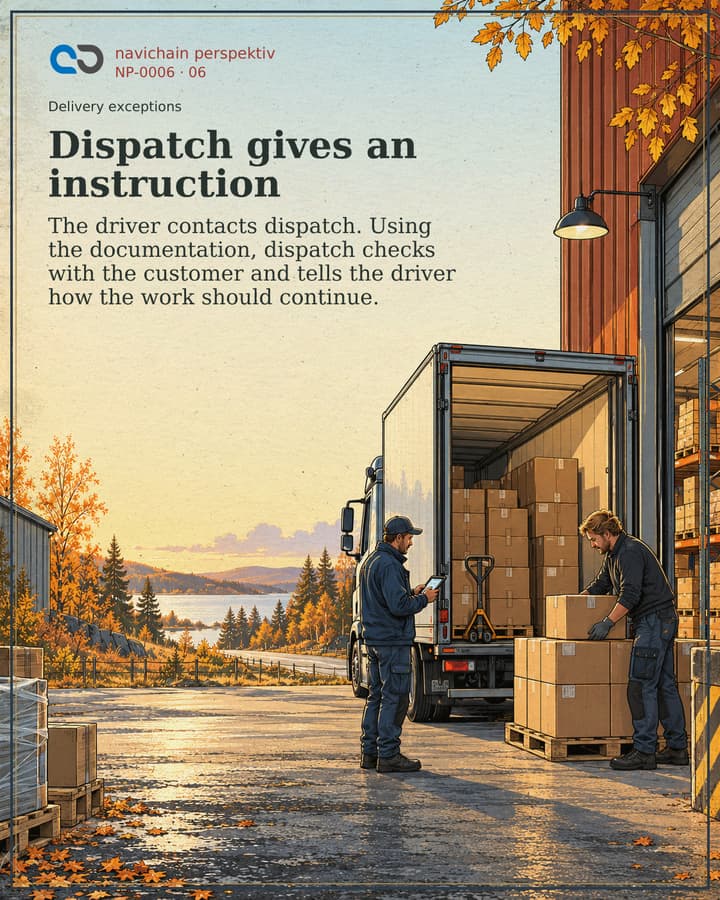
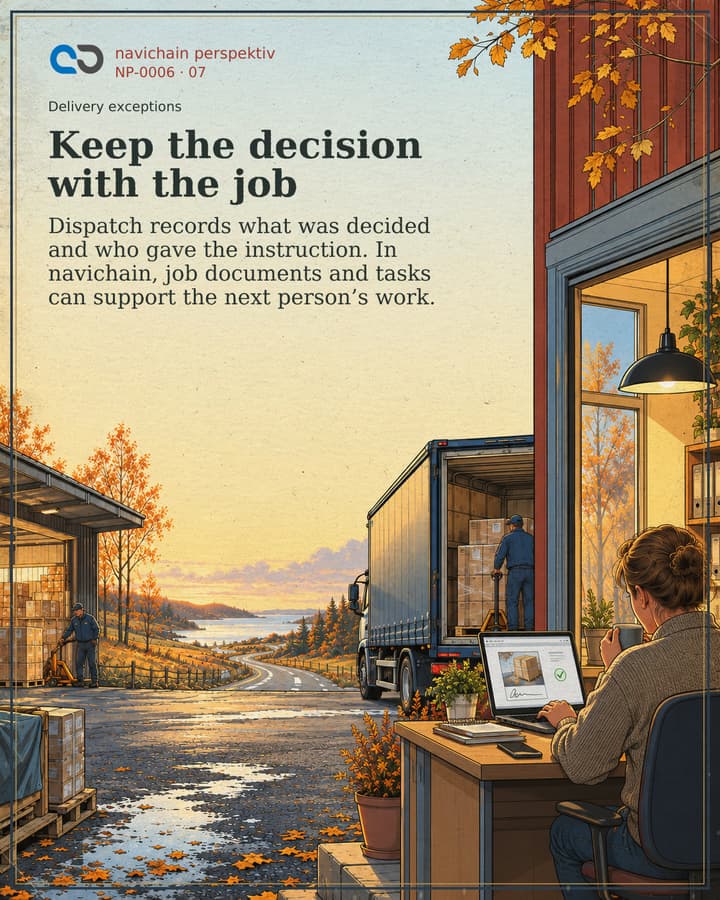
The driver contacts dispatch using the job as the starting point. Dispatch reviews the documentation, checks with the customer and instructs the driver on the next action. In this example, that might mean waiting for instructions about the affected goods before leaving. Record what was decided and who provided the instruction with the job documentation. Navichain’s document and task support provides a shared working place for that information. 1 The decision should remain findable after the person who answered the call has left their desk.
Assign the remaining work to someone
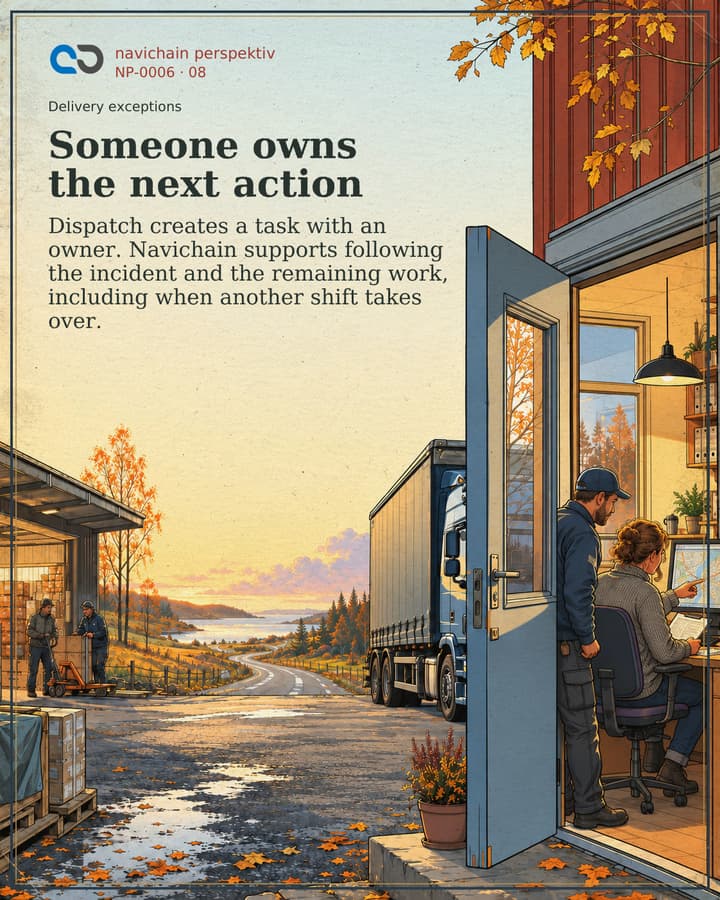
Recording an incident is different from resolving it. Dispatch creates a follow-up task with an owner and an explicit next step. Navichain describes incidents and corrective actions as tasks. 1 Specify who will return to the customer and what response is still awaited. At a shift change, the next colleague can then see both the observation and the unfinished work. Close the task when the agreed action has actually been performed and its outcome recorded, rather than merely when a photo has been uploaded.
Give the customer a coherent update
Customer service can now use the same delivery information when the customer asks. Explain the observation, the decision and what happens next. Navichain’s customer portal also provides access to the customer’s own transport documents and proof of delivery. 1 Agree what evidence the customer needs and who communicates during an open incident. A downloadable file does not always replace a conversation, but it gives that conversation a common basis and reduces the risk of conflicting accounts.
Let finance assess the consequences from the same record
When finance later reviews the transport, the images, delivery outcome and follow-up should be traceable to the same job. The responsible person assesses additional charges, deductions or other questions against the customer agreement and the documented events. Observation and commercial assessment are separate steps: damaged packaging alone does not decide who bears a cost. Preserving the record lets the office proceed without first tracking down the driver or trying to reconstruct the customer’s instruction from memory.
Rehearse an exception and measure the follow-up
Choose a recurring delivery and walk through a normal handover, damaged packaging and a delayed customer response with drivers, dispatch and customer service. Agree what needs to be known before the next role takes over. Track time to an owner, a clear customer update and a completed action. Count requests for additional images or clarification too. Compare similar incidents before and after the change. This gives you your own evidence of whether the working method makes exceptions easier to handle.
Read also
NP-0004 follows transport information through the working day. NP-0009 explores what makes delivery evidence useful when other people need to understand the event.
- NP-0004 · Is your transport information ready to leave the paper pile?
- NP-0009 · Delivery is not complete until the evidence holds
Try it with your next assignment
Create an account and try navichain with a familiar delivery. Work from observation to documentation, an owner and a customer update with drivers and the office.
id.navichain.se · navichain.se
Sources
- navichain: driver app, documents, incidents and customer portal · navichain · Accessed: 2026-09-08
- GS1 Global Traceability Standard, release 2.0, August 2017 · GS1 · Accessed: 2026-09-08
- IRU: CMR and the benefits of electronic consignment notes · IRU · Accessed: 2026-09-08