The workshop conversation: internal bay or external service?
By navichain team
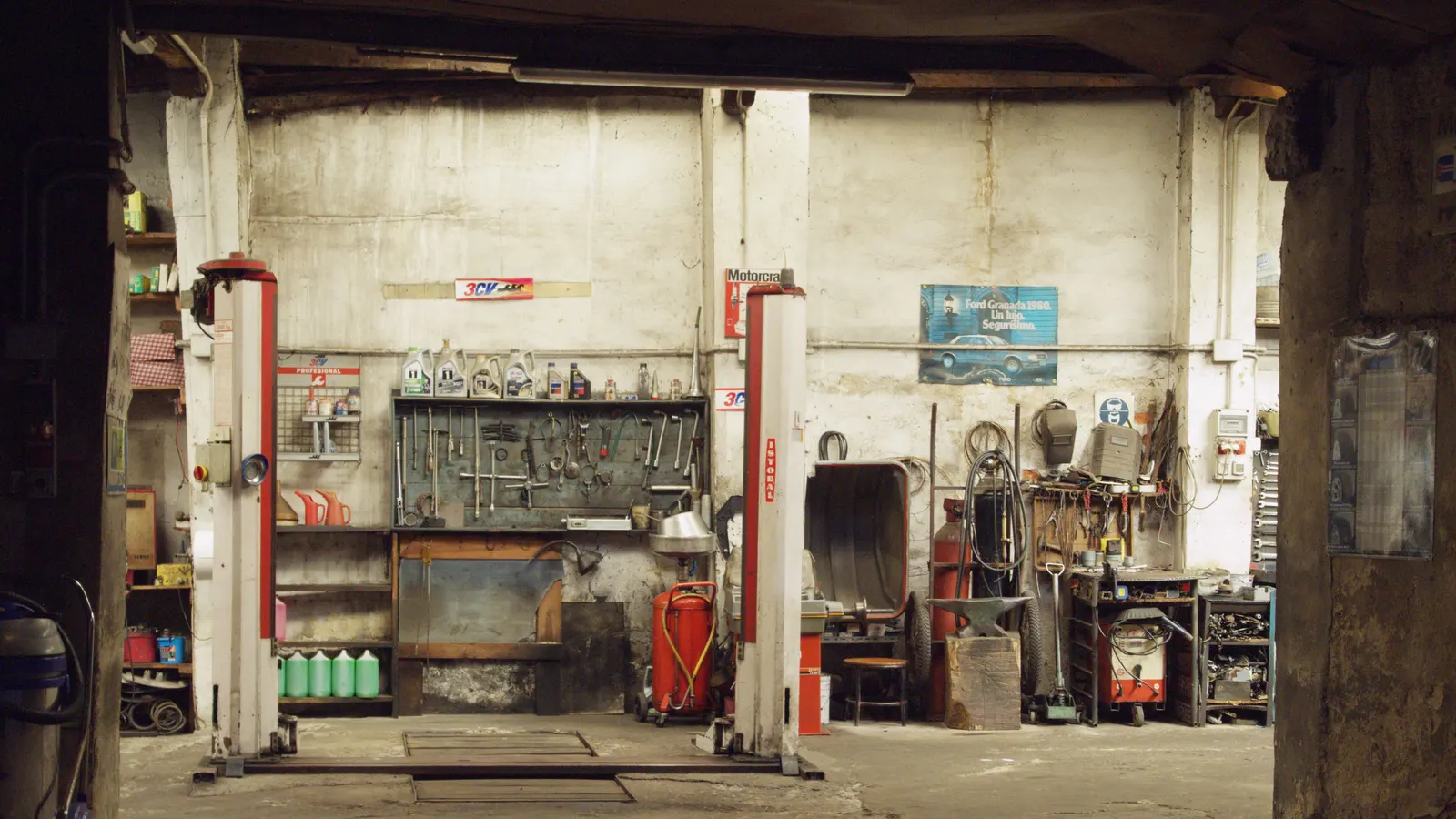
Ask a fleet manager whether they should run their own workshop and the conversation almost always starts with a price: what an hour of an external mechanic costs, against what our own technician costs. It is a fair place to start and a poor place to finish, because the two numbers are not the same kind of number. One is a price per job. The other is a fixed cost that only becomes a price per job if the bay is busy enough, and whether it is busy enough is a question about your fleet’s workload, not about mechanics’ hourly rates.
What an internal bay has to earn
An internal bay is a bundle of costs that arrive whether or not a truck is on the ramp: the premises, the lifting and diagnostic equipment, the tools, the training and, above all, the technician whose time is paid for every working day. Those costs are fixed. The work is not. A fleet’s maintenance demand comes in two shapes. The scheduled part, meaning services due by distance or by calendar, inspections and tyre changes, is predictable and can be planned weeks ahead. The unscheduled part, the breakdown, the damage, the defect found on a morning walk-around, arrives when it likes.
That mix is what makes utilisation hard. Size the bay for the average week and it is idle in the quiet weeks and swamped in the bad ones, at which point the unscheduled job either waits or goes outside anyway. Size it for the peak and you are paying for capacity that spends most of the year waiting for something to do. Small teams add a fragility of their own: one technician is a single point of failure. A holiday, an illness or a resignation ends the internal capability overnight, and the external workshop you stopped using may not have room for you when you come back.
An honest test needs no benchmark from anyone else, only your own records. Add up the hours your maintenance plan generates in a normal month, the scheduled work alone, and ask whether that fills a technician’s month. If it fills most of it, the bay has a foundation to stand on. If it fills a fraction, you are paying for the rest of the month to wait for breakdowns.
What an external workshop costs that is not on the invoice
The external workshop’s strengths are exactly the internal bay’s weaknesses. It spreads its fixed costs across many customers, it has the specialist tools and the people who use them every day, and it absorbs your peaks into someone else’s capacity. What you pay in return is partly on the invoice and partly not, and the part that is not is control.
You queue behind other customers, and their priorities are their own. The slot you are offered may not match the gap in your run schedule: the truck that could have been back on Thursday afternoon comes back on Friday, and the tour built around it is rebuilt. The days a vehicle spends off the road are seldom spent with a spanner on it. They are spent waiting for a slot, for a part, for a call-back, and an external relationship lengthens exactly that waiting, because the person deciding the order of work is not the person who needs the truck. Add the trips, since someone has to drive the vehicle there and collect it, and the fact that a comeback is handled by phone rather than by walking across the yard.
None of this makes external work the worse choice. Some work is done by an approved third party whichever route you choose, the periodic roadworthiness inspection being one, and a fleet without the volume to justify a specialist’s tools is right to buy the specialist’s hours. The point is that the price of the arrangement includes control over scheduling, and it should be counted as a cost rather than discovered as a surprise.
The hybrid most fleets actually run
Ask fleets of this size what they actually do and few answer “everything in-house” or “everything outside”. The common shape is a split by kind of job. The frequent, small, predictable work stays in-house because it is quick, it is on the doorstep and it is what keeps a technician busy: routine services, checks, lights, tyres, the small repairs an inspection turns up. The rare, heavy or specialist work goes outside: major engine and gearbox work, bodywork, refrigeration units, tail-lifts and anything that needs equipment which would otherwise sit unused. Peak overflow goes outside too, so that the bay is sized for the steady load and not for the worst week of the year.
The split is not a one-off decision, because it drifts. A fleet that grows may cross the point where a second technician would be fully used; one that shrinks may cross it the other way. A vehicle type you did not run before brings jobs the bay cannot do. The line is worth redrawing when it moves, and it moves more often than the annual budget conversation notices.
The record has to be one record
The hybrid has one failure mode that has nothing to do with money: the vehicle’s history splits in two. Work done in-house is written on a work order; work done outside lives in an invoice in somebody’s inbox. The service-due calculation, distance since the last service and days since the last inspection, then reads only half the story. A truck serviced externally last month looks overdue, or worse, a truck whose outside work was never recorded looks clean. Whatever the split, every job on a vehicle should end up in one history with the date, the odometer reading and the parts used, whether it happened in your bay or in someone else’s.
That same record is what lets you revisit the decision with evidence instead of impression: which kinds of job recur, how long vehicles were actually off the road for each, and how much of the bay’s time went on work that would have been cheaper to send out. Without it, the argument about internal versus external is conducted from memory, and memory keeps the breakdown that a slow external workshop made worse, not the twenty jobs it handled without a fuss.
Where navichain stands
The platform page describes navichain’s fleet and workshop side: work orders from open to closed, with parts taken off the shelf as they are used; maintenance scheduled on distance or on the calendar, per maintenance type; defects opened from inspections and deferred with an owner and a deadline; and workshops, parts inventory and supplier purchase orders in the same place. That is the kind of record this decision depends on: history and due dates held together rather than split between a workshop whiteboard and a mailbox of invoices. The stock side is covered in workshop parts: a stockroom is a ledger you can walk into. What software does not do is make the choice for you. That stays a question about your own utilisation and your own tolerance for waiting.