Calm in the cab. Control in dispatch.
By navichain team







When rest requirements and cabotage conditions are visible before commitment, dispatch can act early and drivers receive a plan they can actually execute.
navichain perspektiv · NP-0085
Executive summary
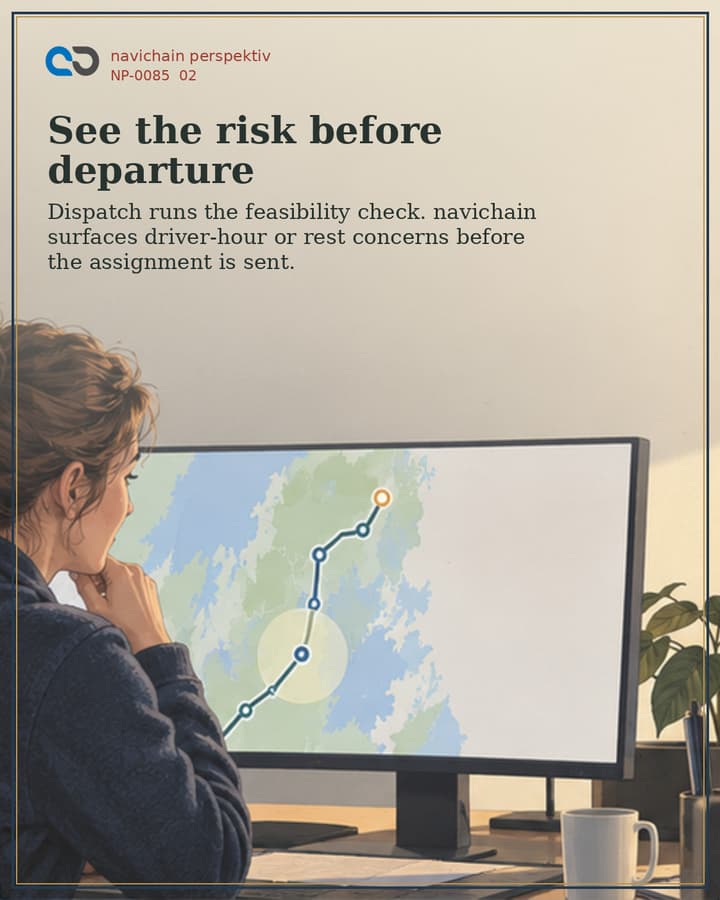
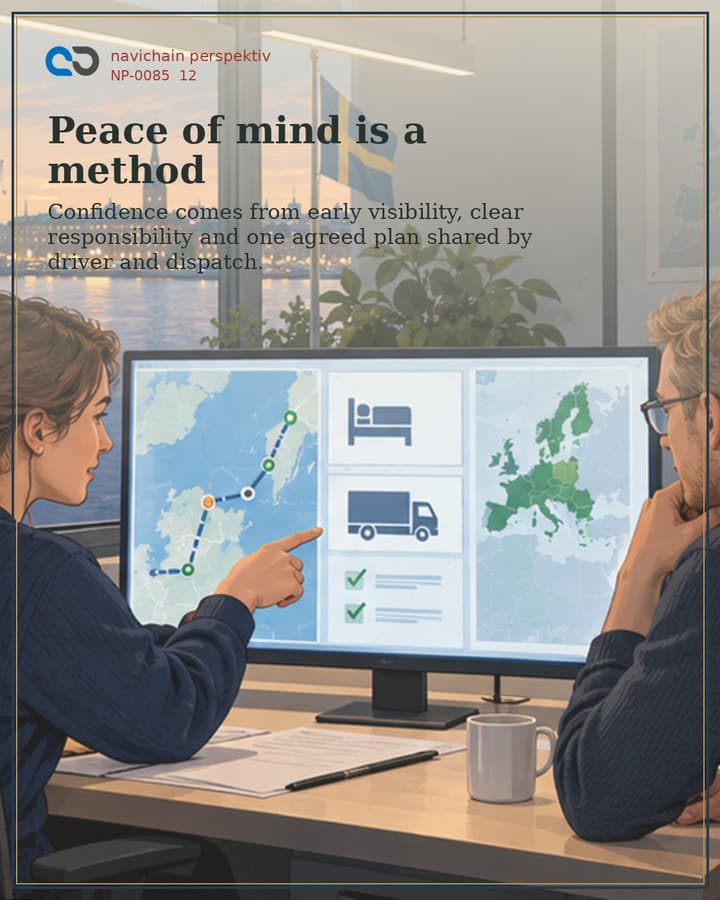
When rest requirements and cabotage conditions are visible before commitment, dispatch can act early and drivers receive a plan they can actually execute. Dispatch runs the feasibility check. navichain surfaces driver-hour or rest concerns before the assignment is sent. navichain can flag cabotage risk in planning and return-load search, prompting a check before commitment. Confidence comes from early visibility, clear responsibility and one agreed plan shared by driver and dispatch.
Where the margin disappears
Yet the next stop, queue and return load can together push the run beyond a break or rest limit. After an international delivery, previous cabotage operations, country and timing must be reviewed before accepting another domestic movement. EU rules distinguish driving time, breaks, daily and weekly rest, while cabotage depends on the documented international movement, territory and timing. 1 3
How the workflow works
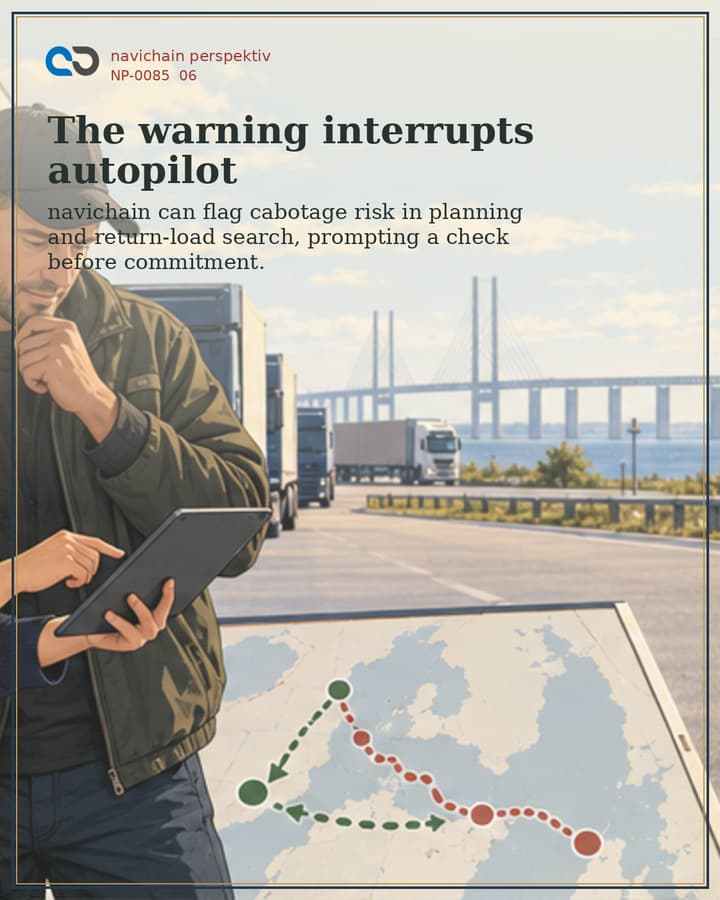
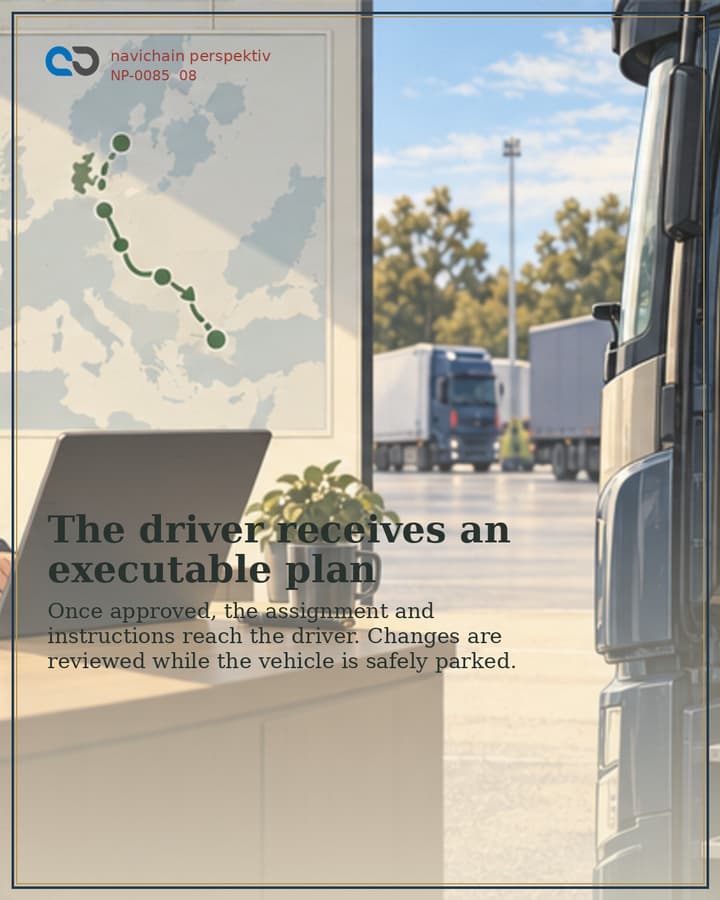
Dispatch runs the feasibility check. navichain surfaces driver-hour or rest concerns before the assignment is sent. The system can suggest suitable rest areas along the route. Dispatch chooses the place and reserves the time. If the window no longer works, dispatch can move a stop or call the customer before the driver is trapped. navichain can flag cabotage risk in planning and return-load search, prompting a check before commitment. Dispatch evaluates the evidence and rules, selects a lawful option or declines. The system does not replace legal judgement. Once approved, the assignment and instructions reach the driver. Changes are reviewed while the vehicle is safely parked.
A realistic example
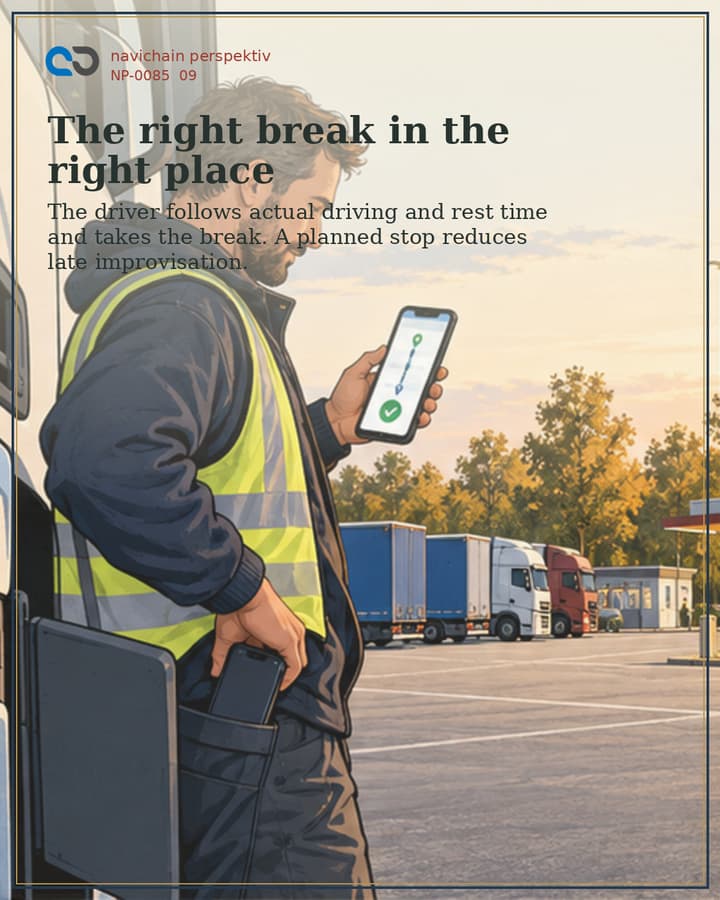
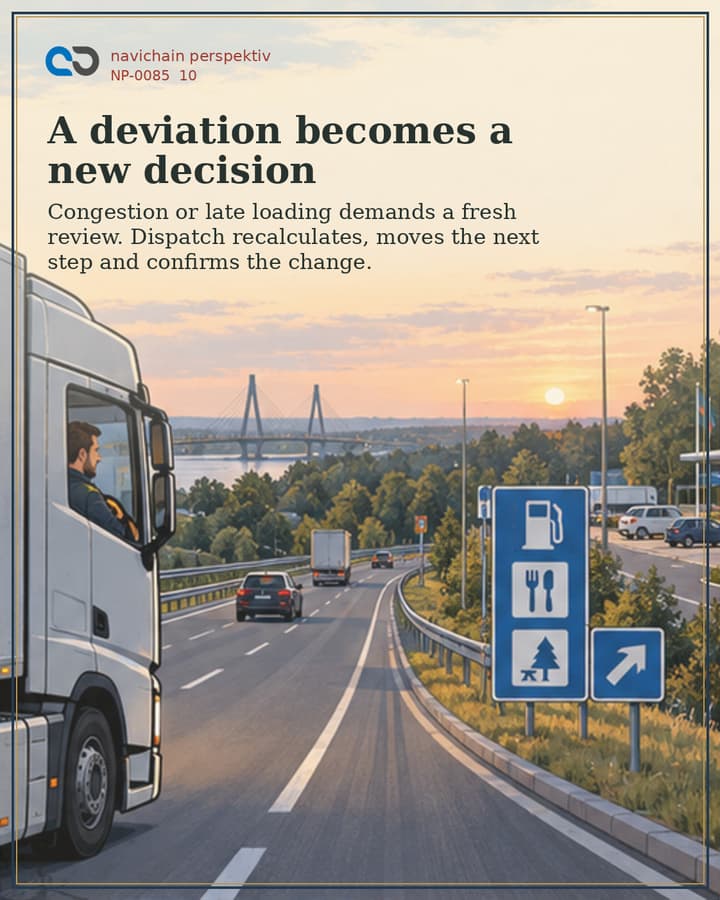
Example: a driver completes an international delivery and dispatch considers a domestic return load. After an international delivery, previous cabotage operations, country and timing must be reviewed before accepting another domestic movement. navichain can flag cabotage risk in planning and return-load search, prompting a check before commitment. Dispatch evaluates the evidence and rules, selects a lawful option or declines. The system does not replace legal judgement. The driver follows actual driving and rest time and takes the break. A planned stop reduces late improvisation. Congestion or late loading demands a fresh review. Dispatch recalculates, moves the next step and confirms the change.
The value: fewer surprises
Plans, warnings and decisions stay with the transport so the next dispatcher can continue without reconstructing scattered messages. Confidence comes from early visibility, clear responsibility and one agreed plan shared by driver and dispatch. Measure warnings reviewed before dispatch, plans changed before departure, unplanned rest stops and deviations requiring rework. These measures describe the workflow, not a legal guarantee.
Start with the right data
Begin with reliable driver, vehicle, route, country, time-window and previous-movement data. Agree who reviews warnings, who may alter a run and how a parked driver acknowledges changed instructions. Test one representative international flow and one deviation before widening the process.
Related perspectives
- NP-0002 — Cabotage: three operations in seven days are only the beginning.
- NP-0036 — The shortest road is not always driveable.
- NP-0084 — Tachograph data without data chaos.
Next step
Try it today. Start free. It is easy to get started. Create your account and try navichain with your next transport. navichain.se/signup
References
- European Commission: Driving time and rest periods — 2026-09-08.
- EUR-Lex: Regulation (EC) No 561/2006 — consolidated text — 2026-09-08.
- navichain documentation · 2026-08-29 — 2026-09-08.