The warehouse need not be permanent. Control must be.
By navichain team
How a small or temporary warehouse becomes a controlled part of the delivery chain
A rented hall will be empty again in ten weeks. Until then, every item must be received, found, allocated and delivered. Follow Sofia, Amir and Elin as navichain helps them keep the entire flow together.
Executive summary
Small warehouses often sit between two extremes: manual lists that no longer reflect reality and a large warehouse-system project that is too heavy for the need. navichain’s strength is that the warehouse flow can sit in the same operational context as purchasing, sales orders, transport bookings, runs, documents and tasks. Configuration and connections are adapted to the company’s system environment. Customers rarely care that the goods passed through a temporary hall. They care that the correct goods arrive, the information can be trusted and somebody takes responsibility when the plan breaks. For the team, peace of mind means not starting every exception with: Who knows what happened?
When the business grows faster than the warehouse
A warehouse does not always begin with a multi-year plan. It may begin with a new contract, a seasonal peak or a project close to the customer. The physical site can appear in days, but responsibility for the information starts with the first delivery.
Between the spreadsheet and the major WMS project
Small warehouses often sit between two extremes: manual lists that no longer reflect reality and a large warehouse-system project that is too heavy for the need. navichain’s strength is that the warehouse flow can sit in the same operational context as purchasing, sales orders, transport bookings, runs, documents and tasks. Configuration and connections are adapted to the company’s system environment.
The story, step by step
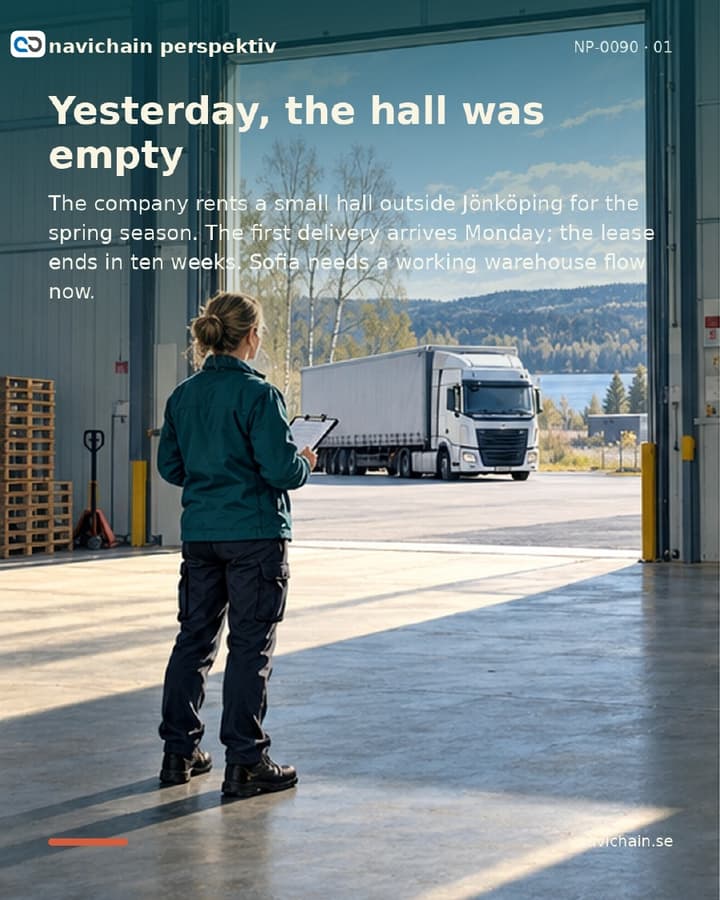
01. Yesterday, the hall was empty
The company rents a small hall outside Jönköping for the spring season. The first delivery arrives Monday; the lease ends in ten weeks. Sofia needs a working warehouse flow now.
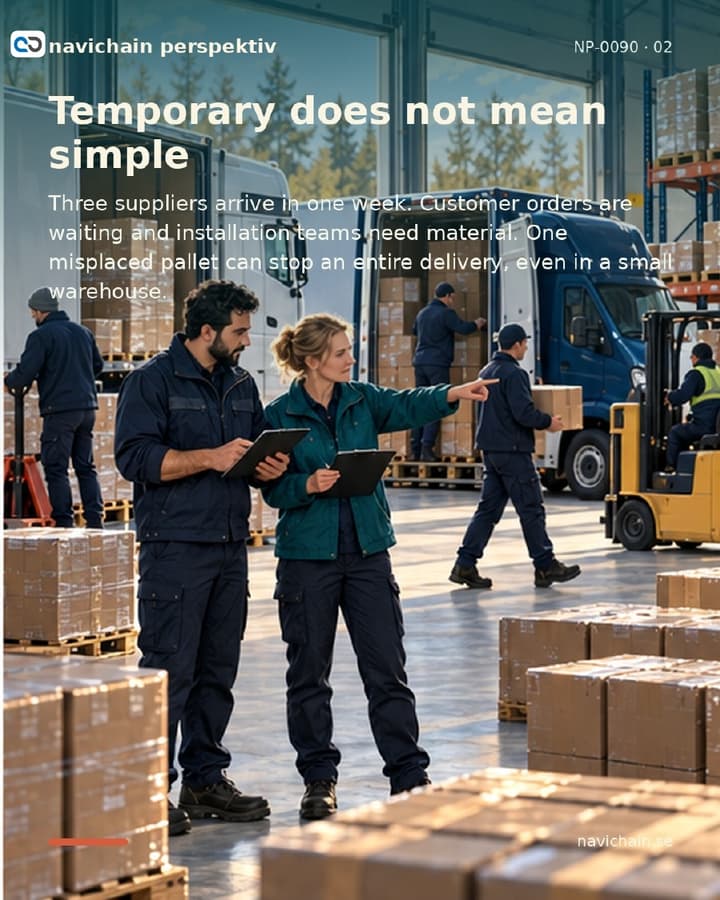
02. Temporary does not mean simple
Three suppliers arrive in one week. Customer orders are waiting and installation teams need material. One misplaced pallet can stop an entire delivery, even in a small warehouse.
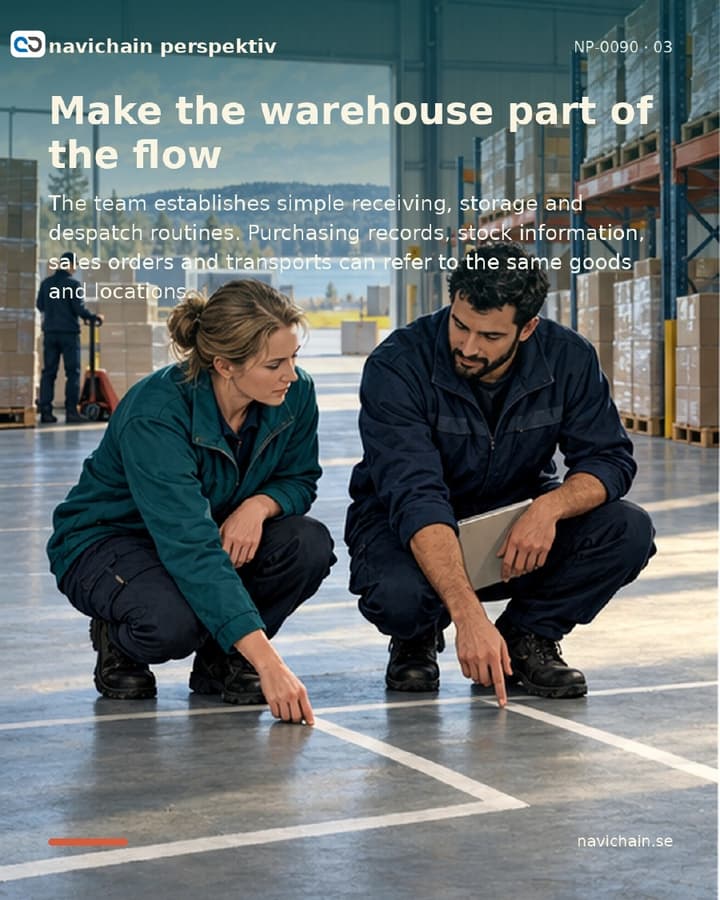
03. Make the warehouse part of the flow
The team establishes simple receiving, storage and despatch routines. Purchasing records, stock information, sales orders and transports can refer to the same goods and locations.
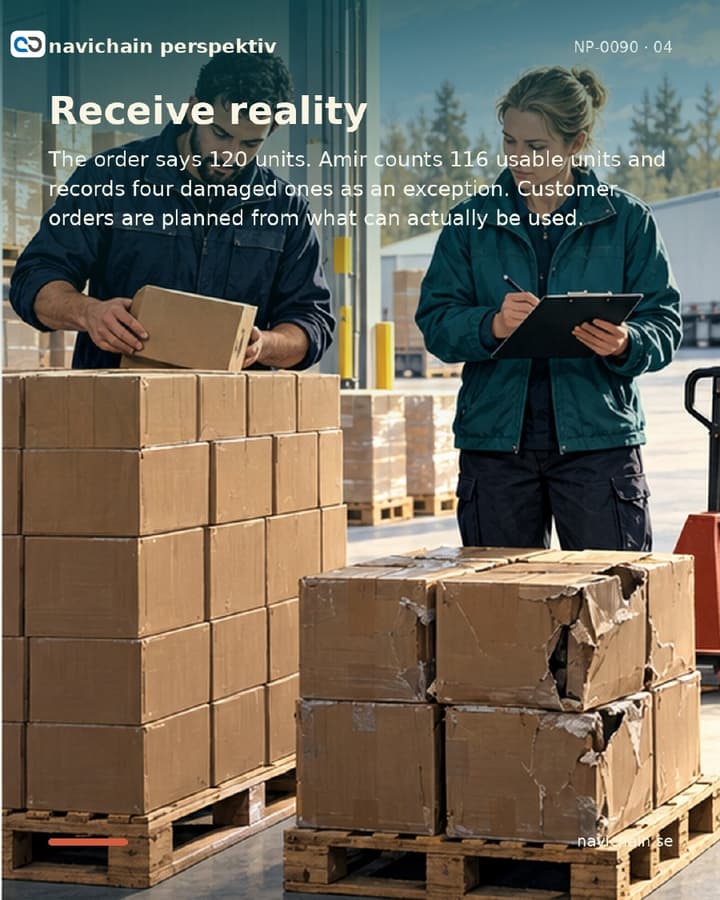
04. Receive reality
The order says 120 units. Amir counts 116 usable units and records four damaged ones as an exception. Customer orders are planned from what can actually be used.
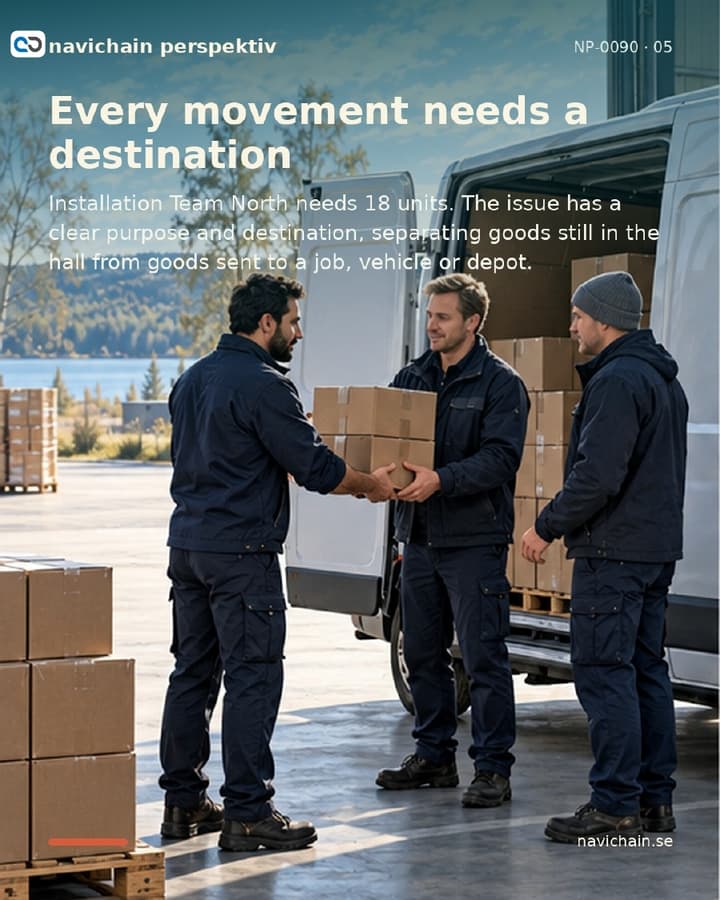
05. Every movement needs a destination
Installation Team North needs 18 units. The issue has a clear purpose and destination, separating goods still in the hall from goods sent to a job, vehicle or depot.
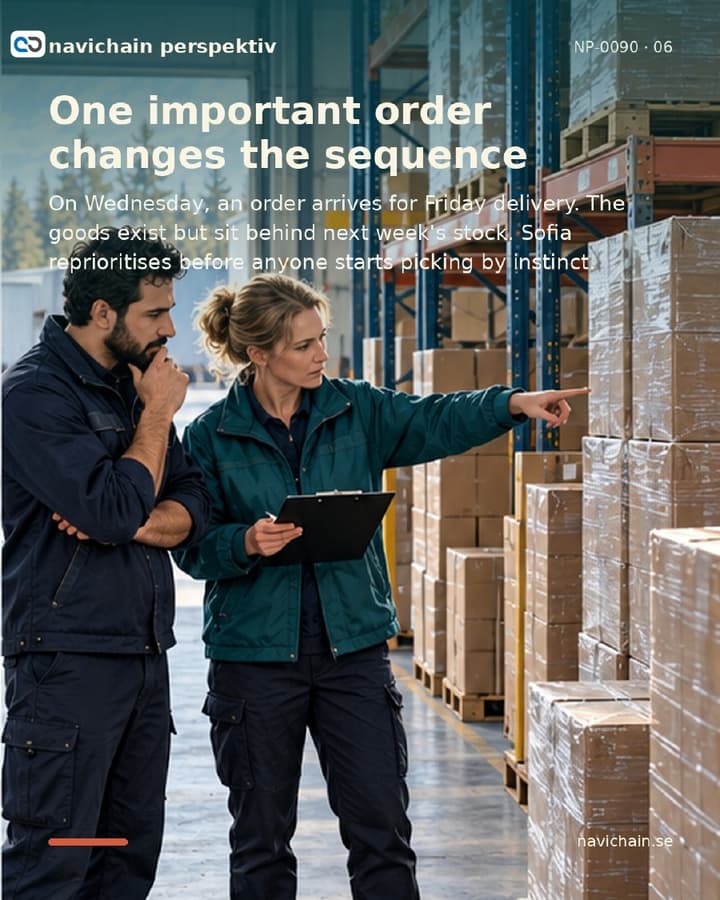
06. One important order changes the sequence
On Wednesday, an order arrives for Friday delivery. The goods exist but sit behind next week’s stock. Sofia reprioritises before anyone starts picking by instinct.
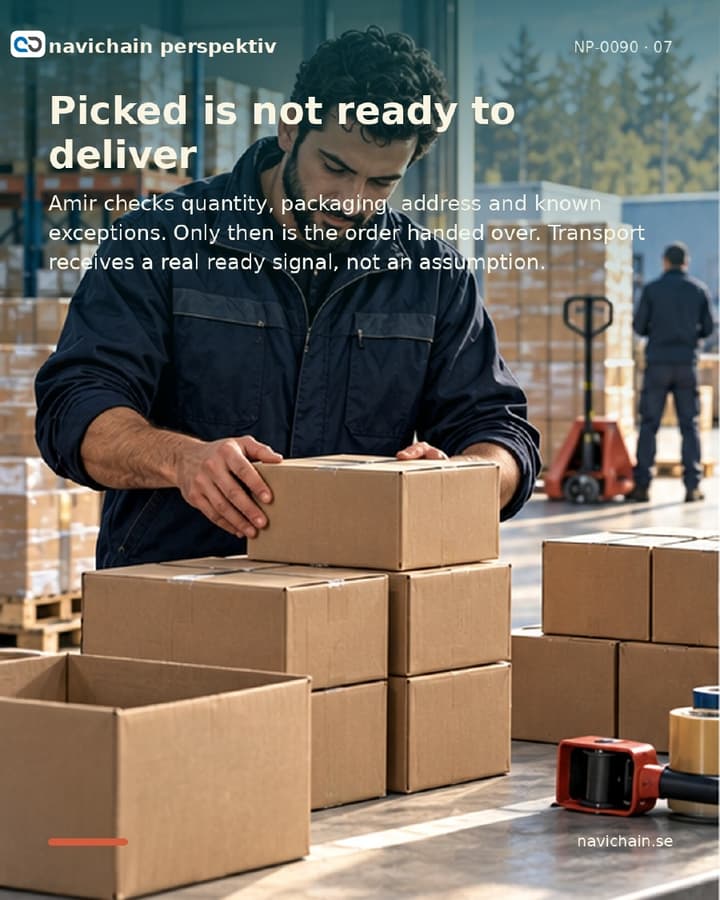
07. Picked is not ready to deliver
Amir checks quantity, packaging, address and known exceptions. Only then is the order handed over. Transport receives a real ready signal, not an assumption.
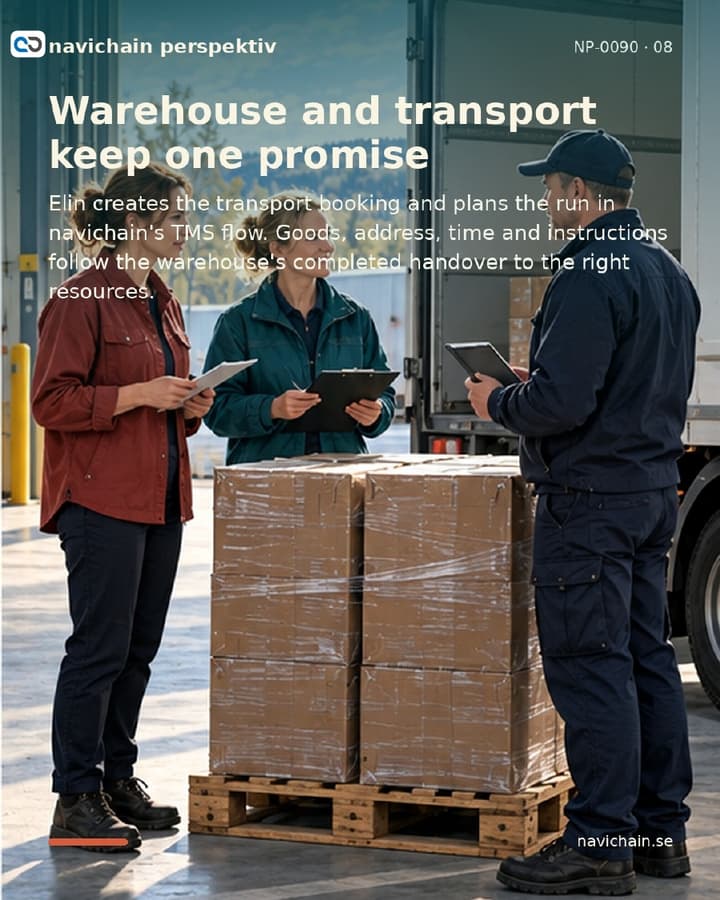
08. Warehouse and transport keep one promise
Elin creates the transport booking and plans the run in navichain’s TMS flow. Goods, address, time and instructions follow the warehouse’s completed handover to the right resources.
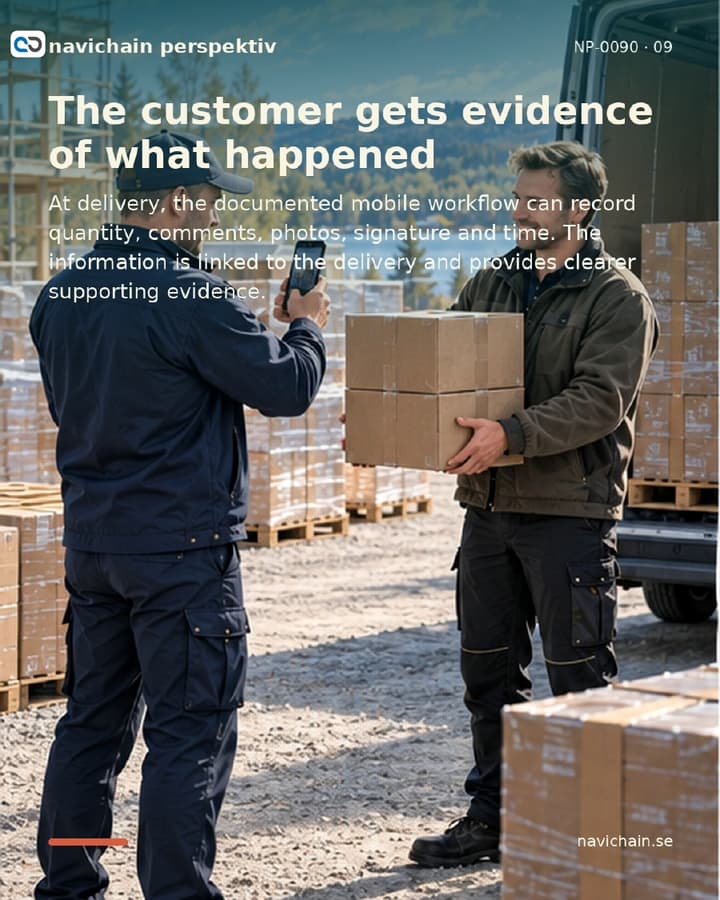
09. The customer gets evidence of what happened
At delivery, the documented mobile workflow can record quantity, comments, photos, signature and time. The information is linked to the delivery and provides clearer supporting evidence.
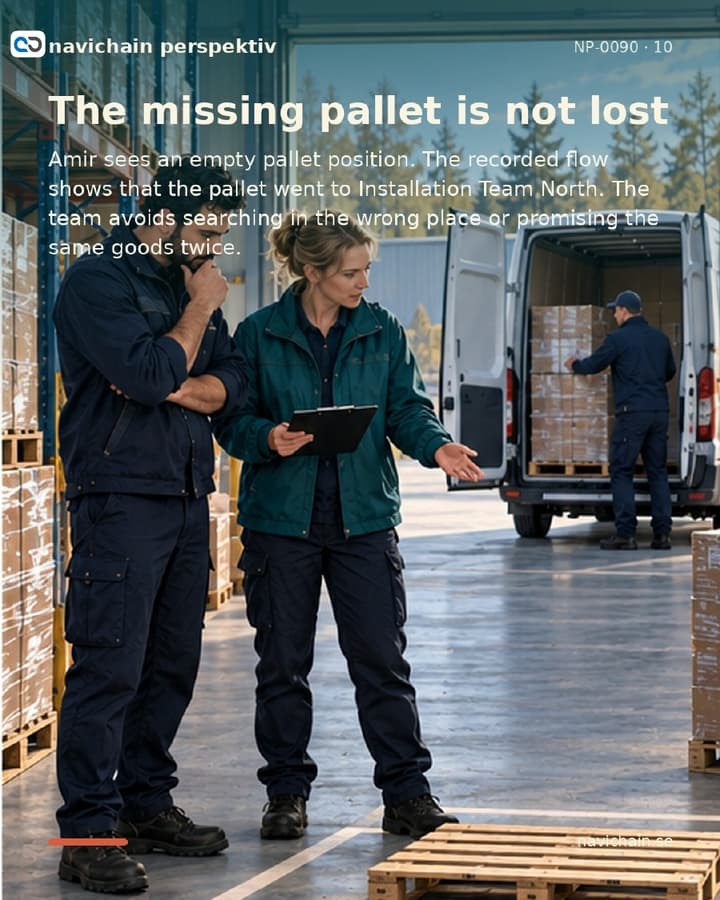
10. The missing pallet is not lost
Amir sees an empty pallet position. The recorded flow shows that the pallet went to Installation Team North. The team avoids searching in the wrong place or promising the same goods twice.
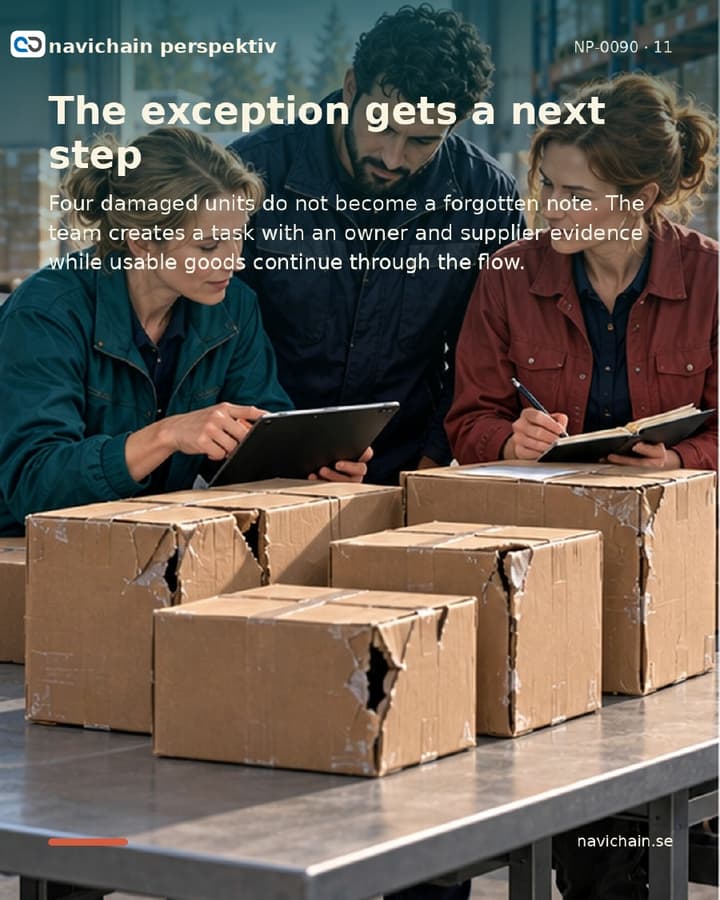
11. The exception gets a next step
Four damaged units do not become a forgotten note. The team creates a task with an owner and supplier evidence while usable goods continue through the flow.
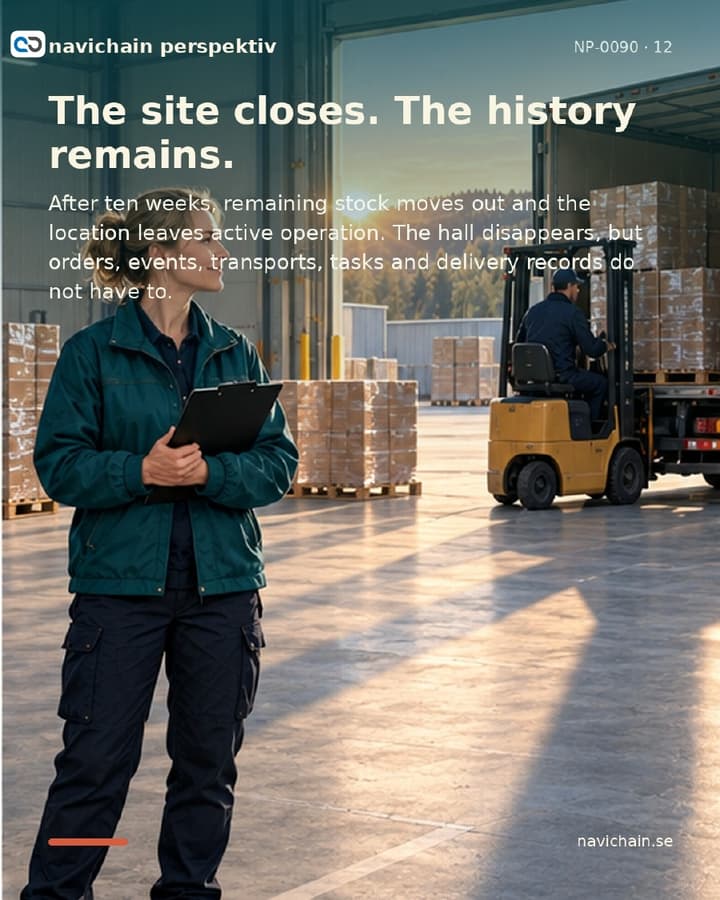
12. The site closes. The history remains.
After ten weeks, remaining stock moves out and the location leaves active operation. The hall disappears, but orders, events, transports, tasks and delivery records do not have to.
Control that is felt beyond the warehouse
Customers rarely care that the goods passed through a temporary hall. They care that the correct goods arrive, the information can be trusted and somebody takes responsibility when the plan breaks. For the team, peace of mind means not starting every exception with: Who knows what happened?
Begin with a real flow
Choose one inbound delivery, one warehouse or depot and one outbound customer order. Decide how you distinguish expected from received, stored from moved and picked from delivered. Test damage, an internal movement and a late priority change. That reveals the control the operation actually needs.
Try it today. Start free.
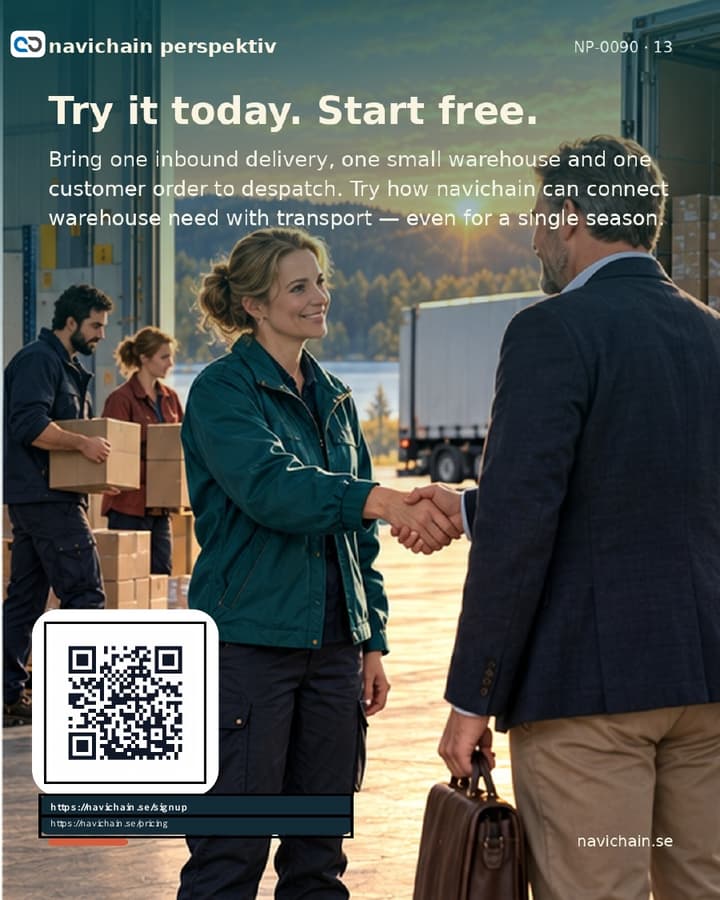
Bring one inbound delivery, one small warehouse and one customer order to despatch. Try how navichain can connect warehouse need with transport — even for a single season.
navichain.se/signup · navichain.se
Sources and scope
- NaviChain Product Truth, controlled current projection PT-2026.08.29-R001: transport bookings, runs, planning, tasks/workspace and digital CMR/POD claim boundaries.
- Product-owner-approved process description for NP-0087–NP-0090: purchasing, sales-order and warehouse-flow context. Configuration and integrations depend on the customer’s system environment.
- This edition uses a hypothetical example. Names, quantities and the ten-week period illustrate the process and are not customer claims.