Cabotage: the three-operation rule is only the beginning
By navichain team
Cabotage needs more than spare capacity. Follow how dispatch and drivers keep vehicle history and evidence together with navichain.
navichain perspektiv · NP-0002
Summary
An available truck is only part of the decision about the next domestic job abroad. Dispatch needs to know which international movement preceded it, which motor vehicle performed it, what has happened since and which evidence the driver can produce. Navichain’s bookings, transport planning, vehicle records, documents and proof-of-delivery workflows help you organise a shared way of working.1 The dispatcher assesses the next job against the actual history and applicable rules. The driver reports what happened, and the next colleague receives usable information. Start with one recurring international movement and follow every handover. The practical value is less searching, clearer ownership and a better-informed decision before the truck is loaded again.
Turn available capacity into an informed decision
Identify the vehicle behind the offer
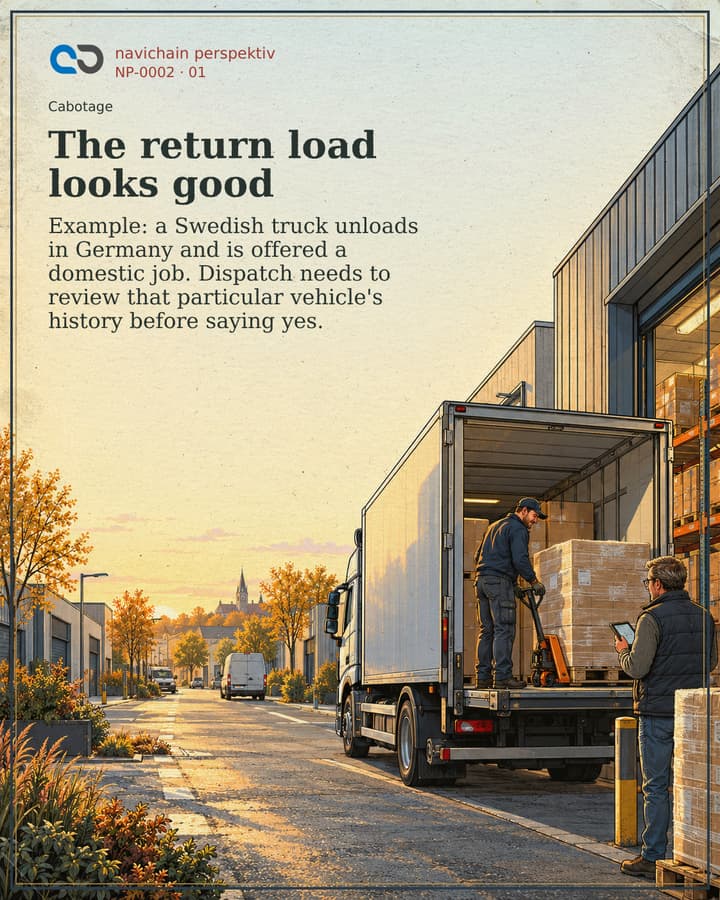
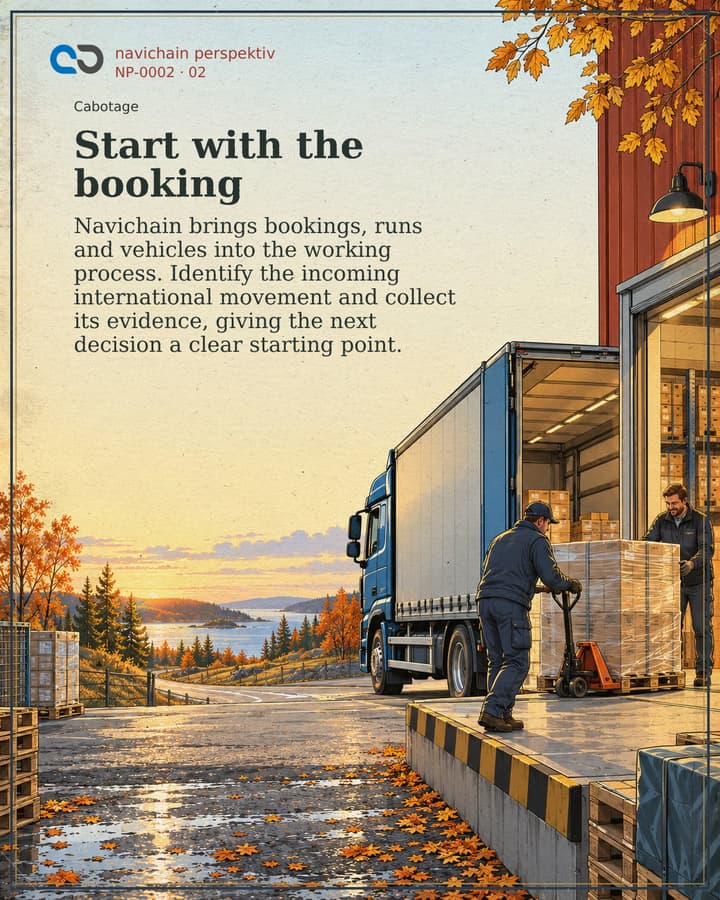
A customer offers an attractive return load. Capacity and delivery times are the first checks, but dispatch also needs the history of the particular motor vehicle. A shared order reference is not enough if the evidence belongs to another tractor unit. In navichain, bookings and runs sit alongside vehicles and drivers. Agree how you identify the incoming international movement and subsequent jobs, so another colleague can follow the connection without guessing.1 2
Work from actual unloading
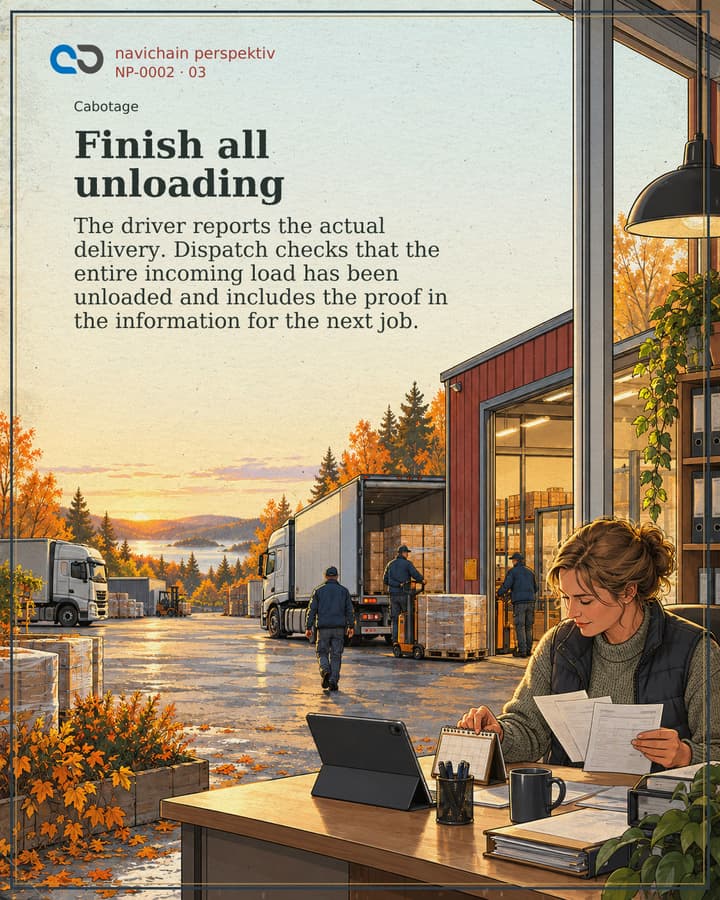
Planned arrival and completed unloading are different events. The driver supplies the delivery details; dispatch checks that the entire incoming movement has finished. Keep the relevant proof with the transport documentation and distinguish actual events from scheduled times. Navichain supports digital CMR and proof-of-delivery workflows that give the team documents to work with.1 The colleague taking over needs to understand which event supports the assessment.
Assess the next job before promising it
Review vehicle, country, previous movements, deadlines and available evidence together. A booking provides the working information; the dispatcher’s decision also considers the rules for the actual operation. Where information is unclear, assign someone to complete it before confirming the job. Use navichain’s tasks and documents to organise that work, and plan another solution when this vehicle is unsuitable. Sales then has a clear answer to give the customer.
Example: two deliveries and a driver change
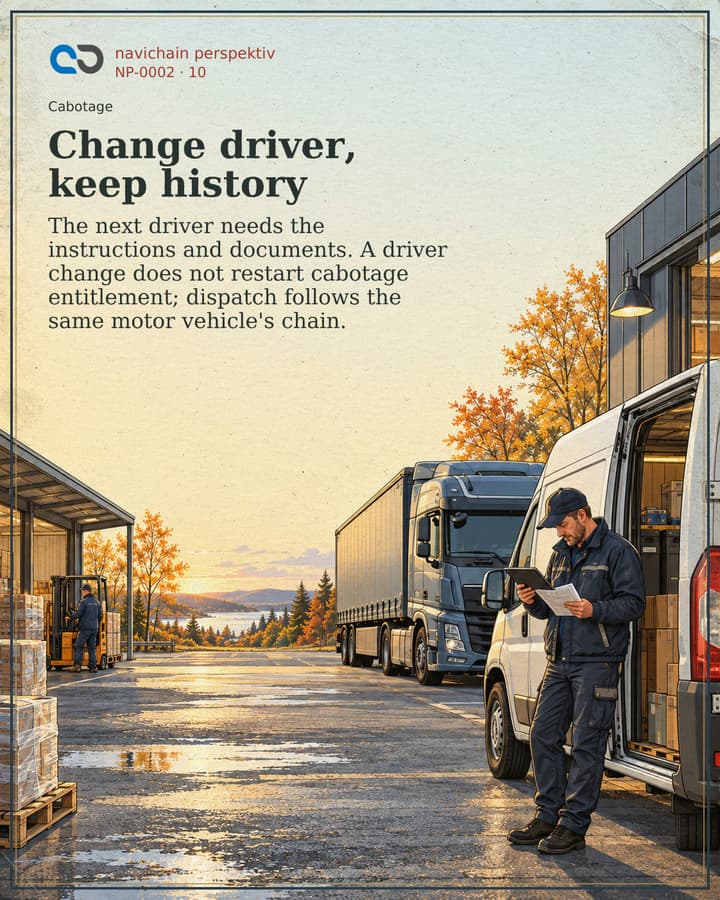
A Swedish haulier with the necessary authorisation travels to Germany with two delivery points. After the first unloading, a German domestic job is offered. Dispatch sees that a second unloading remains and waits before the next loading. Once the driver reports that all goods have been delivered, the team reviews the history and evidence before planning the next job. Later, the driver changes. The incoming driver receives the instructions and documents while the vehicle’s history continues. This is an illustrative workflow, not a measured customer case.
Make missing information someone’s responsibility
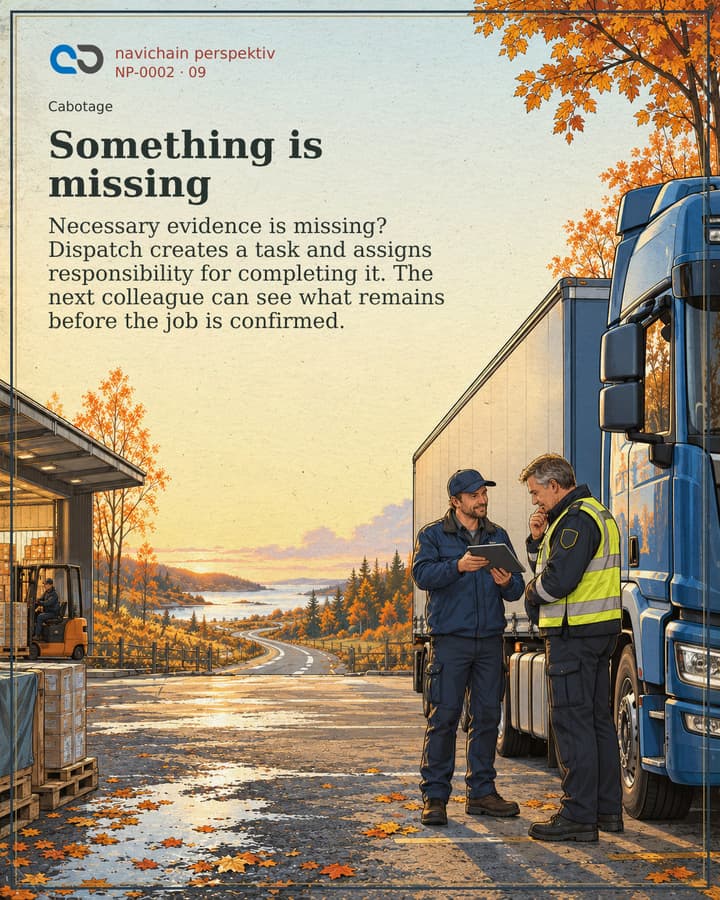
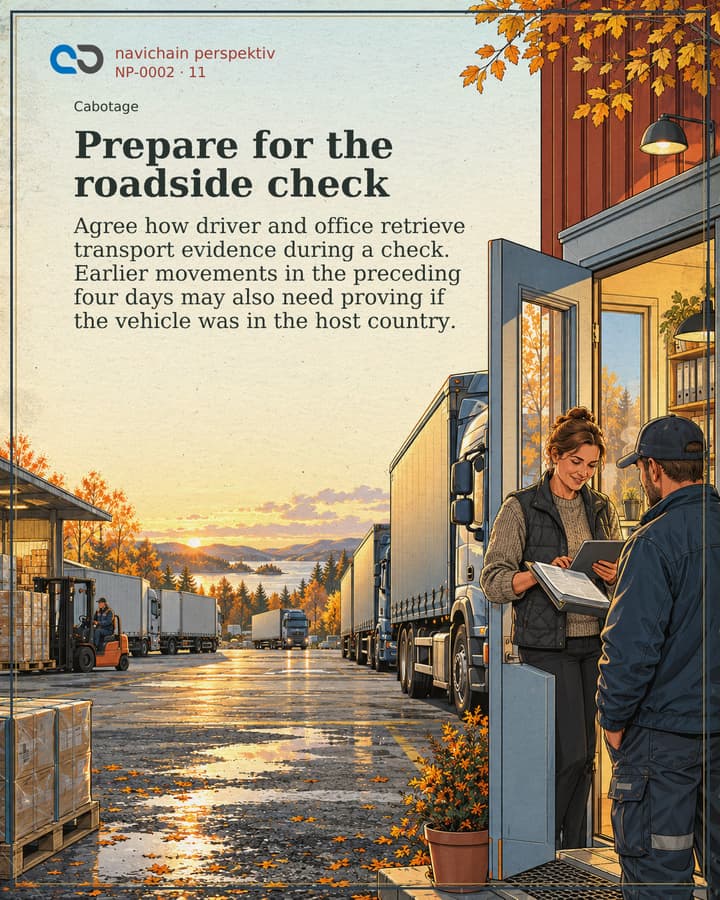
Suppose a delivery document lacks necessary information when a colleague finishes their shift. Create a task identifying what needs completing and who owns it. The next colleague can follow up from a known starting point. Agree how drivers and office staff obtain the evidence quickly during a roadside check. The Swedish Transport Agency’s guidance also illustrates why national application belongs in the operating routine.4
Measure the difference in the working day
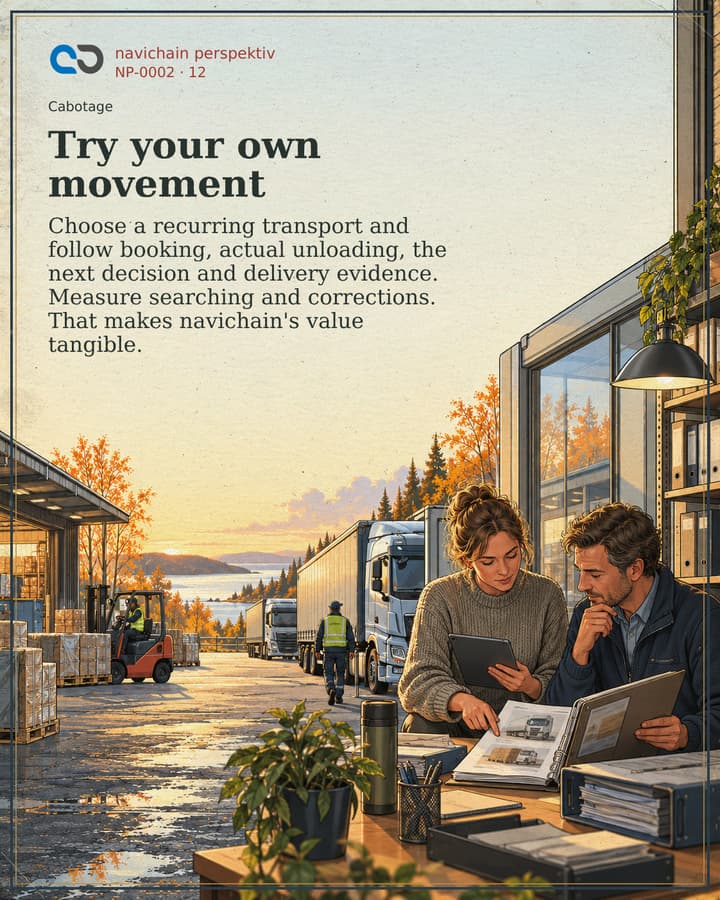
Track how long it takes to retrieve complete evidence, how often a job requires correction and how many handovers generate extra calls. Compare similar movements before and after introduction. Start with one vehicle and a transport chain, name the responsible people and walk through a normal movement and an exception. Bring those examples to a navichain demonstration. The useful question is whether the next colleague can make an informed decision without reconstructing the history.
How it works in practice
Cabotage is temporary national carriage in a host state following an international carriage.
The right does not arise merely because the vehicle is in the country. 3
First: the incoming international carriage
All goods must be delivered. The final unloading starts the timeline. 3
Three elements must stay connected
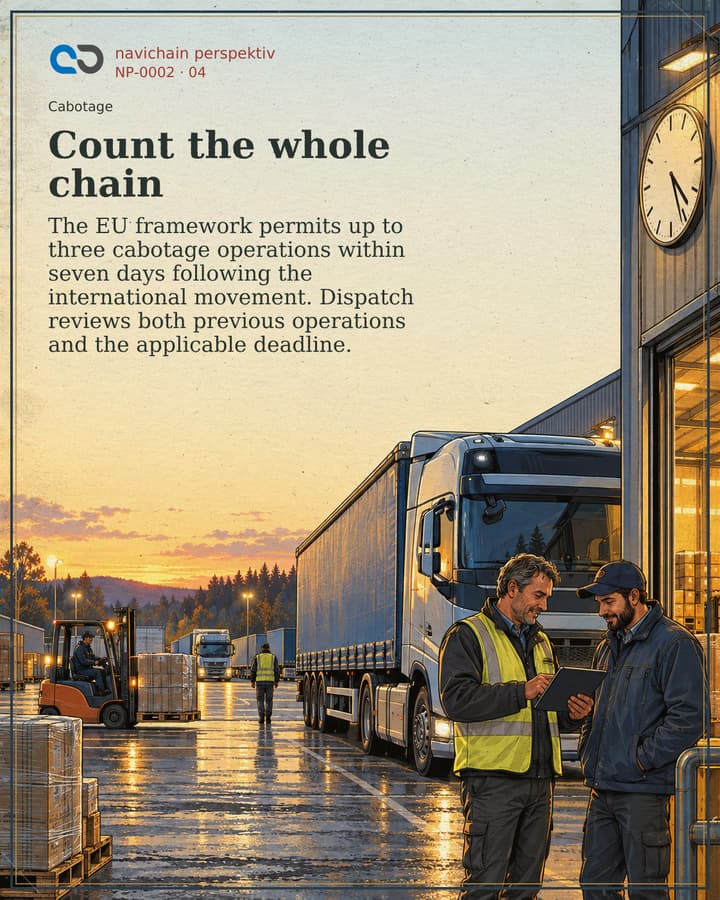
Count from the final unloading. No more than 3 cabotage operations; Within the overall 7 calendar days; After the international carriage is completed. 3
Seven days is one continuous period, not seven selectable working days.
Weekends and public holidays may affect the detailed calculation. Always check the current rules for the particular carriage. 3
The same motor vehicle connects the chain
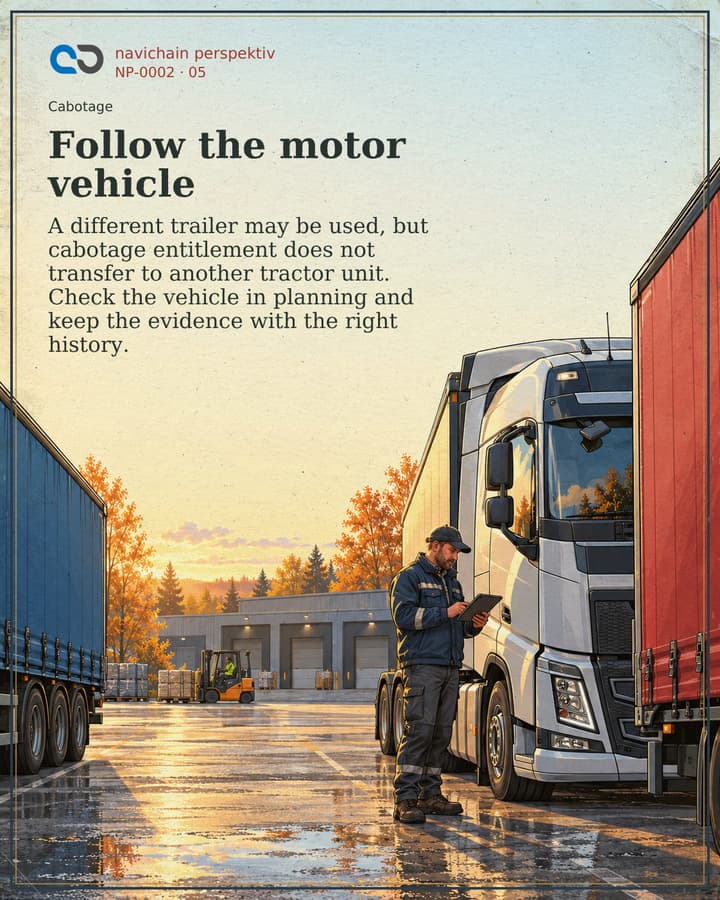
A different trailer may be used, but the right cannot move to another tractor unit. 3
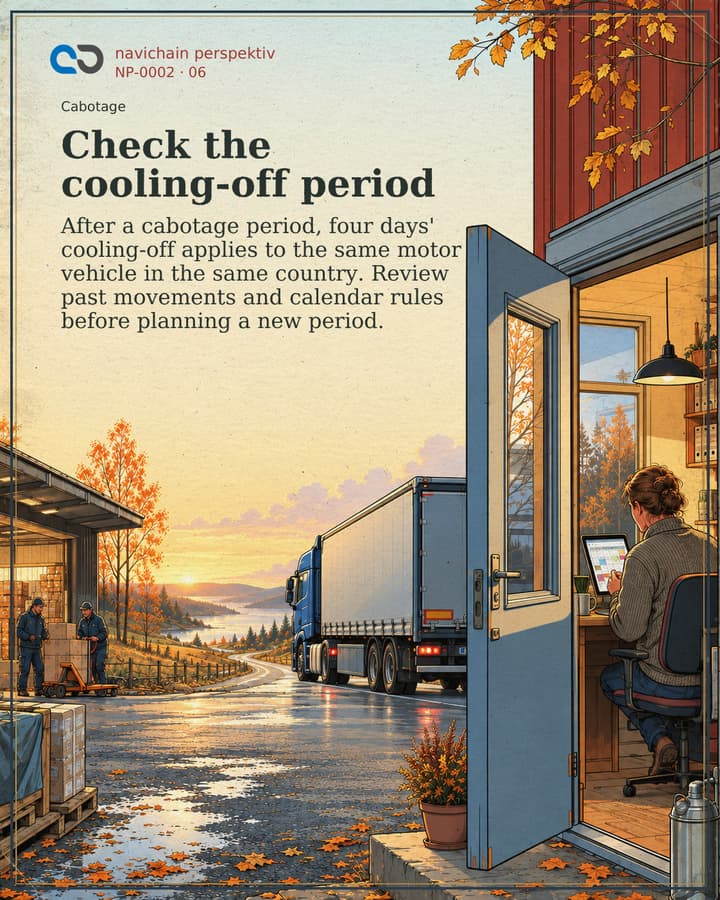
After cabotage ends, four days cooling off applies to the same vehicle in the same country.
The restriction follows both the motor vehicle and the Member State. Connect each cooling-off period to the correct vehicle and country. 3
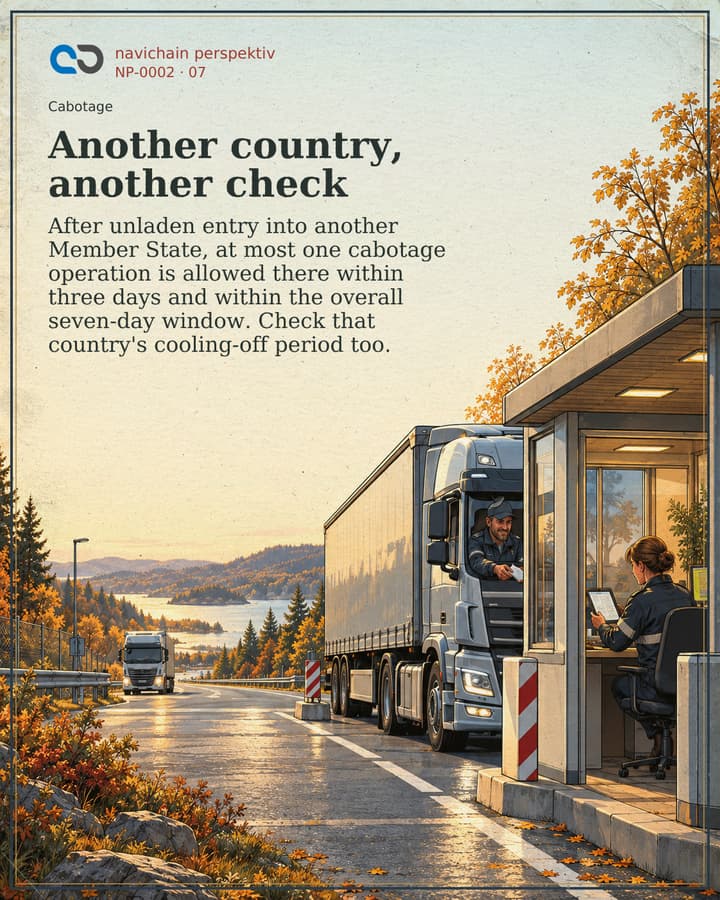
Cabotage in another Member State
All three conditions need to be met. No more than 1 operation in that state; Within 3 days after unladen entry; Still within the overall 7 days. 3
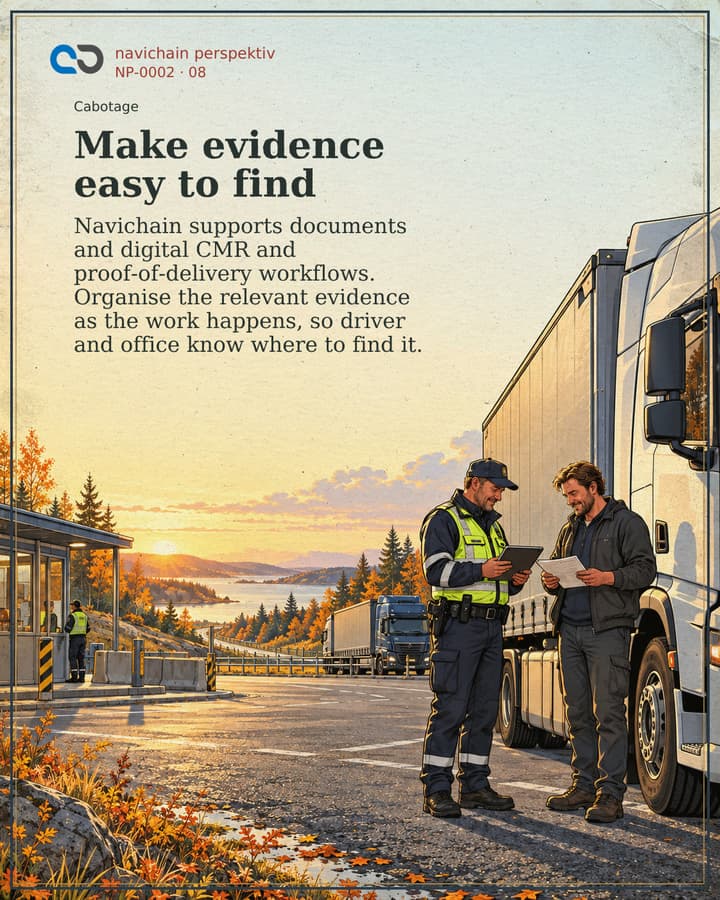
Be ready to show this at an inspection
Article 8(3) defines the required particulars. The incoming international carriage; Every completed cabotage operation; Vehicle, country and relevant timestamps; Evidence available during the roadside check. 3
Electronic is fine
Evidence may be shown or transmitted electronically during the roadside inspection, including by e-CMR. Operations during the previous four days may also need to be evidenced. 3
These rules concern EU cabotage by a haulier holding the required Community licence entitlement. An international trip does not itself give a third-country haulier a right to cabotage. Seven-, three- and four-day periods follow the rules for calendar days, weekends and public holidays. If the vehicle was in the host country during the four days before the incoming international journey, those movements must also be evidenced. 3
Related perspectives
Shared planning, driver time and route choice affect the same transport chain.
- NP-0001 — Your customer’s system runs their flow - but who runs yours?
- NP-0003 — Europe is short of drivers. Can you afford to leave yours waiting?
- NP-0036 - The shortest route is not always driveable
Try it yourself
Try it today! Start for free.
Getting started is easy. Create your account and try navichain on your next transport.
id.navichain.se · navichain.se 5
References
- navichain documentation · 2026-08-29
- navichain · TMS / WMS · 2026-09-08 · Accessed: 2026-09-08
- European Commission: cabotage rules · 2022-02-21 · Accessed: 2026-09-08
- Swedish Transport Agency: national cabotage guidance · 2022-02-21 · Accessed: 2026-09-08
- navichain: plans · 2026-09-08 · Accessed: 2026-09-08