Wiedza
Przewodniki, myślenie produktowe i ekonomia nowoczesnej logistyki.

Stan na półce to nie obietnica: w magazynie, zarezerwowane, dostępne i w drodze
Czterdzieści dwa na półce, trzydzieści zarezerwowane, sześćdziesiąt w drodze: tylko jedna liczba to obietnica sprzedaży, a spóźniona dostawa zaczyna się od salda.

Trzy zegary w każdym wynajmie: wymeldowany, odebrany, gotowy do wynajęcia
Wynajem przestaje być płatny w jednym momencie, maszyna zjeżdża z placu w innym, a zarabia znów w trzecim. Tam leżą spory o faktury i utracone wykorzystanie.

Własna ciężarówka czy kupiony fracht: decyzja, którą większość producentów podejmuje z przyzwyczajenia
Własna ciężarówka producenta wydaje się bezpłatna, bo jest już spłacona. Co naprawdę kosztuje dostawa nią, gdzie przewoźnik jest tańszy, i czyja to decyzja.

Wycofanie partii to problem wyszukiwania: od numeru partii do odbiorcy, zanim dzień się skończy
Wycofanie produktu rzadko przegrywa na decyzji. Przegrywa na godzinach szukania, kto dostał partię. Czego wymagają unijne wytyczne GDP, z numerami rozdziałów.

Potwierdzenie dostawy, które klient pobierze sam, bez pytania Ciebie
Mail z prośbą o POD to cichsza siostra telefonu „gdzie jest moja przesyłka?”. Co potwierdzenie dostawy musi zawierać dla audytora i jak klienci pobierają je sami.

Rozmowa o warsztacie: własne stanowisko czy serwis zewnętrzny?
Własne stanowisko to koszt stały, który musi się obłożyć; serwis zewnętrzny kosztuje kontrolę i terminy. Jak ująć wybór i jaki układ mieszany stosuje większość flot.

Cenniki, które same się wyceniają
Macierze stref, progi wagowe, minima i dopłaty wyceniają spójnie tylko wtedy, gdy stosuje je system — nie "zadzwoń po wycenę".

Puste przebiegi w Europie: co naprawdę mówią statystyki
Własne dane Eurostatu o pustych kilometrach pojazdów w unijnym transporcie drogowym: podział krajowy/międzynarodowy, trend i to, co ukrywa średnia.

Tablet w kabinie czy telefon, który już jest w kieszeni?
Zamontowane na stałe tablety obiecują kontrolę, a najczęściej stają się drugim urządzeniem do ładowania, aktualizowania i gubienia. Kiedy tablet mimo to wygrywa.
Zlecenia stałe: fracht, który co tydzień wpisujesz ręcznie od nowa
Wtorkowy kurs rezerwowany od zera co poniedziałek to trud z marginesem błędu. Co daje zapisany szablon — i jakiej kontroli wymaga w zamian.

Przestojowe: jak rozliczyć godziny, które już straciłeś
Dwie godziny przy rampie to niewiele – dopóki nie policzysz ich w skali miesiąca. Jak rozliczać przestojowe bez sporu z klientem.

Godzina bez zasięgu: co robi Twoja operacja, gdy znika łączność
Tunele i martwe strefy zasięgu to codzienność, nie wyjątek. Co aplikacja kierowcy musi mieć lokalnie, co może poczekać, a co naprawdę nie może czekać na sygnał.
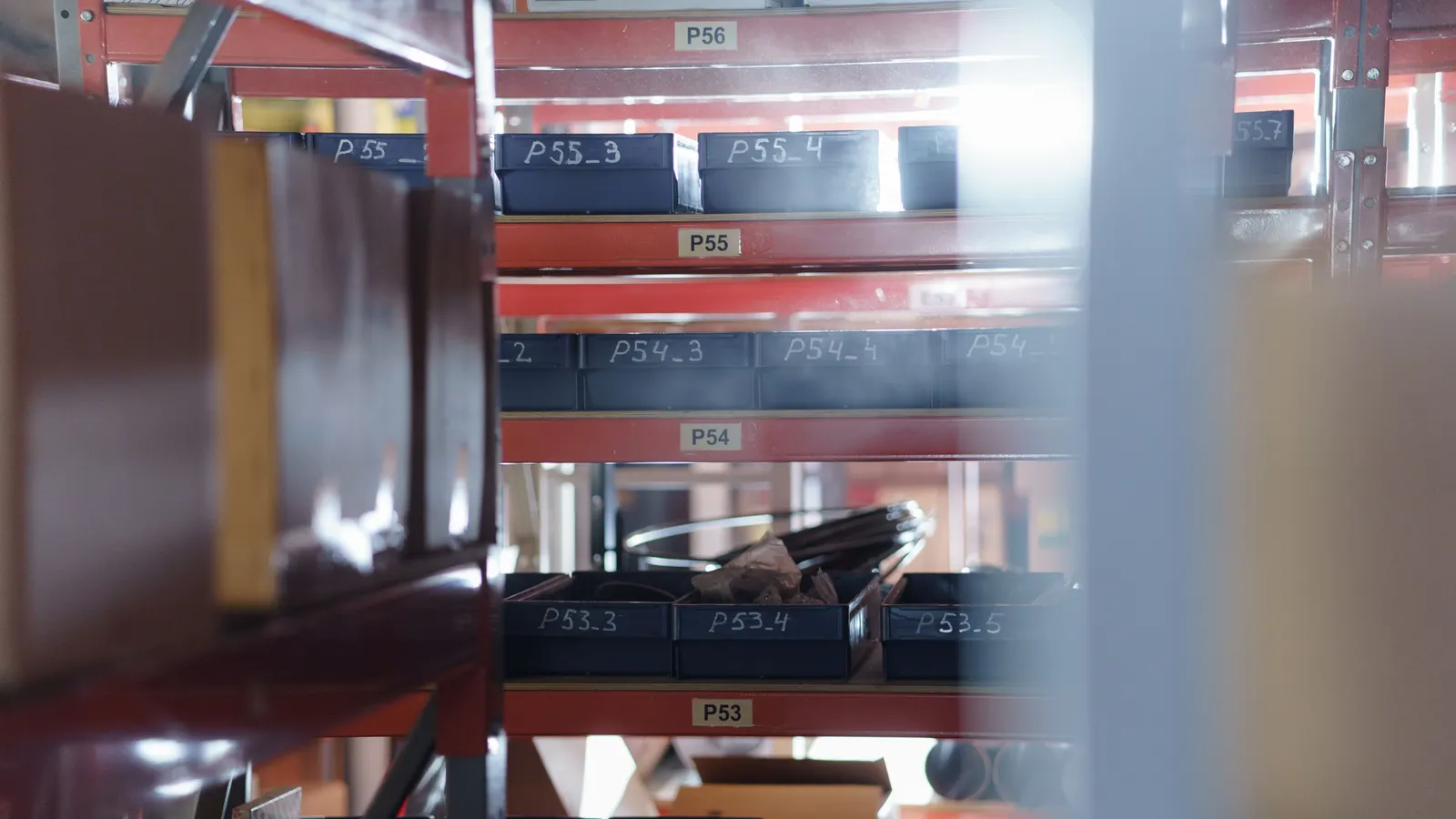
Części warsztatowe: magazyn to księga, do której wchodzisz
Stan części w warsztacie rozjeżdża się, gdy zużycie spisuje się po fakcie, nie na bieżąco. Zlecenia robocze, uczciwe progi zamówień i księga prostsza niż obejście.

Czytać zapytanie ofertowe jak przewoźnik, odpowiadać jak partner
Przetargi transportowe nagradzają tego, kto pokaże dane, a nie najniższą cenę. Co powinna zawierać odpowiedź i jakie klauzule zapowiadają kontrakt ze stratą.

Jedno źródło prawdy: co to znaczy dosłownie
Każdy dostawca deklaruje jedno źródło prawdy. Test jest węższy: czy dwa ekrany w Twojej firmie mogą nie zgadzać się co do tego samego faktu — i kto wygrywa?
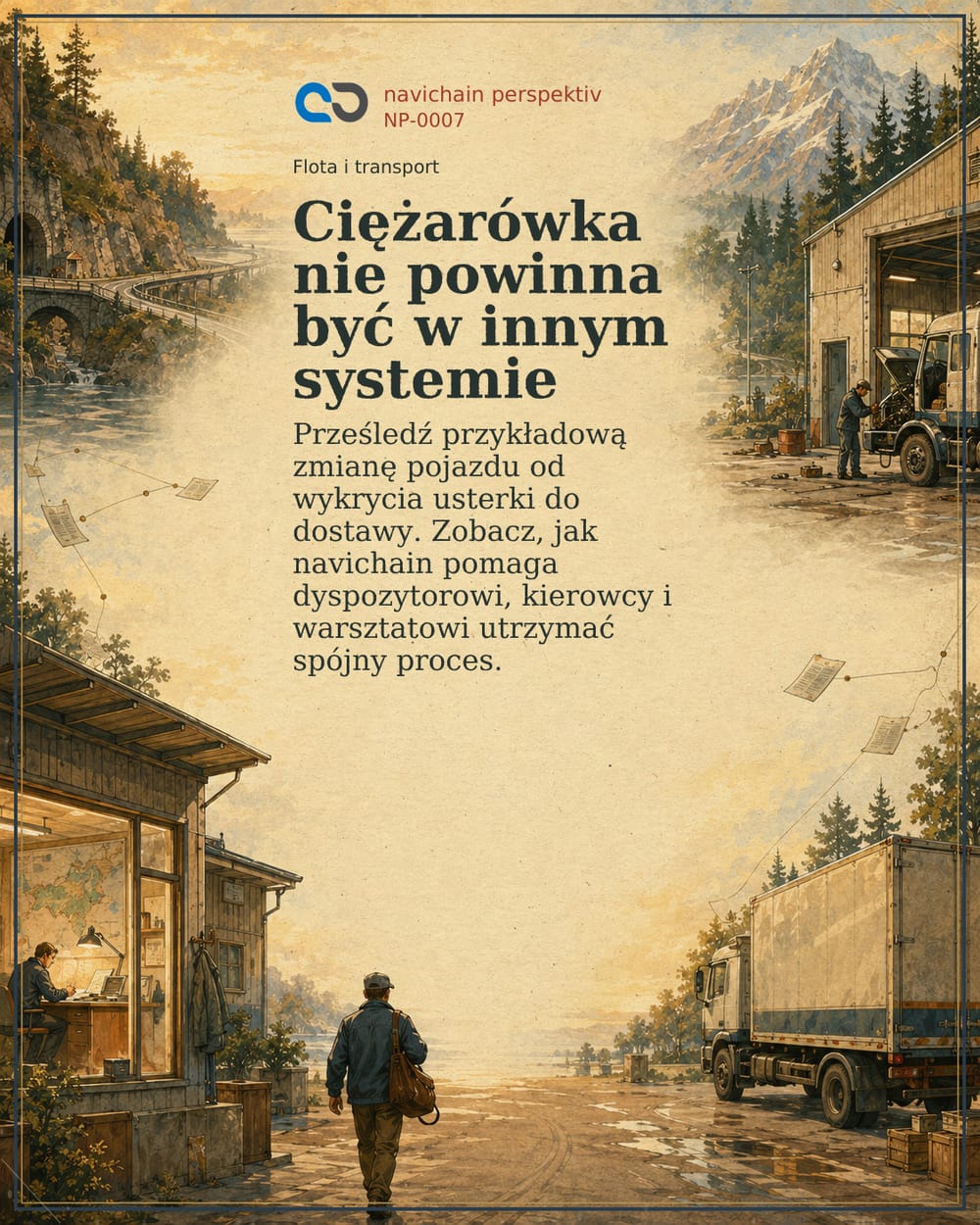
Ciężarówka nie powinna być w innym systemie
Gdy pojazd musi trafić do warsztatu, zmienia się nie tylko lista zadań mechaników.

Czy informacje o transportach są gotowe opuścić stos papierów?
Prześledźcie transport do Rotterdamu. Navichain pomaga połączyć zlecenie, instrukcje i potwierdzenie dostawy, aby kolejna osoba znalazła właściwe informacje.

Dostawa nie jest zakończona, dopóki dowód nie jest wiarygodny
Jak navichain łączy zlecenie, przekazania, odstępstwa i potwierdzenie dostawy w jeden użyteczny zapis transportu.

Droga kosztuje, zanim ciężarówka ruszy
Navichain pomaga ocenić trasę, opłaty i paliwo przed ofertą. Przemyślana cena zaczyna się od warunków przewozu.

Gdy dostawa odbiega od planu
Prześledź dostawę z uszkodzonym opakowaniem. Navichain pomaga kierowcy i biuru połączyć dokumentację, decyzję oraz następne działanie.

Kabotaż: trzy w siedem to dopiero początek
Kabotaż wymaga więcej niż wolnego miejsca. Zobaczcie, jak dyspozytor i kierowca łączą historię pojazdu z dowodami przy pomocy navichain.

Klient potrzebuje potwierdzenia dostawy. Nie całego dnia pracy kierowcy.
Ochrona danych w codziennym transporcie dzięki jasnym rolom i kontrolowanemu dostępowi.

Kliknięcie to początek. Dostawa to obietnica.
Jak navichain łączy zamówienia internetowe, zakupy, magazyn i dystrybucję

Magazyn nie musi być stały. Kontrola musi.
Za dziesięć tygodni wynajęta hala znów będzie pusta. Do tego czasu każdy towar trzeba przyjąć, znaleźć, przypisać i dostarczyć.

Paleta zeskanowana. Czy jest gotowa na kolejny samochód?
Sygnał identyfikuje towar. navichain łączy przyjęcie, lokalizację i kolejny transport w jednym procesie.

Spokój w kabinie. Kontrola w dyspozytorni.
Widoczne przed decyzją odpoczynki i warunki kabotażu pozwalają działać wcześniej i przekazać kierowcy wykonalny plan.

System klienta planuje jego transport. Kto planuje cały dzień przewoźnika?
Klient może mieć świetny portal, a przewoźnik nadal potrzebować własnego narzędzia do zarządzania pracą. Portal pokazuje zamówienia jednego zleceniodawcy.

System klienta prowadzi ładunek. Kto prowadzi Twoją firmę?
Jak przewoźnik może zbudować własny obraz operacji ponad systemami klientów, nie zastępując tego, co już działa.

W Europie brakuje kierowców. Czy firmę stać na czas oczekiwania?
Gdy samochód stoi, zmienia się reszta dnia. Zobaczcie, jak użyć navichain do dokumentowania oczekiwania, reagowania na przyczynę i poprawy kolejnego kursu.

Właściwa część. Właściwy samochód. Zlecenie wykonane.
Technik może przyjechać punktualnie, a mimo to odbyć niepotrzebną podróż.

Wynajem pod kontrolą. Gotowość do kolejnego zadania.
Dostępność sprzętu, ceny, przydziały, dostawy i serwis w jednym procesie wynajmu.

Zamówione nie znaczy dostarczone
Obietnica hurtowni jest spełniona dopiero wtedy, gdy sprzedaż, zakupy, magazyn i dystrybucja działają jako jeden przepływ.

Notifications your customers want (and the ones they mute)
Four events earn a message: booked, collected, delivered, problem. Everything else trains the customer to ignore you — including the one that mattered.

Cross-docking or storage? Two warehouse jobs that pretend to be one
Flow-through is measured in hours and touches, custody in days and accuracy. Deciding which job a consignment is — at intake, not at discovery.
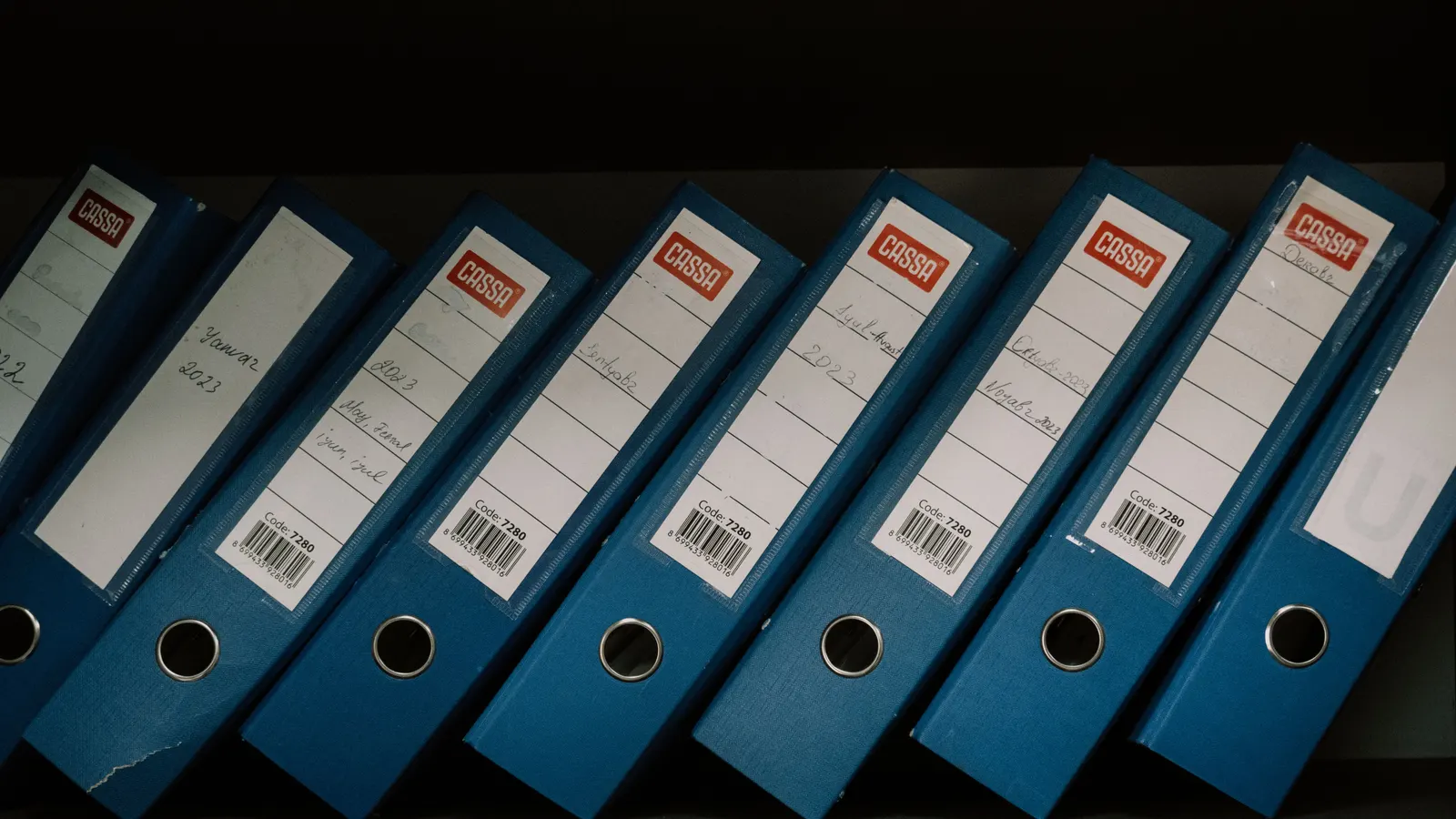
The personal data a carrier forgets it holds
Driver cards, GPS traces, dashcam footage, consignee names, a signature on a doorstep. What the GDPR actually asks of a transport operator, with article numbers.

The truck you buy for December stands still in February
A six-week peak does not justify a vehicle you own for ten years. What handing a run to another carrier actually asks of your office, and where it goes wrong.

The dates that ground a truck are not the ones in your service plan
Roadworthiness, tachograph calibration, ADR and driver CPC each run on their own clock, and any of them can park a truck. One register, forward notice, an owner.

Five numbers a small fleet should look at every Monday
Utilisation, empty share, revenue per vehicle-day, DSO and unplanned downtime — why these five, and why adding more dashboards is usually less management.

The damage file you build before anything is damaged
A damage claim is decided by what was recorded at handover. The reservations, photos and weights worth capturing every time, and the clocks that start at delivery.

Drivers' hours are a planning constraint, not a driver problem
Nine hours a day, 56 a week, a 45-minute break after four and a half. The EU limits are arithmetic a dispatcher can do before the truck moves.
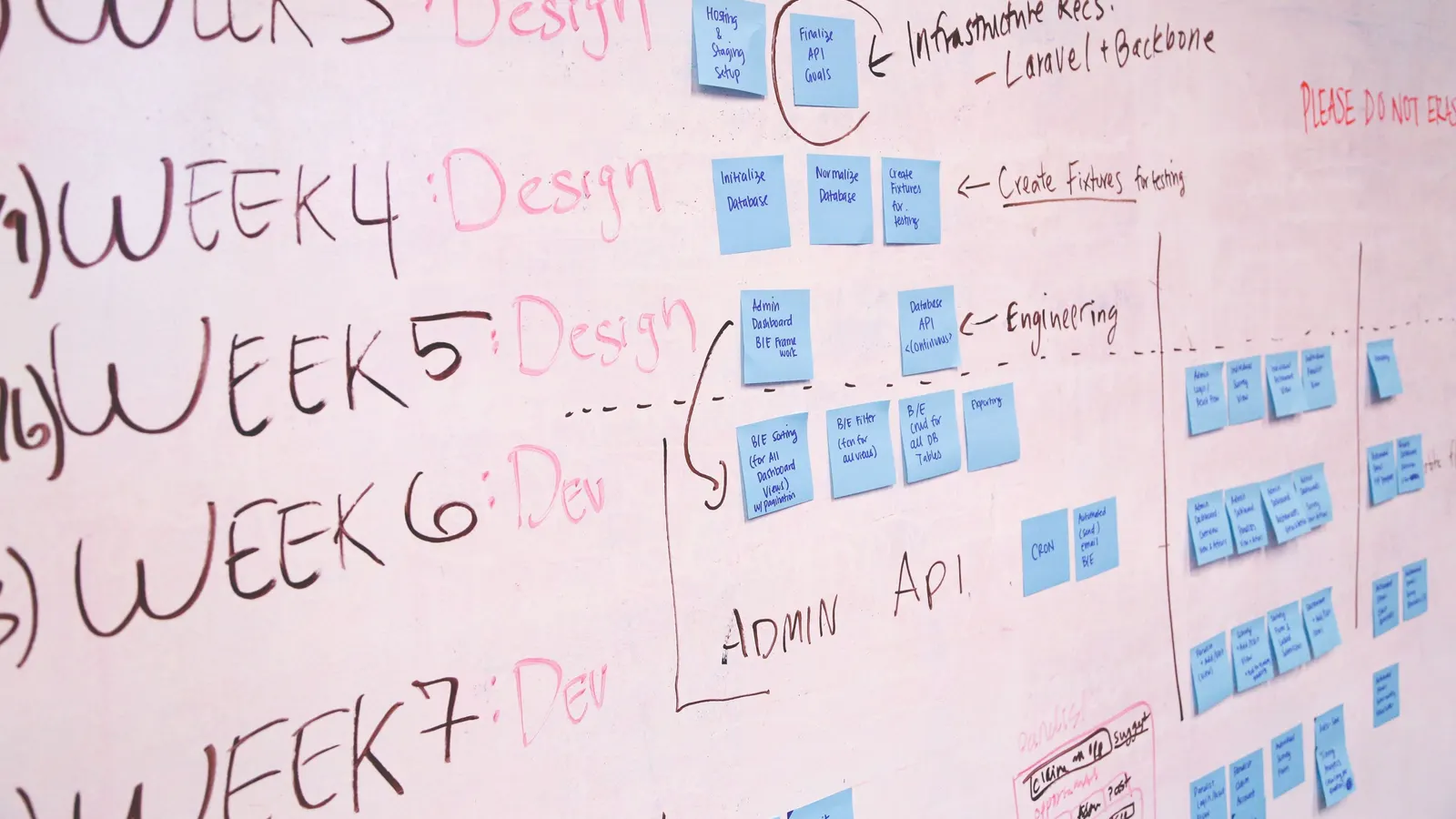
Why TMS implementations fail (and the failure is rarely the software)
Four patterns sink transport software projects: dirty master data, no named owner, a big-bang cutover, and old habits wearing new screens.

API or EDI? Choosing the right pipe for each partner
EDI is an agreement with batch semantics; an API is interactive and cheap to stand up. Which fits which partner, and why most carriers run both.

The first four weeks with a new customer decide whether the account is profitable
Winning the contract is the easy part. The four weeks after it — addresses, price list, booking channel, invoice format — decide what the account actually earns.
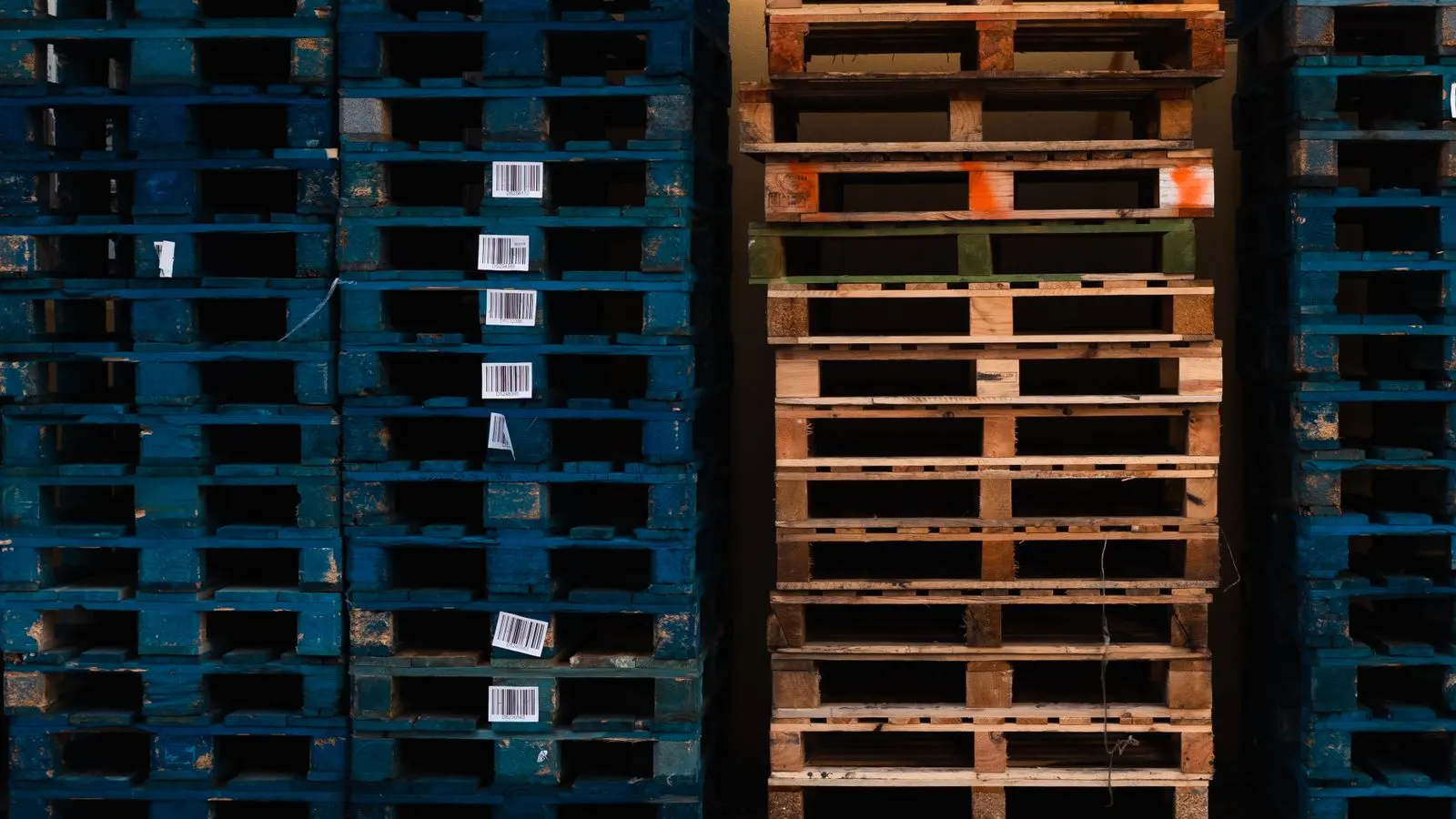
Barcodes in a small warehouse: cheap discipline that compounds
A label printer and a scanner turn a warehouse memory into a lookup anyone can do. What to label, what a barcode should encode, and when to scan it.
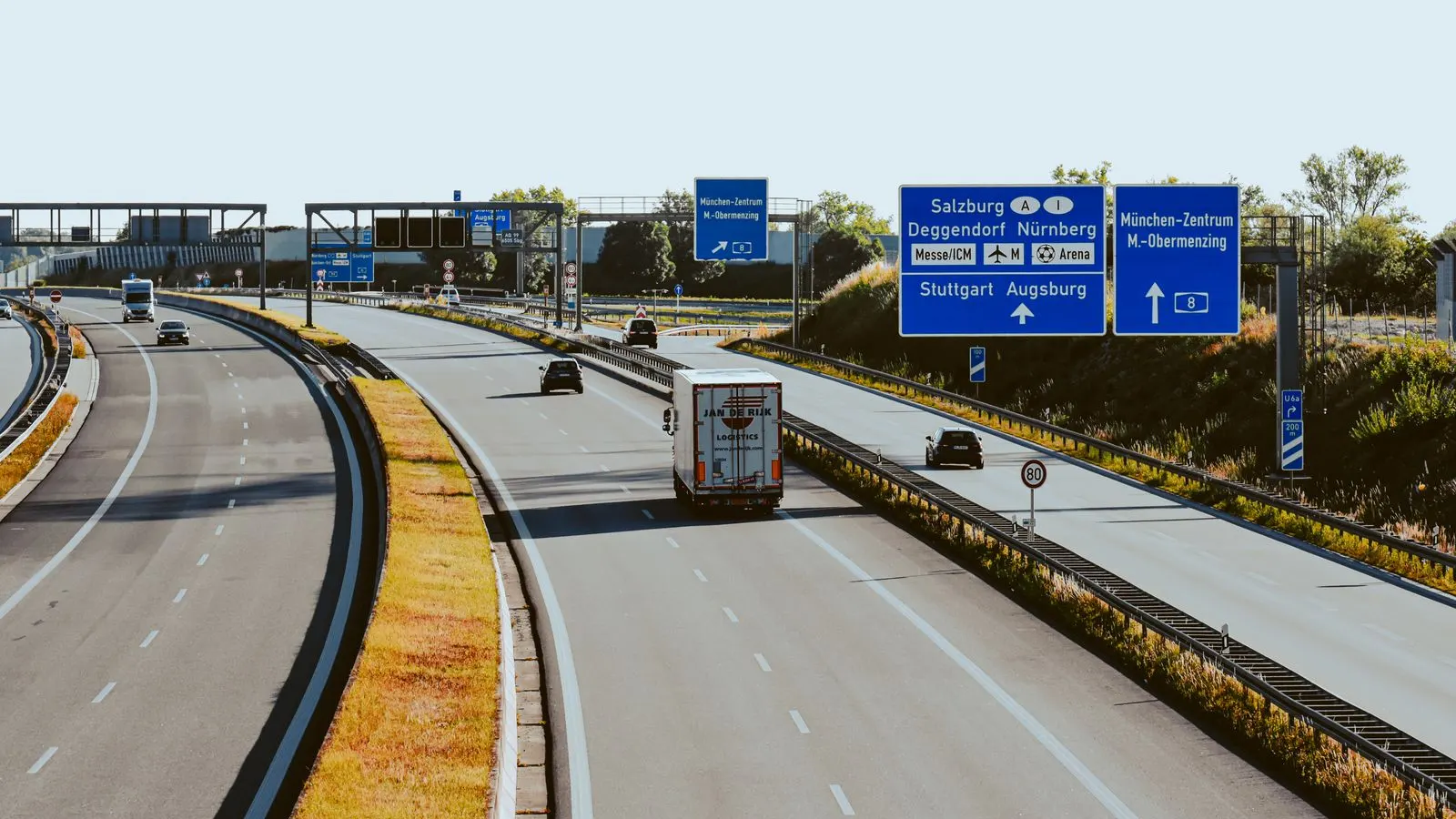
Cabotage in plain language: what the rules actually permit
Three operations in seven days, then four days out. What the EU cabotage rules permit as of August 2026, and what must be produced at a roadside check.

Your trailer fleet is an asset register nobody keeps
Trailers hold real capital and are usually tracked from memory. The four facts worth recording about each one, and how they end the Friday trailer hunt.

Fuel surcharges customers accept
A fuel surcharge survives negotiation when it is indexed to a published diesel price, arithmetically reproducible, and symmetric — it falls when diesel falls.

Multi-stop tours: what your consignment paperwork must not flatten
A tour with three deliveries is three consignments sharing a vehicle. What the CMR Convention keeps separate, and where flattening it into one booking bites.

Stop retyping invoices into your accounting system
The booking already holds the customer, the charges and the VAT. What a TMS-to-accounting integration actually transfers, and where the mapping needs care.

The empty kilometre: why backhauls are a planning problem, not a sales problem
Empty legs get treated as a gap in sales. Most of the fix is visibility — seeing the trailing empty leg at booking time, and knowing what may ride together.

Storing customer goods: the day your terminal became a warehouse
The informal hold these pallets until Thursday arrangement, and what it takes to run it properly: a goods receipt note, a defined clock, and a clean release.

Your customers do not want a tracking link, they want to stop calling you
The where-is-my-shipment call is a symptom, not a nuisance. What a customer portal has to show — bookings, tracking, POD and invoices — to actually stop it.

Daily vehicle checks drivers actually do
A walkaround check that takes eight minutes on paper gets ticked from the cab by week three. How to design one that drivers finish honestly.

Getting drivers to actually use the app
Driver app adoption is a design constraint, not a training problem: BYOD, one-tap status, no leftover paper, and honest behaviour when coverage fails.

eCMR and eFTI: what actually changes for road carriers on 9 July 2027
The EU eFTI Regulation obliges authorities to accept electronic freight information from July 2027. What that does and does not require of carriers.

Which countries accept eCMR today
The e-CMR Protocol is ratified one country at a time, so a lane is only paper-free when both ends and the transit states have joined. The verified list.
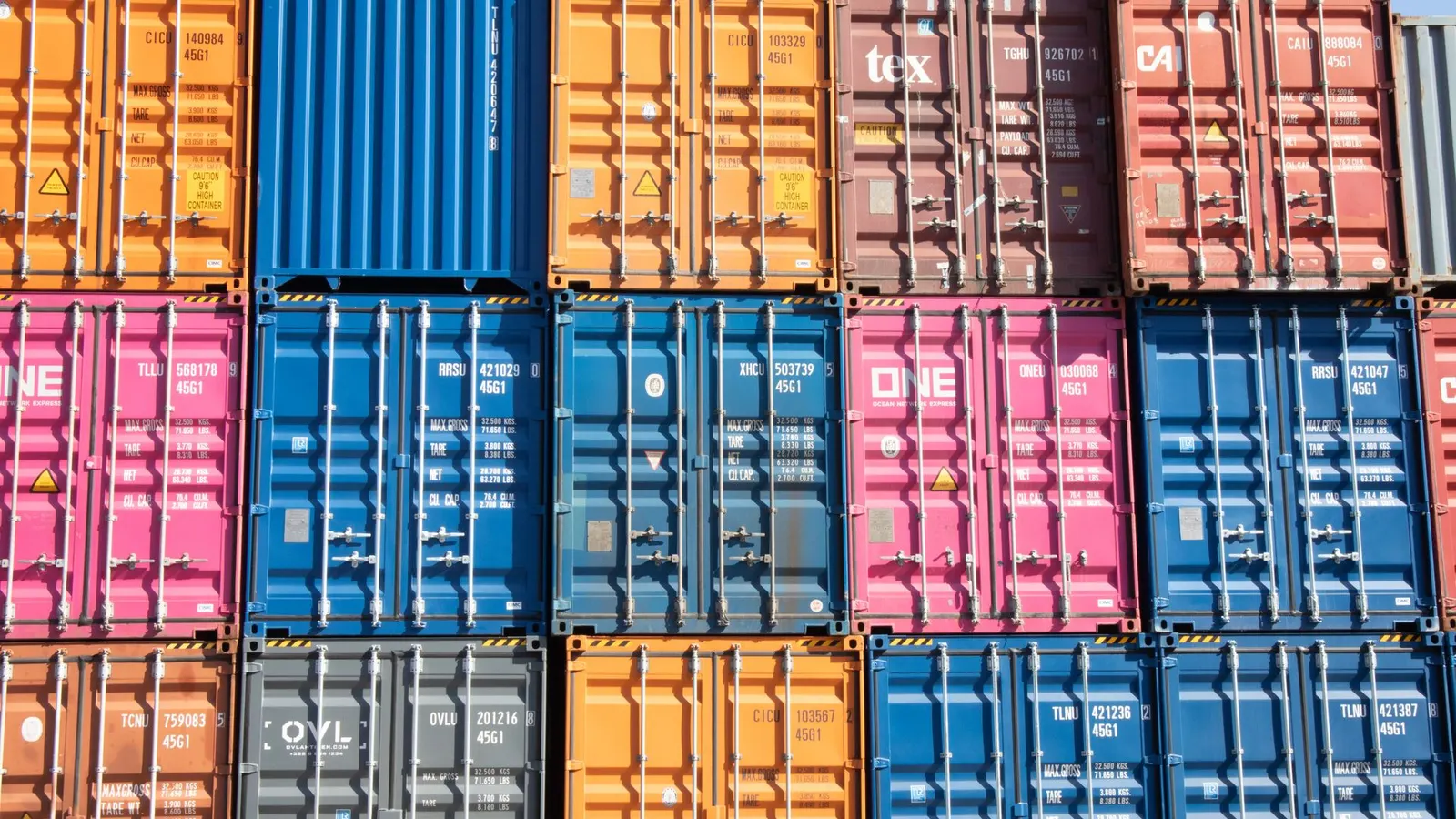
EDI for small carriers: what it is, when it pays, and when it does not
What EDIFACT really involves for a ten-truck operation — the three messages that actually flow, the setup nobody mentions, and where the break-even sits.
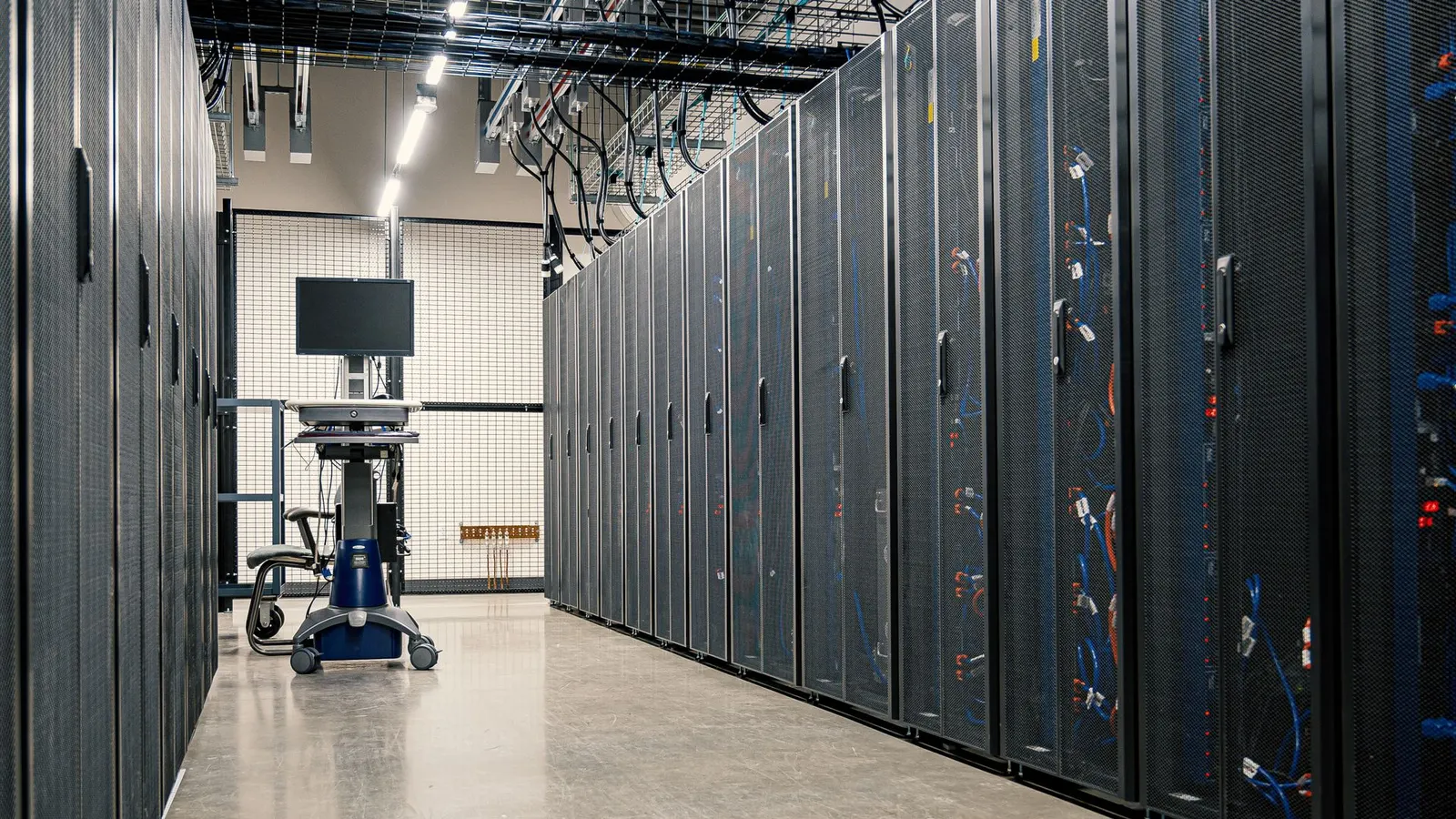
What "EU-hosted" actually means when a customer asks
A plain-language guide for carriers answering a procurement questionnaire: hosting jurisdiction, per-tenant isolation, export rights and what GDPR actually says.
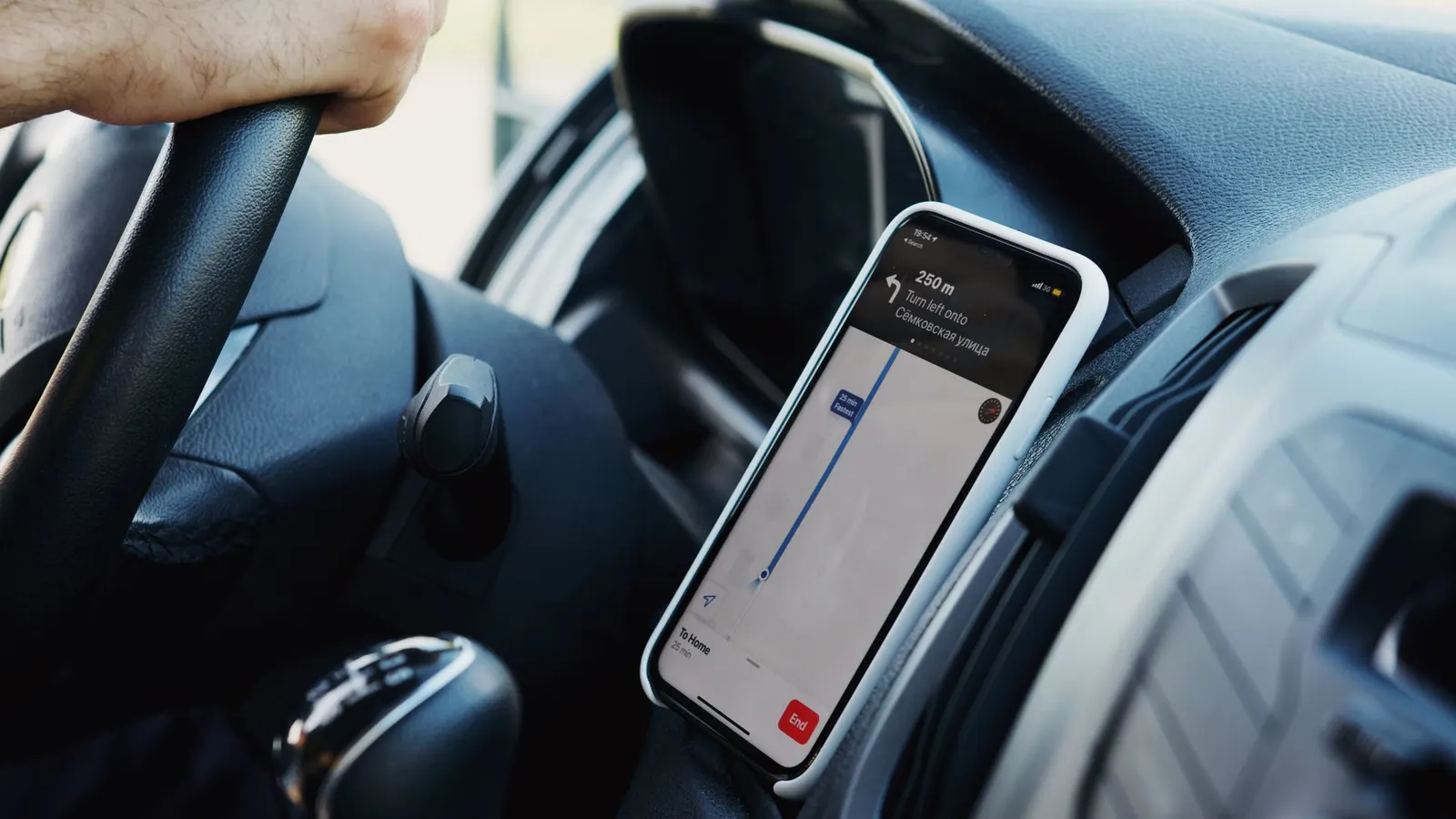
GPS tracking without the second subscription
Three ways a small fleet gets vehicle positions — telematics hardware, a driver phone, or tracking inside the TMS — and what each really costs and answers.

Groupage for small carriers: when consolidation pays and when it costs
Consolidating part-loads lifts revenue per kilometre and multiplies handling, paperwork and claims risk. A break-even way to find where your own line sits.

The honest ETA: why "before lunch" beats "10:23"
A minute-precise ETA is a promise you cannot keep. What an arrival time can honestly say at booking, at dispatch and en route — and how to widen a window well.

How to choose a TMS in 2026: a working checklist for small and mid-size carriers
The questions that actually separate transport management systems — total cost beyond the licence, data exit, integrations and honest pricing models.

Invoice the day you deliver: the shortest lever on cash flow
Payment terms get negotiated hard. The gap between delivery and invoice gets given away for free. Where those days hide, and what closing them requires.

Vehicle downtime is a data problem before it is a workshop problem
Calendar cycles and odometer cycles live in different places, which is why small fleets service on instinct. And what to do with a cycle you cannot judge.

What proof of delivery actually costs you when it arrives on paper
Paper PODs ride in the cab until Friday and the invoice waits for all of it. The arithmetic of the delivered-to-invoiced gap, and how to close it.

Route planning that survives contact with Tuesday
The first plan is the easy one. What decides a planning tool is the cost of the second — moving a booking, knowing which vehicles are free, telling the customer.

The day the dispatch spreadsheet stops scaling
Excel dispatch works until concurrent edits, no driver link, no history and no customer view cost more than the tool saves. The symptoms that mark the crossover.

Stocktakes without stopping the warehouse
The annual wall-to-wall count freezes the warehouse and is stale by February. How counting a slice at a time against a movement ledger works instead.

Transport and warehouse in one system: what actually breaks when they are separate
Carriers who also store goods usually run a TMS beside a WMS. The gap between them is where custody, billing and customer trust quietly leak.

Truck-aware routing: why car navigation sends lorries under low bridges
A consumer GPS does not know your height, axle weight or ADR load. What truck routing must know about the vehicle, and why bridge strikes are a data problem.

Winter operations in the Nordics: planning for the season, not the forecast
The winter plan is a capacity decision made in October, not a scramble in December: buffer times, tyre readiness and daylight as planning inputs.