POD delay: Why your logistics platform is failing your cash flow
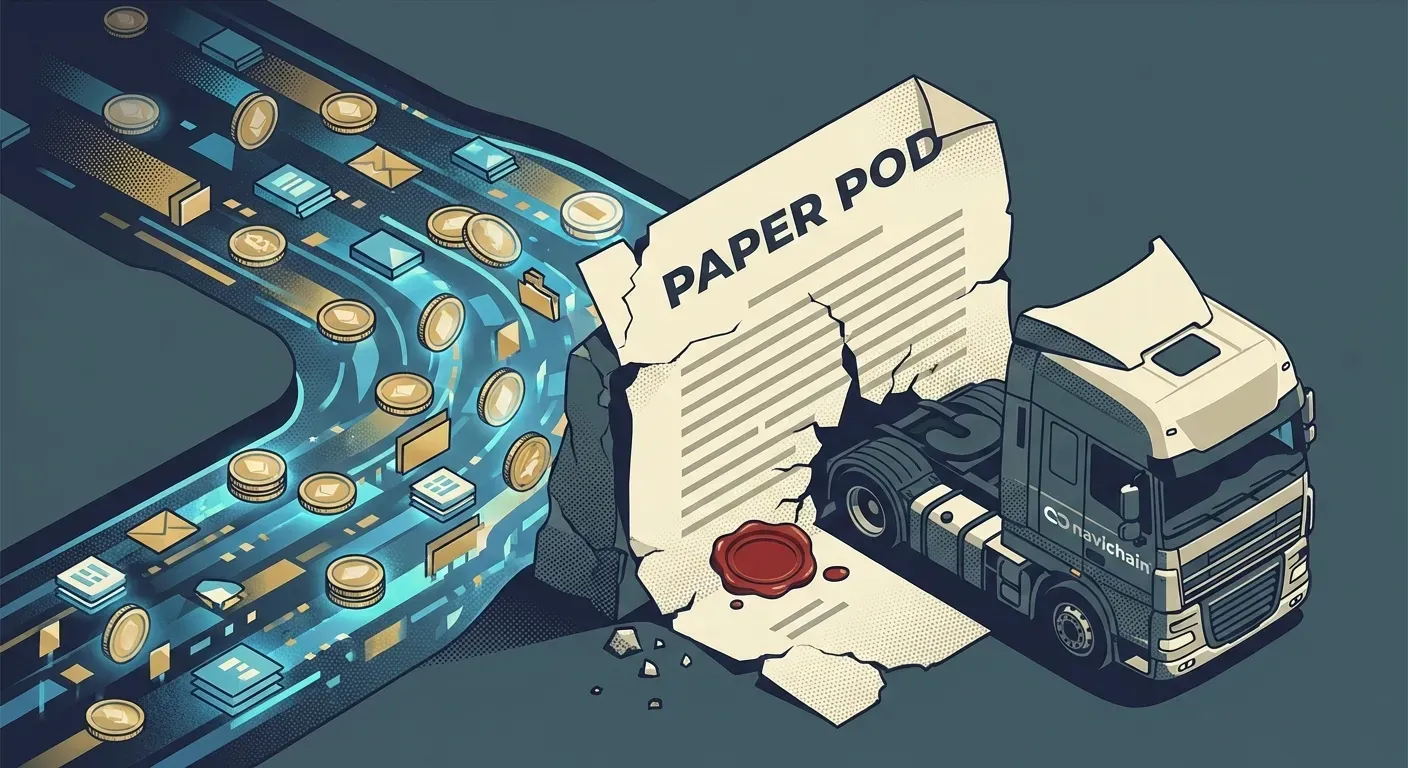
🇬🇧 Read this article in English
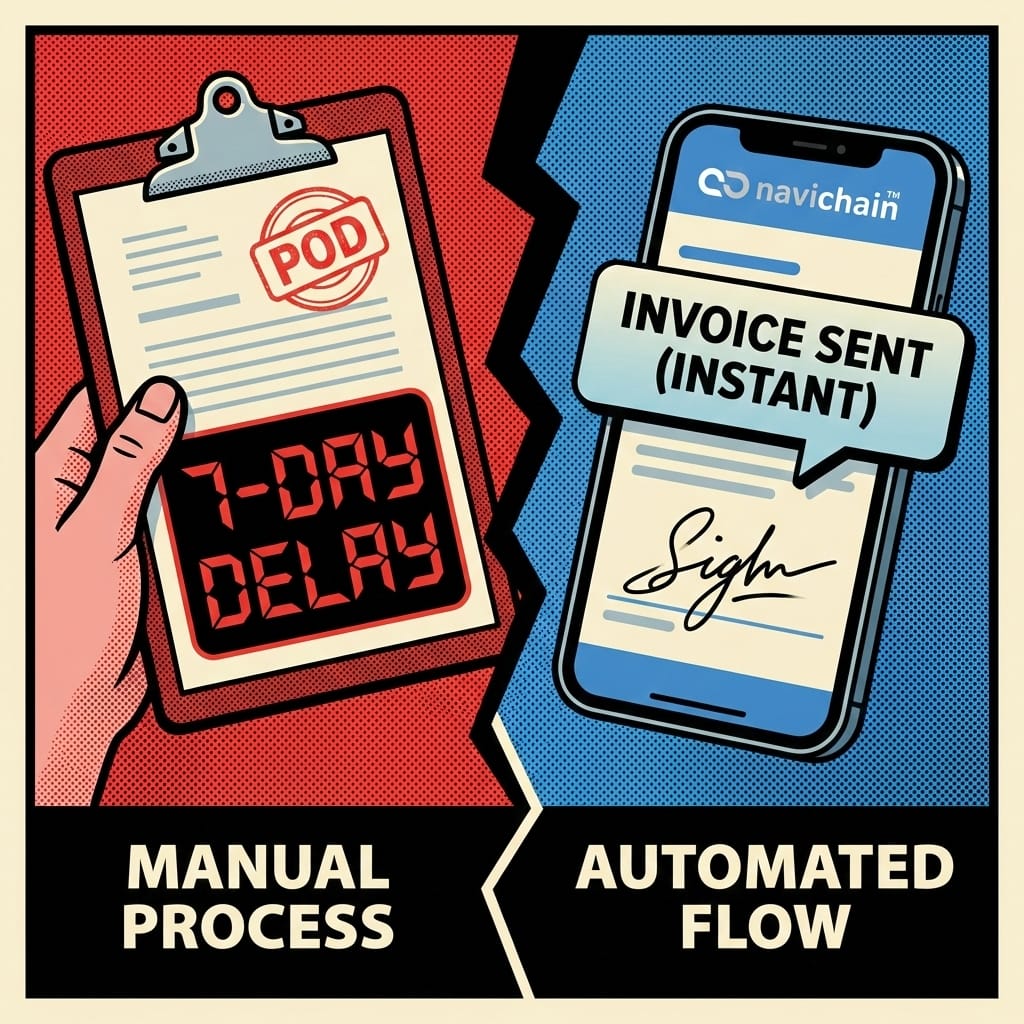
Many haulage companies struggle with cash flow despite punctual deliveries, often due to delays with proof of delivery. This report reveals how fragmented data in the Order-to-Cash cycle extends payment times and pressures working capital, and presents a framework to increase your financial speed.
The POD Lag: Why Your Logistics Platform Is Failing Your Cash Flow
Many small and medium-sized haulage companies are good at delivering on time but struggle with cash flow. The culprit is often an overlooked operational bottleneck: the time it takes to get a signed proof of delivery from the driver's cab to the finance department. Research shows that this delay in the Order-to-Cash (O2C) cycle can critically extend Days Sales Outstanding (DSO), directly pressuring working capital. Most managers treat this as an administrative problem and may try a standalone e-POD app. This fails to solve the core problem. The issue is not just capturing the POD; it's fragmentation of the data. If your e-POD does not immediately and automatically trigger your invoicing system, you have only moved silos, not broken them. This report presents a strategic framework to reconstruct your business around financial speed. We argue that the solution to the POD lag requires a unified logistics operational system where a digital POD signature is the first domino in an automated chain that immediately validates the order, completes the job, and triggers the invoice – all from a single, secure, and sovereign platform.
The Strategic Anomaly: Optimized for Routes, Failing Cash Flow
As a logistics manager, your world revolves around efficiency. You are obsessed with route optimization, fuel consumption, and on-time delivery (OTD). Your dashboards are green, your drivers hit their targets, and your customers are satisfied. So why does your business owner still complain about cash flow?
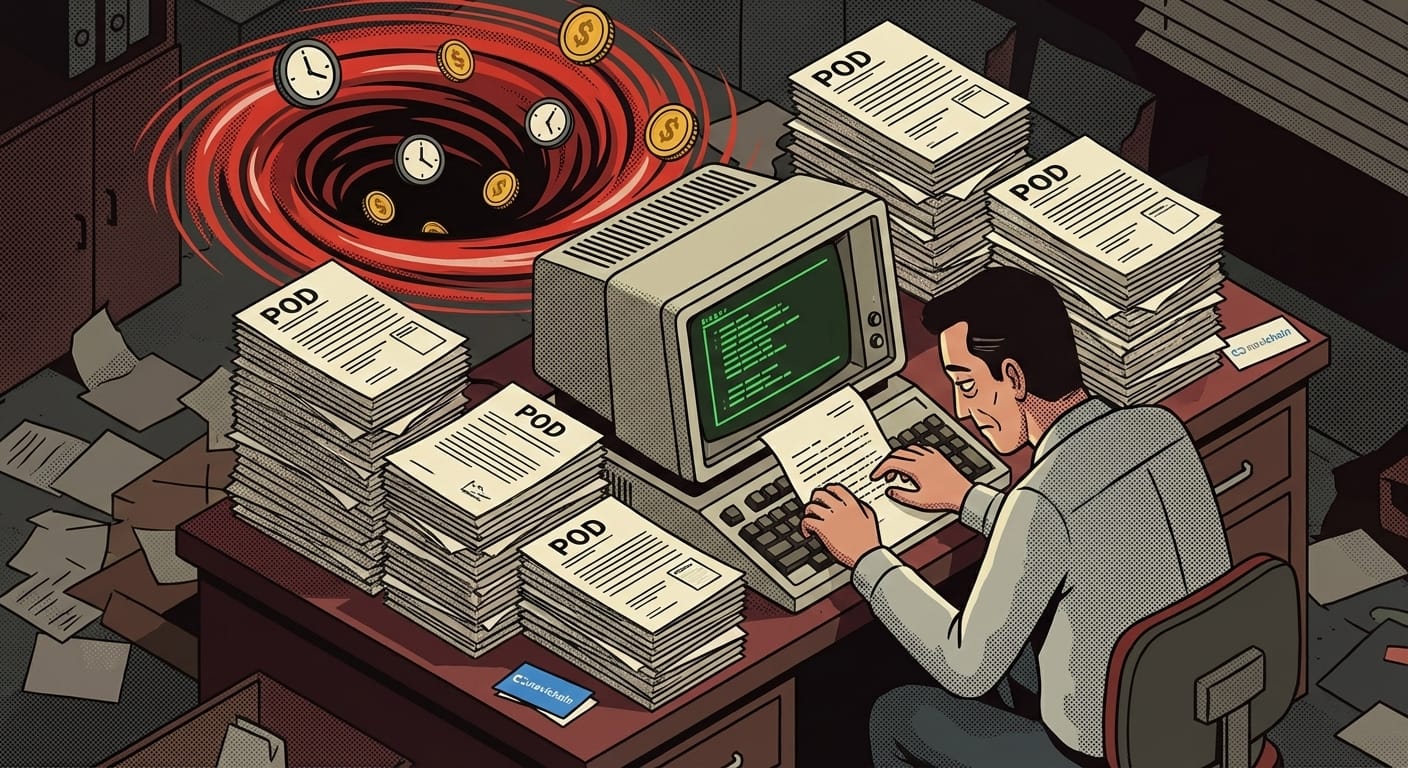
Fragmented data flow around the proof of delivery creates unnecessary delays in invoicing and impacts the company's liquidity.
The problem lies in a process so routine it has become invisible: the proof of delivery (POD). That little piece of paper (or even a simple digital file) that a driver collects takes days, sometimes weeks, to return to the office, be scanned, manually entered, and finally attached to an invoice. This report argues that this "POD lag" is no longer an administrative delay. On today's high-pressure, low-margin market, it is a critical, unmanaged financial liability that directly erodes your cash flow, hides operational weaknesses, and gives a competitive edge to your larger, more integrated rivals. The time it takes to return a signed POD to the office is quite simply costing your business.
The Anatomy of a Delay: Deconstructing the Real Cost of a Paper POD
The "cost" of a manual POD process is almost always underestimated. Managers see the price of paper and the time spent on data entry. The real costs are much higher, more insidious, and impact the three pillars of your business.
1. The Financial Cost: Choking Your Cash Flow
The most immediate and dangerous effect is on your Order-to-Cash (O2C) cycle. The O2C cycle is the entire lifespan of an order, from order to payment. The POD is the critical gatekeeper between the "Order-to-Delivery" phase and the "Invoice-to-Cash" phase.
- Extended Days Sales Outstanding (DSO): Every day a POD is in transit is a day you cannot issue a correct invoice. If your payment terms are 30 days from receipt of the invoice, a 7-day POD lag means you do not see money for 37 days. For a small or medium-sized business, this 7-day gap in working capital is the difference between stability and a crisis.
- Revenue leakage: Paper PODs get lost, damaged, or are illegible.
Fig 2: The Financial Cost: Strains cash flow. The biggest and most dangerous impact on your Order-to-Cash (O2C) cycle.
A missing POD can lead to a customer dispute and in many cases a partial or full write-off of the invoice. This is not a cost; it is pure, irrecoverable revenue loss.
2. The Operational Cost: The Administrative "Black Hole"
Reliance on manual processes creates a significant administrative burden that scales linearly with your business growth. More deliveries mean more paper, more data entry, and more archiving.
- Redundant data entry: A driver captures the information. An office clerk then manually enters exactly the same information into an invoicing system, often from a scanned image. This is a recipe for human error, leading to incorrect invoices, credit notes, and further delays.
- Zero real-time visibility: When a customer calls to ask about delivery status, your service team is blind. They cannot confirm delivery until the driver returns and the POD has been processed. This "I'll call you back" response is a hallmark of an inefficient, non-competitive business.
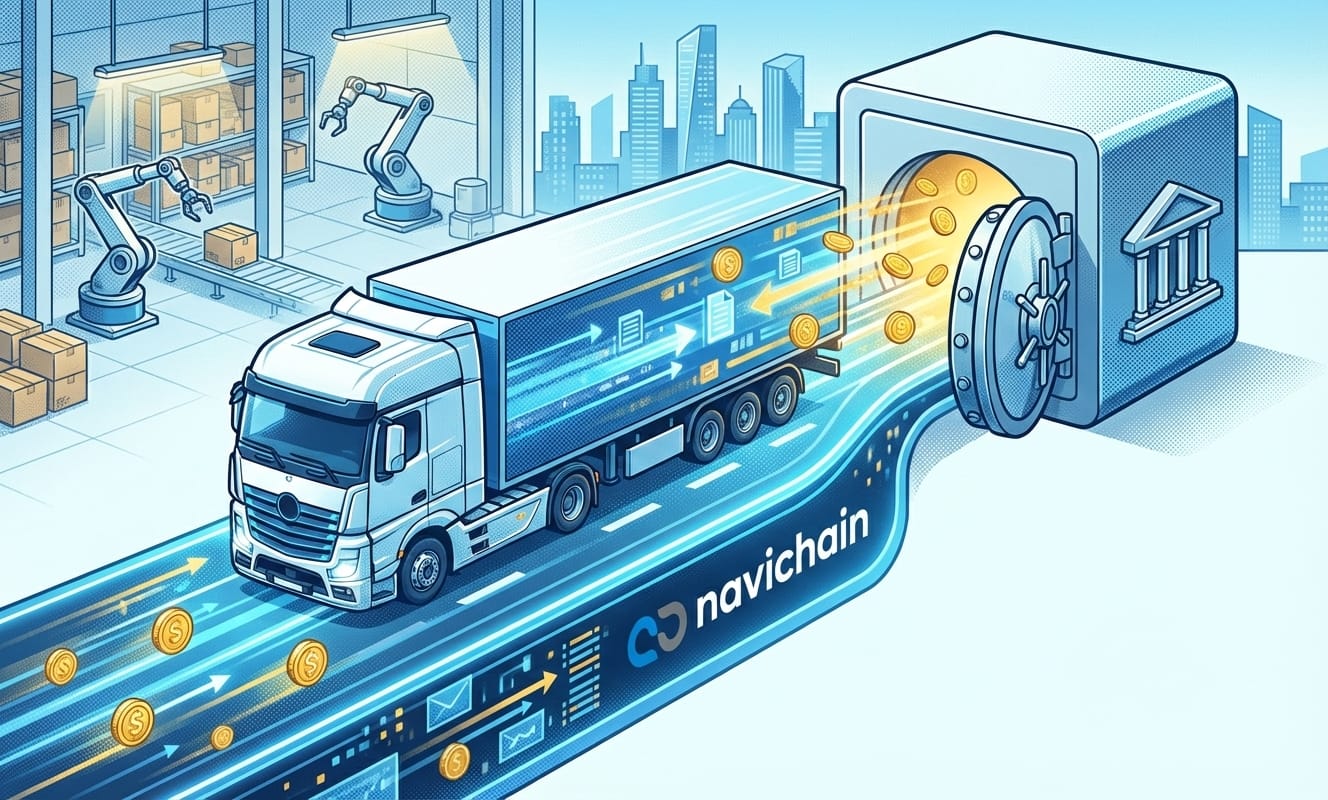
Diagram illustrating the direct and indirect costs associated with the lag in proof of delivery.
3. The Customer Cost: A Fragmented Experience
In an era of real-time tracking from Amazon, your B2B customers have high expectations. A manual POD process creates a frustrating, opaque experience. They have no self-service way to confirm delivery, retrieve old PODs for their own audits, or resolve disputes quickly. This friction damages trust and makes your service feel outdated.
The Digital Misconception: Why a Standalone e-POD App Is Not the Answer
The logical first step for many managers is to buy a simple, off-the-shelf electronic POD app (e-POD). This seems to solve the problem: the driver captures a signature on a phone and a PDF is emailed to the office. This is a digital misconception. You have not solved the problem; you have only moved the bottleneck. The problem was never just the paper. The problem is data silos. If that e-POD app simply emails a PDF to an inbox, an office clerk still has to manually: 1. Open the email. 2. Save the PDF file. 3. Open the invoicing system. 4. Find the matching order. 5. Trigger the invoice. 6. Attach the PDF file. You have replaced "manual data entry" with "manual file handling". The data from the POD (who signed, what time, any exceptions) does not flow. The TMS does not know the job is actually done, and the invoicing system does not know it is time to create an invoice. The O2C cycle is still broken and held together by human intervention. This "solution" only highlights the deeper problem: your systems do not speak the same language.
The Framework: From Order-to-Delivery to Order-to-Cash Velocity
To solve the POD lag, you must stop thinking about capturing a document and start thinking about completing a data workflow. The new key metric for success is not just on-time delivery, but Order-to-Cash Velocity – the total time from a customer's order to your receipt of their payment. This requires a strategic shift from fragmented tools to a unified logistics operational system. This is a single platform where your transport management (TMS), warehouse management (WMS), order management, and invoicing are all part of a cohesive system. In this framework, e-POD is not a separate app; it is the trigger for a fully automated financial workflow.
Schematic image: Unified logistics operational system for improved efficiency.
Step 1: The Integrated e-POD Capture
The driver's mobile app is a direct extension of the core TMS. When the driver marks "Delivered" and captures the signature, they do not create a new file. They update the status of the original order in the central database, in real time.
Step 2: The Automated Invoicing Trigger
This is the game-changer. The status change "Delivered" in the TMS immediately and automatically triggers the invoicing module. The system confirms order details, matches the POD, and generates the customer invoice – all without a human touching a keyboard. The invoice, with the e-POD already attached, is sent to the customer within minutes of delivery.
Step 3: Real-Time, Unified Visibility
Because all modules share this single source of truth: * Finance sees the invoice as "Sent" and the DSO clock starts.
- Customer service sees the order as "Delivered" and can immediately access the signed POD to answer any questions.
- The customer (via a portal) sees their delivery confirmed and can download their own invoice and POD. You have effectively compressed an O2C cycle that took 7-10 days into 7-10 minutes.
Result: Reduced Order-to-Cash cycle through integrated e-POD and automatic invoicing.
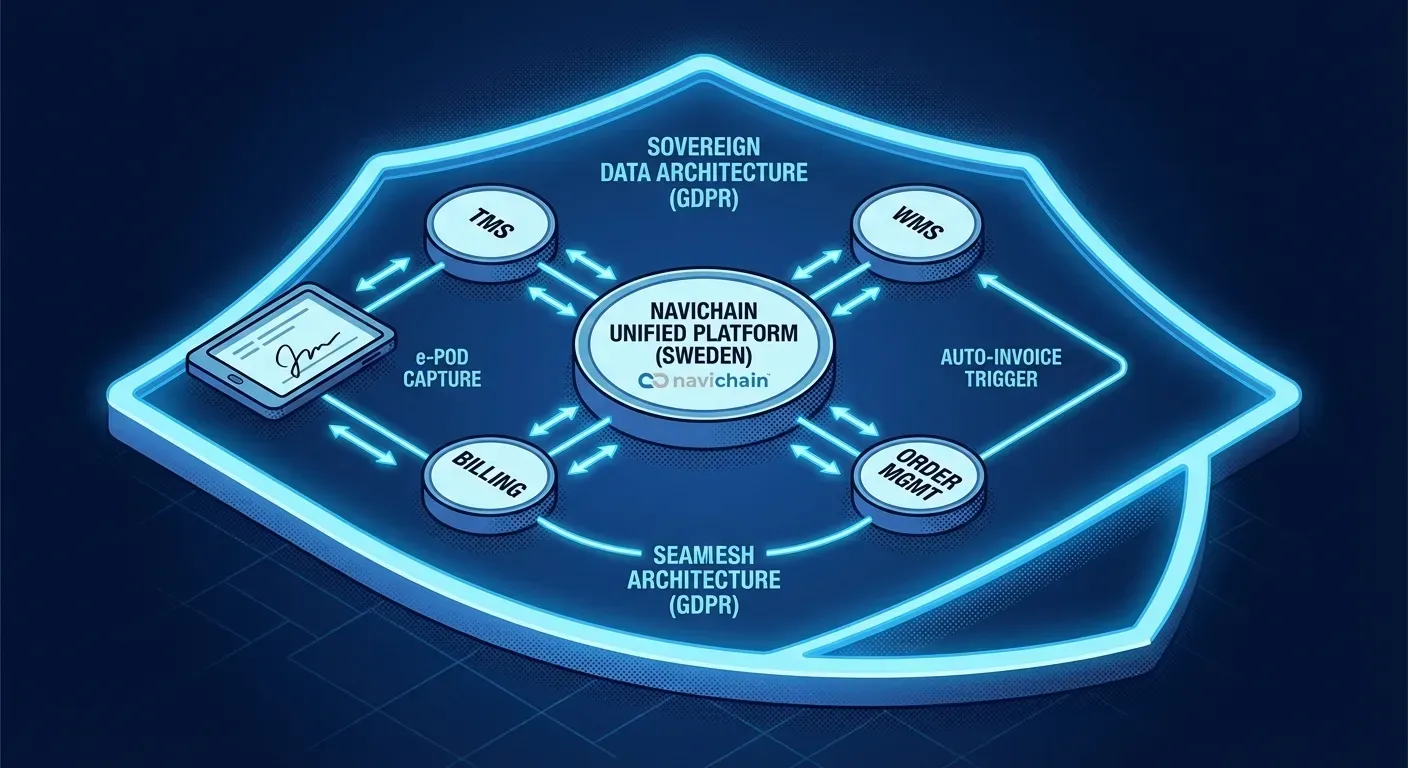
Schematic overview of an integrated e-POD and automatic invoicing process, significantly reducing the Order-to-Cash cycle.
The Unseen Risk: Data Sovereignty in a Digital Workflow
This unified workflow is powerful, but it creates a new, critical vulnerability. All your most sensitive operational and financial data – customer lists, delivery routes, pricing, invoices, and PODs – are now centralized on a digital platform. This raises a question that most European small and medium-sized businesses have not been forced to ask: Where does your data reside? If your "unified" platform is hosted by a large US-based cloud provider (as most are), your data is subject to foreign legislation such as the US CLOUD Act. This law gives US authorities the right to demand access to your data, even if it is stored on servers physically located in Europe (e.g., in Ireland or Germany). This creates a direct conflict with EU's General Data Protection Regulation (GDPR). You are now in the impossible situation of being legally compelled by one government to hand over data, while being legally prohibited by another (your own) to do so. For a small or medium-sized haulage company, this is not a theoretical legal debate. It is a fundamental risk to your business. A data breach or a forced handover of your customer list to a foreign entity could be catastrophic. True operational resilience is therefore not just about efficient workflows; it is about data sovereignty.
From Diagnosis to Design: The Blueprint for a Resilient Logistics Operational System
We have established that the POD lag is a symptom of fragmented systems, a problem that directly impacts cash flow and can only be truly solved by a unified platform. We have also established that this platform in turn creates a new, critical requirement for data sovereignty. This diagnosis leads us to a clear design blueprint. Every effective, modern logistics platform for a European small or medium-sized business must be built on three core principles. These are the strategic imperatives you must use to evaluate all solutions.
Principle 1: A Unified Operational Structure
Your system must not be a collection of disparate apps that are "stitched together". It must be a single, integrated operational structure – a central nervous system for your entire business. Your transport management (TMS), warehouse management (WMS), invoicing management, and order management must function as a cohesive unit. Data entered once (such as a new order) must flow seamlessly through planning, execution, delivery, and invoicing without manual re-entry. This is the only way to break down the silos that cause delays.
Principle 2: Sovereign Data Architecture
This is non-negotiable. For European small and medium-sized businesses, operational resilience requires data sovereignty. Your platform and all your data must be hosted, processed, and managed within your own jurisdiction (e.g., within the EU/Sweden), by a provider also bound by the same laws. This is the only way to guarantee full GDPR compliance and ensure that your sensitive commercial data is permanently protected from extraterritorial laws such as the US CLOUD Act. This architecture is the foundation for trust and long-term risk management.
Principle 3: Embedded Analytical Intelligence
With a unified structure (Principle 1) and a secure architecture (Principle 2), you finally have a clean, complete, and secure dataset. The final principle is to get that data to work for you. The platform must have an embedded intelligence or AI layer that can analyze this unified data. It should run within the same secure environment to identify a driver's route that is consistently unprofitable, a customer approaching their credit limit, or a warehouse process creating a bottleneck – unlocking efficiencies that were previously invisible when your data was fragmented.
References/Sources
- Eurostat (2024). Enterprise performance and key indicators in the transport sector. https://ec.europa.eu/eurostat/statistics-explained/index.php?title=Transport_sector_economic_analysis
- Ti Insight (2025). The European Road Freight Market: Costs, Pressures, and Digital Adoption. https://ti-insight.com/reports/european-road-freight-market-2025
- Institute of Transport and Logistics (Scandinavia) (2024). Order-to-Cash Cycle Benchmarks for SMEs. https://itl.se/research/sme-cash-flow-benchmarks-2024
- International Road Transport Union (IRU) (2024). Digitalisation in Road Transport: The e-POD Revolution. https://www.iru.org/resources/digitalisation-epod-report
Activate the Blueprint: Navichain SaaS Unified Logistics Platform
This report has presented a strategic blueprint for solving the POD lag by achieving true financial speed and data sovereignty. Navichain SaaS is a platform designed from the ground up to embody these three core principles for European small and medium-sized businesses. 1. A Unified Operational Structure: Navichain SaaS is not a collection of modules; it is a single, unified logistics operational system. As described in our blueprint, our platform seamlessly integrates transport management (TMS), warehouse management (WMS), asset management, invoicing management, and order management. This creates a single source of truth, eliminating the data silos that cause manual work and delayed invoicing. A digital POD captured in our TMS is the invoicing trigger, compressing the Order-to-Cash cycle from weeks to minutes. 2. A Sovereign Data Architecture: This is our most important differentiator. We directly address the critical risk of data compliance and foreign legislation. The entire Navichain SaaS platform is hosted on our own integrated infrastructure in Sweden. Your data stays in Sweden, under Swedish jurisdiction. This guarantees full GDPR compliance and makes your business immune to the reach of foreign legislation such as the US CLOUD Act. With Navichain SaaS, data sovereignty is not an add-on; it is the foundation of our architecture. 3. Embedded Analytical Intelligence: Because your data is unified and secure on our platform, we can deploy our integrated AI to analyze it securely. This AI also runs on our own secure Swedish infrastructure, meaning your sensitive operational data is never sent to a third-party provider for analysis. It performs deep, secure analysis of your unified data to unlock unique efficiencies in route planning, asset utilization, and financial performance. Our mission is to democratize logistics technology and empower small and medium-sized businesses to increase efficiency, reduce costs, and deliver exceptional service from a single, secure, and sovereign platform.
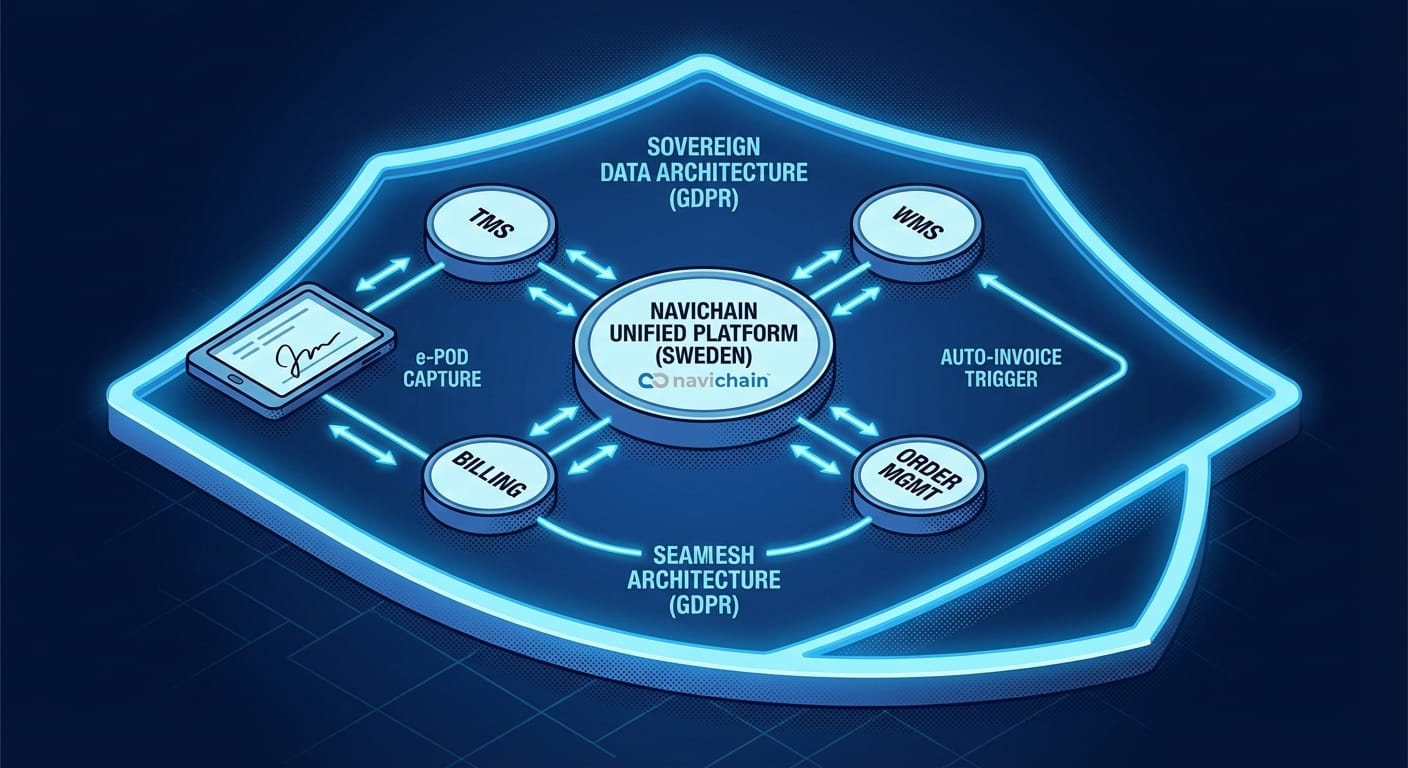
Navichain SaaS unified architecture enables seamless data analysis and unlocks operational efficiency gains through embedded AI.
Navichain gives small and medium-sized businesses an overview of the entire logistics process, enabling more efficient management and increased profitability.