Hauliers Face Debt Risk: Why Route Inefficiency Leads to Regulatory Non-Compliance and How to Resolve It

🇬🇧 Read this article in English
The haulage industry faces a growing risk debt due to inadequate route optimization and insufficient secure truck parking spaces. This report exposes how the regulation fails and creates increasing economic, legal, and human risks. Discover how a digital transformation with a unified data architecture can make compliance profitable and predictable.
The Hauliers Risk Debt Why Route Efficiency Creates Regulatory Failure And How To Fix It
Summary
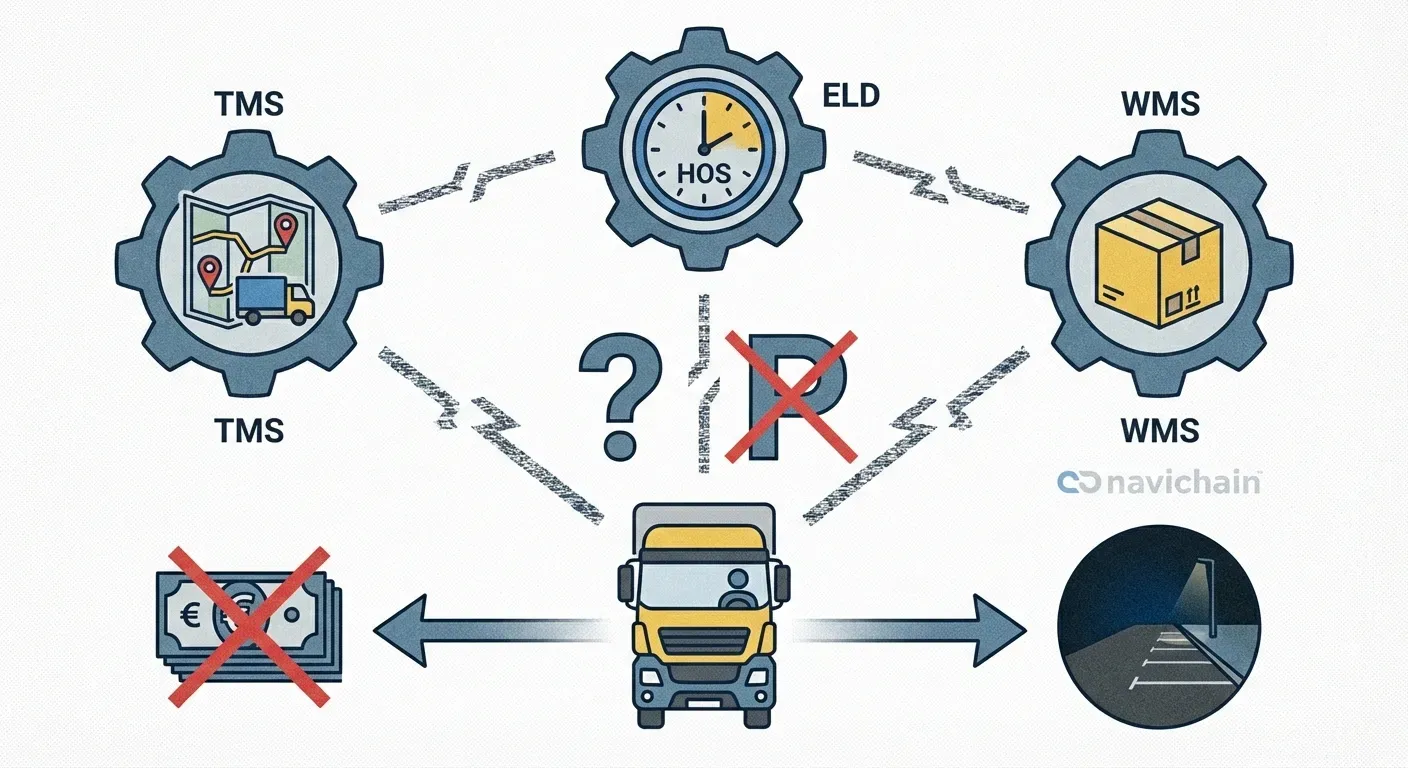
Lack of secure parking increases the risk of truck theft and violations of driving time regulations, resulting in significant costs and regulatory breaches for haulage companies.
The European haulage industry is grappling with a critical shortage of secure truck parking spaces (SSTPA), leading to an escalating "risk debt" for haulage companies. This report reveals that the problem is not just a matter of physical infrastructure but a systemic regulatory failure that, combined with fragmented operational data, creates increasing economic, legal, and human risks. The solution lies in a digital transformation: achieving a unified, sovereign data architecture that makes compliance predictable, provable, and profitable, enabled by innovative platforms like Navichain SaaS.
Introduction: Navigating a New Reality for European Hauliers
The European logistics sector is a complex and dynamic environment where haulage companies play a crucial role in ensuring a smooth flow of goods across the continent.
The European logistics sector is a complex and dynamic environment where haulage companies play a crucial role in ensuring a smooth flow of goods across the continent. But beneath the surface of efficiency and fast deliveries lurks a growing crisis: the shortage of secure truck parking spaces (SSTPA). This is not just a matter of convenience; it is a systemic shortage that creates a "risk debt" for haulage companies, threatening their profitability, legal compliance, and even their existence. This report aims to examine this crisis in detail and offer a strategic framework for addressing it. We will explore the economic, human, and regulatory costs of the lack of SSTPA, analyze the underlying causes of the problem, and present an innovative solution based on a unified data architecture. By adopting a proactive and data-driven strategy, haulage companies can reduce their risk debt, improve their operational efficiency, and ensure a sustainable future.
Part 1: The Challenge – The Hidden Risk Debt
The European haulage industry faces a challenge that is both complex and acute: an alarming shortage of secure truck parking spaces (SSTPA).
The European haulage industry faces a challenge that is both complex and acute: an alarming shortage of secure truck parking spaces (SSTPA). This shortage is not just an operational inconvenience; it is a fundamental systemic failure that creates a significant "risk debt" for haulage companies, particularly small and medium-sized enterprises (SMEs).
The Economic Cost: More Than Just Truck Thefts
The most obvious cost of the lack of SSTPA is the economic loss that occurs as a result of truck thefts. According to the Transported Asset Protection Association (TAPA), truck crime costs European companies over €8.2 billion annually. The majority of these thefts occur at insecure parking lots, where trucks and their cargo are easy targets for criminals. But the costs of truck thefts extend far beyond the value of the stolen cargo. Haulage companies must also deal with the costs of insurance premiums, deductibles, legal fees, and lost business opportunities. For an SME, a single lost load can be a catastrophic event that can lead to bankruptcy.
The Human Cost: A Neglected Duty of Care
The lack of SSTPA also has a significant human cost. Drivers are often forced to park their trucks in insecure locations, where they are exposed to theft, violence, and threats. This constant fear for their safety can lead to stress, anxiety, and burnout. Additionally, haulage companies have a legal and moral duty of care towards their drivers. By forcing them to park in insecure locations, haulage companies fail to fulfill this obligation, which can lead to legal actions and damage their reputation. The increasing shortage of qualified truck drivers is further exacerbated by these unsafe working conditions, creating a vicious circle.
The Regulatory Cost: A Ticking Bomb of Non-Compliance
The perhaps most serious cost of the lack of SSTPA is the regulatory cost. EU Mobility Package 1 (MP1) introduces strict rules for driving times and rest periods for truck drivers. According to MP1, drivers must take regular rest periods, and they are not allowed to take their weekly rest in the cab. Instead, they must rest in suitable accommodation, which presupposes that the vehicle is left in a secure place. But with the shortage of SSTPA, drivers are often forced to choose between violating MP1 rules or parking in an insecure location. If they continue to drive to find a secure place, they violate the rules for driving times and rest periods, which can lead to fines and other penalties. If they park in an insecure location, they expose themselves and their cargo to risk. This situation creates a "risk debt" for haulage companies. Every time a driver is forced to violate MP1 rules or park in an insecure location, the haulage company's risk of fines, legal actions, and reputational damage increases. This risk debt can quickly accumulate and ultimately lead to the revocation of the haulage company's operating license.
Part 2: The Context – A Complex Weave of Trends and Paradoxes
The diagram illustrates how the lack of secure and safe parking spaces (SSTPA) leads to increased risks and potential sanctions for haulage companies due to non-compliance with EU Mobility Package 1 (MP1).
To understand the challenge of the shortage of secure truck parking spaces (SSTPA), we must analyze the broader context of the European logistics sector. Several key trends and paradoxes contribute to the problem and make it harder to solve.
Increasing Demand for Freight Transport
The European economy is heavily dependent on freight transport. With a growing population and an increasing demand for goods and services, the demand for freight transport is also increasing. This puts pressure on haulage companies to deliver more goods faster and more efficiently.
Lack of Infrastructure Investments
Despite the increasing demand for freight transport, investments in infrastructure have not kept pace. This is particularly true for SSTPA. There is a significant shortage of secure parking spaces across Europe, and the situation is exacerbated by the fact that many existing parking spaces are in poor condition and lack basic amenities.
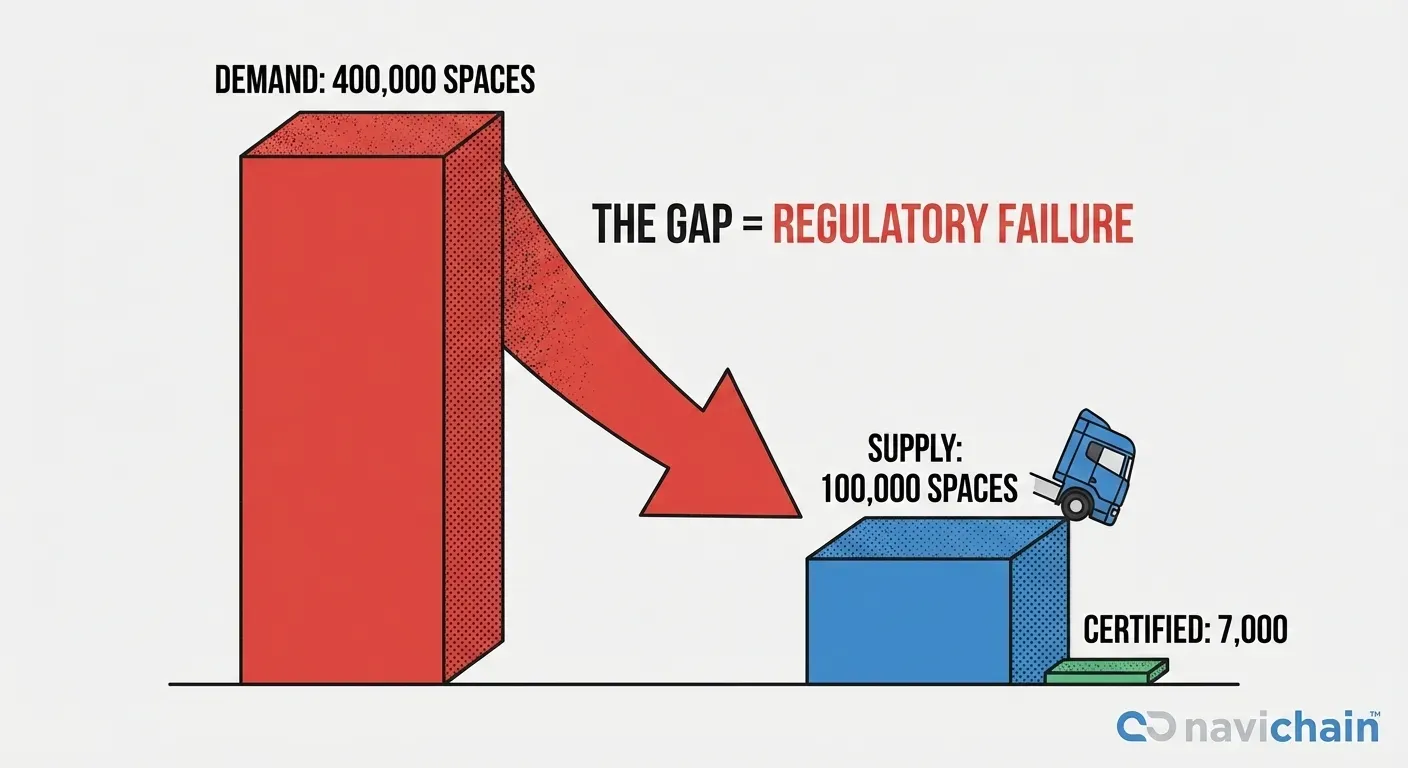
The diagram illustrates the relationship between the lack of secure truck parking and the increased risk for haulage companies to violate EU Mobility Package 1.
Fragmented Data and Lack of Coordination
Another key factor contributing to the shortage of SSTPA is the fragmented data and lack of coordination between different actors in the logistics sector. Haulage companies, freight forwarders, parking lot operators, and regulatory authorities often work in silos, making it difficult to get a comprehensive picture of the situation. This leads to inefficiencies and makes it harder to plan and manage resources effectively.
The Paradox of Route Efficiency
One of the biggest paradoxes in the European logistics sector is that an unwavering focus on route efficiency can actually increase the risk of non-compliance and increase the "risk debt" for haulage companies. By trying to save minutes and fuel, haulage companies can inadvertently force their drivers into parking situations that are not compatible with the regulations and are dangerous.
EU Mobility Package: A Sharpening of the Rules
EU Mobility Package 1 (MP1) is an ambitious reform aimed at improving working conditions for truck drivers and creating a more fair and competitive logistics sector. But MP1 has also introduced stricter rules for driving times and rest periods, which has increased the pressure on haulage companies to ensure compliance.
Part 3: The Strategic Solution – A Unified Data Architecture
To address the growing "risk debt" and ensure a sustainable future, European haulage companies must adopt a strategic solution based on a unified data architecture.
To address the growing "risk debt" and ensure a sustainable future, European haulage companies must adopt a strategic solution based on a unified data architecture. This means moving beyond traditional, fragmented systems and creating a single source of truth that can be used to plan, execute, monitor, and audit all aspects of the business.
From Reactive Fines to Proactive Resilience
The strategic goal is to shift the focus from reactive payment of fines to proactive, auditable compliance. The solution is not just to find one place; it is to create an irrefutable data trail that proves compliance and risk management at every step.
A Holistic Approach
A unified data architecture enables a holistic approach to logistics management. By integrating data from various sources, including transport management systems (TMS), electronic logging devices (ELD), warehouse management systems (WMS), and real-time data on SSTPA availability, haulage companies can get a complete picture of their operations.
Schematic overview of a unified data architecture enabling proactive compliance and risk management in logistics operations.
Key Components in a Unified Data Architecture
An effective unified data architecture should include the following key components: 1. Holistic Planning: Integrate real-time SSTPA availability (and even pre-booking) directly into the TMS route engine, along with HOS, fuel, and traffic. 2. Dynamic Execution: Provide the driver and dispatch with a single glass pane showing the HOS clock against the live map of compatible rest stops. 3. Proactive Monitoring and Alerts: Proactively alert dispatch before a driver risks an HOS violation and suggest compatible detours or alternative stops. 4. Irrefutable Audit: In the event of an unavoidable violation, the system must automatically generate a complete audit log: "Driver X's HOS ran out at 18:00. Certified parks A, B, and C (links to logs) were full. The driver was directed to safe location D, 15 km away."
Benefits of a Unified Data Architecture
By adopting a unified data architecture, haulage companies can achieve a range of significant benefits, including: * Reduced Risk Debt: By ensuring compliance with MP1 rules and reducing the risk of truck thefts, haulage companies can reduce their risk debt and protect their profitability.
- Improved Operational Efficiency: By optimizing routes and reducing delays, haulage companies can improve their operational efficiency and deliver more goods faster and more efficiently.
- Increased Driver Safety: By ensuring that drivers have access to secure parking spaces, haulage companies can increase driver safety and improve working conditions.
- Enhanced Reputation: By demonstrating a commitment to compliance and driver safety, haulage companies can enhance their reputation and attract new customers and drivers.
Part 4: Tech Enabler (Navichain) – An Intelligent Platform for Logistics Management
Navichain SaaS is an innovative platform designed to help haulage companies manage their risk debt and improve their operational efficiency. By offering a unified data architecture and integrating real-time data on SSTPA availability, HOS, fuel, and traffic, Navichain enables haulage companies to plan, execute, monitor, and audit all aspects of their operations.
Navichain Unified OS: A Single Source of Truth
Navichain Unified OS is a centralized platform that integrates data from various sources and provides haulage companies with a single source of truth. By collecting and analyzing data from TMS, ELD, WMS, and other systems, Navichain provides haulage companies with a complete picture of their operations.
AI-Driven Optimization: Intelligent Decisions in Real Time
Navichain uses AI-driven optimization to help haulage companies make intelligent decisions in real time. By analyzing data on SSTPA availability, HOS, fuel, and traffic, Navichain can optimize routes, reduce delays, and ensure compliance with MP1 rules.
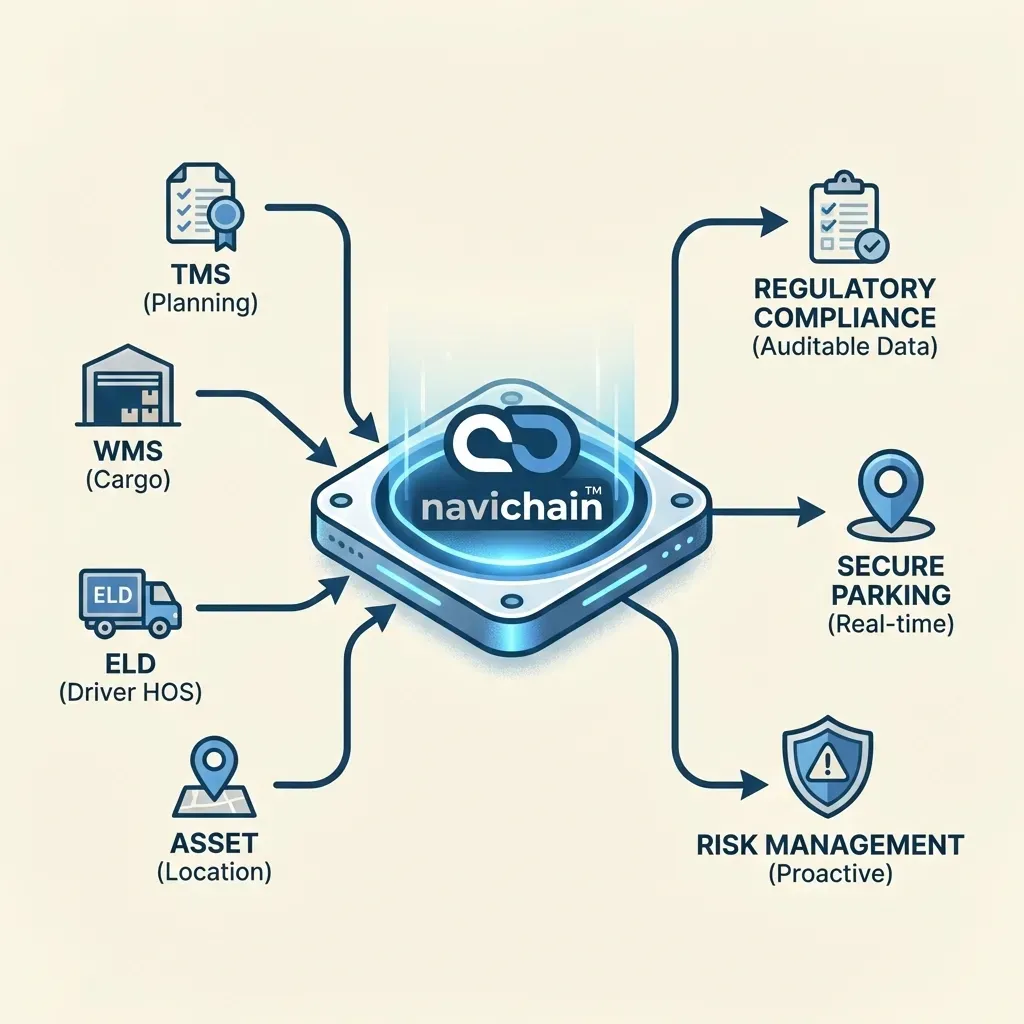
A schematic diagram illustrating Navichain's integrated data flow and its ability to collect and analyze information from various logistics sources.
Navichain SaaS: A Cloud-Based Solution for All Sizes
Navichain SaaS is a cloud-based solution available to haulage companies of all sizes. By offering a flexible and scalable platform, Navichain can be tailored to the specific needs of each haulage company.
How Navichain Solves the Problem of Risk Debt
Navichain solves the problem of risk debt by: * Integrating Real-Time SSTPA Availability: Navichain integrates real-time data on SSTPA availability directly into the TMS route engine, enabling haulage companies to plan routes that avoid insecure parking spaces.
- Monitoring HOS in Real Time: Navichain monitors HOS in real time and proactively alerts dispatch before a driver risks an HOS violation.
- Generating Audit Logs: Navichain automatically generates complete audit logs in the event of an unavoidable violation, providing haulage companies with an irrefutable data trail that proves their compliance and risk management.
The diagram illustrates how Navichain reduces risk debt by integrating SSTPA availability, monitoring HOS, and generating audit logs.
Part 5: Business Outcomes – ROI, Efficiency Gains, and Strategic Resilience
By implementing a unified data architecture, enabled by platforms like Navichain SaaS, haulage companies can achieve a range of significant business outcomes. These outcomes go beyond simple cost savings and include improved ROI, increased efficiency gains, and enhanced strategic resilience.
ROI: Reduced Risk Debt and Increased Revenue
The most direct business outcome is a reduction in risk debt. By ensuring compliance with MP1 rules and reducing the risk of truck thefts, haulage companies can reduce their fines, legal fees, and insurance premiums. Additionally, haulage companies can increase their revenue by delivering more goods faster and more efficiently.
Efficiency Gains: Optimized Routes and Reduced Delays
A unified data architecture enables optimized routes and reduced delays. By integrating real-time data on SSTPA availability, HOS, fuel, and traffic, haulage companies can plan routes that avoid traffic jams, insecure parking spaces, and other obstacles. This leads to reduced fuel costs, reduced labor costs, and increased delivery speed.
Strategic Resilience: Adapting to a Changing Environment
A unified data architecture enables haulage companies to adapt to a changing environment. By having access to real-time data and using AI-driven optimization, haulage companies can quickly adjust their routes and strategies to meet new challenges and opportunities. This makes haulage companies more resilient and better equipped to handle unexpected events.
Measurable Results: Examples of Success
Several haulage companies have already achieved significant business outcomes by implementing a unified data architecture and using platforms like Navichain SaaS. These outcomes include: * Reduction of Fines by 50%: By ensuring compliance with MP1 rules, haulage companies have reduced their fines by up to 50%.
- Increase in Delivery Speed by 20%: By optimizing routes and reducing delays, haulage companies have increased their delivery speed by up to 20%.
- Reduction of Fuel Costs by 10%: By planning more efficient routes, haulage companies have reduced their fuel costs by up to 10%.
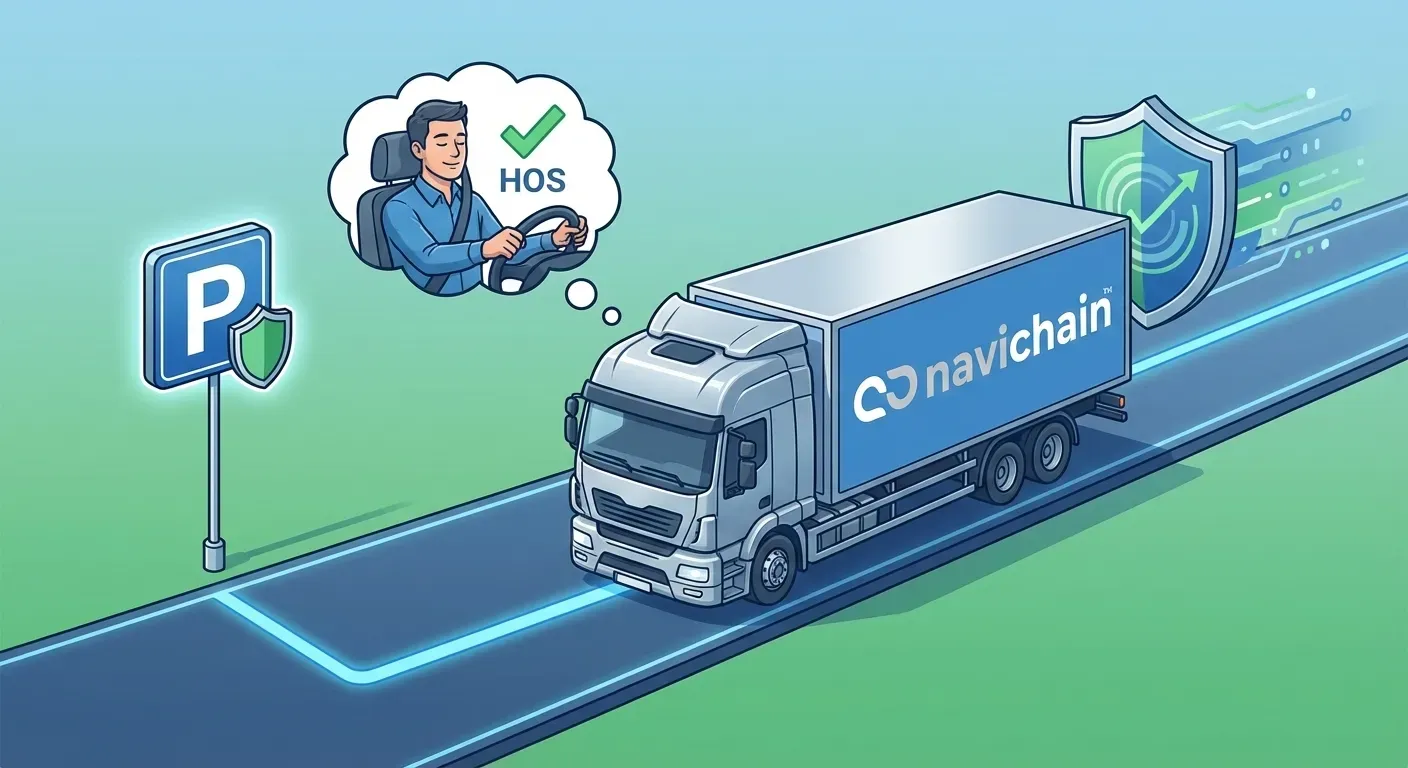
The image illustrates the measurable results that haulage companies can achieve through the implementation of a unified data architecture, including reduced fines, increased delivery speed, and reduced fuel costs.
Conclusion: A Future Built on Data and Security
The European haulage industry faces a critical challenge: the shortage of secure truck parking spaces (SSTPA). This shortage creates a significant "risk debt" for haulage companies, threatening their profitability, legal compliance, and even their existence. But there is hope. By adopting a strategic solution based on a unified data architecture, haulage companies can manage their risk debt, improve their operational efficiency, and ensure a sustainable future. Platforms like Navichain SaaS enable haulage companies to plan, execute, monitor, and audit all aspects of their operations, allowing them to make intelligent decisions in real time and adapt to a changing environment.
References
- European Commission (2020). EU's Freight Transport Market: Situation, Competition, and Challenges. https://ec.europa.eu/transport/modes/road/road_en
- International Road Transport Union (IRU) (2023). IRU Report on Skills Shortage in the Transport Sector. https://www.iru.org/news-resources/newsroom/driver-shortage-continues-bite
- McKinsey & Company (2022). Future of Logistics: Building Resilience in a Fragmented World. https://www.mckinsey.com/industries/travel-logistics-and-infrastructure/our-insights/future-of-logistics
- Gartner (2023). Top 10 Logistics Technology Trends for 2023. https://www.gartner.com/en/information-technology/insights/top-technology-trends-in-supply-chain
Navichain enables increased transparency and efficiency in freight transport through real-time visualization and tracking.
Navichain visualizes the freight transport chain and enables real-time tracking, contributing to increased transparency and efficiency.