Self-determination in motion: Why European SMEs are regaining control of the supply chain
🇬🇧 Read this article in English
The infamous "Excel trap" is a common and costly problem. Many SMEs still rely on Excel spreadsheets to manage critical logistics functions such as transport planning, warehouse management, route optimization, and invoicing. This creates inefficiency, lack of transparency, difficulty scaling, and a high risk of human error. When data is fragmented across different Excel spreadsheets and departments, visibility is lost, making it difficult to make informed decisions, optimize operations, and identify potential problems before they escalate. Additionally, Excel-based systems are often difficult to update and maintain, leading to further inefficiency and costs.
Alternative 1 (Data Chart showing risk):*
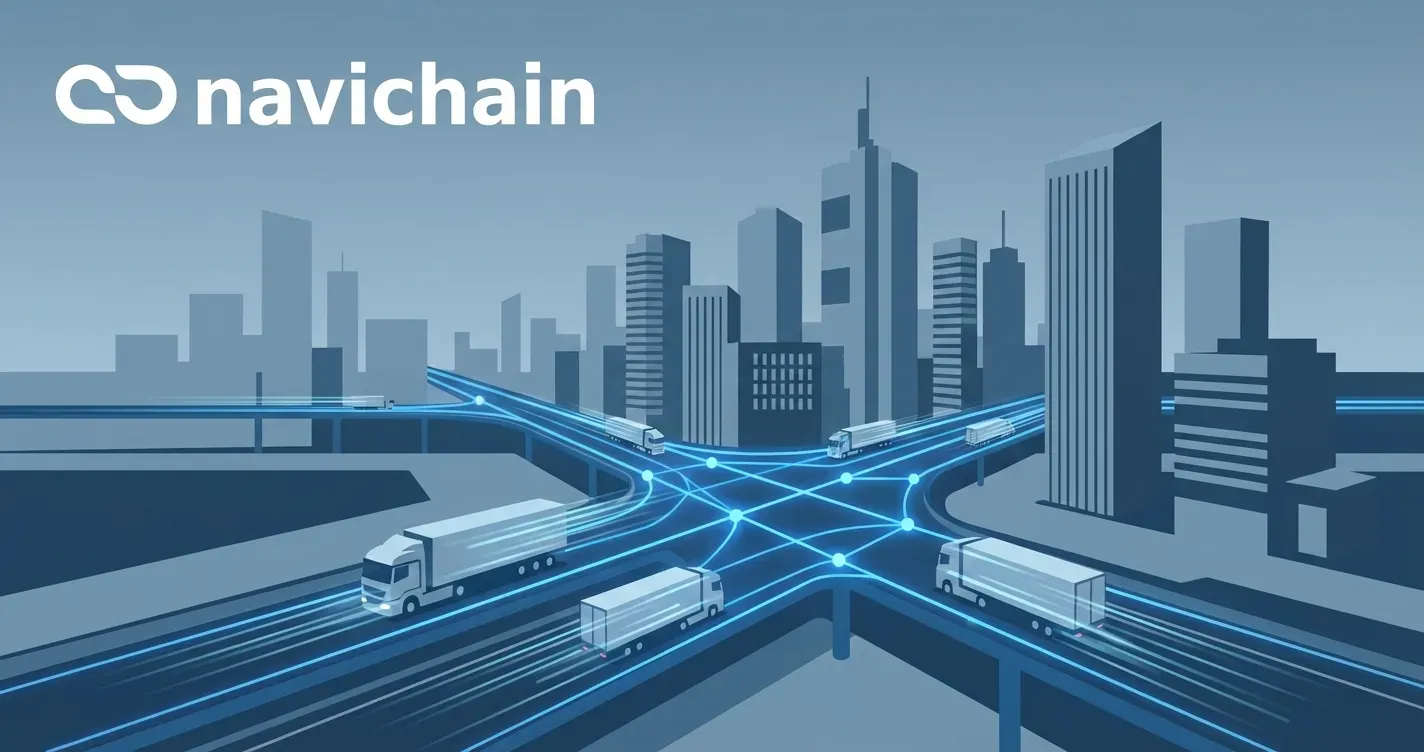
Increased control reduces vulnerability in a complex supply chain. Fragmented supply chains increase risks for European small businesses. Visibility and traceability: the key to an independent delivery flow.*
Summary
In a time of geopolitical turbulence, rapid technological development, and increasing customer expectations, European small and medium-sized enterprises (SMEs) face a critical challenge: to regain control of their logistics operations. For decades, logistics has often been viewed as a necessary cost, outsourced to inflexible third-party logistics providers (3PL) or managed through fragmented systems of spreadsheets and manual paperwork. This report presents a fundamental paradigm shift: the transition to "Logistics Sovereignty." We explore why companies across various industries, from e-commerce to medical technology, are insourcing their strategic control towers. We analyze the ten most critical operational friction points they solve and argue that a unified SaaS approach – based on European data sovereignty – is no longer a luxury but a necessity for survival and growth. By automating finance, optimizing driver experiences, and leveraging self-hosted AI, Navichain empowers SMEs to transform their supply chains from a source of chaos to a primary driver of profitability, competitiveness, and long-term resilience. This report provides an in-depth analysis of the challenges, opportunities, and strategic solutions required to achieve logistics sovereignty in today's complex business landscape. Fragmented systems prevent European SMEs from optimizing logistics.
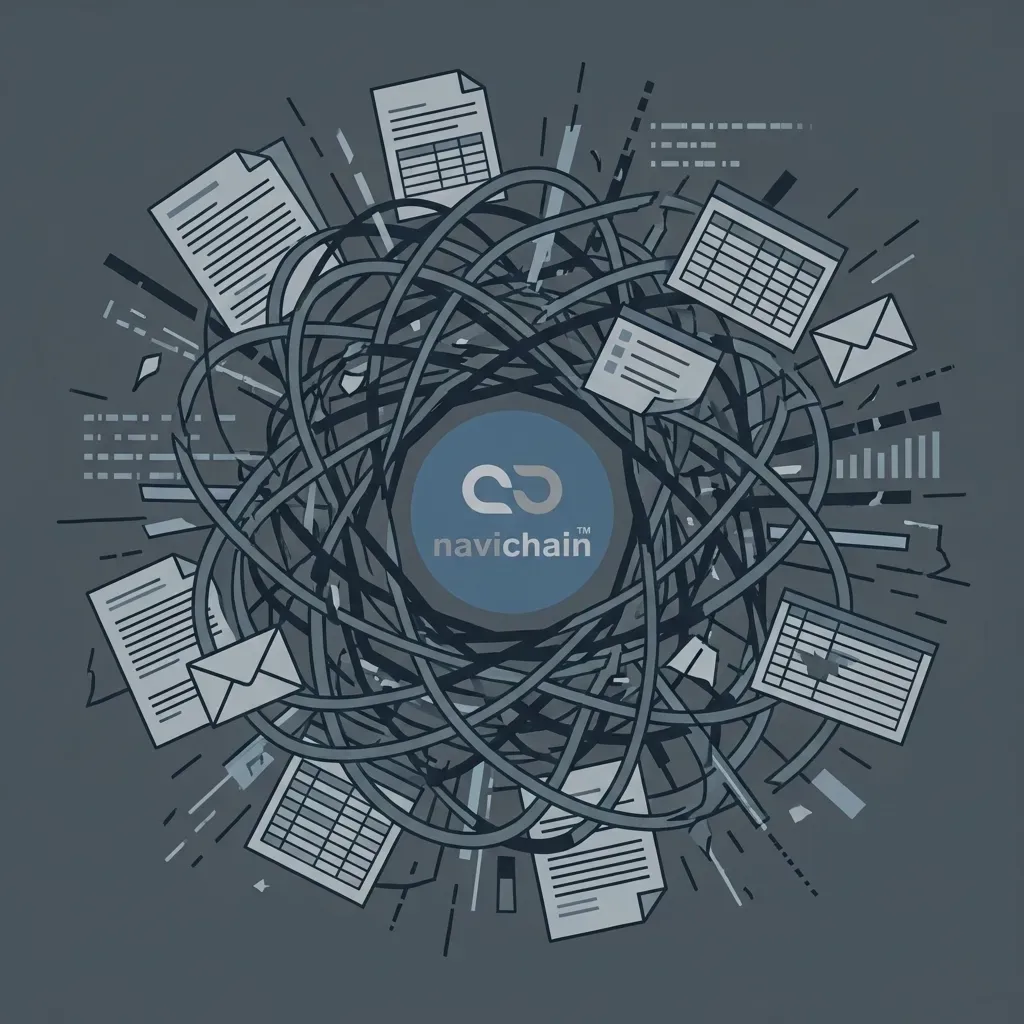
Manual processes and lack of real-time visibility create operational barriers and increased costs for SMEs in their supply chains.
Introduction
The global economy is in a state of constant flow. Geopolitical tensions, technological breakthroughs, changing consumer behaviors, and increasing regulatory requirements create a complex and unpredictable environment for businesses of all sizes. For European SMEs, these challenges are particularly acute. They must navigate an increasingly competitive market while meeting stricter regulatory requirements and meeting customers' increasing expectations for transparency, speed, and sustainability. Logistics, which has traditionally been a supporting function in the background, has now become a strategic differentiator. The ability to effectively and cost-efficiently manage the flow of goods, from raw materials to the end customer, is crucial to achieving competitive advantages and building a resilient business. But for many SMEs, logistics is still a bottleneck that hinders growth and profitability. Relying on manual processes, fragmented systems, and outsourcing to inflexible 3PL providers creates inefficiency, lack of transparency, and vulnerability to disruptions. This lack of control over their own logistics can lead to increased costs, dissatisfied customers, and lost business opportunities. This report explores the specific challenges and opportunities that European SMEs face regarding logistics. We argue that logistics sovereignty – the ability to control and optimize their own logistics operations, from planning to execution and analysis – is crucial to achieving long-term success and building a resilient business. We present a strategic solution based on a unified logistics operational system and highlight how Navichain SaaS, with its focus on European data sovereignty, AI-driven automation, and user-friendliness, can help SMEs regain control of their supply chains and transform them into a competitive advantage. We will examine how this transition not only reduces costs and increases efficiency but also enables a more flexible, transparent, and customer-centric logistics business.
SMEs' complex environment requires flexibility and strategic adaptation.
Section 1: The Challenge – The High Cost of "Status Quo" and the Consequences of Inactivity
For many European SMEs, logistics is still a "black hole" – a complex and opaque function that is difficult to control, optimize, and understand. This is often due to a combination of factors, including reliance on manual processes, fragmented systems, and outsourcing to inflexible 3PL providers that are not always tailored to the specific needs of SMEs. This lack of control and transparency can lead to a range of problems, including increased costs, reduced efficiency, dissatisfied customers, and vulnerability to disruptions. Lack of real-time tracking and visibility is another major challenge that directly affects customer satisfaction. Without real-time tracking of goods and vehicles, it is difficult to quickly identify and address problems. This can lead to delayed deliveries, dissatisfied customers, increased costs, and damaged brand reputation. Companies often find themselves in a reactive cycle, responding to angry customer calls about delayed deliveries because they lack real-time information about where their goods are. This lack of visibility can also lead to inefficient inventory management, increased inventory costs, and an increased risk of shrinkage. Manual invoicing and administration is also a major source of inefficiency, costs, and potential errors. Manual data entry and invoicing are time-consuming and prone to human error, leading to delayed payments, strained cash flow, and increased administrative costs. Additionally, the lack of automation can make it difficult to track and manage costs, making it harder to identify and implement savings. This manual process can also lead to disputes with carriers and suppliers, further increasing administrative costs. The "visibility gap" between the warehouse and the end customer also creates a brand risk that SMEs can no longer afford. In today's digital age, customers expect transparency, real-time information, and personalized service. If a company cannot provide this, it can lead to dissatisfied customers, negative reviews, lost business, and damaged brand reputation. Customers want to know where their orders are, when they can expect delivery, and have the ability to track their shipments in real-time. Companies that cannot meet these expectations risk losing business to competitors who can offer a better customer experience. The cost of "status quo" is high and the consequences of inactivity are serious. The operational friction created by these challenges is not just an inconvenience; it is a drain on capital, resources, and opportunities. Inefficiency, lack of transparency, and manual processes lead to increased costs, reduced profitability, vulnerability to disruptions, and reduced competitiveness. For many SMEs, logistics is a bottleneck that hinders growth and competitiveness. Failing to address these challenges can lead to lost market share, reduced profitability, and in the worst case, bankruptcy.
Lack of logistics insight risks SMEs' profitability and competitiveness.
Section 2: The Context/Evidence – The Shift to Resilience, Compliance, and Customer-Centricity
Data from the European Commission, industry analysts, and leading consulting firms indicate a clear trend: SME investments in logistics technology are accelerating. This increase is driven by three main factors: Resilience, Compliance, and Customer Experience. These factors are not isolated but rather interconnected and reinforcing each other. 1. Nearshoring & multi-sourcing: Building resilient supply chains: After the supply chain shocks of the early 2020s, companies are moving production closer to Europe and diversifying suppliers. This trend, known as nearshoring, aims to reduce dependence on distant suppliers, shorten lead times, and increase the supply chain's resilience to disruptions such as geopolitical tensions, natural disasters, and pandemics. At the same time, companies are diversifying their suppliers to reduce the risk of being dependent on a single source. This increased complexity requires smarter management tools to ensure efficiency, transparency, and control over the entire supply chain. Companies need real-time insight into their supply chains to quickly identify and address potential problems and adapt to changing market conditions. 2. ESG & regulatory pressure: Sustainability as a competitive advantage: New EU directives, such as the Corporate Sustainability Reporting Directive (CSRD), require accurate CO2 tracking throughout the supply chain and increased transparency regarding environmental and social impacts. ESG (Environmental, Social, and Governance) has become an increasingly important factor for companies, and investors, customers, and employees demand increased transparency, accountability, and sustainability. The EU's CSRD directive requires companies to report on their environmental impact, including CO2 emissions from the supply chain. Manual guessing is no longer a legal or commercial option; companies must have access to accurate and verifiable data to meet regulatory requirements, meet stakeholder expectations, and build a strong brand. Additionally, companies that can demonstrate a strong ESG profile can attract investments, improve their reputation, and increase their competitiveness. 3. The "Amazon effect": Customer-centricity as a necessity: Even in B2B sectors, customers expect transparency, speed, and personalized service similar to B2C deliveries. Amazon has set a new standard for customer experience, with fast deliveries, real-time tracking, easy return handling, and personalized communication. This "Amazon effect" has spread to the B2B sector, where customers expect the same level of transparency, service, and convenience. Companies that cannot meet these expectations risk losing business to competitors who can offer a better customer experience. Investing in logistics technology that enables real-time tracking, proactive communication, and flexible delivery options is crucial to meeting customers' increasing expectations and building long-term relationships. These three factors – resilience, compliance, and customer experience – drive SMEs to invest in logistics technology and regain control of their supply chains. Companies realize that logistics is no longer just a cost item but a strategic differentiator that can provide competitive advantages, increase profitability, and build a resilient business. By investing in the right technology, SMEs can improve their efficiency, reduce their costs, increase their transparency, enhance their customer experience, and meet regulatory requirements.
Technological investment strengthens resilience, compliance, and customer experience for SMEs in the supply chain.
Section 3: The Strategic Solution – A Unified Logistics Operational System for Logistics Sovereignty
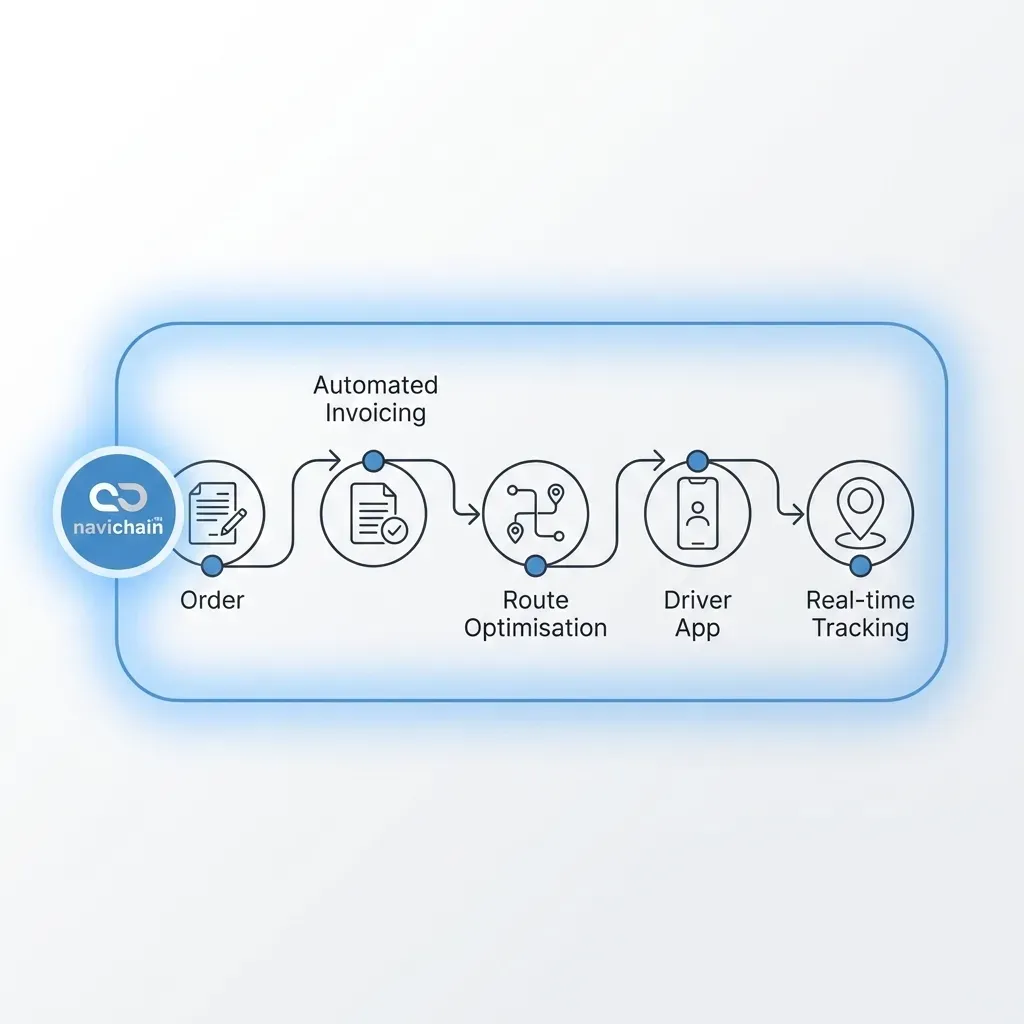
The solution to the challenges faced by European SMEs in logistics is not to purchase ten different niche software solutions that do not integrate with each other, but to adopt a Unified Logistics Operational System. This methodology moves away from fragmented "point solutions" towards a single source of truth for all logistics data and all logistics processes. By integrating transport management (TMS), warehouse management (WMS), route optimization, automated finance, and real-time tracking into a seamless flow, SMEs can regain the flexibility, control, and transparency that large, rigid 3PL providers often lack. A unified logistics operational system provides a holistic view of the entire supply chain, from order to delivery, and enables a more proactive and data-driven management of logistics operations. This allows companies to: * Gain real-time insight and visibility: Track goods and vehicles in real-time, quickly identify and address problems, make informed decisions based on current information, and proactively communicate with customers about delivery status.
- Automate processes and reduce manual work: Automate manual processes such as transport planning, warehouse management, invoicing, route optimization, and document handling, reducing inefficiency, minimizing the risk of human error, freeing up time for staff to focus on more strategic tasks, and increasing overall productivity.
- Optimize operations and reduce costs: Optimize routes, inventory, transport choices, and other logistics functions to reduce costs, improve efficiency, increase customer satisfaction, and reduce environmental impact.
A unified logistics operational system enables a holistic view of the supply chain, leading to improved data-driven management and increased efficiency.
- Improve collaboration and communication: Improve collaboration between different departments and stakeholders, including suppliers, carriers, and customers, by sharing information, creating a common understanding of the supply chain, and enabling more effective communication.
- Meet regulatory requirements and build a sustainable brand: Track and report CO2 emissions, ensure compliance with regulatory requirements, and build a sustainable brand that attracts customers, investors, and employees. Strategic sovereignty means owning your data and controlling your processes. When a company controls its digital workflow, it can quickly adapt – change routes, switch carriers, or scale order volumes without breaking the underlying process. This is especially important in today's rapidly changing business landscape, where companies must be flexible and adaptable to survive and thrive. By owning their data, companies can also analyze their logistics operations, identify areas for improvement, and make data-driven decisions that lead to increased efficiency, reduced costs, and improved customer satisfaction.
Diagram illustrating the benefits of strategic sovereignty in logistics, including increased flexibility, data-driven decisions, and improved adaptability.
Section 4: The Tech Enabler (Navichain): Logistics Sovereignty with a Unified OS
Navichain SaaS offers a unique solution for European SMEs striving for logistics sovereignty. Navichain is not just software, but a Unified Logistics Operational System that integrates all critical logistics functions into a single platform. This eliminates the need for fragmented systems and manual processes, giving companies a holistic view of their supply chain and enabling more proactive and data-driven management of logistics operations. Navichain SaaS is built with a focus on European data sovereignty, meaning all data is stored and processed within Europe, ensuring compliance with GDPR and other relevant data protection laws. This is particularly important for companies handling sensitive data or operating in industries with strict regulatory requirements. By choosing Navichain, SMEs can be assured that their data is protected and that they meet all relevant laws and regulations. Navichain's Unified OS offers a range of benefits, including: * Centralized data: All logistics data is stored on a single platform, giving companies a holistic view of their supply chain and enabling more efficient analysis and reporting.
- Automated processes: Manual processes are automated, reducing inefficiency, minimizing the risk of human error, and freeing up time for staff to focus on more strategic tasks.
- Real-time insight: Companies gain real-time insight into their logistics operations, allowing them to quickly identify and address problems, make informed decisions, and proactively communicate with customers about delivery status.
- Optimized operations: Navichain helps companies optimize their logistics operations, reduce costs, improve efficiency, and increase customer satisfaction.
- Improved collaboration: Navichain improves collaboration between different departments and stakeholders, leading to a more efficient and coordinated supply chain. Additionally, Navichain leverages AI-driven automation to further optimize logistics operations. AI is used to:
- Predict demand: AI algorithms are used to predict demand, allowing companies to optimize their inventory and reduce the risk of stockouts or overstocking.
- Optimize routes: AI algorithms are used to optimize routes, reducing transport costs, improving delivery times, and reducing environmental impact.
- Identify anomalies: AI algorithms are used to identify anomalies in logistics data, allowing companies to detect and address potential problems before they escalate.
A schematic example of how Navichain integrates data flows and AI-driven tools to optimize logistics operations.
- Automate customer service: AI-driven chatbots are used to automate customer service, reducing the burden on customer service staff and improving customer satisfaction. By combining a unified operating system, European data sovereignty, and AI-driven automation, Navichain empowers SMEs to regain control of their supply chains, reduce costs, improve efficiency, increase customer satisfaction, and build a resilient business.
Section 5: Business Outcomes: ROI, Efficiency Gains, and Strategic Resilience
The implementation of Navichain SaaS and a unified logistics operational system leads to significant business outcomes for European SMEs. These outcomes can be measured in terms of ROI, efficiency gains, and strategic resilience.
- Reduced transport costs: By optimizing routes, choosing the most cost-effective carriers, and automating transport planning, companies can reduce their transport costs by up to 20%.
- Reduced inventory costs: By optimizing inventory, predicting demand, and reducing the risk of stockouts or overstocking, companies can reduce their inventory costs by up to 15%.
- Reduced administrative costs: By automating manual processes such as invoicing, document handling, and reporting, companies can reduce their administrative costs by up to 30%.
- Increased customer satisfaction: By offering real-time tracking, fast deliveries, and personalized service, companies can increase their customer satisfaction and loyalty, leading to increased sales and market share.
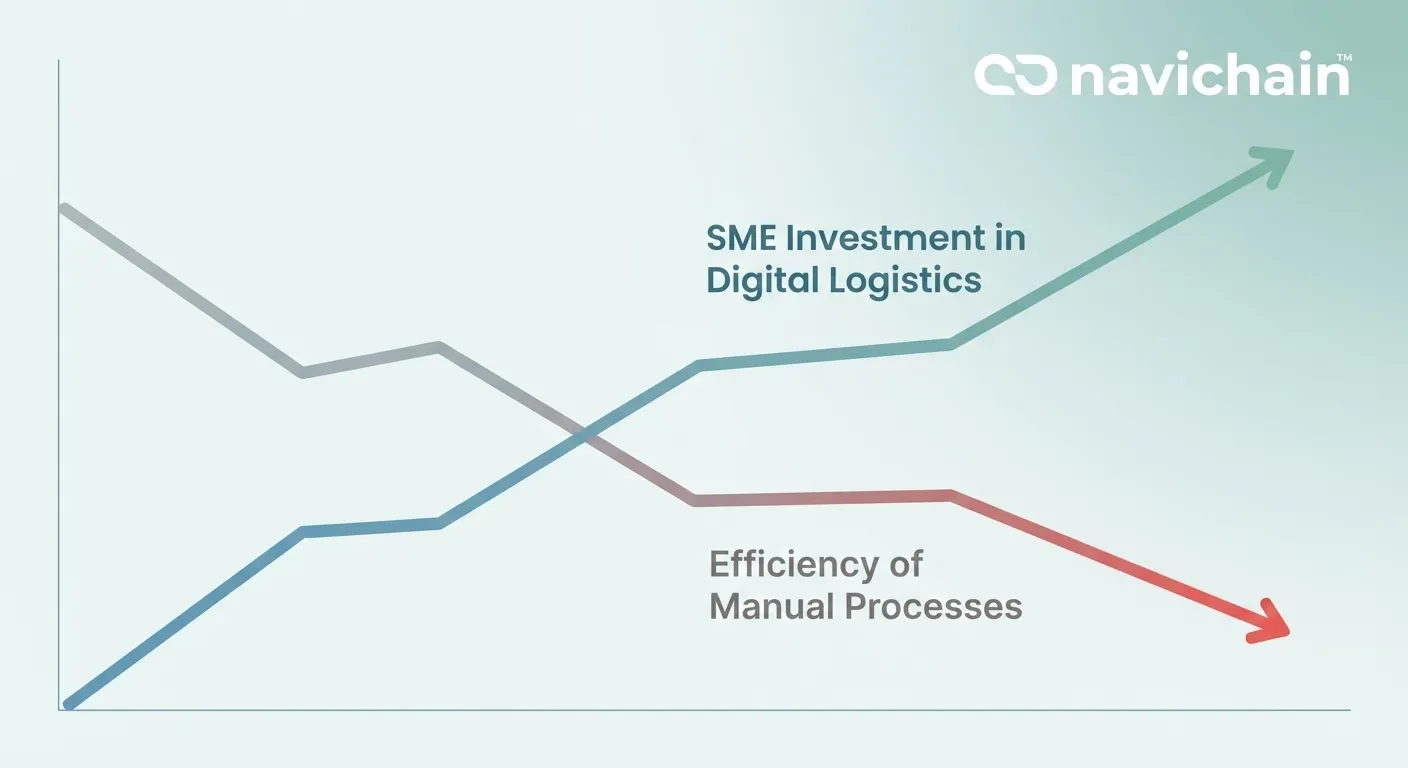
This schematic illustration summarizes how Navichain SaaS and a unified logistics operational system lead to concrete business outcomes for European SMEs through streamlining and cost savings.
- Faster delivery times: By optimizing routes, automating transport planning, and improving collaboration, companies can reduce their delivery times by up to 25%.
- Increased productivity: By automating manual processes and freeing up time for staff to focus on more strategic tasks, companies can increase their productivity by up to 20%.
- Reduced risk of human error: By automating processes and centralizing data, companies can reduce the risk of human error, leading to fewer incorrect deliveries, invoicing disputes, and other problems.
This image illustrates the multifaceted benefits of improved and more independent logistics management, including increased efficiency and customer satisfaction.
- Improved visibility and control: By gaining real-time insight into their logistics operations, companies can improve their visibility and control over their supply chain, allowing them to quickly identify and address problems and make informed decisions.
- Increased adaptability: By owning their data and controlling their processes, companies can quickly adapt to changing market conditions, supply chain disruptions, and new regulatory requirements.
- Reduced vulnerability: By diversifying their suppliers, moving production closer to Europe, and building resilient supply chains, companies can reduce their vulnerability to disruptions and ensure a continuous supply of goods and services.
- Increased competitiveness: By reducing costs, improving efficiency, increasing customer satisfaction, and building a sustainable brand, companies can increase their competitiveness and gain market share.
- Improved risk management: By gaining real-time insight into their logistics operations, companies can improve their risk management and proactively identify and address potential problems before they escalate. By achieving these business outcomes, European SMEs can not only survive in today's complex business landscape but also thrive and build a long-term sustainable and profitable business.
Conclusion
In a world characterized by uncertainty, rapid change, and increasing customer expectations, logistics sovereignty is no longer an optional strategy but a necessity for European SMEs. Continuing to rely on outdated systems, manual processes, and inflexible 3PL providers is not only costly and inefficient but also risky. Companies that do not address these challenges risk losing market share, reducing profitability, and in the worst case, bankruptcy. By adopting a unified logistics operational system, such as Navichain SaaS, SMEs can regain control of their supply chains, reduce costs, improve efficiency, increase customer satisfaction, and build a resilient business. Navichain offers a unique solution that combines a unified operating system, European data sovereignty, and AI-driven automation, enabling SMEs to optimize their logistics operations, meet regulatory requirements, and build a sustainable brand. This report has shown that logistics sovereignty is not just a technical solution but a strategic imperative for European SMEs that want to survive and thrive in today's complex business landscape. By investing in the right technology and adopting a proactive strategy, SMEs can transform their supply chains from a source of chaos to a primary driver of profitability, competitiveness, and long-term success. The time is ripe for European SMEs to regain control of their logistics and secure their future.
By achieving logistics sovereignty, European SMEs can create a resilient and profitable business.
References
- European Commission (2020). EU Strategy for Sustainable and Smart Mobility
- International Road Transport Union (IRU) (2023). IRU Situation Report on European Road Freight Transport
- McKinsey & Company (2022). Resilient supply chains: A transformation imperative
- Gartner (2023). Top Supply Chain Technology Trends
- Tillväxtverket (2021). Logistics Situation in Sweden 2021
The Navichain platform enables increased transparency and control over the supply chain for European small and medium-sized enterprises.
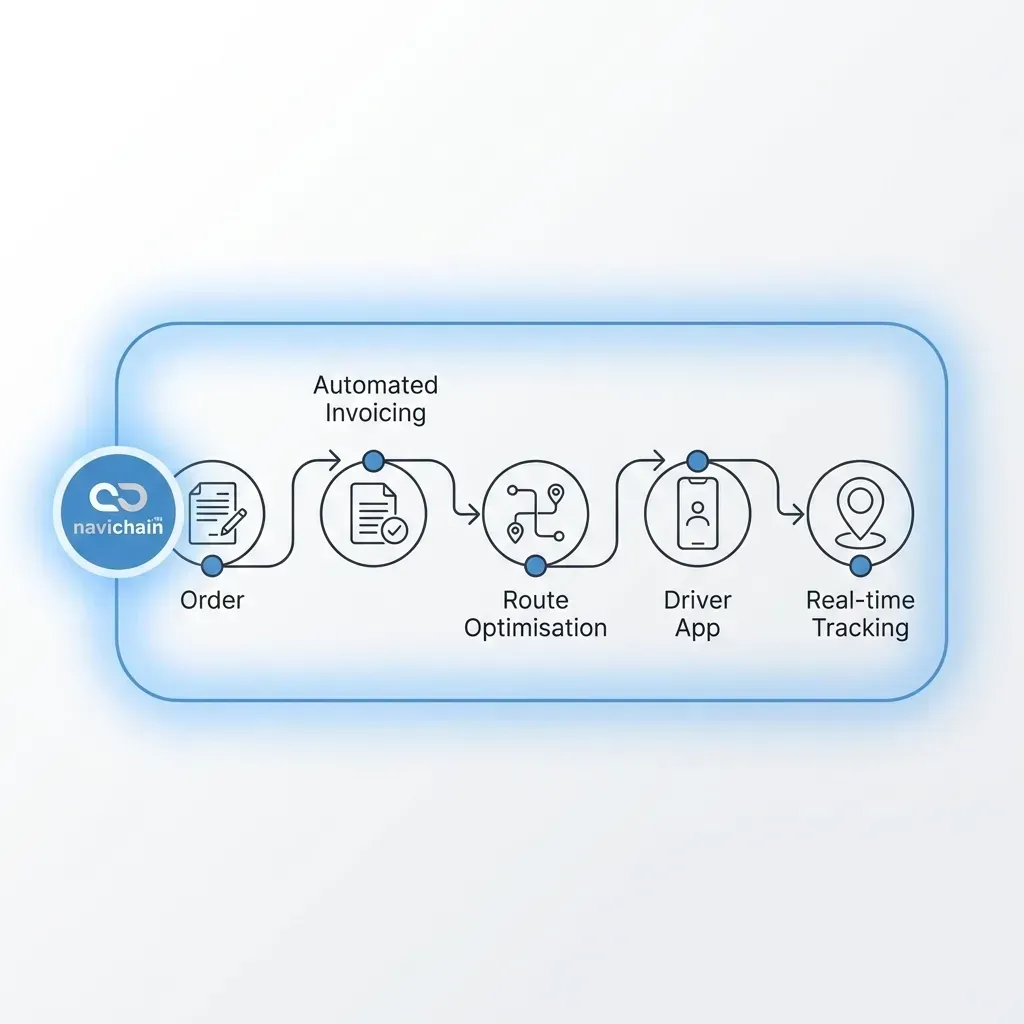
The Navichain platform provides European small and medium-sized enterprises with tools to visualize and manage their supply chains more effectively. This contributes to increased control and transparency.