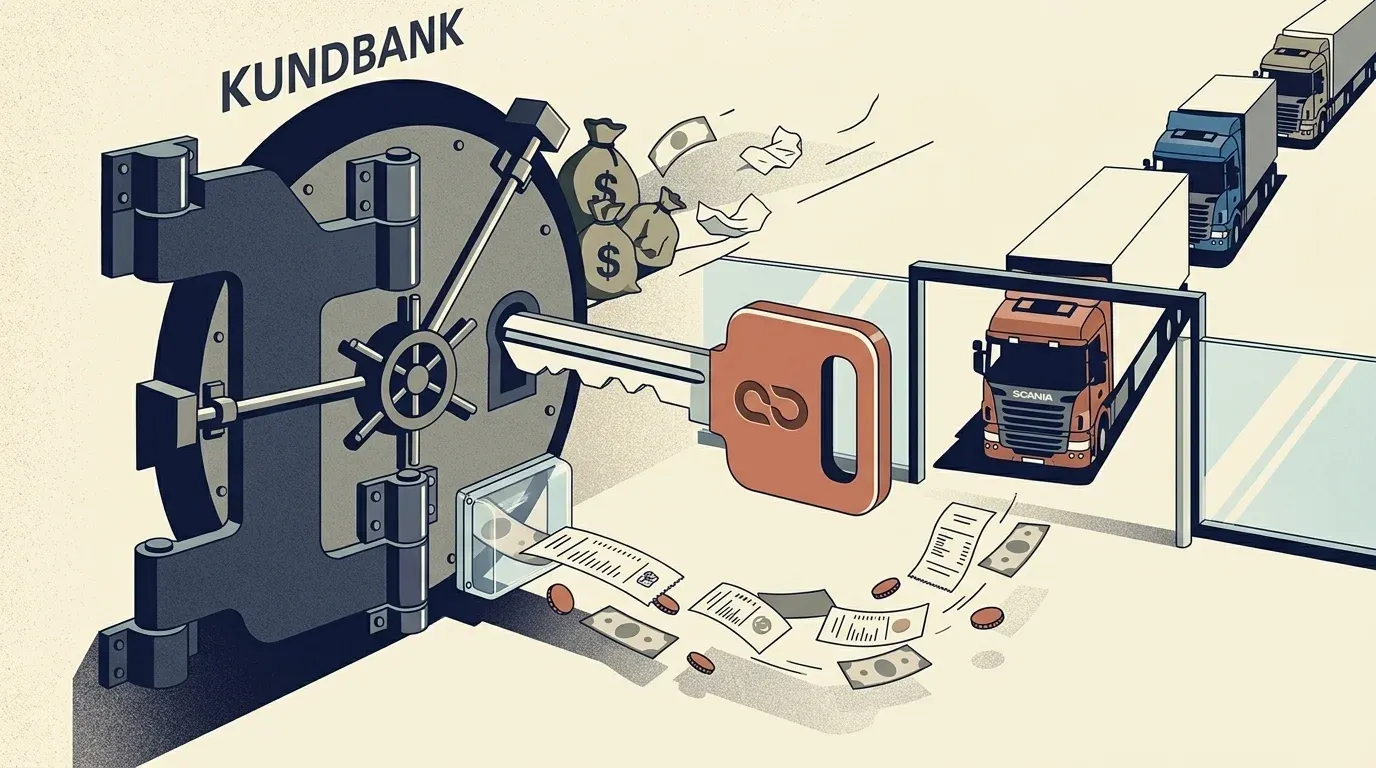
Stop acting as a bank for your customers (This way, you halve the time to payment)
🇬🇧 Read this article in English
Last week, we launched the navichain SaaS Forever Free model equipped with advanced Sovereign AI to radically accelerate billing cycles in logistics. By implementing Open Source LLMs on navichain's self-hosted infrastructure, we digitally transform complex paper waybills with 100% data sovereignty preserved. Most transport companies lose critical liquidity in the gap between service rendered and invoice sent due to inefficient routines. But with navichain's ecosystem for automated invoicing and e-CMR directly in the field, you can stop acting as an interest-free bank for your customers and in many cases halve the time to payment – without hidden fees.
Key Takeaways / Executive Summary: - Eliminate Delays: Automate invoicing so the system matches the booking to the correct tariff the second a signature is collected via the navichain Mobile App. - Manage Unlimited Routes in Real-Time: Regardless of the number of terminals (cross-docking), the platform keeps the order together throughout the entire transport chain, even for complex subcontractor structures. - Ensure Compliance and Data Sovereignty: With navichain's proprietary RAG architecture and locally hosted models, full operational sovereignty is ensured, protected from external data disclosure (such as the US CLOUD Act). - Direct Evidence: Get immediate access to e-CMR, photos of deviations, and logged comments live from the field.
Why do haulage companies often act as banks for their customers?
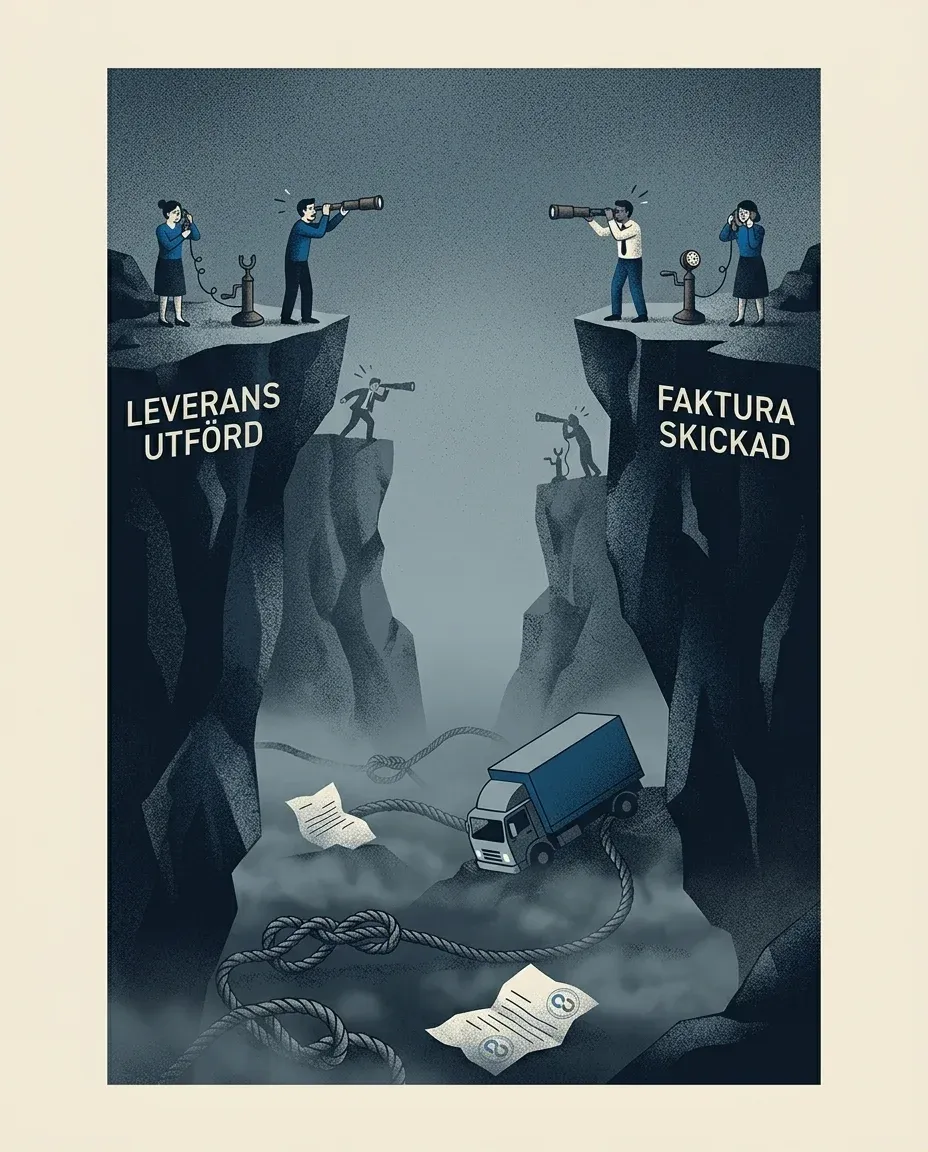
Digitizing a paper document is only the first, basic step. The real strategic question for the company's liquidity is what happens immediately afterwards. One of the absolute largest hidden cost traps for transport companies in the Nordic region is the gap between the logistics service performed and the day the invoice is actually sent to the customer.
According to EU Directive 2011/7/EU on combating late payments in commercial transactions, shorter payment times are strongly recommended to protect smaller companies, and interest organizations such as Transportföretagen often warn about how long payment times are strangling the industry. In practice, this means that smaller subcontractors are forced to finance the balance sheets of large companies.
Part of these delays is due to the back office having to wait for physical papers. Drivers may accidentally misplace documents, or subcontractors may delay necessary supporting documents after complicated multi-leg trips. This handling means that the back office ultimately spends hours chasing paper documents before they can even start the invoicing process.
What is POD (Proof of Delivery)? A legally binding receipt of delivery that a specific cargo delivery has been completed, which is often the definitive condition for the job to be invoiced.
While you, your back office, and your drivers search for these physical documents, you are effectively acting as an interest-free bank for your customers' customers. Large sums of capital are locked up for weeks, which seriously harms growth and resilience in modern logistics.
What are the real costs of manual paper handling?
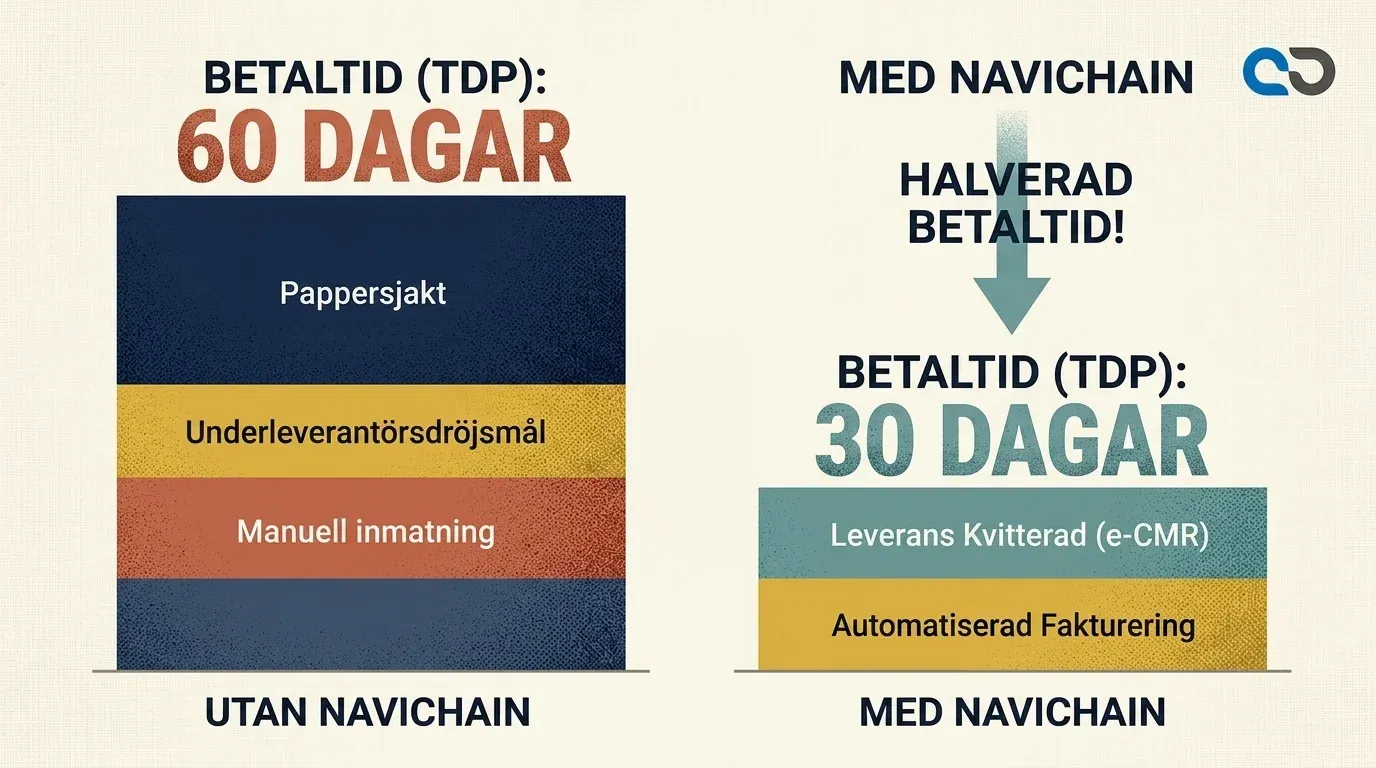
In addition to pure liquidity problems, manual handling of paper-based consignment notes and freight documents creates an administrative nightmare. In studies conducted on the degree of digitalization in the haulage industry in Sweden, many companies testify that the error margin in manual input accounts for up to 10% of total administrative costs.
What is e-CMR? The electronic consignment note (Electronic Consignment Note) that functions as a standardized, fully digital transport document with the same legal value as the paper version during international road transport.
Relying on physical e-CMR copies also means that deviations are detected too late. If a pallet is damaged upon unloading and the driver only notes this on a piece of paper, the information may reach dispatch management several days after the goods have already been accepted. This delay causes severe claim disputes and costly customer losses. A modern, data-sovereign dispatch management system prevents this proactively.
How does navichain automate the entire flow from booking to payment?
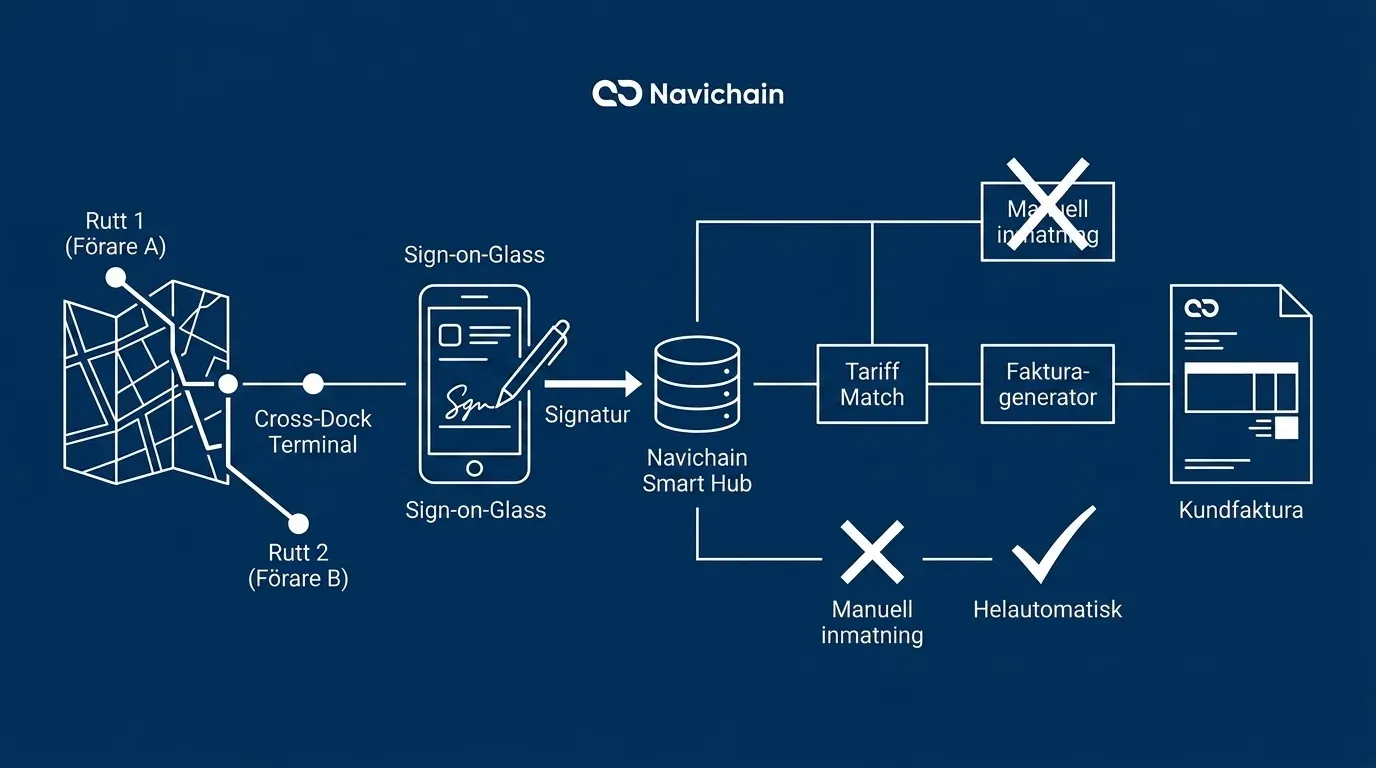
This is how navichain closes the gap completely automatically: In our ecosystem, everything is connected from the very first click in the booking until the last crown safely lands in your bank. The system is built for scalability and allows you to handle unlimited routes, drop points, and subcontractors. Regardless of how many legs or terminals a transport passes through, the order data remains intact and centralized.
With live updates directly from the field via our integrated Mobile App (compatible with iOS and Android), the driver gets direct access to the current job and can digitalize the process through navichain's Sovereign AI. We use open AI models operated 100% locally on our own infrastructure – no need to outsource critical business information to data centers in major powers' jurisdictions.
What is Sovereign AI? An AI infrastructure where the organization has full control over both its business data and the platform itself. Instead of relying on American cloud giants, navichain hosts open-source models externally via its own RAG architecture for absolute confidentiality and data sovereignty.
The driver can, among other things, immediately photograph and log damages at the ramp.
What is Sign-on-Glass? A digital method where the driver collects the recipient's legally binding signature directly on the touchscreen of the mobile phone or tablet for lightning-fast verification and traceability.
The goal of the entire system converges in: automated invoicing. The second the driver collects the recipient's signature, the entire platform is updated. Navichain immediately matches the booking to the customer-specific tariff and creates an invoice basis that is ready to be exported or approved. No waiting time. No manual cut-and-paste from dirty spreadsheets.
How can you test this workflow in your own trucks?
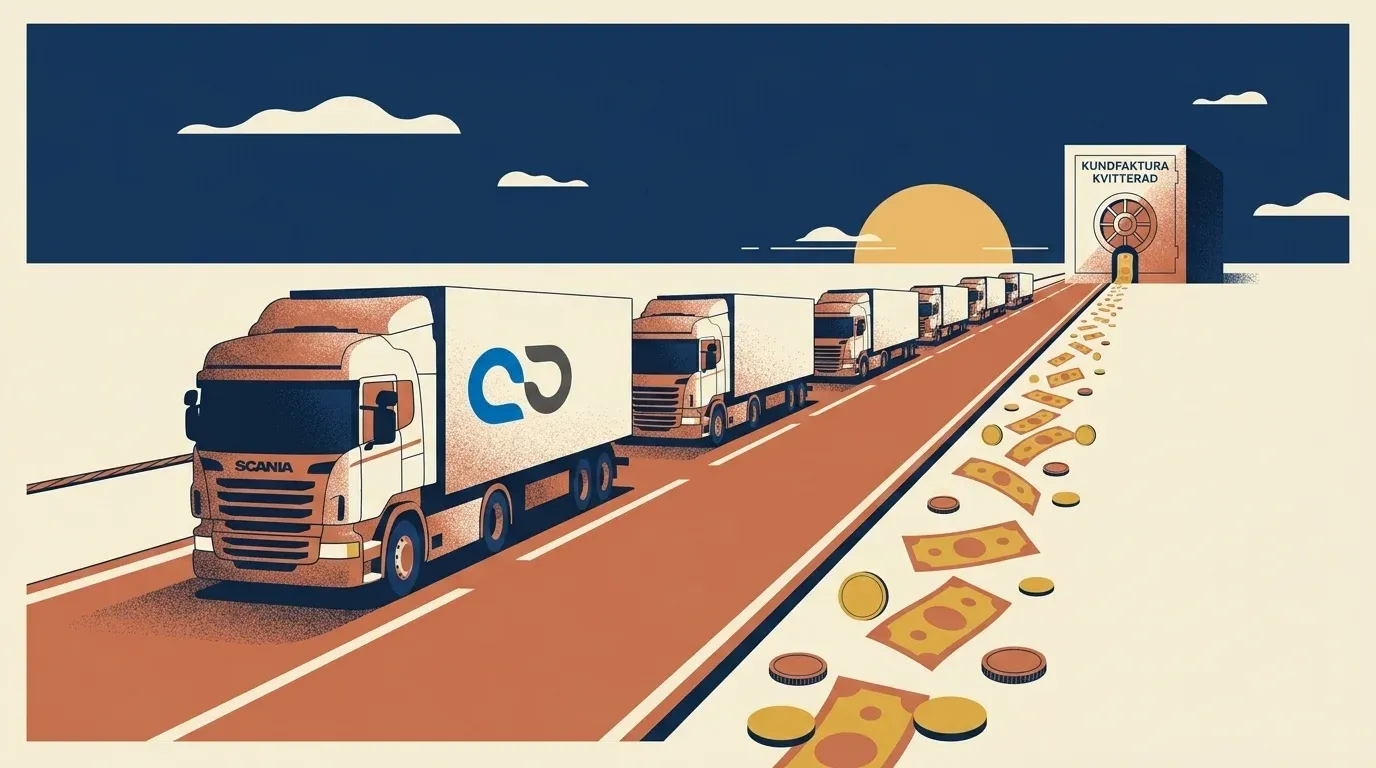
The beauty of modern cloud systems is that you no longer need to commit to expensive multi-year contracts to initiate a digital transformation. With navichain's "Forever Free" level, small businesses get full access for up to 2 users and 10 bookings per month. This is your opportunity to verify the platform's efficiency under real conditions.
Set up one of your best drivers with the app, perform a demo transport, collect the signature on the screen, and observe in real-time how the platform's Sovereign AI and invoicing model handles the administration for you.
When you then want to grow and scale up to hundreds of trucks and thousands of bookings? The cost of the premium subscription falls to the hyper-attractive price of 199 SEK/month per user. For most haulage companies and logistics firms, this price pays for itself solely through the saved administrative time at the very first invoicing run. Stop acting as a bank for other companies. Start invoicing directly from your pocket.
🔗 Click here to create your free account and launch your first fully automated logistics order.
About the Author: Manusha Integration & Automation Specialist at navichain. Manusha focuses on building smart, secure logistics solutions with Sovereign AI that minimize administration, preserve data privacy, and maximize operational efficiency for European transport companies.