Protect your shipments with digital technology
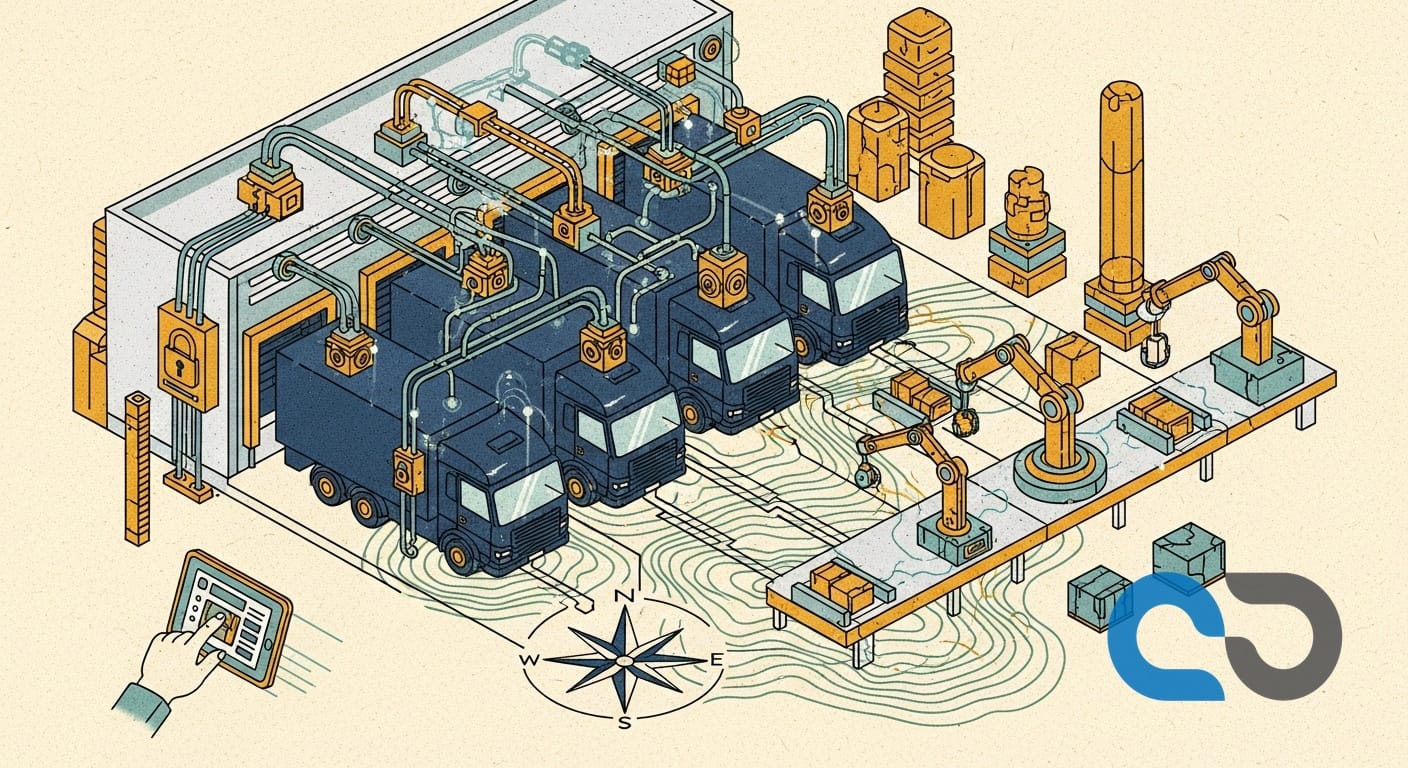

Criminal networks today use drones to scout rest areas and signal jammers to disrupt GPS signals. For a modern haulage company, a padlock on the back doors is no longer sufficient. Security must — just like route optimization — be integrated into the digital architecture.
Cargo theft is no longer just a logistical nuisance. It's an organized, well-funded industry with increasingly sophisticated methods. According to industry organizations in Europe, the value of stolen loads increased by over 30 percent during the period 2022–2025, driven by rising cargo values in electronics, pharmaceuticals, and consumer goods.
What has changed the game is that the attacks now target digital systems as much as physical locks. A GPS jammer can be bought for a few hundred dollars online. A coordinated action with drone scouting and jamming signals can neutralize an unlocked trailer at an unmonitored rest area in minutes. The answer to this threat cannot be a thicker padlock.
Security's Three Digital Defense Lines
Modern cargo security solutions are built on three layers of digital control working together — each powerful on its own, but transformatively effective in combination.
Smart geofencing
The doors of the trailer cannot be physically unlocked as long as the vehicle is outside a predefined, secure delivery zone. No manual override without an approved digital signature from dispatch.
Digital IoT seals
Sensors mounted on doors and hatches send an immediate alert to the office at the slightest light intrusion or pressure change in the wrong place. Every opening is logged with a timestamp and GPS coordinates.
Anti-jamming technology
Telematics units like Teltonika FMC650 detect if someone is trying to block the GPS signal and immediately trigger an emergency mode with backup tracking via cellular positioning.
From lock barrel to logistics platform
The critical shift occurs when you connect your physical security systems to a central dispatch platform. Security then transforms from a passive barrier to an active, intelligent protection.
With Navichain as the hub, the system can automatically raise the security status of a vehicle if the driver is forced to stop at a non-approved rest area. If the back doors are opened without digital approval from dispatch, the alarm goes directly to both the office and the nearest security company — with exact position and timestamp.
"Secure logistics isn't about making theft impossible, but about making the risk of detection so immediate and digital that the thief chooses another target."
Three concrete actions you can implement now
Regardless of fleet size, there are several cost-effective measures that can be quickly implemented with the right TMS support:
-
Dynamic route selection along secure corridors
Let the system plan routes only along roads with certified and fenced TAPA parking areas, so the driver never has to take chances during rest breaks. Navichain integrates with HERE Maps with support for security-classified rest stops.
-
Two-factor authentication for unloading
Require both the driver and the receiver's warehouse manager to sign digitally in their respective apps before the electronic loading bay locks are released. Eliminates manipulated deliveries and creates an indisputable audit trail.
-
Hidden backup transmitters in the cargo
Place microscopic, battery-powered IoT trackers directly inside the cargo or on the pallet — completely separate from the truck's own systems. A last lifeline if the vehicle is cut off. Easily integrated with Navichain via open API to common tracker protocols.
Security as a selling point
Investing in digital cargo security is, in 2026, one of the strongest arguments for winning premium customers in electronics, pharmaceuticals, and high-value transport. Procurement companies in these segments are increasingly demanding documented security systems — not as an option, but as a qualification requirement.
When you can demonstrate that your fleet is controlled with digital precision — geofenced, IoT-sealed, anti-jamming protected, and logged on Swedish servers — you position your haulage company as the partner the market can trust. Security that is immediately visible in lower insurance premiums and increased margins on premium assignments.
See how Navichain handles cargo security in your fleet
Book a walkthrough with one of our transport specialists. No obligations — but with sharp answers to your specific questions.