Planning as a Profit Driver: From Administrative Chaos to Strategic Profitability
🇬🇧 Read this article in English
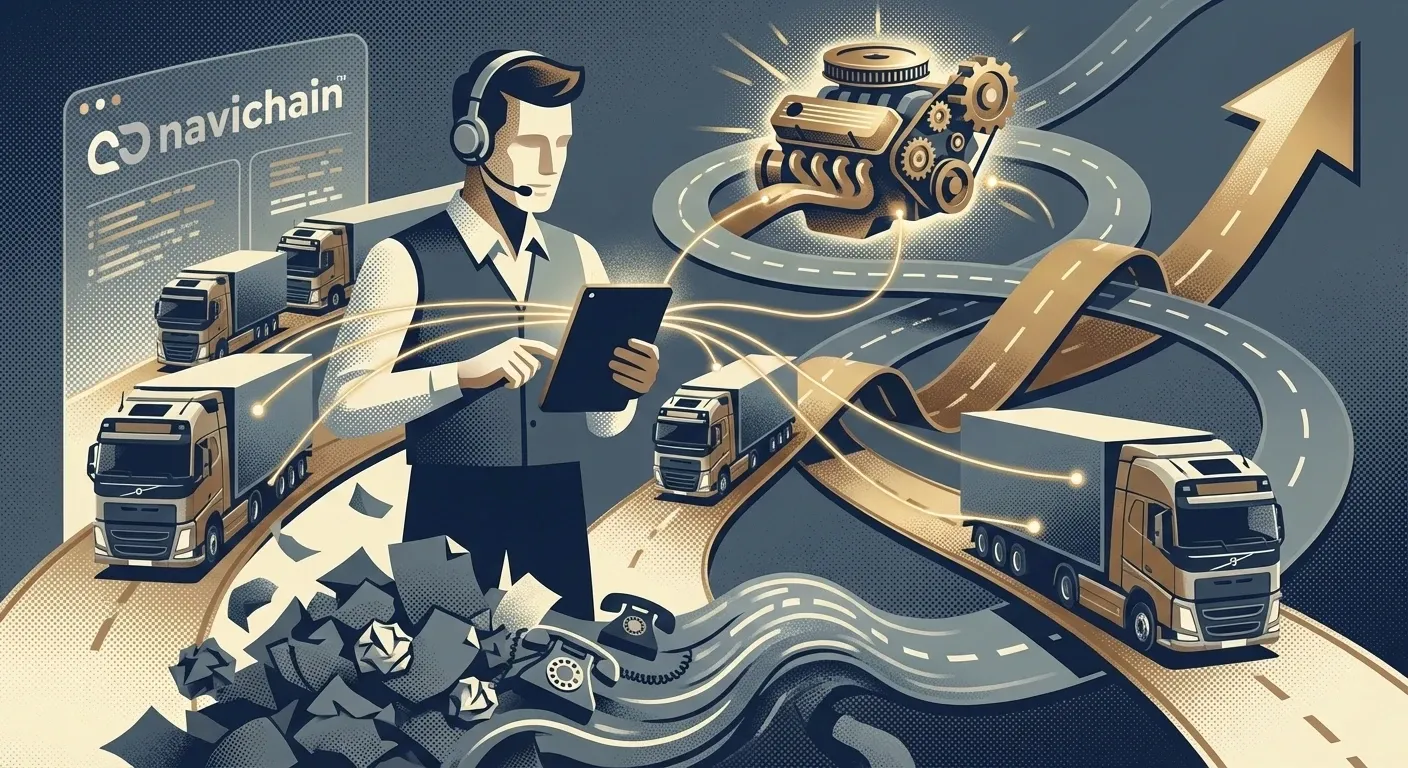
For many Swedish haulage companies, dispatch/transport management is a stressful cost item. Phones are ringing, Excel spreadsheets are crashing, and margins are guessed on the fly. But for the winners of the future, planning is something else: A profit engine.
The transport planner is the heart of every haulage company, but often functions as the organization's "shock absorber." Every day, they make hundreds of micro-decisions under extreme time pressure. Which truck should take which load? Can we squeeze in a pickup in Jönköping? Should we take the job despite the low price to position the truck?
In a traditional haulage company, these decisions are made based on gut feeling, experience, and fragmented information from phone calls and emails. It has worked for decades when margins were larger and demands lower. But in today's logistics landscape – characterized by volatile fuel prices in 2026, driver shortages, and demands for minute precision – gut feeling is no longer enough.
Inefficiency in traditional transport planning leads to inefficiency.
The risk is not that the truck won't arrive. The risk is that it arrives at a loss that we don't discover until the invoice is sent a month later. Every "guess" in planning is a financial risk. Every minute of manual intervention to move data between systems is a direct cost.
We call this phenomenon Process Friction. This White Paper delves deep into how process friction silently kills profitability for small and medium-sized haulage companies (SMEs) and presents a radical new strategy: Transforming transport planning from a reactive administrative function to a proactive profit machine through "Unified Fabric" technology.
Part 1: Anatomy of a Hidden Cost
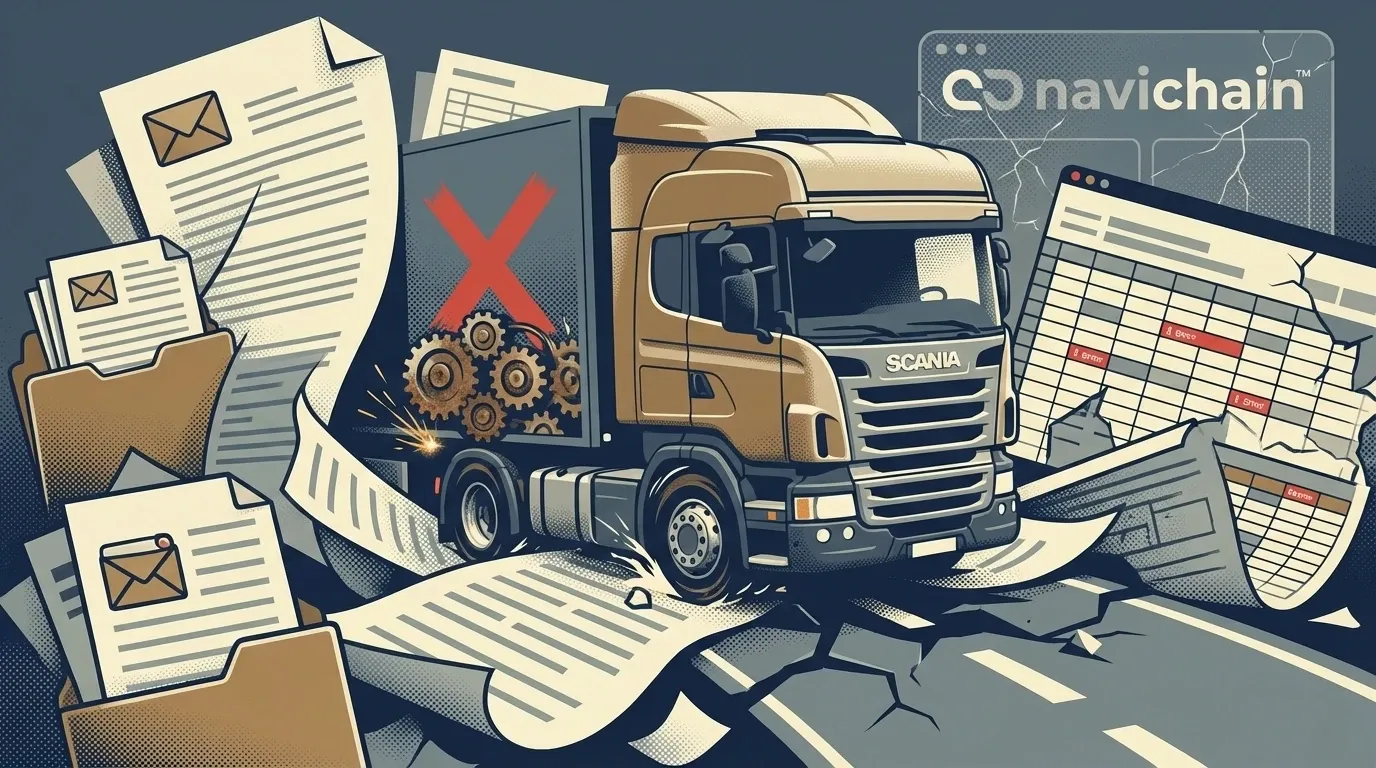
A fragmented view of data leads to manual handling, errors, and wasted time – process friction in its purest form.
To understand the solution, we must first dissect the problem. What does it actually cost when systems don't talk to each other?
1.1 The Invisible Cost of "Alt-Tab"
Look at a typical workday for a transport manager. A customer calls in an order. The planner notes it in a block (or in their head). They open their TMS to see which trucks are available. They then need to open another system (or call the driver) to see where the truck actually is. To price the order, they might need to look at an Excel spreadsheet with customer agreements.
Every time the planner switches context – from phone to TMS, from TMS to map, from map to Excel – process friction occurs. It's not just the time it takes. It's the risk of errors. * A misentered figure in the order. * A missed note that the driver's driving time is about to end. * A price based on an old tariff.
These microscopic friction points accumulate. If a planner spends 2 hours a day chasing information that should be immediately available, that's 25% of a full-time job that goes to pure administrative waste.
Time spent searching for information in transport planning.
1.2 "Margin Leakage"
The most serious symptom of process friction is the lack of real-time calculation. When a planner accepts a job, they often know what the revenue is. But do they know the cost? In most systems, the cost only becomes visible when the invoice from the subcontractor arrives or when the payroll is processed. This means the haulage company is operating "blindly".
Scenario: You take a job from Gothenburg to Malmö for 8000 SEK. It sounds good. But due to poor data visibility, the planner misses that the truck has to wait 4 hours for loading (cost: driver wage + downtime). In addition, the truck has to take a detour of 40 km to pick up a pallet that the planner thought was "along the way". The actual cost ends up at 8500 SEK. The haulage company has paid 500 SEK for the privilege of doing the job.
With fragmented systems, this is never discovered at the job level. It disappears into the mass of costs in the monthly report. This is "Margin Leakage".
Part 2: A New Architecture for Profitability
The solution is not "better Excel spreadsheets" or "faster staff." The solution is structural. We need to rebuild the data architecture from the ground up.
2.1 The Concept of "Unified Fabric"
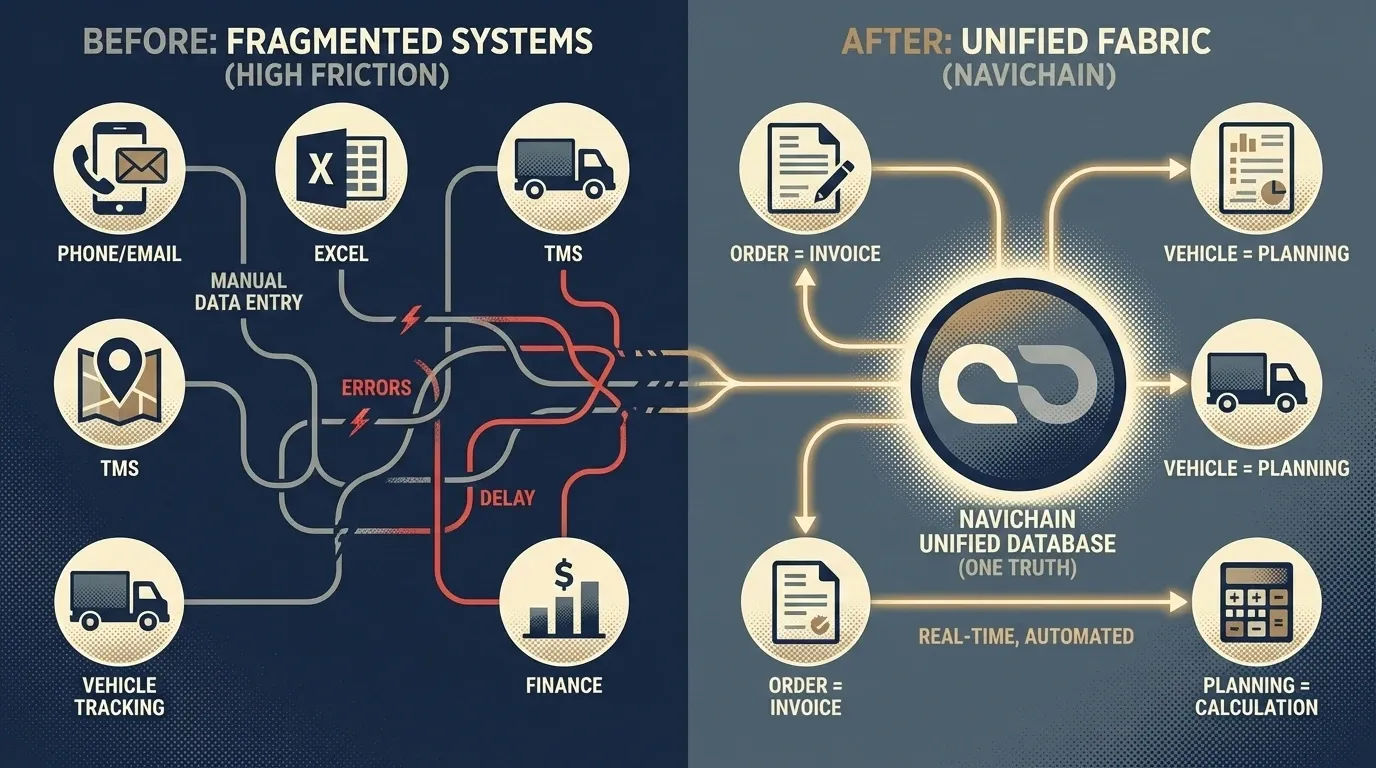
Traditional logistics IT is based on "Best-of-Breed" thinking: One system for warehouse, one for transport, one for finance, and expensive integrations between them. The model of the future, which Navichain advocates, is Unified Fabric (Unified Fabric). This means there are no integrations. There is one database. One truth.
Schematic overview of Navichain's Unified Fabric architecture.
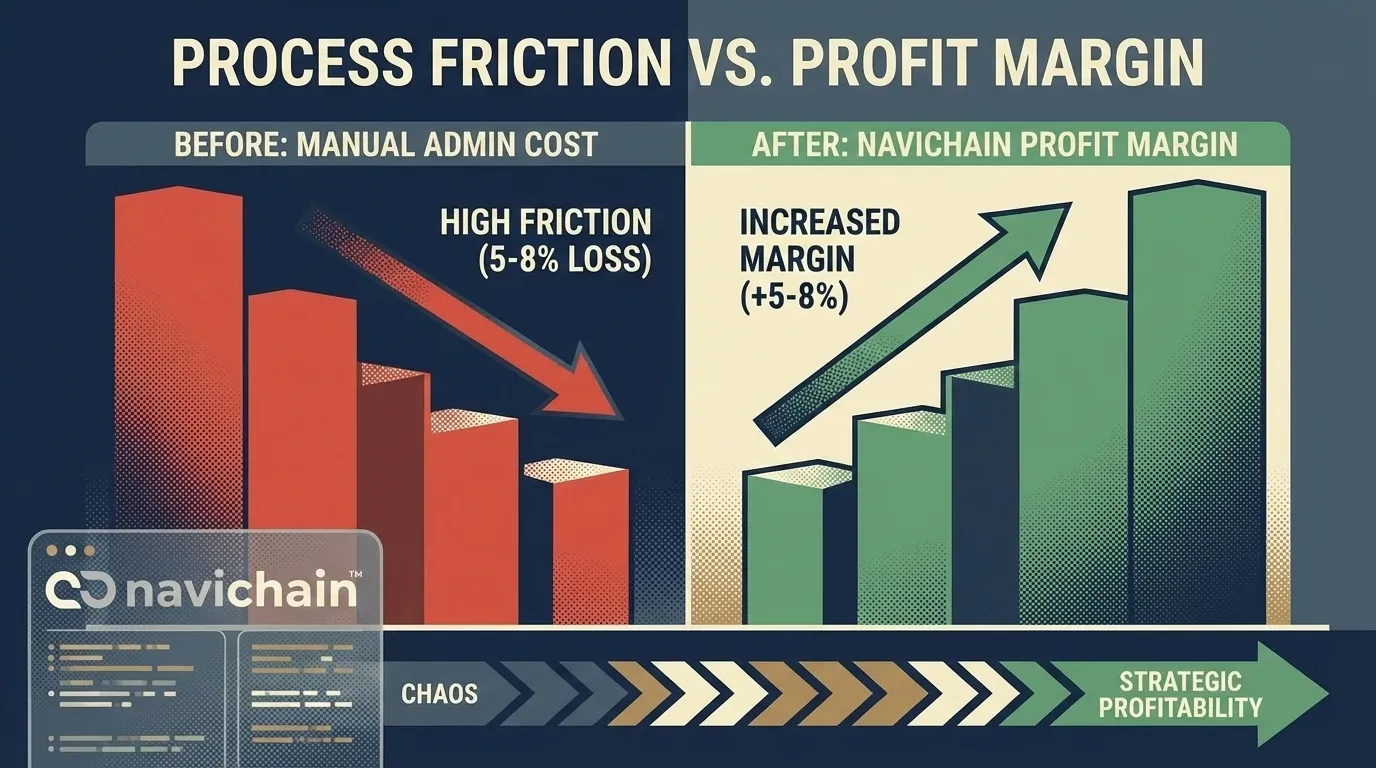
Illustration of Navichain's Unified Fabric architecture, where all data is managed in a single cohesive platform for optimal efficiency and data sovereignty.
2.2 Data Sovereignty as the Foundation
In a time of geopolitical uncertainty (see our partner WP "The Liquidity Shield"), it is not sustainable to build this critical infrastructure on foreign clouds. Navichain applies strict Data Sovereignty. All data is stored on Swedish soil, under Swedish law. It's not just a security issue; it's a performance issue. By owning the infrastructure, we can guarantee the millisecond-fast access to data required for automated planning.
Part 3: From Puzzle Solver to "Margin Trader"
When technology handles the friction, the role of the transport manager changes. This is the core of "Planning as a Profit Engine".
3.1 The New Job Description
Instead of being an administrator who enters orders and chases drivers, the transport manager becomes a Margin Trader (Margin Trader). Their screen shows not only trucks on a map. It shows profitability. Every potential job is color-coded:
Example of how a Margin Trader optimizes profitability through data-driven decisions.
The planner's job is to maximize the green area. "If I move this load to Truck 4 instead of Truck 2, the margin increases by 4% because Truck 4 is passing the goods receipt anyway."
*Example of how a Margin Trader optimizes profitability through data-driven decisions.
*
This decision cannot be made with gut feeling. It requires that the system (AI engine) has already calculated the consequences of every possible move.
3.2 Proactivity Through Predictive Analysis
A Margin Trader acts before the cost arises. With Navichain's built-in intelligence, the planner gets warnings about the future: * "Warning: Driver Andersson's driving time will end in 2 hours. He won't make it to Jönköping. Change truck now to avoid downtime." * "Opportunity: A new order has come in that matches the empty run for Truck 7. Accept now to increase fill rate."
This shift from reactive firefighting ("The truck is stuck!") to proactive optimization ("We avoided the truck being stuck") is the single biggest factor for increased profitability.
Part 4: Case Study – A Day with Navichain
Schematic overview of how Navichain integrates into different parts of the haulage company's daily operations to optimize planning and increase profitability.
Let's see how this looks in practice for a medium-sized haulage company with 25 trucks.
07:00 – Morning Overview Traditionally: The planner comes in to a pile of yellow notes and emails about the night's problems. With Navichain: The planner opens the dashboard. The system has already flagged three trucks that are behind schedule. With two clicks, their last stops are redistributed to other trucks that are ahead of schedule. No stress, no phone queue.
10:30 – The Urgent Order Traditionally: A major customer calls. "Can you take a pallet to Stockholm, needs to go now?" The planner says "Yes" to be nice, without knowing if it's profitable. With Navichain: The planner sees the order in the system. The AI simulates directly: Taking this order requires a redirection of Truck 12. The cost of the detour is 400 SEK. The revenue is 1200 SEK. The margin is positive. "Yes, we take it."
14:00 – Invoicing Flow Traditionally: The planner spends the last hour collecting consignment notes for yesterday's jobs. With Navichain: Drivers have signed deliveries in the app (Sign-on-Glass). The invoices have already been generated automatically and sent to the financial system for approval. Cash flow is accelerated by up to 14 days.
Conclusion: Stop Leaving Money on the Table
Digitalizing transport planning is not about "keeping up with development." It's about pure survival. Process friction is a parasite that eats up the little margin that remains in haulage companies. The strategy "Planning as a Profit Engine" is about eliminating this parasite.
By implementing a unified platform (Unified Fabric) and giving planners the tools to become Margin Traders, a haulage company can: 1. Reduce administrative costs by 30-40%. 2. Increase fill rate through smarter matching. 3. Increase invoicing speed and thus liquidity. 4. And most importantly: Never again run a job at a loss without knowing it.
The tools are here. Navichain is built for this single purpose. The question is not whether you can afford to change systems. The question is whether you can afford not to.
The unified platform enables a complete overview of the business, leading to increased efficiency and profitability.
References and Further Reading
- Transportföretagen (2025): "The Effect of Digitalization on Profitability for SME Haulage Companies". Analysis of the Swedish market. https://www.transportforetagen.se
- McKinsey & Company: "Supply Chain 4.0 - The future of planning". Global study on automation. https://www.mckinsey.com
- Navichain White Paper: "The Liquidity Shield". In-depth look at the financial risks of geopolitics.
Navichain: Your engine for more profitable transports. Swedish technology, global standard.
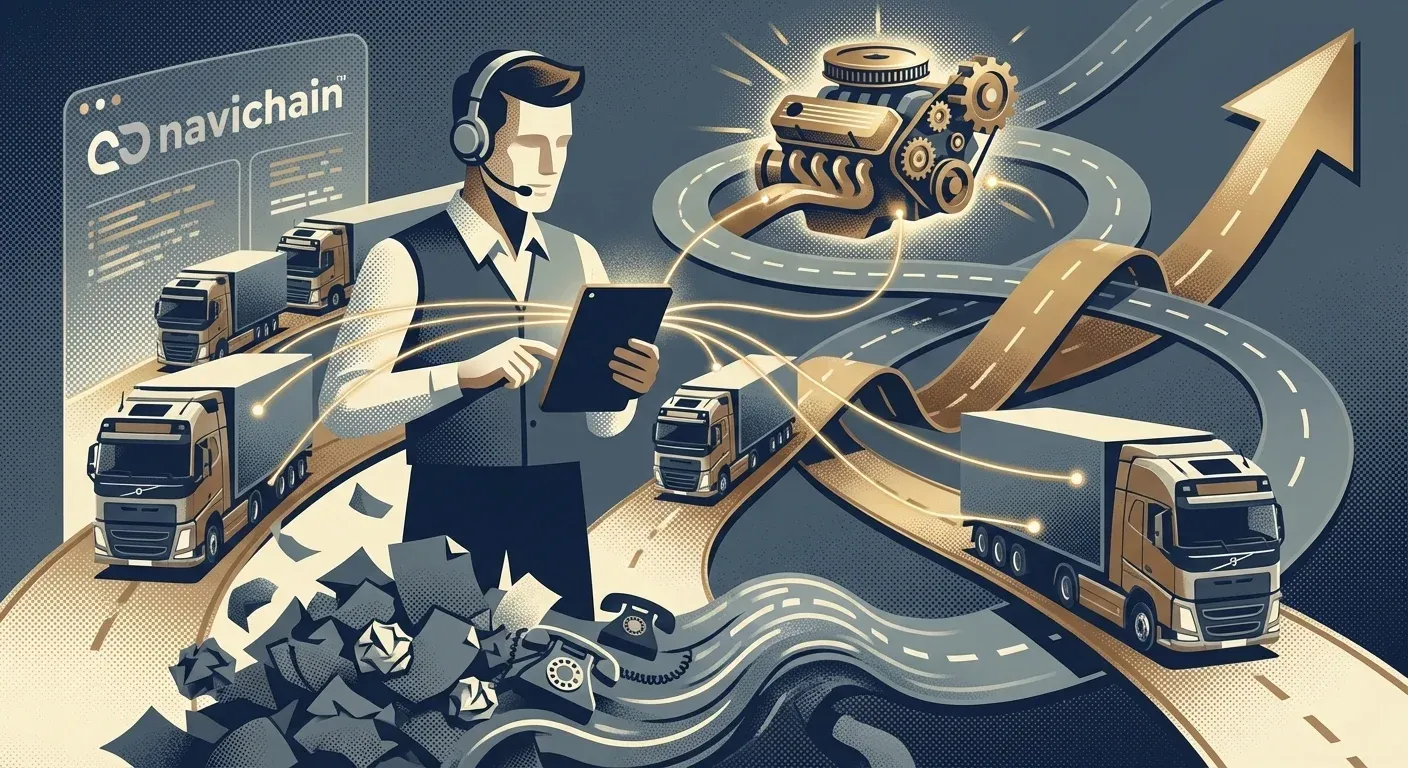
Navichain visualizes the data flow for an optimized and more profitable transport chain. With Navichain, you get the insight you need to maximize your margin.
.jpeg)
Navichain: visualizes complex transport data for increased transparency and efficiency, enabling better decision-making and increased profitability for haulage companies.
Are you ready to take control of your margin?
Stop guessing. Start making money on every kilometer. Book a personal walkthrough where we show you how Navichain eliminates friction in your business.
Start your Profitability Journey »