The Competitive Trap: Why Older Platforms Like Opter Are Costing You the Game
🇬🇧 Read this article in English
European and Swedish haulage companies and logistics SMEs are facing tougher times than ever, squeezed between thin margins and relentless global competition. Discover why it can be an expensive lesson to choose seemingly standard, older platforms that quickly turn into a jungle of hidden costs and expensive consulting hours. This white paper compares the traditional path – with platforms like Opter – against navichain's 'Sovereign-by-Design' model, and shows how you can instead prepare for the future and make your data an unbeatable competitive advantage.
Competitiveness Trap: Why Your Legacy Platform is Costing You the Game
Small and medium-sized haulage companies in Sweden and Europe are fighting daily for their survival. With profit margins often hovering below 3% and a relentless digital pressure from the industry's giants, there is no room for inefficiency. Doing as you "always have done" – and purchasing well-known, modular legacy systems like Opter – presents strategic challenges today. What starts as a basic package often results in increased operational complexity: the need for multiple integrated additional modules, a growing dependence on IT consultants for system customization, and the management of separate third-party licenses for vehicle tracking. Even more seriously, non-sovereign cloud services risk exposing your most important trade secrets (such as routes, customer registers, and price lists) to foreign scrutiny through laws like the US CLOUD Act.
Here we present a razor-sharp comparison and a new roadmap to turn the ship around. We show why logistics entrepreneurs must break free from yesterday's outdated business models, bring TMS, WMS, and invoicing under one roof, and leverage secure, built-in, and locally hosted AI on sovereign European infrastructure.
1. The New Playing Field for Haulage Companies and Logistics
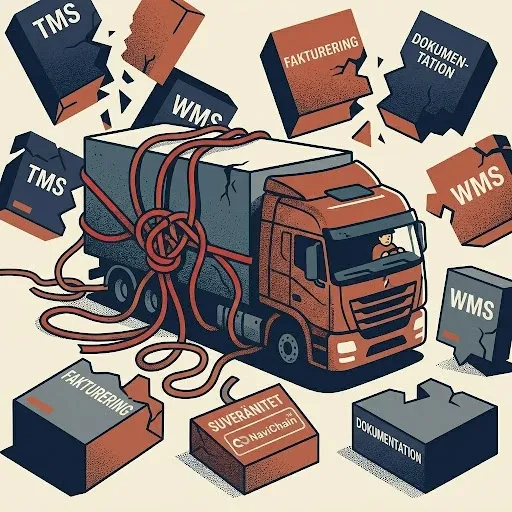
Fig 1: Scattered data and outdated pricing models cause logistics SMEs to lose ground in an increasingly tough business climate.
For many decades, competition in the haulage industry was mainly about two things: cutting prices and building strong personal relationships from person to person. Today, that model is crumbling under the pressure of the digital revolution.
The playing field is now governed by data. The multinational giants play in a league of their own by utilizing gigantic, interconnected platforms. They offer their customers real-time traceability, AI-calculated arrival times, and dynamic pricing. They roll out sleek dashboards and optimization tools that a regular haulage company – locked into a tangle of standalone systems – simply cannot keep up with.
The truth is that you probably sit on a goldmine of data, but it is locked away in different "black boxes": * Your TMS (Transportation Management System) keeps track of routes, fuel consumption, and driving times. * Your WMS (Warehouse Management System) knows exactly how quickly inventory turns and how efficient picking is. * Your accounting software and Excel spreadsheets hide the truth about which customers are actually profitable and how long invoicing really takes.
When these systems – or the expensively priced standalone modules in your legacy system – refuse to communicate with each other without costly special integrations, you are constantly putting out fires instead of looking ahead. Always being one step behind is directly devastating for competitiveness.
2. The Legacy Trap: Opter vs. navichain SaaS
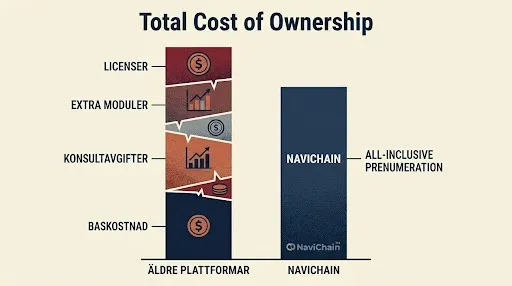
Fig 2: A look at the actual total cost of ownership (TCO): Modular legacy systems vs. a comprehensive SaaS platform.
When it's time to digitize, many companies choose established industry names like Opter. But what looks like a standardized software purchase on paper often develops into a complex and unmanageable IT landscape. To future-proof operations, it is crucial to understand the fundamental differences in both architecture and pricing model between yesterday's systems (where Opter is a typical representative) and tomorrow's systems – a modern, seamless SaaS platform like navichain.
Comparison of Advantages and Disadvantages
| Feature and Aspect | Yesterday's Software (e.g., Opter) | navichain SaaS |
|---|---|---|
| Pricing Model | Patchwork. A base price at the bottom followed by ongoing fees for every extra module you need. | Straightforward. A transparent subscription model where you pay for active users per month – pro rata (i.e., a user who has been active for half a month is billed only for half a month), and where all necessary functions are already included. |
| Deployment | Heavily dependent on expensive, embedded consultants to get started at all, and for every small future change. | Built from the ground up to be user-friendly and rolled out quickly – without you becoming hostages to consultants. |
| Tracking and Telematics | Usually requires purchasing separate third-party licenses that then need to be integrated laboriously. | Includes state-of-the-art FMC650 connectivity directly encapsulated in the vehicle subscription, integrated with HERE Maps' advanced smart route planning for truck-specific roads, real-time traffic, and dynamic ETA calculations. |
| Data Sovereignty | Highly uncertain. Often operated by American giants (Azure, AWS), which opens the door to the US CLOUD Act. | 100% locally hosted on our own Swedish infrastructure under Swedish and European law. Total immunity to the US CLOUD Act. |
| Artificial Intelligence | Outdated reporting where lists from different paid modules are often manually extracted and combined. | Built-in, locally hosted AI that extracts data from a fully interconnected environment (TMS/WMS/Finance) to provide razor-sharp future forecasts. |
A Jungle of Costly Add-on Modules
The perhaps most insidious thing about systems like Opter is the sales philosophy. They are initially presented as a base platform, but it doesn't take long before the realization hits: to really get a flow that works, you have to enter a jungle of different add-on modules – and each module lands as an extra line on the invoice. Want sharper route planning? That's a module. Need better support for advanced invoicing? Another module. This way of slicing and dicing and charging for every little vital part makes the total cost of ownership (TCO) spiral far beyond the initial teaser price.
navichain is built on a different conviction. With us, the platform is seamless. Everything needed to manage a modern haulage company or logistics business – from heavy TMS and WMS functions to invoicing and order flows – is interconnected from the start. No jungle of expensive extra packages, just a powerful engine for your business.
Dependence on Expensive Consultants
It is well known that legacy software is a nightmare to reconfigure. If you need to change a certain workflow in a system like Opter, it usually ends with you having to hire a consultant for expensive money. The result is doubly painful: it digs deep holes in the budget and makes you frighteningly inflexible. When the market changes quickly, you don't want to have to sit and wait (and pay dearly) for an outsider to tweak your settings.
navichain is created to be quick and malleable. The interface is so modern and logically built that it puts the power in your hands – rearrange your own flows without constantly succumbing to expensive consulting bills.
Third-Party Licenses or Built-in Tracking?
When we look at tracking and telematics, the gap becomes extra clear. Older systems often work more like a switch, forcing you to sign separate licenses with third-party suppliers just to keep track of the vehicle fleet. Now you suddenly have piles of agreements, different contact persons, and scattered data flows blown away by the wind.
navichain cuts off all that headache. In our vehicle subscription, Hardware-as-a-Service (HaaS) is included, which means you get the top-of-the-line vehicle computer Teltonika FMC650 delivered and ready to use. This is not just a simple tracking puck; it gives you full integration with the tachograph, predictive vehicle maintenance, and analysis of fuel-efficient driving (eco-driving) directly in the platform. One subscription, one price. And the vehicles are tracked wirelessly in the same interface where you manage the rest of your business.
3. The Invisible Pitfall: Exposing Your Data to Foreign States
Letting costs spiral out of control is bad enough, but in the background lurks a nightmare of geopolitical and legal nature. When the logistics industry talks about data surveillance and integrity, GDPR often echoes. Unfortunately, one often turns a blind eye to the harsh collision between European legislation and other states' surveillance interests.
The Collision Between The CLOUD Act and GDPR
Here is the crux that sabotages the existence of all companies using American cloud services where many legacy platforms rest: * EU's perspective: With the "Schrems II" ruling, the EU Court of Justice found that American legislation does not provide the protection that our beloved GDPR requires, which knocked the legs out from under old data-sharing agreements. * USA's perspective: The US CLOUD Act of 2018 gives American authorities the cold hand to force domestic tech companies to hand over all interesting data if they snap their fingers – completely invisibly and regardless of whether the servers are spinning in Frankfurt, Dublin, or Stockholm!
For a logistics company, this is life-threatening. Do you let your routes, price lists, margin calculations, and customer registers lie and fester with a non-sovereign cloud provider? Then you have practically given away your entire smorgasbord of trade secrets to a foreign power that, according to its own law, is not legally allowed to close the door on them. It is the definition of hollowed-out competitiveness.
4. From Problem to Solution: The Blueprint for a Resilient Logistics OS
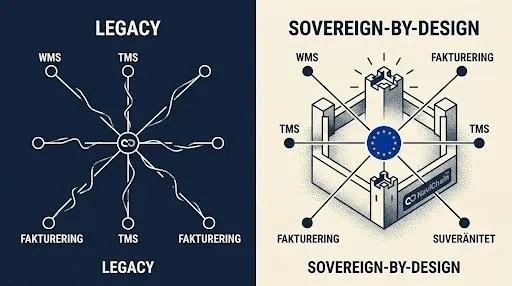
Fig 3: Overview of a unified logistics system, built entirely around data sovereignty.
To break free from the countless module screws and build an unstoppable business forward, savvy haulage and logistics managers need to navigate according to the 'Sovereign-by-Design' philosophy – and it rests on three unshakable pillars:
Principle 1: A Fully Integrated Core
We can only compete for the pie if we speak the truth in one and the same logic. Throw out the business model where you buy a module for every conceivable task. The future lies in one unified system where TMS, WMS, order management, and invoicing operate as a living organism. This bridges dead information walls, eliminates unnecessary double work, and thunders in the truth of the minute in real-time.
Principle 2: The Sovereign Data Fortress
A welded business engine is dangerous if the opposition gets hold of the blueprints. Therefore, everything you build must rest on purely sovereign data architecture. The core system must both house and run on infrastructure within the EU border, at a company that is subject to EU jurisdiction and acts within EU law, completely without any parent, sister, or subsidiary company in the USA. It is the only guaranteed bulletproof vest against foreign espionage laws like the US CLOUD Act, and the only seatbelt that can promise true GDPR compliance.
Principle 3: AI in the Bloodstream
When you have locked the doors around a purified data fabric, you can finally turn on the headlights. Let embedded, locally hosted AI right into the mix. Such an analysis engine weighs fuel against routes, tracking patterns, and invoicing details into unbeatable forecasts – completely without a single data bit leaking out to commercial, public training networks.
5. Break the Pattern: navichain SaaS Shows the Way
Throughout this white paper, we have outlined the guidelines for how you shake off the invisible hidden fees and the square IT consultants that come with old systems like Opter. navichain SaaS is, right down to the code, built to be the solution to that problem.
- Transparent Holistic Grip: navichain SaaS delivers an integrated workflow from day one, and also rolls in FMC650 tracking directly into the vehicle subscription. This saves significant administrative time and resources compared to maintaining separate third-party licenses and hiring consultants for integrations. You get a robust logistics tool with full cost control.
- Data Sovereignty is Sacred: The crux of the matter! The entire navichain SaaS runs securely on our in-house developed Swedish infrastructure. Your lifeline facts are parked in Sweden and unequivocally subject only to Swedish and EU legislation. It cuts the risk of foreign insight via the US CLOUD Act and secures your competitive advantage for the future, but also serves as a huge safety guarantee when you win deals.
- Embedded AI Right on Site: By having all aggregated data already safely spinning in our Swedish mix, our integrated locally hosted AI draws the benefit a huge leap higher – and you see exactly where the threshold for saving soup, time, and money is drawn, rock-solid and encapsulated without the slightest risk.
Our mission is to transform the power over logistics technology and give small and medium-sized haulage companies a fair chance for better business and lower costs. Stop being stuck in an old rut of expensive licenses and insecure operating environments. Put the shovel in your own secure future today.
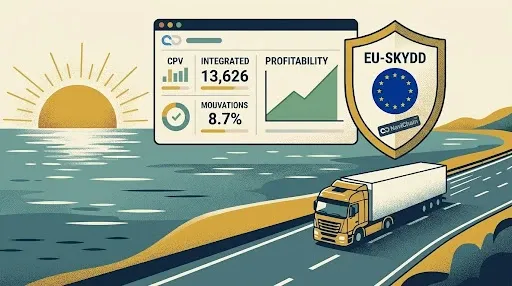
With navichain SaaS, you build the walls around your success stronger – with data sovereignty and interconnected, module-free flows.
Ready to Close Hidden Costs for Good?
Join navichain for free here »
About the Author
Manusha takes on the role of Integration & Automation Specialist at navichain. He is passionate about ensuring a watertight overlap from old, cumbersome legacy systems to quick, secure, and future-proof logistics power for Europe's haulage companies. Get a grip on all the in-depth information about data sovereignty at navichain.se.