Warehouse Management: Break free from the Capital Trap
🇬🇧 Read this article in English
We are currently witnessing a fundamental paradigm shift in European logistics. Small and medium-sized enterprises (SMEs) are moving away from the "Just-in-Case" mentality (hamstring) that prevailed after the pandemic, towards Precision Efficiency. They realize that excess inventory is not an asset; it is a liability that ties up capital.
This trend is critical for:
1. Fashion & Retail: Where last season's unsold goods become next season's waste.
2. Electronics: Where components lose value with each week they sit on the shelf.
3. Food & Beverage: Where expiration dates turn inventory into waste.
4. Manufacturing: Where holding raw materials ties up capital needed for R&D.
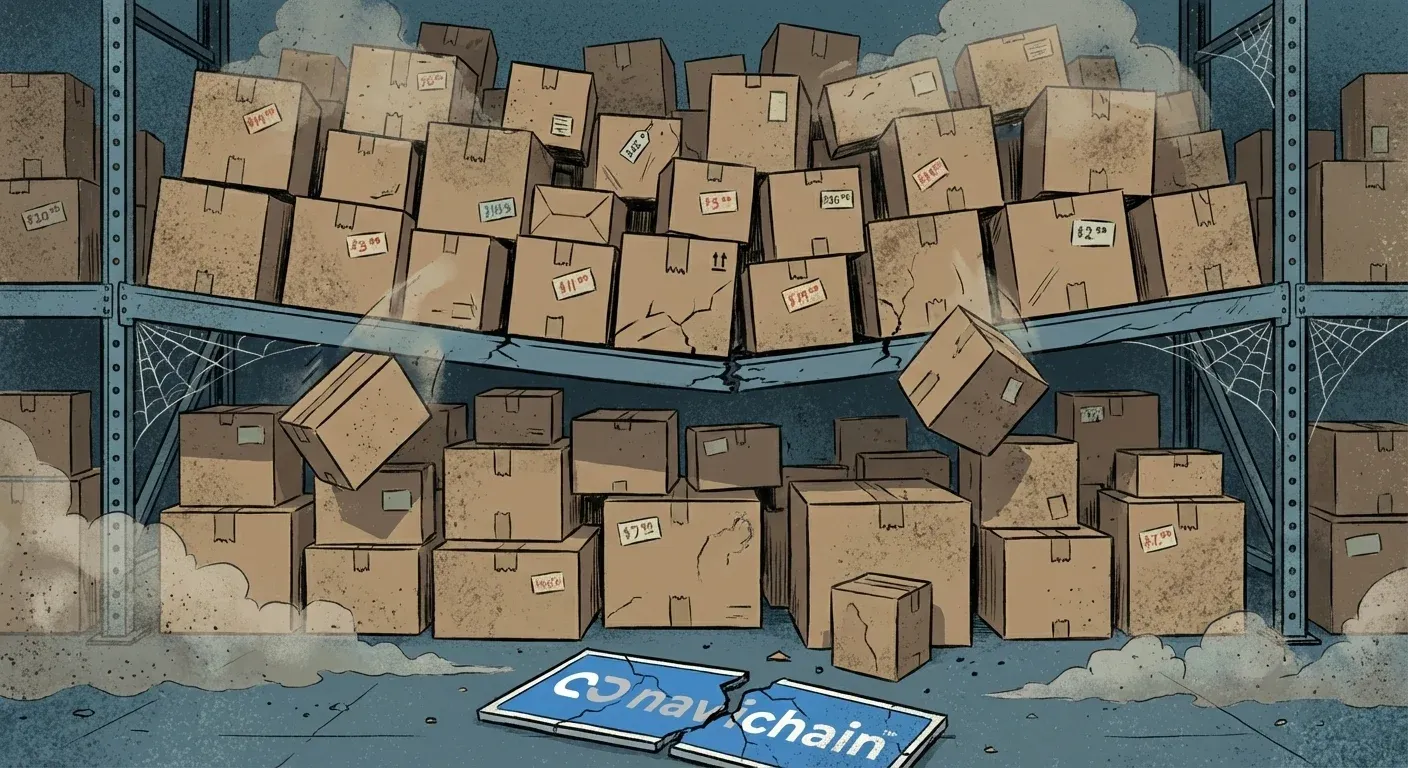
The challenge: The Capital Trap. Without precise data, companies face a brutal choice: buy too much and strangle cash flow, or buy too little and strangle sales. Navichain provides the intelligence to walk the perfect tightrope.
Take Control (Take Action)
Unlock your capital.
- AI Forecasts: Predict what you will sell next month, not what you sold last year.
- Safety Stock Optimization: Calculate exactly how much buffer you need based on supplier reliability.
- Dead Stock Alerts: Identify slow-moving items before they become obsolete.
- Purchase Automation: Auto-generate purchase orders at the optimal reorder point.
Fear drives inventory bloat. "What if the supplier is late?" "What if we get a big order?" So you buy extra.
1.1 The Silent Killer
Inventory holding costs (rent, insurance, obsolescence) typically eat up 20-30% of the inventory's value per year. * Trap: You have 10 million SEK in inventory. You think you are rich. In reality, it costs you 2.5 million SEK a year just to hold it. * Out of Stock: Ironically, while your warehouse is full of Product A (that no one wants), you are out of Product B (that everyone wants).
SMEs using spreadsheets cannot dynamically adjust reorder points. They set them once and forget about them.
Navichain transforms your inventory data into a crystal ball.
2.1 Live Forecasts
We don't just look at sales history. We look at lead times, seasonal variations, and trends. * Scenario: Sales of winter jackets increase by 20% in October. * Navichain Action: The system projects the trend forward. It warns you that current inventory will run out in mid-November, not December, triggering an early reorder.
2.2 The Smart Reorder Point
We dynamically adjust when you buy. * Supplier A: Is always on time (2 days). Reorder point: Low. * Supplier B: Is unreliable (5-10 days). Reorder point: Higher buffer. * Result: You carry the minimum safe amount of inventory for each item.
This is Efficiency.
The goal of logistics is not just to move goods; it is to move money.
3.1 Reduce Days in Inventory (DSI)
If you can sell your inventory 30 days faster, you free up capital for growth. Navichain helps you identify "long tail" products that move slowly so you can clear them out and free up space.
3.2 The Sovereign Advantage
Your sales data is your most valuable IP. By keeping your inventory planning on your own Navichain instance (not Amazon's cloud), you prevent platforms from seeing your bestsellers and launching competing products.
- Fashion: Reducing end-of-season markdowns through smarter buying increases net margins by 10%.
- Food & Beverage: Reducing waste by digitally managing "First-In-First-Out" (FIFO) saves thousands.
- Construction: Ensuring materials arrive just when needed frees up congested job sites.
Your inventory should be a flow-through facility, not a warehouse. Navichain gives you the tools to stop buying out of fear and start buying with precision.
References/Sources
- Investopedia (2025). Working Capital Optimization Strategies.
- Harvard Business Review (2023). Supply Chain Efficiency vs Resilience.
- McKinsey & Company (2024). AI in Supply Chain Planning.
- Inventory Management Institute (2025). The Cost of Holding Stock.
Enabling the Vision: Navichain SaaS Unified Logistics Platform
This white paper addresses the fourth critical challenge: Inventory Control. Navichain SaaS is your inventory brain.
We embody the three core principles required for capital efficiency:
1. Unified Operational Fabric: Sales data talks to Procurement data. When a sale occurs, the reorder logic updates immediately.
2. Secure Data Architecture: Your sales trends are yours alone. We analyze them for you, not for the market.
3. Embedded Intelligence: The system learns seasonal variations. It knows you need to order umbrellas in August to be ready for the September rain.
Our mission is to help you invest your capital in growth, not in dust.