Automated Management Consulting: The Brain of Your Logistics Business

🇬🇧 Read this article in English
From Hands to Brain: Navichain transforms from a tool to a strategic partner.
Over the past decade, logistics software has focused on being the "Hands" in the operation. It performs tasks, prints labels, tracks trucks, and generates invoices. Ideally, it does this faster and cheaper than a human. But in a post-digital world, efficiency is a hygiene factor. The real competitive advantage lies not in execution, but in strategy.
Navichain is now taking a transformative leap. We propose that your TMS should not only be the hands that steer the wheel, but the "Brain" that sets the course. We call this Automated Management Consulting. By integrating a dedicated "Strategy Layer" into our Sovereign AI, Navichain can now analyze your business with the same mental models as a top-ranked management consultant—DuPont analysis, the BCG matrix, Porter's five forces, and EOQ models—but tailored specifically for the logistics industry. This white paper describes the architecture of this module and how it enables you to get McKinsey-class strategic health checks on demand, without sharing your data with the outside world.
Take Control (Take Action)
Upgrade your strategic capabilities today.
- Financial Health: Deconstruct your return on equity (ROE) with the DuPont analysis module.
- Customer Strategy: Map your customer base in the BCG matrix to identify "Cash Cows" and "Dogs".
- Inventory Logic: Stop guessing order quantities; let the EOQ model dictate your purchases.
- Sovereign Wisdom: Get world-class advice that stays in your private data bunker.
We cannot simply ask an AI to "provide strategic advice." It will produce generic nonsense or hallucinations. To build a true Automated Consultant, we must ground the Artificial Intelligence in established economic theory.
Navichain achieves this through a new architectural component: the Strategy Layer. This layer, placed in your private Knowledge Bank (/knowledge/strategy/), consists of "Strategic Lenses"—structured definitions that translate academic business concepts into hard logistics logic.
1.1 Example: The "DuPont Logistics" Lens
Take the classic DuPont analysis, used to deconstruct Return on Equity (ROE). A generic AI might explain the formula. Navichain's Strategy Agent applies it:
- Net Profit Margin: Is the haulage company pricing its routes correctly relative to fuel and driver costs?
- Asset Turnover: How hard are the trucks working? (Revenue per truck).
- Financial Leverage: How much debt is there on the fleet?
Logic Tree: * IF Margin is low but Turnover is high -> STRATEGY: "Volume Player". Focus on cost efficiency and EOQ. * IF Margin is high but Turnover is low -> STRATEGY: "Niche Specialist". Focus on premium service and marketing. * IF Both are low -> STRATEGY: "Crisis (Distress)". Recommend immediate shutdown of unprofitable routes.
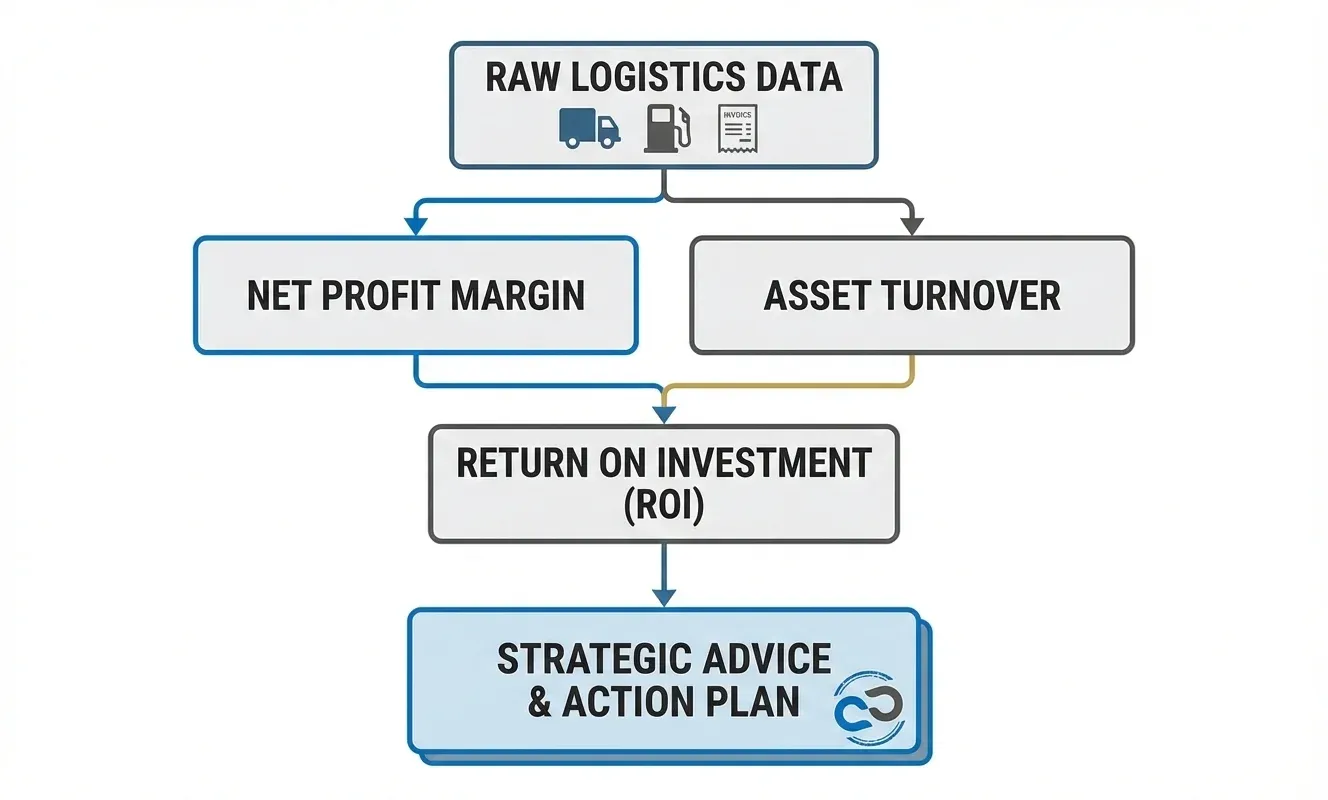
Structure Over Chaos: How Strategic Lenses filter raw data into actionable wisdom.
We don't just chat with the system. When a subscriber clicks "Run Strategic Health Check," Navichain executes a sophisticated Multi-Step Logic Chain behind the scenes. This mimics the workflow of a consulting team, where junior analysts process data and senior partners synthesize the strategy.
2.1 Scenario: "Analyze My Customer Mix"
Goal: The subscriber asks: "Should I get rid of certain customers?" Model: The BCG matrix (Cash Cows, Stars, Dogs, Question Marks).
Step 1: SQL Agent (The Data Miner) The system queries your private database to retrieve Customer Name, Total Revenue (last 12m), Gross Margin %, and Credit Time (DSO).
Step 2: Analyst Agent (The Mapper) The system maps these 50 customers onto a matrix based on Margin (Y-axis) and Volume (X-axis). * Result: IKEA is identified as a Cash Cow (High Volume, High Margin). Local store "Bob" is identified as a Dog (Low Volume, Low Margin).
Step 3: Strategy Agent (The Consultant) The system takes the mapped list and the definition from /knowledge/strategy/marketing/bcg_matrix.md to generate a recommendation.
Output: "Your analysis shows that 40% of your administrative effort is spent on 'Dogs' (Customers <10,000 kr revenue/year). Strategic Advice: Apply the Pareto Principle (80/20). Raise prices by 15% for these small accounts. This will either force them to leave (freeing up operational capacity for your Stars) or make them profitable."
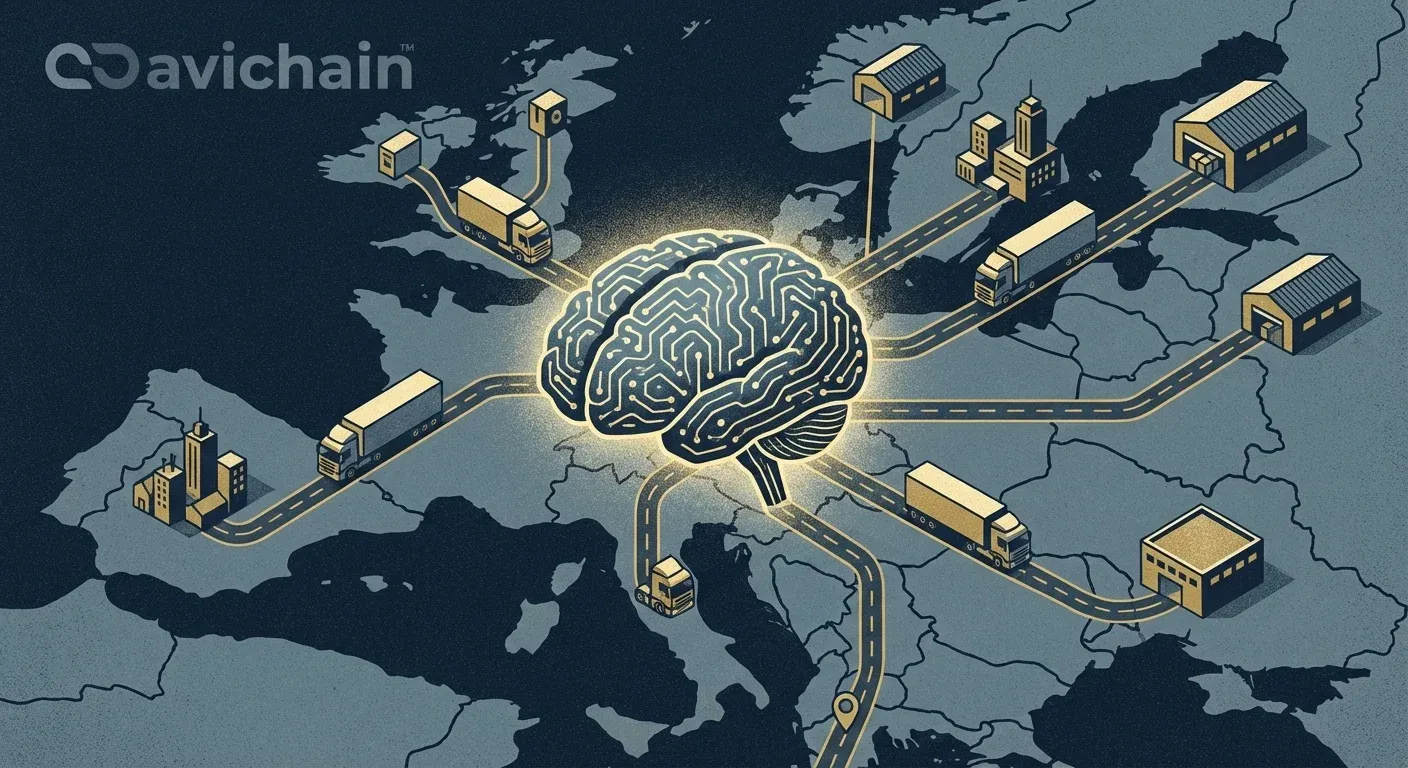
Visualizing the Portfolio: BCG matrix applied to customer profitability.
How does the system know your specific context? You can't write every rule yourself, and you can't rely on a generic LLM to guess right.
Navichain uses Sovereign Synthesis.
- Ingest Standard Theory: The system uses standard definitions of models like EOQ or Porter's five forces as a base.
- Navichain Context: You, the human expert, "trim" the variables. You map "Inventory Holding Cost" to your specific "Daily Warehouse Fee." You map "Ordering Cost" to your "Administrative Cost for Delivery."
- Continuous Learning: The loop closes with results. If you accept a recommendation (e.g., "Raise Prices"), the system logs the outcome. Six months later, it checks the data. Did it increase profits? If yes, it increases the "Strategic Weight" for that model in your specific instance.
This creates a living, breathing strategy engine that gets smarter the longer you use it—without ever leaking your trade secrets to the public cloud.

Sovereign Wisdom: Your data helps YOU learn, not your competitors.
We don't hide this intelligence in a chatbot. We elevate it to a "Boardroom Dashboard." This is a dedicated interface for "Quarterly Strategic Review," designed for the CEO, not the traffic manager.
The Strategic Health Report:
- Section 1: Health Score (DuPont)
- "Your ROE is 12%. This is driven by High Asset Turnover but Low Margins."
- Advice: "You're running your trucks hard for little profit. Consider saying no to low-margin loads to reduce wear and tear."
- Section 2: Inventory Optimization (EOQ)
- "You order tires/parts in batches of 10. Based on your consumption rate of 50/month..."
- Advice: "Switch to Economic Order Quantity (EOQ) of 25 units per order to minimize capital binding."
- Section 3: Market Position (Porter's Five Forces)
- Context: The AI sees that you rely on one massive customer for 70% of revenue.
- Advice: "High Buyer Power detected. You are vulnerable. Strategy: Targeted courting of 3 mid-sized competitors to spread this risk."

The Old Way: Stressed executives drowning in spreadsheets without clear direction.
By implementing the Automated Management Consultant, Navichain completes its evolution. We are no longer just a software tool you use to perform work; we are a partner that helps you decide what work to perform.
- Data: Remains Sovereign (Tenant Scoped).
- Logic: "Injected" via your RAG knowledge bank.
- Value: You get a top-tier strategic analysis of your business, generated automatically, for the cost of a subscription.
Navichain: The hands to execute. The brain to strategize.
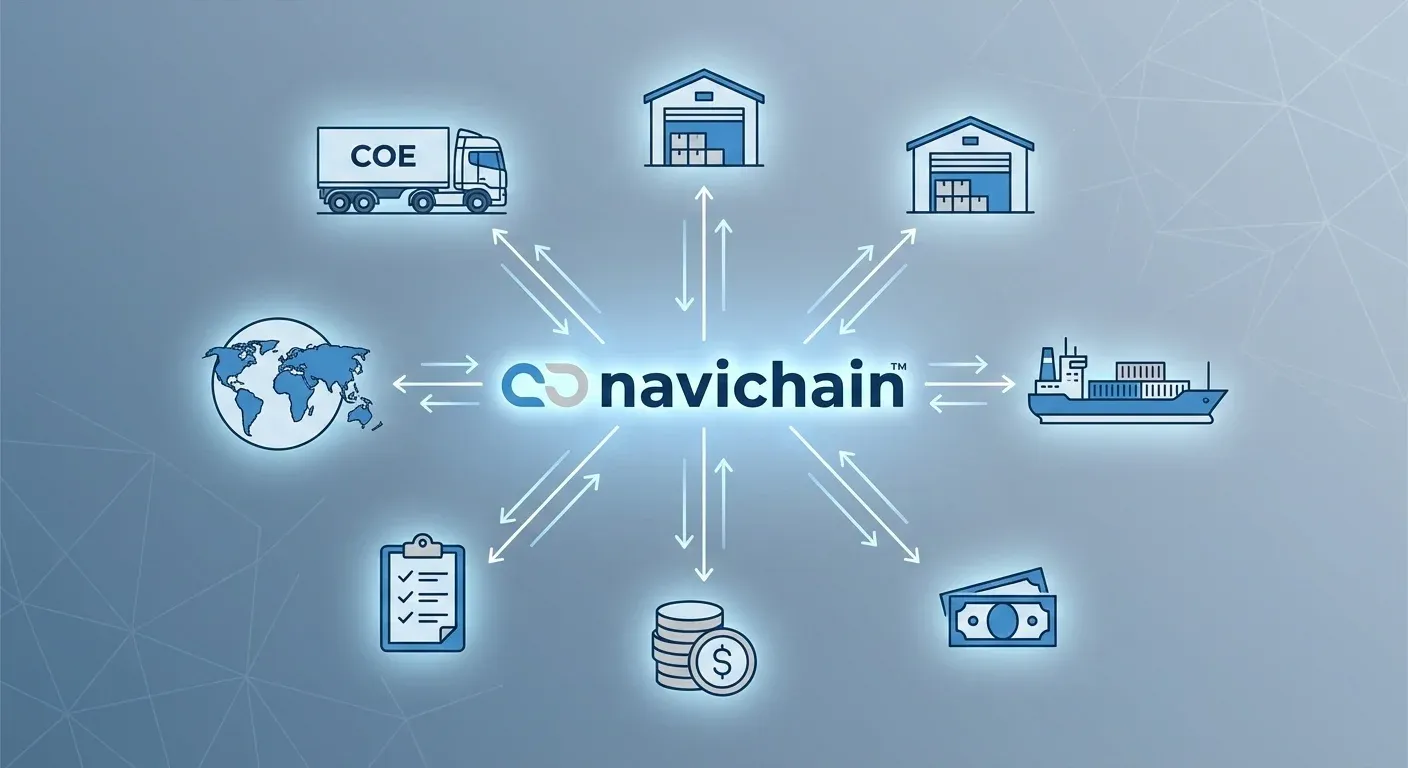
The New Way: Data-driven strategic clarity in the boardroom.
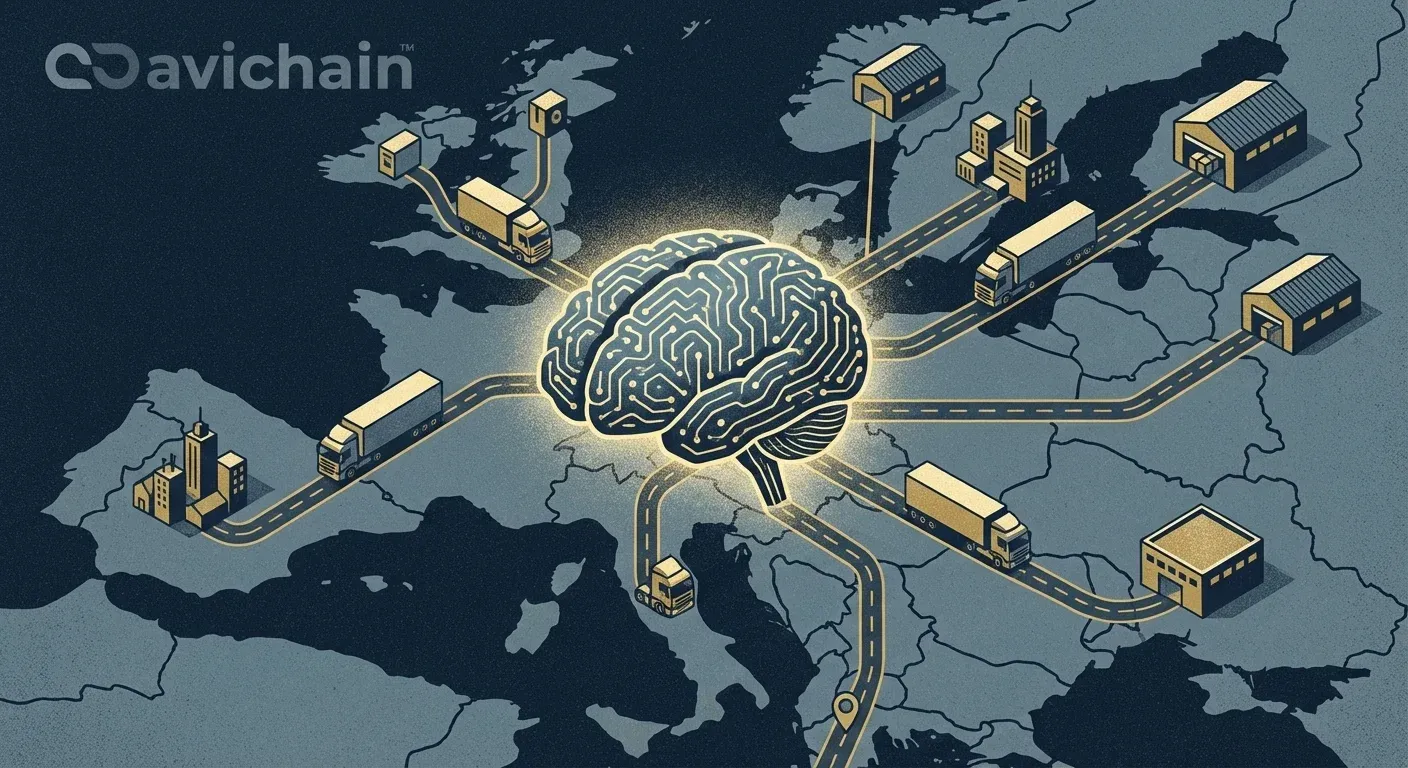
Navichain: Automated Strategy.
References/sources
- Porter, M.E. (2008). The Five Competitive Forces That Shape Strategy. Harvard Business Review. https://hbr.org/2008/01/the-five-competitive-forces-that-shape-strategy
- Henderson, B.D. (1970). The Product Portfolio (BCG Matrix). Boston Consulting Group. https://www.bcg.com/publications/1970/strategy-the-product-portfolio
- Investopedia (2024). DuPont Analysis: What It Is and How to Use It. https://www.investopedia.com/terms/d/dupontanalysis.asp
- Harris, F.W. (1913). How Many Parts to Make at Once (EOQ Model). Factory, The Magazine of Management.
- Ti Insight (2024). The Future of Logistics: Strategic Intelligence. https://ti-insight.com/
Enabling the Vision: Navichain SaaS Unified Logistics Platform
This white paper has presented a strategic blueprint for transforming your TMS from merely operational "hands" to a strategic "brain". The Navichain SaaS platform is designed to be the tool that enables this transformation for European SMEs.
We embody the three core principles required for a truly intelligent and resilient logistics operating system: 1. Unified operational fabric: Navichain is not a collection of loose modules; it is a single, unified logistics operating system. Your Transport Management (TMS), Warehouse Management (WMS), invoicing, and order management work as one. This creates the "single source of truth" required for strategic models like DuPont and BCG to generate accurate insights. 2. Secure data architecture and control (Sovereignty): We believe you should own and control your own data. Our platform is hosted on our own secure, Self-Hosted infrastructure in Sweden. By keeping your data strictly within Swedish/EU jurisdiction, we enable "Sovereign Synthesis"—where your unique business strategy stays with you, protected from competitors and global tech giants. 3. Embedded strategic intelligence: Because your data is unified and secure, we can apply our Strategy Layer to it. Our embedded AI acts as an always-open management consultant, analyzing your business through the lenses of established economic theory to serve you top-tier decision support.
Our mission is to democratize strategic intelligence for the SMEs that form the backbone of the European economy. We provide the powerful, unified, and secure platform you need not just to survive in the competition, but to strategically dominate your niche.