Cash Flow Gap: Why Invoicing Delays Cost Swedish Haulage Companies More
🇬🇧 Read this article in English
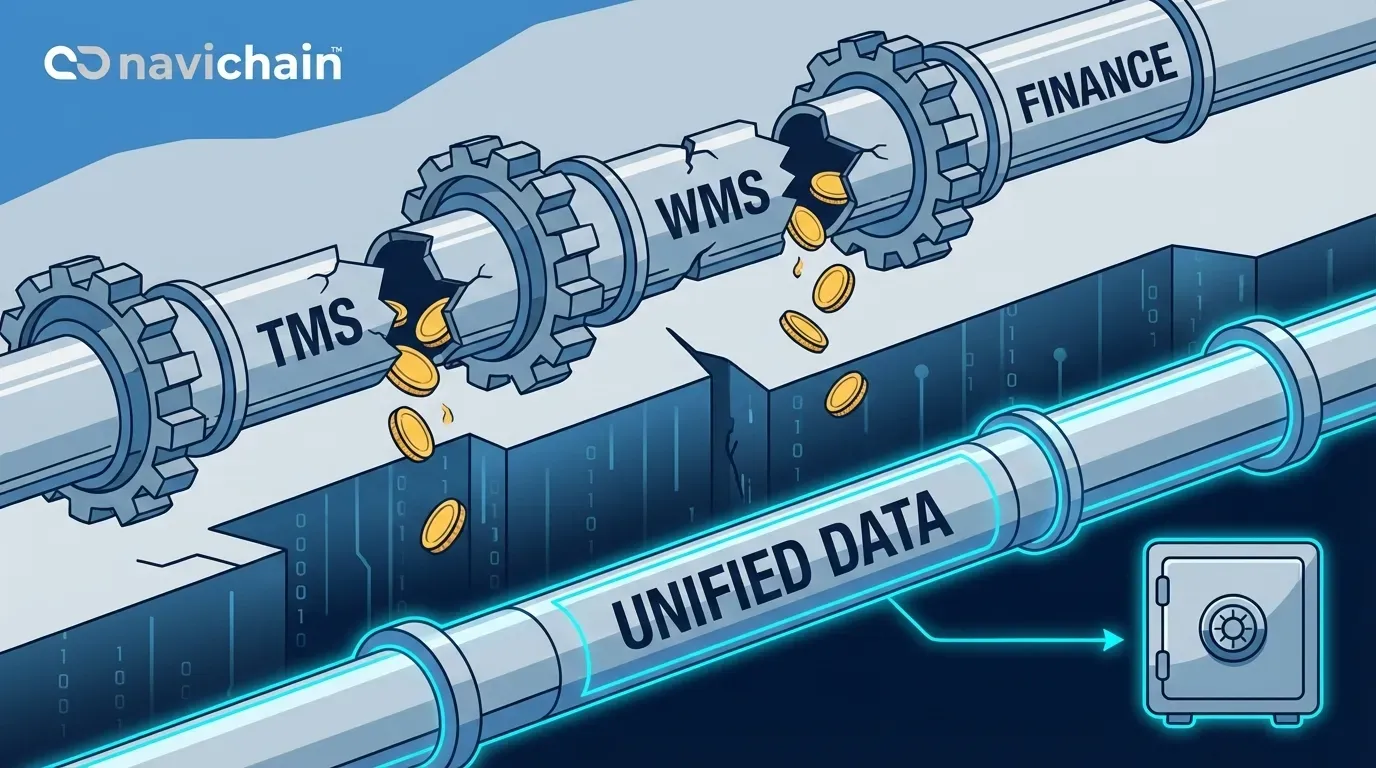
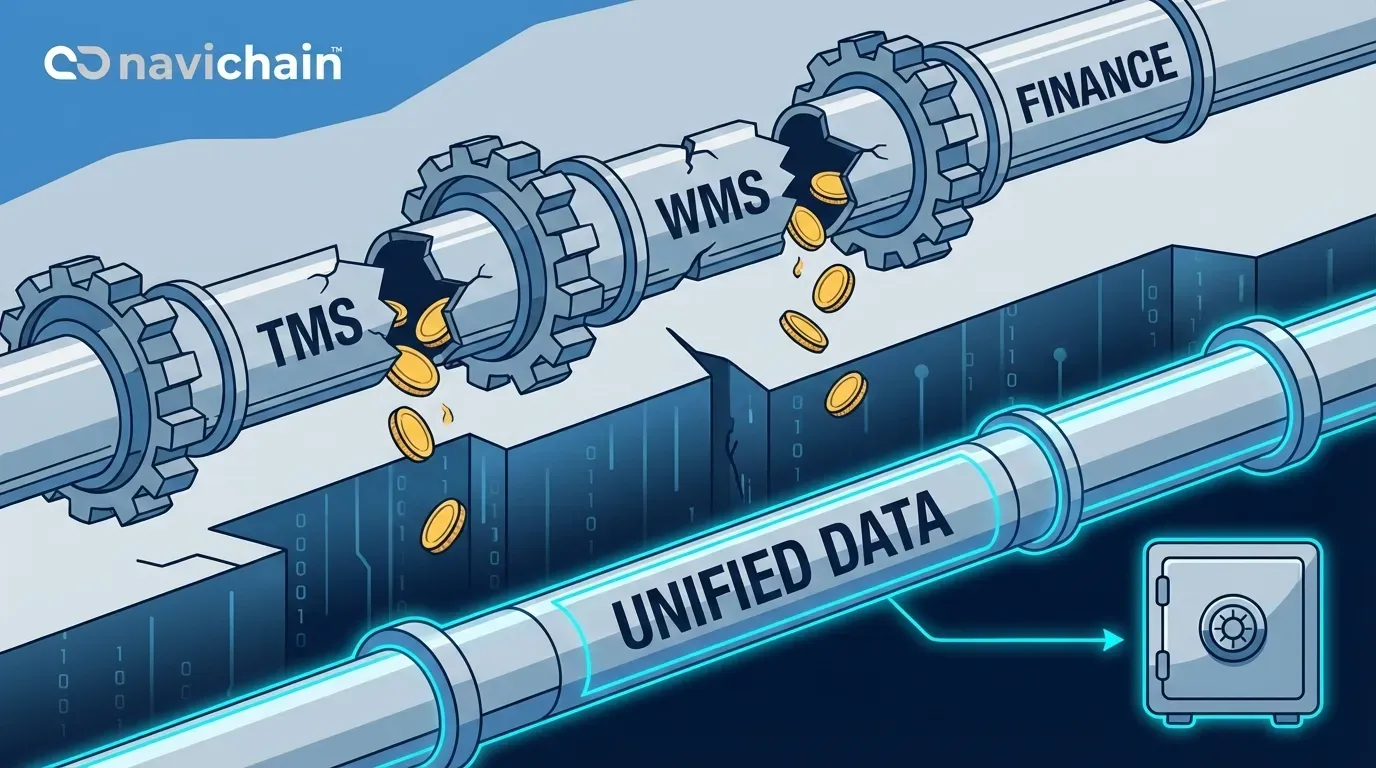
The modern European haulage company struggles with rising costs and customer demands. Managers have focused on operational efficiency: optimize routes, maximize utilization, and reduce empty runs. But why is the money still moving slowly?
Cash Flow Gap: Why Invoicing Delays Cost Swedish Haulage Companies More
For the modern European small or medium-sized haulage company, the dashboard is a sea of red warning lights. Fuel costs are volatile, there is a shortage of drivers, and customers' demands for transparency have never been higher. In response, managers have rightly focused on operational efficiency: optimize routes, maximize vehicle utilization, and reduce empty runs. We have made our trucks faster, smarter, and more efficient.
"Efficiency Illusion": Why Your Trucks Are Fast But Your Money Is Slow
For the modern European small or medium-sized haulage company, the dashboard is a sea of red warning lights. Fuel costs are volatile, there is a shortage of drivers, and customers' demands for transparency have never been higher. In response, managers have rightly focused on operational efficiency: optimize routes, maximize vehicle utilization, and reduce empty runs. We have made our trucks faster, smarter, and more efficient. So why is our cash flow still stuck in first gear?
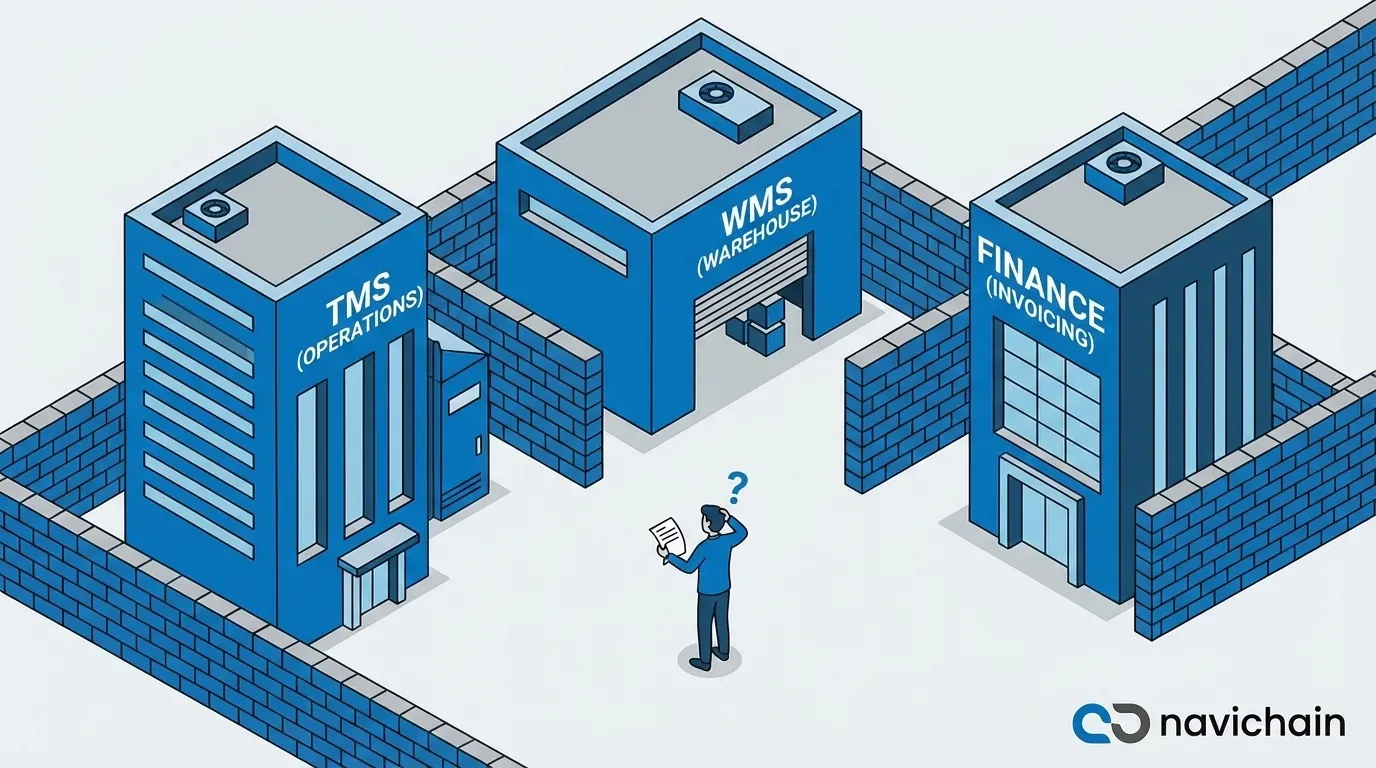
The Problem: Haulage companies struggle with delayed cash flow despite more efficient operations.
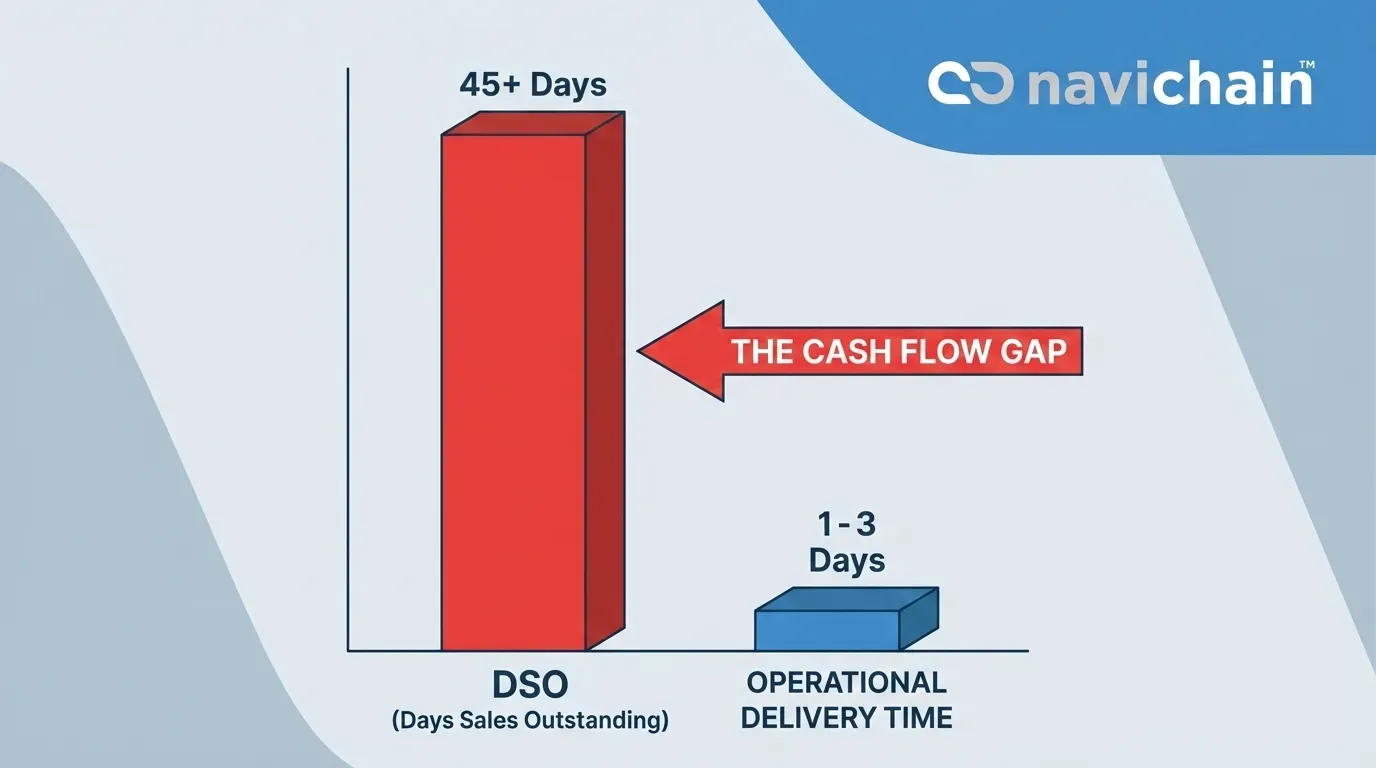
The answer lies in a critical and often overlooked discrepancy: the 'cash flow gap'. This is the enormous, friction-filled chasm between the moment a service is delivered (a proof of delivery, or POD, is signed) and the moment a correct invoice is sent. We spend an unreasonable amount of time manually collecting data – PODs, tolls, waiting time logs, warehouse picking confirmations – just to create an invoice. The result is a process defined by delays, errors, and disputes. This is not a minor administrative headache; it is the single biggest threat to operational efficiency and profitability for most small and medium-sized haulage companies. Industry analyses show that the days sales outstanding (DSO) in the transport sector can easily exceed 45 or even 60 days. Worse still, the cost of correcting a single incorrect invoice, including administrative time and dispute handling, can be as high as 1,000 SEK.
DSO (Days Sales Outstanding) in the transport sector.
This report argues for a fundamental shift in perspective. The most significant source of operational inefficiency and cash flow leakage is not in the truck; it is in the 'data gap' between delivery and final invoicing. Closing this gap requires a unified data structure, not just better accounting software.
Analysis of Friction: The Anatomy of a Broken 'Quote-to-Cash' Cycle
The 'quote-to-cash' (QTC) cycle is the entire business process from the first customer order to the final payment. For many haulage companies, this cycle is broken, held together by spreadsheets, emails, and manual data entry. This fragmentation is the root cause of inefficiency.
Silo #1: The Operational 'Black Box'
Your business generates a constant stream of valuable data. Your transport management system (TMS) knows the route, the tolls, and the fuel. Your driver's mobile app captures the electronic proof of delivery (ePOD), waiting times, and any additional charges. Your warehouse management system (WMS) confirms what has been picked and packed. But this data is often locked in its respective systems. It is an 'operational black box' – the accounting department knows that a job has been performed, but they do not have the validated, line-specific data required to invoice for it correctly. This forces administrative staff to become digital detectives, chasing PODs and cross-referencing manifests just to issue an invoice.
Silo #2: The Financial 'Fortress'
On the other side stands your accounting or invoicing software as a 'financial fortress'. It is designed to handle accounts receivable, send invoices, and track payments, but it is fundamentally disconnected from the physical operations in real-time. The system's inability to 'talk' to the TMS or WMS creates the bottleneck. It requires a person to manually input data from the operational systems. This manual data entry is not only slow; it is the primary source of invoicing errors – incorrect prices, missed additional charges (such as waiting time or fuel surcharges), and mismatched order numbers. These errors lead directly to customer disputes, which in turn freeze your cash flow.
The Accumulated Cost of Disconnection
The effect of this fragmented, inefficient process is serious and multifaceted: * Waste of personnel costs: You are paying qualified staff to perform low-value data entry and reconciliation tasks instead of high-value financial analysis or customer service.
- Strangled cash flow: Every day an invoice is delayed is a day you are giving your customer an interest-free loan. High DSO directly impacts your ability to pay for fuel, wages, and capital investments.
- Revenue leakage: This is the most insidious cost. How many times has a valid waiting time charge been forgotten? How many fuel surcharges have been miscalculated? Without an automated link between operational data and invoicing, you are almost certainly leaving money on the table.
- Data security & compliance risk: When your core invoicing process relies on emailing spreadsheets with sensitive operational data, you create a significant data security risk. This 'shadow IT' is a direct liability under GDPR, where data control is non-negotiable.
The Way Forward: A Framework for a Unified Data Structure
To solve the efficiency crisis, we must stop patching the symptoms. Buying new accounting software will not fix a broken operational data flow. The solution is to reform the flow itself. The strategic goal is to create a 'unified data structure' – a single, seamless system where operational events automatically and correctly trigger financial actions.
Schematic overview of a unified data structure for haulage companies showing how operational data is integrated with invoicing to reduce revenue leakage and improve data security.
This vendor-agnostic framework consists of four key steps.
Step 1: Map the 'Data-to-Cash' Journey
Before you can automate, you must analyze. You must map every single data point required to generate a 100% correct invoice, from the original order to the final proof of delivery (POD).
- Where is the pricing agreement?
- How is waiting time captured and approved?
- Where is the POD stored?
- Who validates additional charges? By mapping this journey, you will identify every point of manual intervention, friction, and delay. This map will be your blueprint for automation.
Step 2: Create a Single Source of Truth
Fragmented data is your enemy. The core principle of a unified structure is to have a single source of truth (SSOT). This means moving away from separate TMS, WMS, and invoicing systems to a unified platform where this data coexists. In this model, an 'order' is not just a transport job; it is also the pre-invoice. The data entered by the planner (price, customer, route) and the data captured by the driver (POD, waiting time) all populate the same record. The WMS confirmation of a 'pick' validates a line on the same record. When the job is marked as 'completed' in the TMS, the invoicing-ready data is already present and validated.
Step 3: Automate the Triggers
With a single source of truth, automation becomes simple. You can now create rules that translate operational events into financial actions.
- 'POD-to-Invoice' Trigger: In the same moment that an ePOD is signed by the customer, the system immediately validates the order as 'invoiceable'.
- Automated Price Application: The system automatically applies the correct customer price, fuel surcharge, and pre-approved additional charges from the central record.
- Consolidated Invoicing: The system can automatically group all completed jobs for a specific customer over a defined period (e.g., weekly) into a single, consolidated invoice, complete with all attached PODs and supporting documents. This process eliminates manual data entry and reduces 'data-to-invoice' time from days to minutes.
Step 4: Analyze and Optimize
When your operational and financial data live in the same system, you unlock real business intelligence for the first time. You can finally answer the most important questions: * What is my true cost to serve each customer?
- Which routes or customers are my most (and least) profitable?
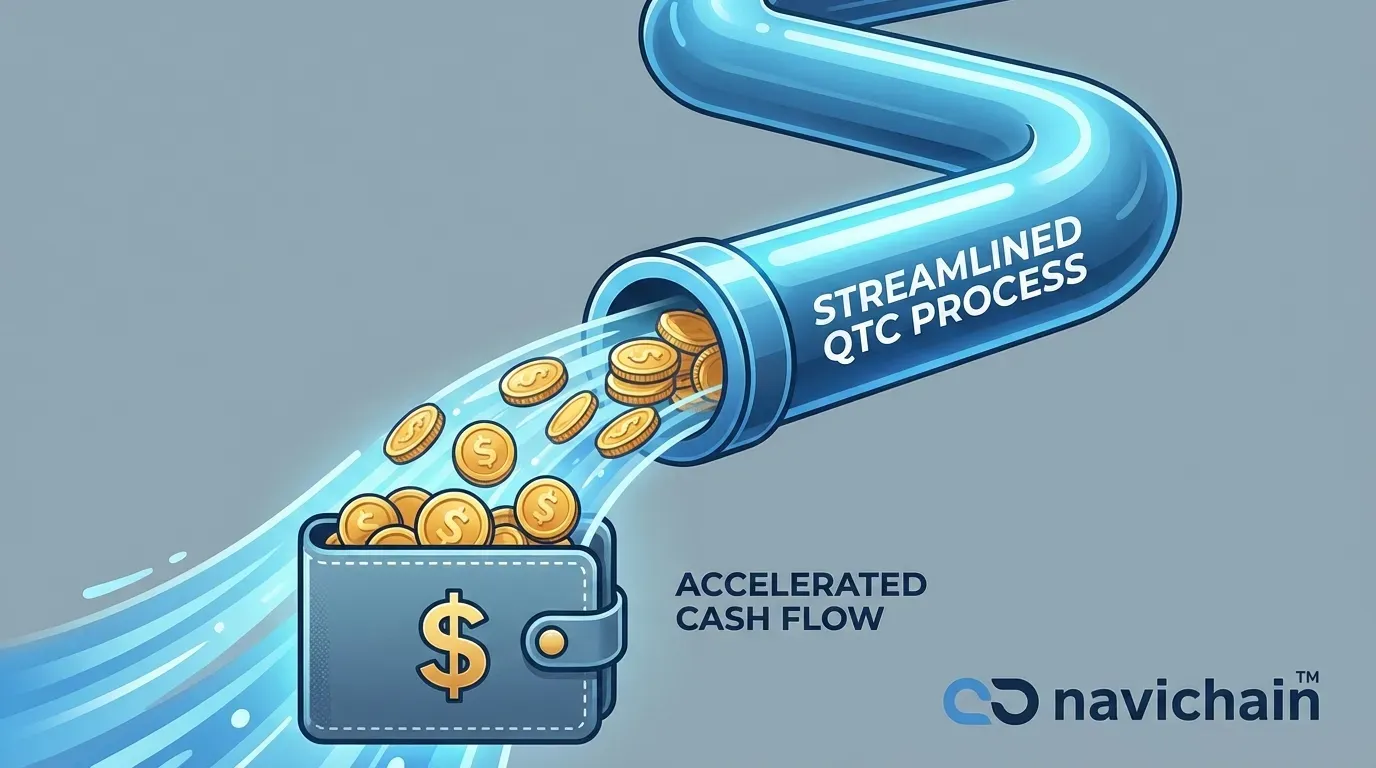
Schematic view illustrating how a unified data structure can streamline processes and improve cash flow for haulage companies.
- Where are my hidden revenue leaks? This continuous feedback loop allows you to optimize your pricing, operations, and cash flow – a level of strategic control that is impossible when data is locked in silos.
Improved cash flow and profitability through a unified data structure.
From Diagnosis to Design: The Blueprint for a Resilient Logistics Operational System
This framework requires a new type of technical foundation. For European small and medium-sized enterprises, every modern logistics platform must be built on three core principles.
Principle 1: Unified Operational Structure
The system must function as a 'central nervous system' for your entire business. It cannot just be a TMS or a WMS. It must be a single, integrated platform where transport management (TMS), warehouse management (WMS), vehicle management, order management, and – critically – invoicing management are all built-in components. Data must flow seamlessly, in real-time, from one function to the next without exports, imports, or manual re-entry. This creates the single source of truth necessary for automation.
Principle 2: Secure Data Architecture and Control
For European small and medium-sized enterprises, operational data is your most valuable and sensitive asset. True operational resilience requires full control over this data. This means that your platform's infrastructure must be secure, resilient, and unambiguous in its legal domicile. For companies operating within the EU, this means that data must be stored and processed within the EU (e.g., in Sweden) on secure infrastructure or via self-hosting. This ensures straightforward GDPR compliance, protects your data from the complexity of foreign jurisdictions (such as the US CLOUD Act), and gives you absolute data sovereignty.
Principle 3: Embedded Analytical Intelligence
Finally, the platform must provide the tools to use the data you have unified. With a single source of operational and financial truth, an embedded intelligence layer or integrated AI becomes incredibly powerful. This AI, running securely within your own data environment (per Principle 2), can analyze your unified data to unlock efficiency gains. It can predict cash flow, identify unprofitable routes, detect revenue leaks, and suggest optimizations – and transforms your data from a passive record into an active, strategic asset.
References/Sources
- Transport Intelligence (Ti Insight): European Road Freight Market 2024 Report (Analysis of margins and operating costs). https://www.ti-insight.com/report/european-road-freight-market-2024/
- International Road Transport Union (IRU): Driver Shortage Global Report 2023 (Context on operational pressure). https://www.iru.org/resources/news-and-reports/iru-driver-shortage-global-report-2023
- Atradius: Payment Practices Barometer 2024 - Western Europe (Data on DSO and payment delays by sector). https://atradius.com/en/publications/payment-practices-barometer-western-europe-2024.html
- Deloitte: The 'Quote-to-Cash' (Q2C) Opportunity (Analysis of QTC processes and bottlenecks). https://www2.deloitte.com/us/en/pages/operations/articles/quote-to-cash.html

Navichain SaaS Unified Logistics Platform: An integrated solution to streamline logistics operations and improve cash flow.
Enabling the Blueprint: Navichain SaaS Unified Logistics Platform
This white paper has sketched a strategic blueprint for solving the operational efficiency crisis in SME logistics. Navichain SaaS is a platform designed to embody these three core principles. 1. Embodiment of the Unified Operational Structure: Navichain is not a collection of loosely coupled modules. It is a single, unified logistics operational system where transport management (TMS), warehouse management (WMS), vehicle management, invoicing management, and order management function as one. This architecture creates, in itself, the 'single source of truth' described in Principle 1, eliminating the data silos that cause invoicing errors and delays. 2. Delivery of Secure Data Architecture and Control: We are fundamentally committed to Principle 2. The entire Navichain SaaS platform is hosted on our own secure infrastructure (Self-Hosting) in Sweden. This ensures maximum data security and control. By keeping your data strictly within Swedish and EU jurisdiction, you retain full control over your operational information, ensuring straightforward GDPR compliance and resilience against the complexity of international data transfers. 3. Providing Embedded Analytical Intelligence: Navichain fulfills Principle 3 with our integrated AI, running on the same secure Swedish infrastructure. Because your data is already unified (Principle 1) and secure (Principle 2), our AI can perform deep, secure analyses to help you optimize routes, predict maintenance, and, most importantly, analyze profitability and cash flow – all without your sensitive data ever leaving its secure environment. Our mission is to democratize logistics technology for small and medium-sized enterprises. We provide the powerful, integrated, and secure platform you need to close the 'cash flow gap' and build a truly resilient, efficient, and profitable business.
Navichain: A unified logistics platform to optimize cash flow.
Navichain's unified platform integrates TMS, WMS, and AI-driven analysis to optimize logistics operations and strengthen cash flow for small and medium-sized enterprises.

Navichain: A secure and integrated platform hosted in Sweden, combining TMS, WMS, and AI to optimize logistics and cash flow for small and medium-sized enterprises.