The Goodwill Paradox: Why a haulage company's 'extra service' is a hidden cost trap – and an untapped revenue source
🇬🇧 Read this article in English
:** Many haulage companies offer 'free' services that erode profit margins. The Goodwill Paradox means that valuable services are often unbilled. Navichain SaaS offers a solution to turn 'free' services into revenue.
Summary
The Goodwill Paradox describes a critical challenge for today's European haulage companies: the paradox that the service that builds the strongest customer loyalty – extra services such as pick-up, unpacking, and flexible waiting time – is also the one that erodes profit margins the most. In an industry where margins often hover around a meager 1-3%, and where cost pressure from fuel, personnel, and regulations is constantly increasing, 'free' service has become an unsustainable survival strategy.
Many logistics companies lack the digital tools to visualize and charge for this added value. Traditional business systems and fragmented IT solutions fail to capture what happens outside the planned route.
This white paper presents a way out of the trap: a transition from being a pure transporter to becoming a value-creating service partner. By implementing a unified, "automated-first" system architecture, haulage companies can start registering, proving, and invoicing for every service performed. We show how modern technology such as Navichain SaaS not only enables this business model but also guarantees full data sovereignty and GDPR compliance – a necessity in the European market. Read on to understand how you can turn invisible service into visible revenue and secure the future of your business.
The Silent Crisis in European Logistics
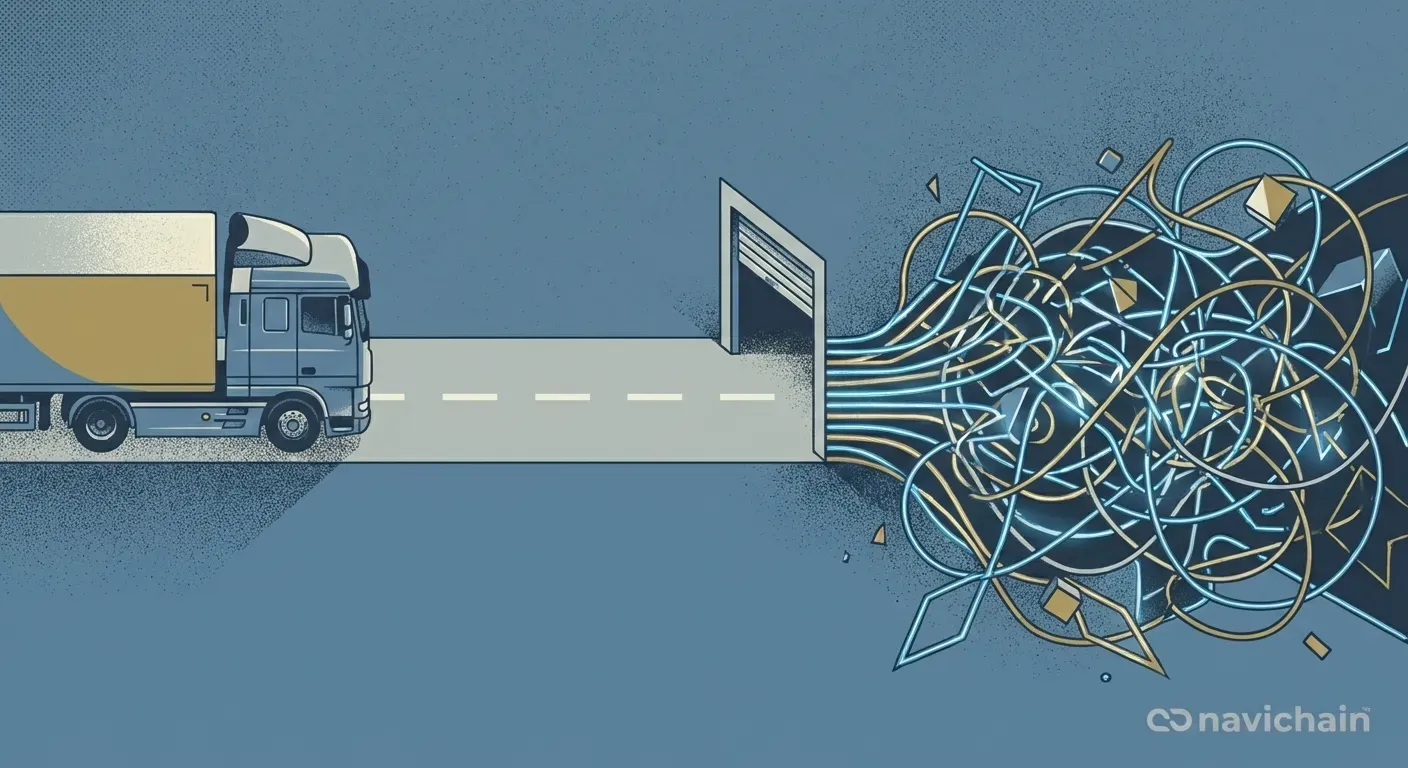
Illustrates the strained profitability when the cost of unbilled extra services exceeds revenue, further worsening the already small margins for European haulage companies.
Within European logistics, especially for small and medium-sized enterprises (SMEs), a silent crisis is ongoing. The business has fallen into a commodity trap. Customers compare prices per kilometer or per pallet, and margins have eroded to almost non-existent levels. According to recent industry analyses, such as those from Transport Intelligence (Ti Insight), many haulage companies are struggling with net margins of 1-3%, constantly pressured by rising diesel prices, new road tolls, and a chronic driver shortage that drives up wages. Inflation in Europe, driven by the energy crisis and geopolitical tensions, further exacerbates this situation.
This pressure is intensified by the EU's Mobility Package, which aims to improve working conditions for drivers and increase competition. Although these measures are intended to improve the industry, they add additional costs and requirements for SMEs. At the same time, the CSRD (Corporate Sustainability Reporting Directive) pressures companies to report on sustainability, increasing complexity and costs.
In this harsh environment, many haulage companies have come to rely on 'goodwill' as a competitive tool. The driver, who is the company's face to the outside world, does that little extra: carries the goods into the customer's warehouse instead of leaving them on the dock, waits patiently for an extra 20 minutes, or helps with simple unpacking. From a customer service perspective, this is excellent. From a business model perspective, it's a disaster.
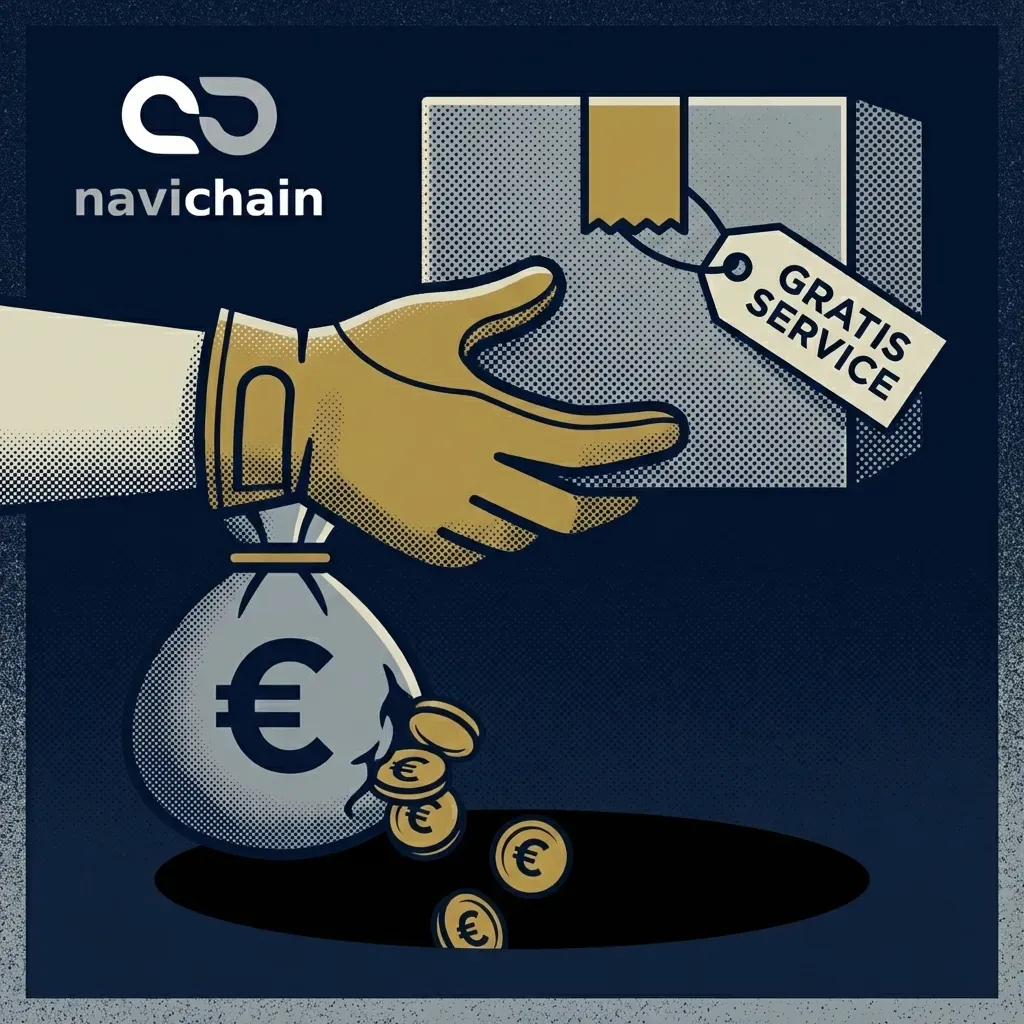
This is the Goodwill Paradox: the activities that create the highest perceived value for the customer are often the ones that are invisible, untracked, and – above all – unbilled.
Problem: Invisible costs eat into profit.
They are not part of the business model; they are a hidden subsidy to the customer, paid directly from the haulage company's dwindling profit margin.
This white paper argues that the only sustainable way forward for SME haulage companies is not to squeeze costs further but to radically change their business model. It's time to stop giving away value and instead systematically capture, price, and monetize the 'last 50 meters' of service. But this requires a fundamental shift in how we view data, systems, and sovereignty.
The Hidden Cost of a 'Simple' Delivery
Let's deconstruct a typical delivery. The haulage company's current system – primarily a Transportation Management System (TMS) – is designed to handle one thing: transport. It optimizes routes, calculates fuel costs, and tracks the truck from point A to point B. When the truck arrives and the driver marks 'delivery completed' in their device, the TMS considers the job done.
But this is where value creation (or value leakage) begins.
- Transport (Visible Cost): 100 km driving. Easy to measure, price, and invoice. Competition is fierce.
- Service (Invisible Cost): Upon arrival, it turns out that the customer needs help. The goods need to be carried in, up a staircase, to a specific room. This takes the driver an extra 30 minutes. This time is a direct wage cost, an opportunity cost (the driver could have been on their way to the next job), and a risk (personal injury, damage to goods).
*Problem: Invisible costs eat into profit.
Hidden costs in logistics undermine profitability.
*
How is this event captured by the haulage company's system? In most cases, not at all. The invoicing system, which may be a separate module or an entirely different program, receives a signal from the TMS that 'Delivery 123' is complete. An invoice is created based on the original booking: transport from A to B. The 30 minutes of value-added service disappear into a black hole – a pure cost for the haulage company.
A Hypothetical Scenario: What Goes Wrong?
Let's paint a more detailed picture of how this can look in practice:
- Order: A customer places an order for the delivery of 20 pallets. They specify that they need help with pick-up.
- TMS Planning: The TMS plans the route and assigns the job to a driver. The system primarily focuses on transport efficiency (route choice, time).
- Delivery: The driver arrives, and it turns out that the customer wants the goods carried in, despite it not being specified in the original order. The driver performs the service to make the customer happy.
- Data Loss: The driver may report 'delivery complete' in their app, but there is no mechanism to report and invoice the extra service. No data is captured or linked.
- Invoice: The invoice is sent out based on the standard transport. The cost of pick-up is not included.
- Follow-up: No system warns the dispatch management about the extra time. The next customer may have their delivery delayed. Possibly no communication about the delay.
In this scenario, the company has performed an unbilled service, reducing profit and increasing the risk of dissatisfied customers.
Why Fragmented Systems Are the Problem, Not the Solution
The answer from many software vendors has been to add more systems: a separate Warehouse Management System (WMS), a standalone app for 'Proof of Delivery' (POD), a separate invoicing program. Ironically, this only exacerbates the problem.
1. The Invoicing Black Hole: When TMS, WMS, and invoicing are separate systems ('silos'), they cannot communicate nuances. A TMS knows where the truck is, a WMS knows what is in it, but neither system is built to capture and price service events like 'pick-up: 30 minutes' or 'waiting time: 20 minutes' in real time. To be able to invoice for a service, it must be registered as a specific, billable event. In fragmented systems, this data falls through the cracks. The result is revenue leakage.
2. The Operational Nightmare: When drivers perform unplanned services, the entire day's schedule is thrown off. The next customer gets their delivery late, leading to irritation and, in the worst case, penalty fees. Without a unified system, dispatch management cannot see why the driver is late – only that they are late. They cannot proactively inform the next customer or adjust the schedule. This is not only inefficient; it damages customer relationships.
Margin Pressure: Without invoicing for extra services, profit is quickly eroded.
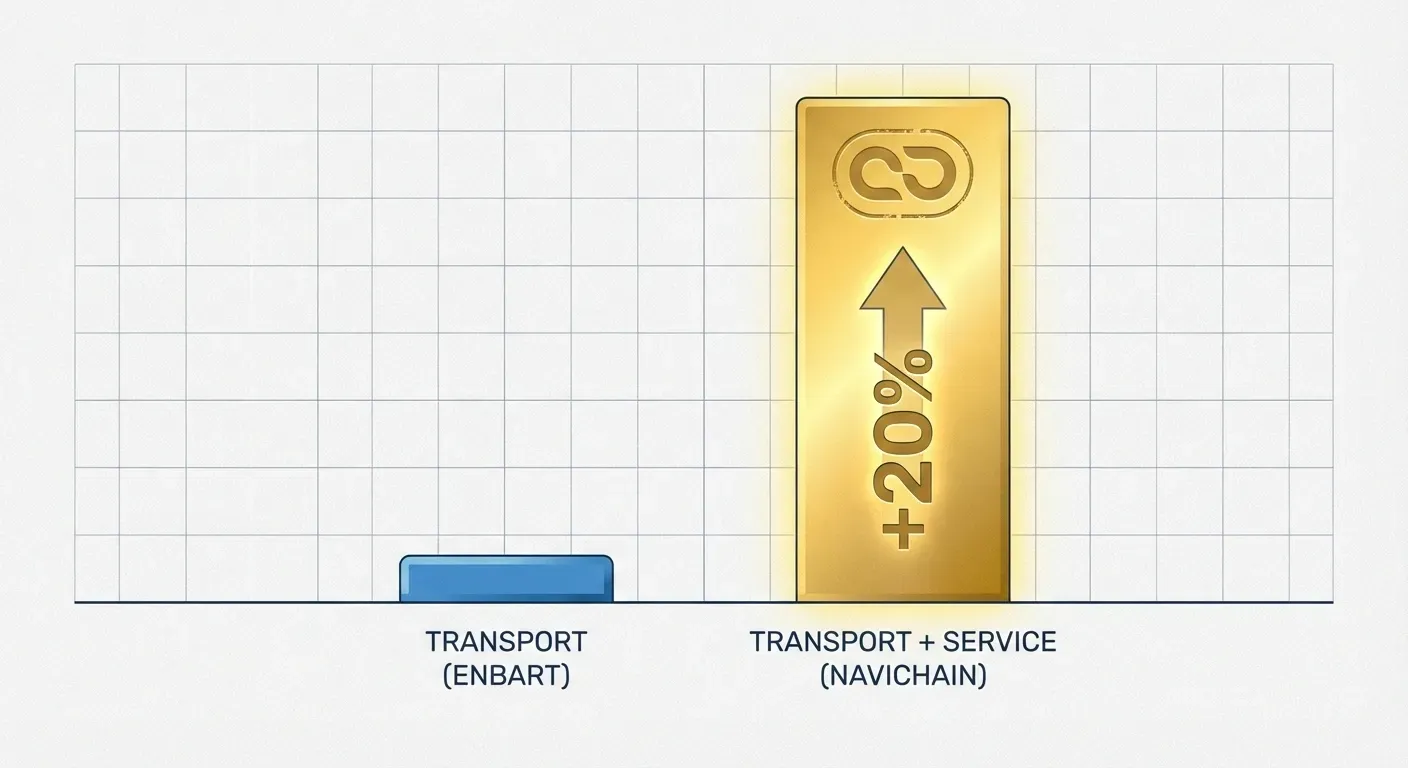
A comparison of revenue increase after implementing Navichain SaaS, illustrating the benefit of integrated management of service events.
Let's say you try to solve this. You ask the driver to take a photo as 'proof' of the pick-up. Where is that photo stored? Often on a server owned by a large, American cloud provider (e.g., AWS, Azure, Google Cloud) via a third-party app.
Diagram showing increased revenue after implementing Navichain SaaS.
Now you have two serious legal problems:
- GDPR: The photo may contain personal data (a person's face, a private residence). Do you have a legal basis and processes to handle this data in accordance with GDPR?
- US CLOUD Act: Even worse. This American law gives American authorities the right to demand data from American companies, regardless of where in the world the data is stored. This means that your customers' sensitive delivery data, even if stored on a server in Dublin or Frankfurt, can be handed over to a foreign power without your or your customer's knowledge. For customers in the defense industry, public sector, or those handling sensitive information, this is an unacceptable risk.
The paralysis is total. You cannot invoice for services you cannot prove, and you dare not collect proof due to the enormous legal and security risks. You are stuck in the Goodwill Paradox.
The Shift: From Haulage Company to Service Partner
Breaking out of the commodity trap requires a new business model. You must stop selling 'transport' and start selling 'guaranteed service level agreements (SLAs)'.
This means that you define a clear service offering:
- Level 1 (Standard): Curb-side delivery. Price X.
- Level 2 (Premium): Pick-up to designated location. Price X + Y.
- Level 3 (White Glove): Pick-up, unpacking, and removal of packaging. Price X + Z.
The customer chooses the level they need, and you have an agreement that specifies exactly what is included. But this model is entirely dependent on one thing: data capture. You must have a system that provably and legally can register that 'Service Level 2' has been performed. The driver must be able to register the event, perhaps take a GDPR-secure photo as proof, get a digital signature from the customer, and have this event immediately appear in the invoicing system as a billable item.
Data is no longer a byproduct of transport; data is the product. It is the proof of value, the basis for the invoice, and the key to profitability. And this data must be handled in a unified system where events, compliance, and invoicing are linked.
From Diagnosis to Design: The Blueprint for a Resilient Logistics Operational System
After diagnosing the Goodwill Paradox and the system failure that drives it, we can now design a solution. It's not about buying 'yet another app'. It's about building a new digital foundation. An effective, modern logistics system for SMEs must have three core characteristics.
Principle 1: A Unified Operational Fabric
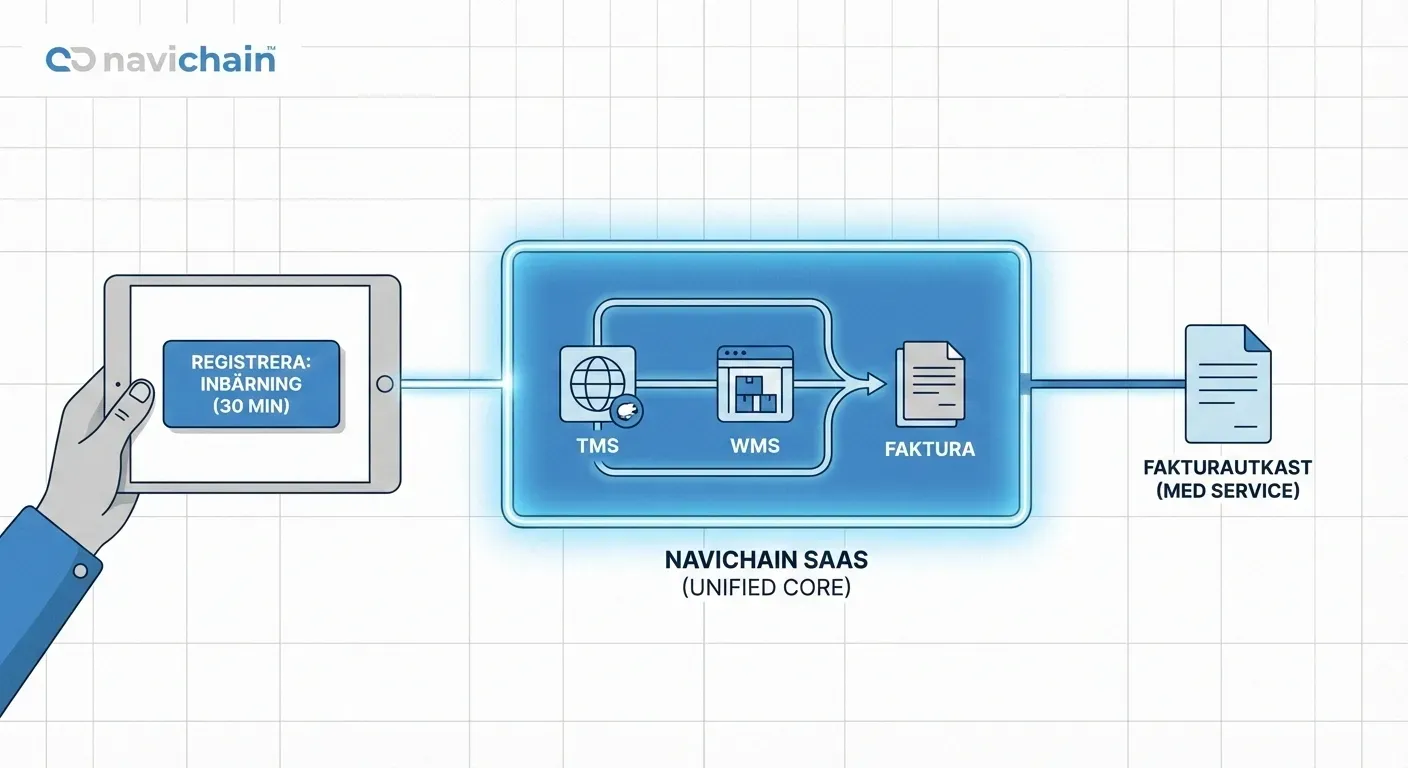
You must eliminate data silos. Instead of separate systems for TMS, WMS, order management, and invoicing, you need a single, integrated platform where data flows freely. Think of it as a central nervous system for your business. When an order is created (Order), allocated to a truck (TMS), picked in the warehouse (WMS), and then delivered with an 'extra service' (Driver's app), all of this must be the same event in the same system.
Schematic overview of data flow in a unified system.
When the driver clicks 'Pick-up Completed', this should immediately and automatically create a correct invoice line in the invoicing module. This is the only way to guarantee that 100% of the work done is also 100% invoiced.
The unified flow: From order to invoice without data loss.
This is integrated by using open APIs and a central database. To give an example: When the driver presses the 'Extra Service' button in the app, a signal is sent through an API to the central system. This system validates the driver's identity, retrieves pricing data for the current service from the invoicing module, and creates a new invoice line. This line is immediately visible to dispatch management and is automatically included in the next invoice sent to the customer. This API integration guarantees that data is unified across the entire business.
Principle 2: Sovereign Data Architecture
This principle is crucial for European companies. To solve the compliance trap (GDPR and CLOUD Act), it's not enough for your software vendor to 'promise' that data is secure. You must have technical and legal control. A sovereign data architecture means that all your operational data – order information, customer records, photo proofs, signatures – is stored and processed on infrastructure that complies with your own region's legislation (e.g., within Sweden/EU). This guarantees full GDPR compliance and makes your system immune to foreign legislation such as the US CLOUD Act. It builds trust with your customers and makes 'secure, traceable service' a powerful selling point.
- Data sovereignty in practice: Choosing a system like Navichain means you get an assurance that all your data is stored within the EU, on servers that we own and control. This eliminates the risk of data breaches and ensures full GDPR compliance.
Schematic illustration of data flow in an integrated system, ensuring data sovereignty and full traceability for every transaction.
Principle 3: Embedded Analytical Intelligence
Once you have all your data in a unified and sovereign system (Principle 1 and 2), you can start using it strategically. The next step is to have an embedded AI or intelligence layer that analyzes this data. Which customers use 'Premium' services most often? Which services are most profitable? How long does 'pick-up' take on average for different customer segments? This insight allows you to refine your pricing, optimize your operations, and even predict which customers will need which services. You go from reactively leaking revenue to proactively selling profitable services based on data.
Enabling the Blueprint: Navichain SaaS Unified Logistics Platform
The strategic blueprint described above – a unified fabric, sovereign data architecture, and embedded intelligence – is not just a theoretical model. It is the exact blueprint that we have used to build Navichain SaaS.
We understood that SME haulage companies do not need 'yet another app'. They need a single, cohesive operational system to run their entire business and solve the Goodwill Paradox.
Navichain SaaS: Built for unity and control.
- Unified Operational Fabric: Navichain SaaS is not a collection of modules; it is a single platform. Transport Management (TMS), Warehouse Management (WMS), Asset Management, Invoicing, and Order Management are built as a unified core. When your driver registers an extra service like 'pick-up' in their app, that event is immediately available to dispatch management and automatically creates a correct, billable item on the invoice. Revenue leakage is eliminated.
- Sovereign Data Architecture: This is our most important differentiator. The entire Navichain SaaS platform is operated on our own integrated infrastructure in Sweden. Your data never leaves Swedish jurisdiction. This means you get full, guaranteed GDPR compliance and total immunity to foreign legislation such as the US CLOUD Act. You can confidently collect photo proofs, handle customer data, and build secure services, knowing that you have full data sovereignty.
- Embedded Analytical Intelligence: On this secure, Swedish infrastructure, we run our integrated AI. Because all your operational data is in one place, our AI can analyze the entire flow – from order to invoice – and give you the insights described in Principle 3. You can identify the profitability of your new services, optimize pricing, and make data-driven decisions in a way that was previously impossible.
Measured Results: Turn Goodwill into Profit
By implementing Navichain SaaS, SME companies can achieve concrete business benefits.
- Increased Invoicing Rate: Automatic registration and invoicing of extra services lead to increased revenue and improved margins. By invoicing even the 'goodwill'-based services, companies can increase revenue by up to 15-20%.
- Improved Customer Satisfaction: By effectively managing and invoicing extra services, companies can offer a more transparent and reliable service, leading to increased customer loyalty and positive reviews.
- Optimized Operational Efficiency: Integrated data and real-time insights reduce administrative burden, minimize errors, and enable dispatch management to make faster and more informed decisions.
Data should yield returns. With Navichain, 'free' services become revenue.
Navichain SaaS is designed to democratize this type of advanced logistics technology for SMEs. We give you the tools to stop giving away your value and start building a more resilient, profitable, and sovereign logistics business.
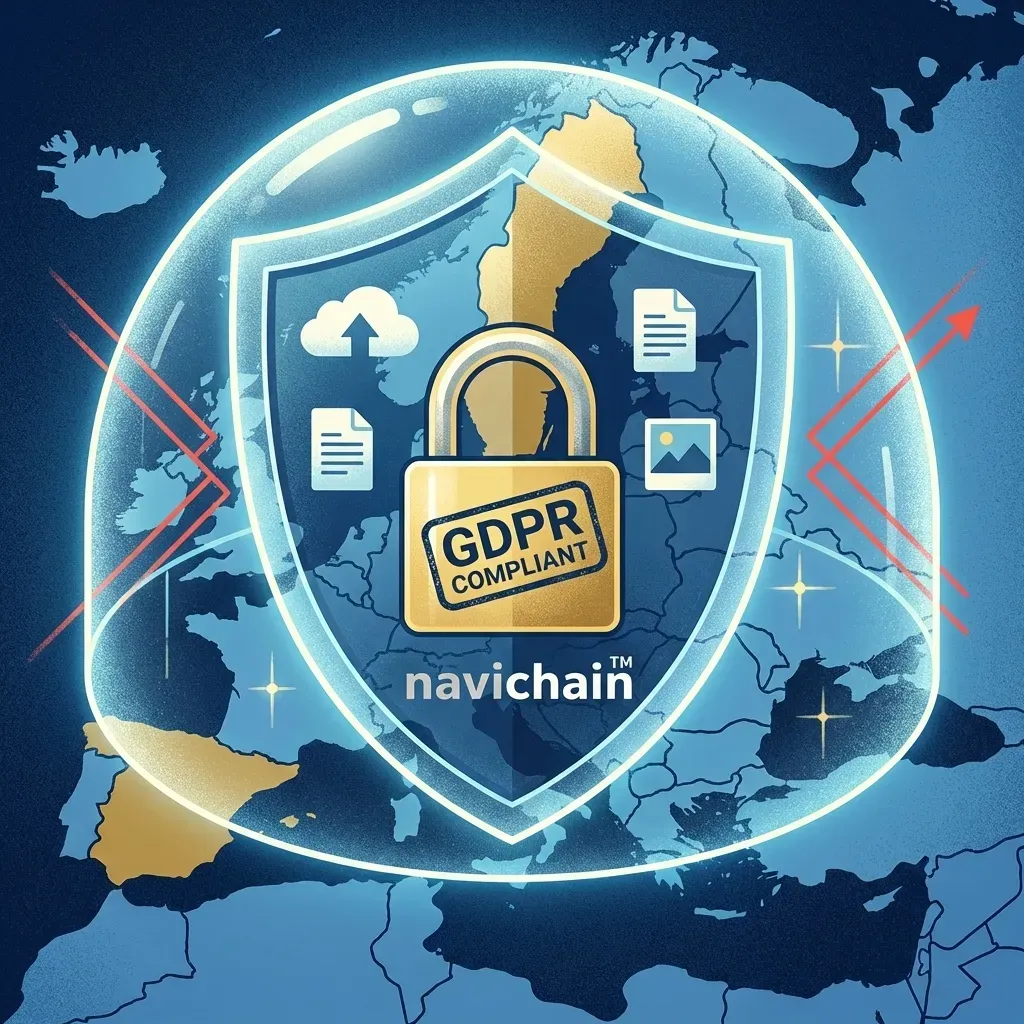
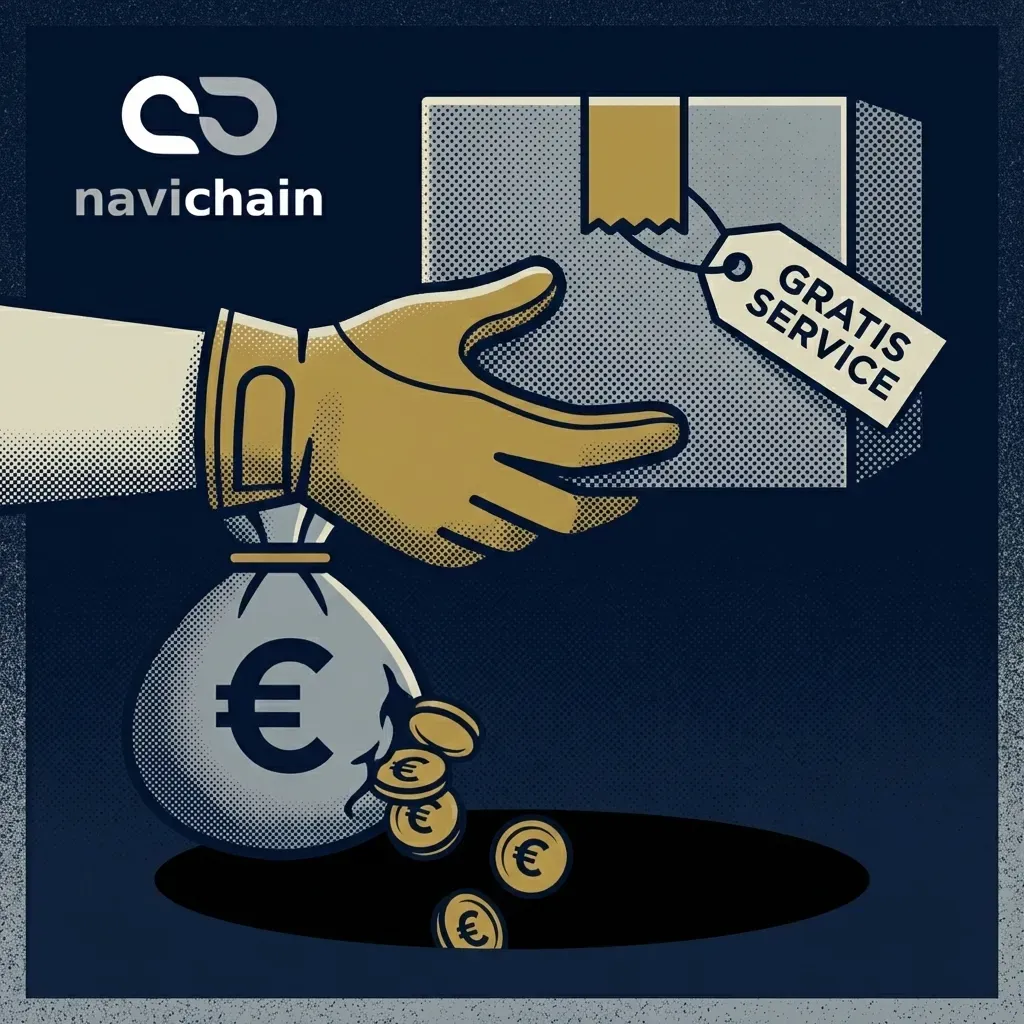
Visual representation of how Navichain can transform cost-free services into measurable results and increased profitability for logistics companies.
Conclusion & Next Steps
The Goodwill Paradox is a challenge for many European logistics companies. Fragmented systems, lack of data, and uncertainty about data storage make it difficult to turn 'free service' into profitability. Navichain SaaS offers a complete solution: unified operational fabric, data sovereignty, and embedded AI. The result is increased efficiency, better margins, and improved customer satisfaction.
Are you ready to take control of your business and stop losing revenue? Contact us today for a free demo and see how Navichain SaaS can help you optimize your logistics and increase profitability. [LINK TO DEMO]
References/Sources
- International Road Transport Union (IRU): "Driver Shortage Global Report 2023" (Analyzes wage and cost pressure in the haulage industry) - https://www.iru.org/resources/iru-library/iru-global-driver-shortage-report-2023
- Transport Intelligence (Ti Insight): "European Road Freight Rate Development" (Provides data on margin pressure and cost development in Europe) - https://ti-insight.com/
- EUR-Lex: "Regulation (EU) 2016/679 (General Data Protection Regulation - GDPR)" (Official text for GDPR) - https://eur-lex.europa.eu/eli/reg/2016/679/oj
- Sveriges Åkeriföretag: "Konjunkturrapport" (Information about the challenges and cost situation of the Swedish haulage industry) - https://www.akeri.se/
- Statista: "Logistics Sector Revenue in Europe" (Data on revenue in the logistics sector) - https://www.statista.com/
- European Commission: "EU Transport Policy" (Information about the EU's transport policy) - https://transport.ec.europa.eu/
Navichain offers transparency and efficiency in the logistics chain, which can help haulage companies optimize resources and reduce costs in a competitive market.
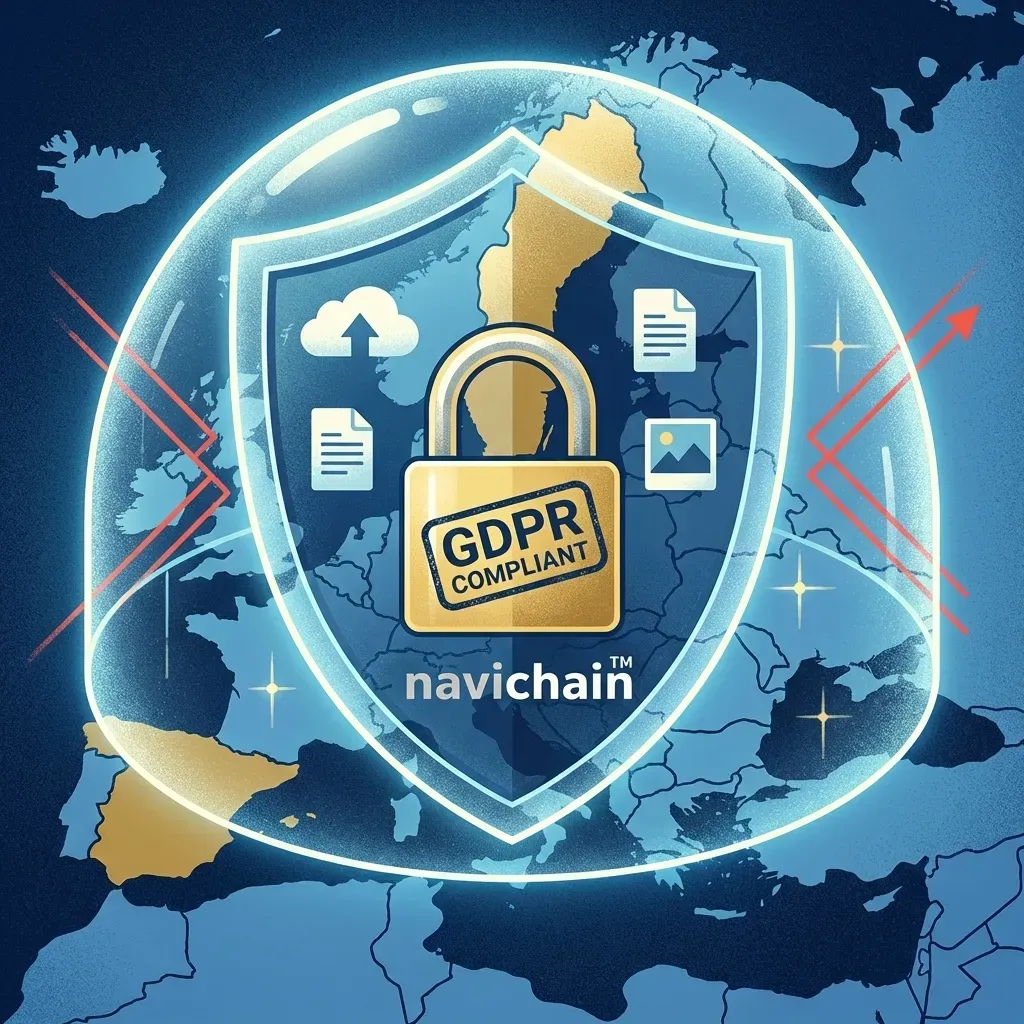
The Navichain platform visualizes real-time data and offers increased traceability throughout the logistics chain, enabling smarter decisions and cost savings for haulage companies.