From Paper to AI-Driven Efficiency: How Much Your Fleet Can Save
Cross-language link: Läs på svenska
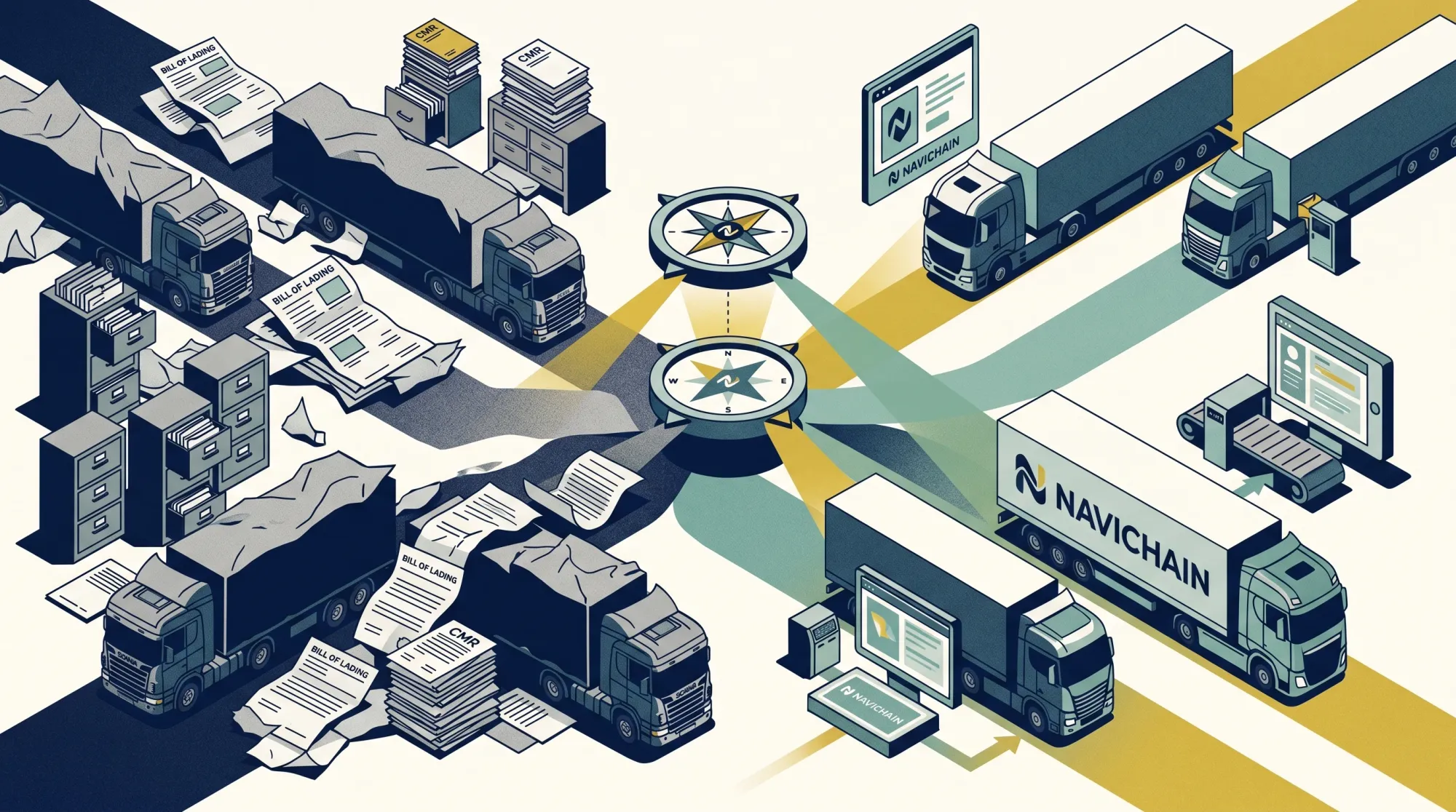
Replacing manual workflows with a modern, AI-driven Transport Management System (TMS) is now essential for fleet profitability. By implementing a self-hosted Sovereign AI solution for route optimization and automated crossdocking, logistics companies can drastically reduce their fuel costs and avoid expensive penalty fees, all while ensuring 100% data sovereignty. This translates directly to immediate cost savings and improved margins from the very first month.
Key Takeaways / Executive Summary
-
Immediate ROI: Small to medium-sized fleets save between 20,000 and 160,000 SEK annually in reduced fuel costs purely through Sovereign AI-based route optimization.
-
Avoid Penalties: Automated monitoring of driving and resting times eliminates administrative mistakes that could otherwise cost up to 60,000 SEK per violation.
-
Maximized Fill Rates: Smart crossdocking functionalities unlock consolidation opportunities and new revenue streams without the need to expand your vehicle fleet.
-
Complete SaaS Solution: Available for just 109 SEK per user/month, including local AI processing and a driver mobile app equipped with e-CMR capabilities.
Why are profit margins shrinking in the modern transport industry?
The transport industry is undergoing a significant paradigm shift where already slim margins are squeezed further by increasing demands for speed, regulatory complexity, and sustainability. Continuing to rely on pen, paper, and time-consuming spreadsheets is no longer sustainable for those looking to remain competitive. Transitioning to a system-supported workflow is therefore inevitable.
By investing in a modern platform for 199 SEK per user per month, the transport company receives a comprehensive solution. The software includes secure AI interpretation of unstructured bookings, route optimization via Here Maps, and Hardware-as-a-Service for vehicle tracking (FMC 650) for only 199 SEK per vehicle per month. Moreover, the system features a driver app with "sign on glass," digital handling of waybills, and robust support for proof of delivery.
What is e-CMR? An abbreviation for electronic consignment note, which completely replaces traditional paper documents with a traceable digital signature, radically reducing administrative overhead in the cabin.
How much fuel can be saved through AI-based route optimization?
Fuel remains one of the heaviest cost centers for any haulage company. By leveraging Navichain's Sovereign AI, which is built on robust open-source algorithms hosted entirely within our own infrastructure, your logistics operations are analyzed continuously without transmitting data to third parties. Unnecessary mileage, inefficient routes, and expensive deadhead driving are systematically eliminated. Industry experts estimate that advanced, AI-driven systemic optimization lowers fuel consumption by an impressive 10 to 20 percent for operations dealing with complex logistics cycles.
Here is a conservative baseline estimate (based on a typical vehicle driving approximately 150,000 km per year):
For the small fleet (5 trucks)
-
From manual to AI: By eliminating the inefficiencies of paperwork, fleets save approximately 20,000 SEK per year.
-
From legacy digital to AI: When upgrading from a basic TMS to advanced machine learning decision-making, an additional 5,000 SEK per year is saved.
For the mid-sized fleet (20 trucks)
-
From manual to AI: The combined cost reduction for fuel reaches up to 80,000 SEK per year.
-
From legacy digital to AI: Fine-tuning already digitized routes cuts expenses by an extra 20,000 SEK per year.
For the large fleet (40 trucks)
-
From manual to AI: Significant savings amounting to roughly 160,000 SEK per year.
-
From legacy digital to AI: Locally executed intelligence saves the company nearly 40,000 SEK per year on smarter algorithmic routing decisions alone.
In what ways can smart crossdocking increase revenue?
Many Nordic forwarders currently grapple with irregular or unpredictable fill rates, which quickly erodes profitability. The answer lies in a system equipped to handle micro-level, advanced consolidation planning.
What is crossdocking? A logistics strategy where incoming goods are immediately sorted and reloaded onto outbound transport vehicles, aiming to minimize or entirely bypass warehousing.
The platform's capability to orchestrate reloading across virtually limitless route legs frees up invaluable time and cargo space:
-
For small fleets, optimizing existing space means one or two extra multi-drop loads can be added per week without any need to increase the workforce. This impacts the bottom line instantly.
-
In large logistics networks, it enables automated mass consolidation of thousands of parcels between multiple hubs, creating entirely new logistics services and driving up the gross margin per driven mile.
Why is automated compliance an economic lifesaver?
Attempting to manually monitor and document driving and resting times, approved breaks, and international cabotage regulations too often leads to mistakes. These oversights introduce massive risks and potentially crippling fines.
The AI functionality continuously audits activities against current regulations and issues real-time warnings to transport management and drivers as soon as a compliance breach is imminent. According to the Swedish Transport Agency, violations of these exact rulebooks frequently trigger penalty fees ranging between 10,000 SEK and 60,000 SEK per incident. Equipping the software with the ability to preempt even a single human error every year effectively means the entire software license and telematics hardware pay for themselves, several times over.
Sources and recommended deep dives
Here are a few central industry reports and regulations supporting these calculations:
- Descartes details how AI-driven analysis slashes fuel consumption, see What is Route Optimization?.
- DC Velocity explains the efficiency advantages across the supply chain: Route optimization saves the day.
- Lumenalta breaks down AI's impact on predictive transport at Understanding AI route optimization.
- Flex Logistics covers the business value of lean operations: Cross-Docking Explained.
- The baseline penalty registry is provided by the designated authority, Swedish Transport Agency (Regulations and penalty fees).
Related Articles
About the Author
Manusha (Integration & Automation Specialist)
As an expert in integrations and data flows, Manusha implements localized system solutions that minimize operational disruptions and guarantee absolute data security according to Sovereign AI principles. Read more at navichain.se.