Electric Vehicles & Range Anxiety: From Diesel's Freedom to Electric's Precision
🇬🇧 Read this article in English
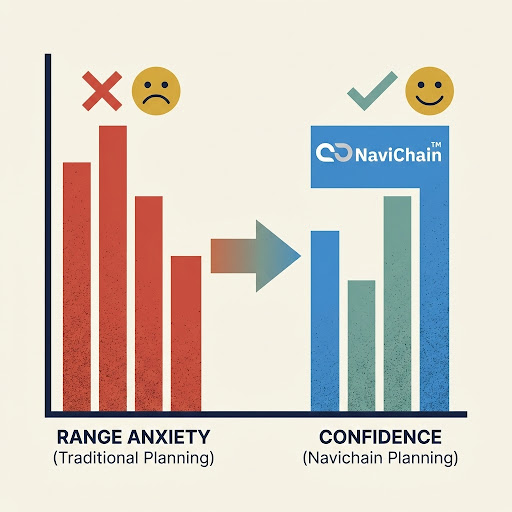
The electrification of heavy traffic is accelerating. By 2026, the rollout of Megawatt Charging System (MCS) promises to revolutionize long-haul transportation. However, for many fleet managers, the transition from diesel to electric is accompanied by a deep operational paralysis known as "Range Anxiety." It is the fear that a 40-ton truck will be stranded on the E4 with an empty battery. The truth is that range anxiety is not a battery problem – it is a planning problem.
Summary
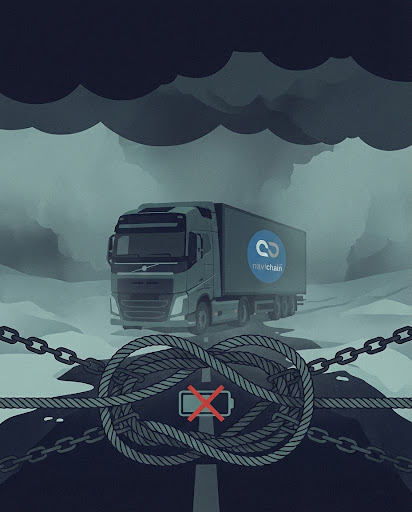
For a century, logistics has relied on "Diesel Freedom": the ability to refuel anywhere, anytime, in 10 minutes. Electrification removes this freedom and replaces it with the need for precision. * Limitation: Charging takes time (30-45 minutes with MCS) and requires specific locations. * Opportunity: By integrating charging with mandatory driver rest periods, the charging "downtime" is effectively zero.
This white paper explores how Navichain transforms the electric truck from a burden to a precision instrument, handling everything from power-limited depots to fast charging along the way.
Part 1: The Paradigm Shift - Freedom vs Discipline
Loss of Flexibility?
With a diesel truck, a dispatch manager can change the route mid-shift with minimal consequences. With an electric truck, a 50 km detour can mean missing the next charger. * Fear: Dispatch managers overcompensate by keeping batteries at >50%, reducing the vehicle's effective range and utilization. * Reality: Modern electric trucks (e.g., Volvo FH Electric, Scania 45R) have real ranges of 300-450 km. This covers 60% of all European freight routes without stopping.
Planning Gap
The problem is that most Transport Management Systems (TMS) still think in "Diesel." They calculate distances but ignore energy. They see a road, but they don't see the uphill slope that drains the battery twice as fast.
Part 2: The MCS Revolution & Public Charging
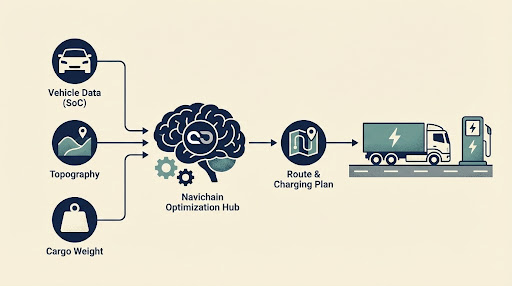
Megawatt Charging System (MCS), rolling out across Europe in 2026, is a "Game Changer." * Speed: By charging at up to 3.75 MW (but initially ~1 MW), an MCS charger can add 400 km of range in under 30 minutes. * Synchronization: This perfectly aligns with the EU's mandatory 45-minute break after 4.5 hours of driving. * Navichain's Role: Our algorithms act as a "Booking Agent" for energy. We not only find a charger; we verify its availability and reserve the spot (where support exists), ensuring the driver helps the truck charge while they drink their coffee.
Part 3: The Depot Challenge - Smart Energy Management
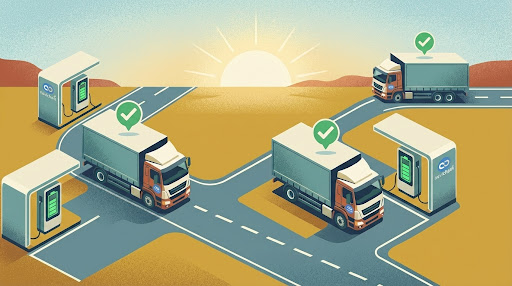
Most logistics depots were designed for lighting and coffee machines, not for charging ten 40-ton trucks simultaneously. * The "Pixelated" Grid: If 10 trucks plug in at 18:00, the local grid crashes or you face massive power tariffs. * Smart Orchestration: Navichain's Energy Management logic prioritizes vehicles based on tomorrow's schedule. * Truck A: Leaves at 05:00 for long-haul transport. Priority: High. * Truck B: Leaves at 09:00 for local distribution. Priority: Low (charge slowly overnight). * Result: You avoid expensive grid upgrades by smoothing the load curve.
Conclusion
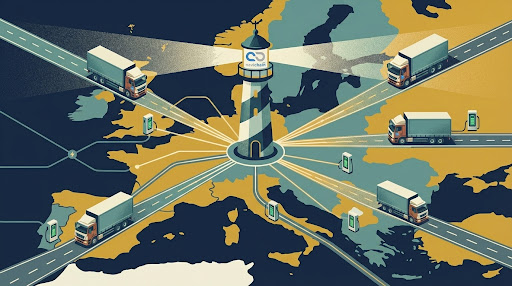
Electrification is not just an engine swap. It is an update of the operating system for your entire business.
Those who try to run electric trucks with diesel thinking will fail. They will encounter anxiety, stranded vehicles, and high costs. Those who embrace Precision Planning – and use data to manage energy as rigorously as they manage the bottom line – will discover that electric transportation is not only cleaner but cheaper and more predictable.
Stop worrying about range. Start planning energy.
Electrify with Confidence.
See how Navichain integrates MCS charging and energy management.