e-CMR catalyst: Why your implementation is a key to operational efficiency, not just technology
🇬🇧 Read this article in English
Summary
This report examines how haulage companies can optimize operations and maximize customer satisfaction through effective e-CMR implementation. Many find that the technology itself doesn't solve the problems. The key lies in integrating e-CMR with existing systems, such as TMS and WMS, to create a unified logistics platform. By reducing manual data handling, improving real-time information, and streamlining communication, efficiency increases significantly. The report shows how companies, regardless of size, can achieve faster deliveries, reduced administrative costs, and happier customers through strategic data integration and a holistic system approach.
Increasing customer demands for e-CMR put pressure on hauliers, but digitalization can drive significant gains in efficiency and customer satisfaction. This whitepaper goes beyond compliance-driven implementations and presents a three-step framework for building a unified and efficient operational system by addressing the inefficiencies of fragmented systems.
e-CMR Paradox: Why Your Implementation Isn't About Technology but System Flaws
Hauliers face increasing customer demands for e-CMR, requiring a focus on efficiency. According to IRU, digitalization can reduce administrative time by up to 75%, boosting operational performance. But the path can seem complex. This isn't just another technological hurdle. The real opportunity lies in seeing your customer's demands as a catalyst for addressing the operational brakes caused by fragmented systems and data silos. This whitepaper replaces "compliance implementation" with a strategic data integration model. We present a three-step framework not just for implementing e-CMR, but for building a unified, efficient operational system that enhances customer satisfaction for your haulage company.
Introduction: When a Customer Demand Unleashes Efficiency

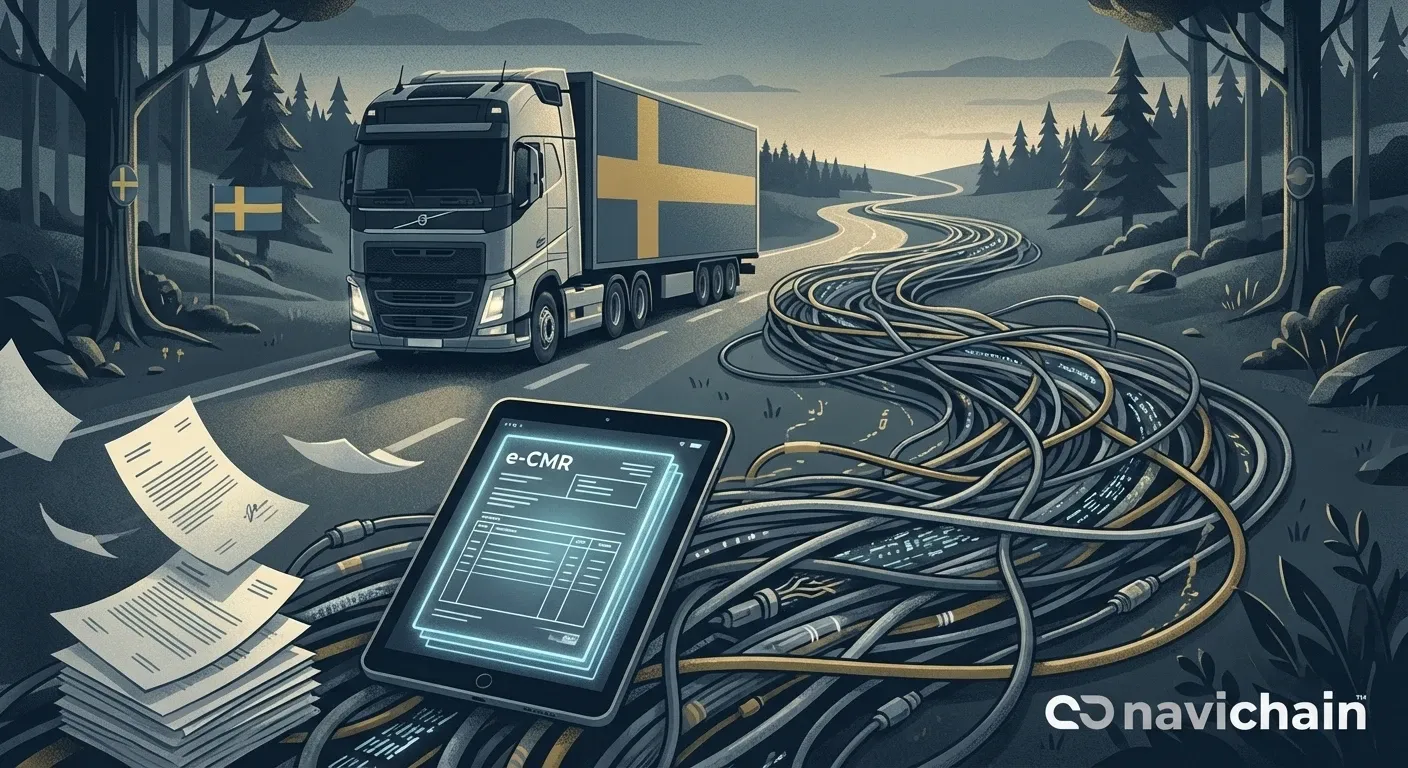
This illustrates the immediate pressure hauliers feel when faced with a mandatory e-CMR requirement, highlighting the opportunity to streamline systems and enhance customer service.
The demand has come from your most important customer: "Starting next quarter, we require you to use e-CMR." For many haulage companies, this can feel like yet another operational challenge. Another system to integrate, another cost to absorb, and another technical complexity to manage in an industry where efficiency is paramount.
But what if this demand isn't an obstacle, but a strategic opportunity? What if your customer's requirements provide a powerful impetus to address deeper inefficiencies that have long limited your ability to scale and deliver exceptional service?
This is the e-CMR catalyst. The challenge of implementing a digital consignment note isn't about the e-CMR technology itself. It's about how this requirement exposes the costly operational effects of system fragmentation.
This whitepaper offers a strategic guide to transforming this customer demand from a reactive burden into a proactive investment in your company's future. We argue that the solution isn't just to "buy an e-CMR app," but to adopt a data integration strategy that addresses underlying problems, enhances customer satisfaction, and drives operational efficiency.
The Real Bottleneck: The Cost of a Fragmented Operation
For the average haulage company (SME), operational reality rarely resembles an efficient process, impacting customer service.
For the average haulage company, operational reality rarely reflects an efficient process. Instead, it's a collection of disconnected systems:
- Order Management often relies on email and manual data entry into spreadsheets.
- Transport Planning occurs in a separate TMS (Transport Management System) – if one exists at all.
- Warehouse Status (WMS) exists as another isolated system, often supplemented with manual processes.
- Invoicing relies on accounting software that requires manual data transfer from TMS or spreadsheets.
Each system contains a fragment of critical data, creating a fragmented view of the operation. This system fragmentation is costly and critically impacts the customer experience.
The Hidden Cost of Manual Processes and Their Impact on Customers
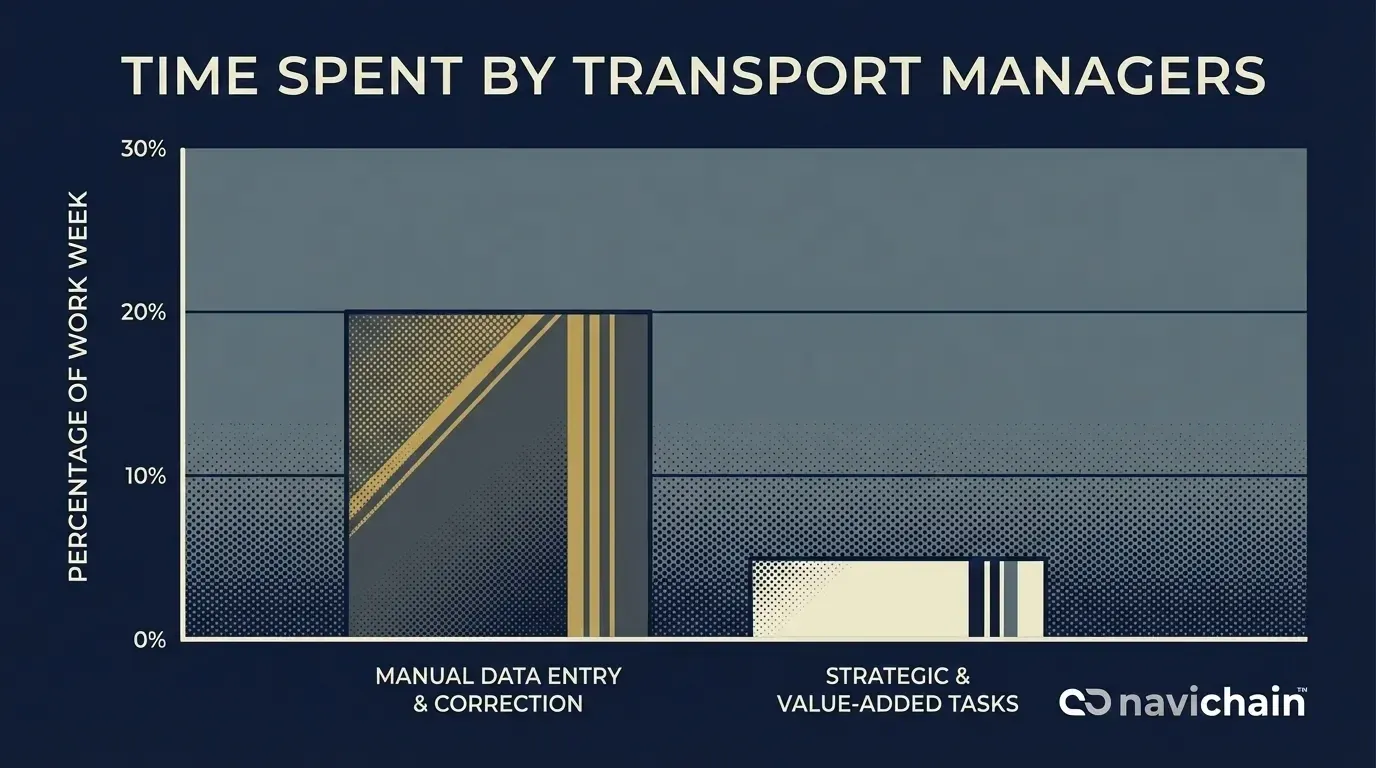
In this fragmented environment, employees – transport managers, administrators, and even drivers – become human "integrators." They spend hours each week manually transferring data between systems. Industry analysts report that transport managers can spend up to 20% of their time manually transferring data, correcting errors, and chasing information. This impacts response times and the accuracy of information provided to customers.
When an e-CMR requirement arises, this fragile manual system wobbles. Because e-CMR isn't a standalone process. To be effective, an e-CMR system must:
- Retrieve data from TMS (details about the transport order, destination, and carrier).
- Provide real-time updates from the driver (current status, route deviations, electronic signature).
- Send data immediately to the invoicing system (proof of delivery, facilitating quick invoicing).
- Offer accessibility to the customer via a dedicated portal or automated notifications.
In a fragmented system, this requires three, four, or even five separate, complex, and expensive integrations. The implementation challenge isn't e-CMR itself; it's the lack of a unified data foundation. This limits the ability to proactively communicate with customers and provide exceptional service.
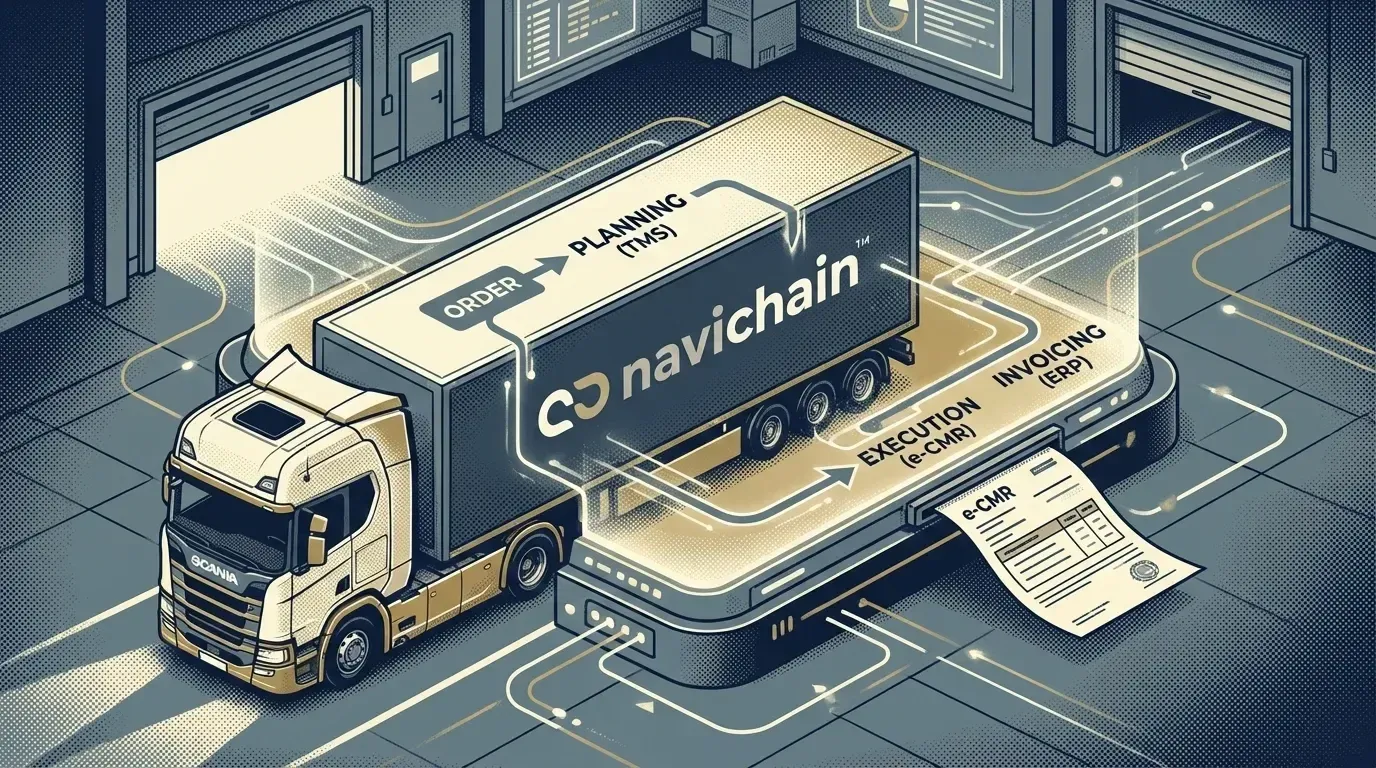
A typical example of the complex data flows and system integrations often required for a single shipment in a fragmented logistics landscape.
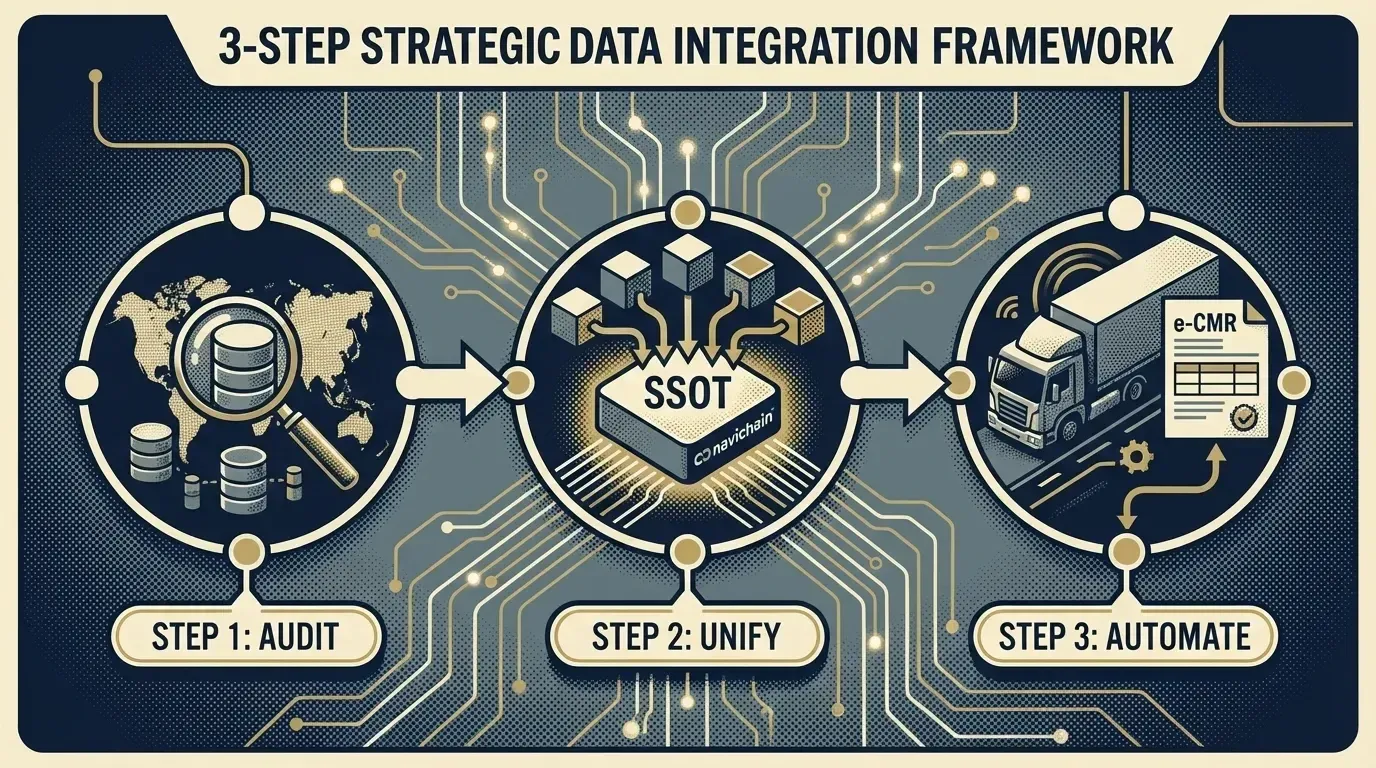
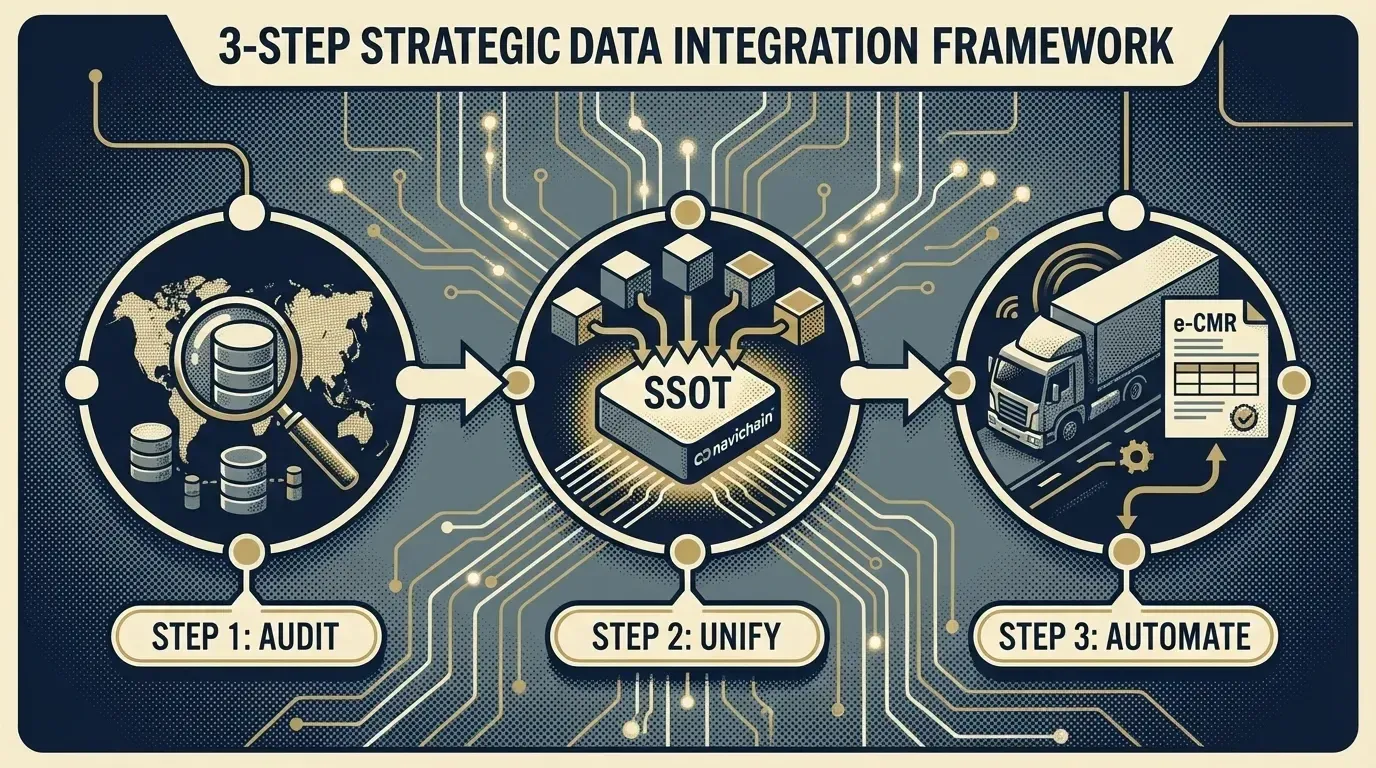
The Way Forward: A Three-Step Framework for Strategic Data Integration
Instead of "patching" the system with yet another standalone solution, the e-CMR requirement forces a strategic decision focused on efficiency and customer service.
Instead of treating e-CMR as a standalone technical challenge, it's important to adopt a strategic integration approach. The way forward involves shifting focus from technology (e-CMR) to strategy (integration). Implementing the right solution not only addresses the e-CMR requirement but also automates other processes, giving you the opportunity to deliver superior service and build lasting customer relationships.
Step 1: Mapping (Review) – Understand Your Data Landscape
Before you build a bridge, you need to understand the terrain. Start by creating a visual map of your data flows. Consider the following questions for each step in your core process (from order to invoice):
- What data is required?
- Where is this data created (system, individual)?
- Where does the data need to be transferred?
- How is the information moved (manual entry, email)?
This process will reveal bottlenecks and manual transfer points, providing insights into the "pain points" that impact efficiency and customer service.
Step 2: Consolidation (Unity) – Establish a Single Source of Truth
The primary goal is to eliminate data silos and create a Single Source of Truth (SSOT). In logistics, this means establishing a platform where TMS, WMS, order management, and invoicing are not separate, "connected" programs, but integrated modules within a single operational system.
When an order is created, it should exist in the same system used for planning transport, tracking assets (vehicles), and generating the invoice. Data is entered once and flows automatically through the entire process. This streamlines operations, reduces errors, and enables proactive customer communication.
Step 3: Automation (Automate) – Implement e-CMR as a Natural Process
With a consolidated platform (Step 2), e-CMR implementation becomes a streamlined task, not a complex integration project. It's a natural outcome of your existing workflow.
- The transport manager creates a transport order in the unified system.
- The system automatically generates an e-CMR with correct data (order details, customer information, asset details).
- The driver handles the e-CMR via a mobile device, connected to the system.
- Upon customer signature (proof of delivery), the system status updates in real-time.
- This update triggers the invoicing module to generate and send an accurate invoice automatically. The customer receives immediate notification.
In this scenario, you haven't just "implemented e-CMR." You've built an efficient logistics flow with e-CMR as an automated component, resulting in operational improvements and customer satisfaction.
From Diagnosis to Design: The Blueprint for a Customer-Centric Logistics System
This strategic shift requires a new technical foundation focused on delivering exceptional customer experiences.
Schematic representation of the integrated logistics flow, highlighting the transition from siloed systems to a unified operational framework that enables better customer service.
This strategic shift from fragmentation to integration requires a new technical foundation. To be future-proof, a modern logistics operational system must follow three fundamental principles.
Principle 1 - Unified Operational Framework
Move beyond the concept of separate "systems" (TMS, WMS, etc.). The future lies in a unified operational framework – a central nervous system for your company. The platform must be designed to handle the entire flow from order to invoice via a single interface. This approach establishes a true "Single Source of Truth," minimizes manual data entry, and enables proactive customer updates.
Principle 2 - Secure Data Architecture and Control
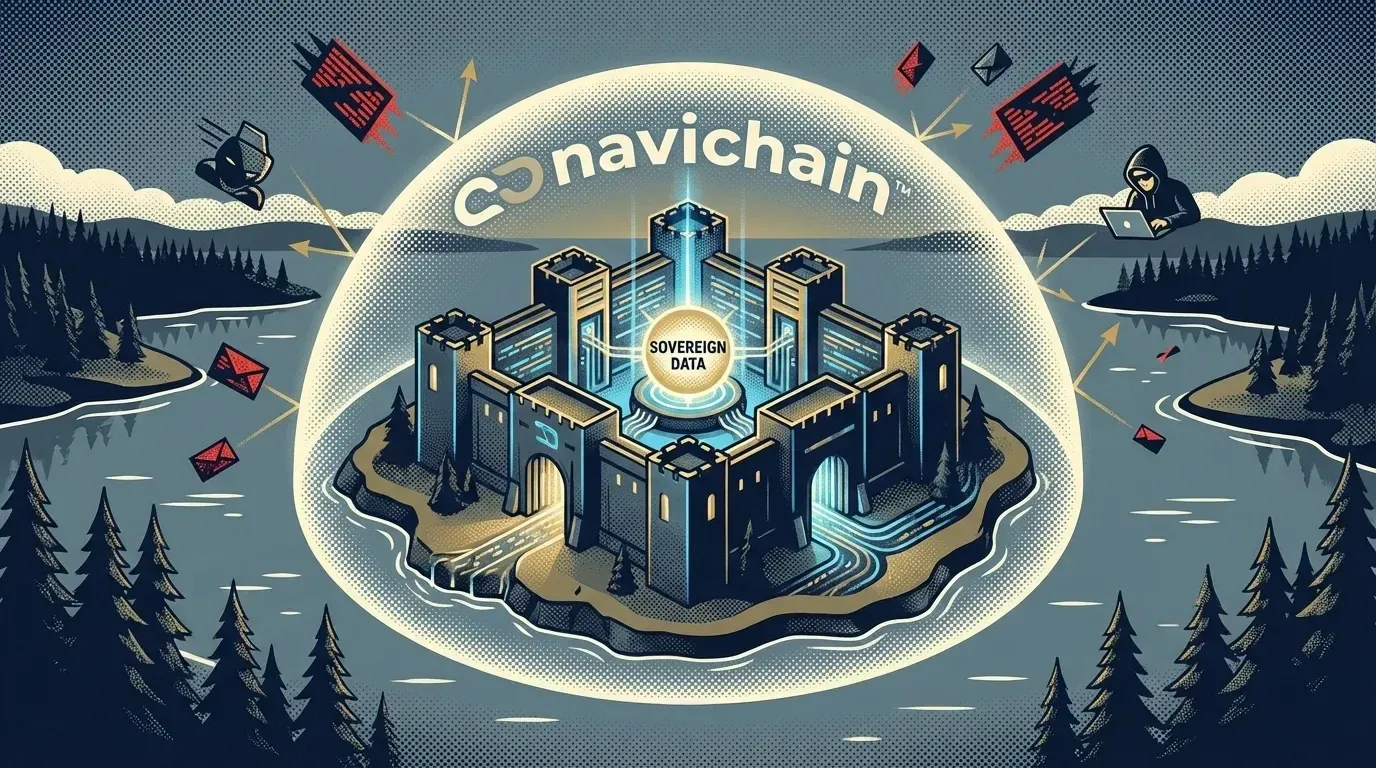
Data security and regulatory compliance are critical. A robust data strategy is essential. While data sovereignty – storing and processing data within a specific legal jurisdiction – can offer marginal benefits, the primary focus should be on robust security measures and compliance with data protection regulations.
Principle 3 - Embedded Analytical Insights
Data is only valuable if it provides actionable insights. While analytics are important, ensure they are seamlessly integrated into the unified platform (Principle 1) and comply with data protection regulations (Principle 2).
References/Sources
- International Road Transport Union (IRU): "e-CMR: The Future of Logistics" (Information on adoption and benefits) - https://www.iru.org/what-we-do/facilitating-trade-and-transit/e-cmr
- Transportstyrelsen: "Digitalization of Freight Transport" (Swedish initiatives and regulations) - https://www.transportstyrelsen.se/sv/vagtrafik/Yrkestrafik/Gods-och-buss/ (Specific reports on digitalization)
- European Commission: "Digital Transport and Logistics Forum (DTLF)" (EU framework for digital transport documents) - https://transport.ec.europa.eu/transport-themes/intelligent-transport-systems/digital-transport-and-logistics-forum-dtlf_en
- Ti Insight: "European Road Freight Transport Market Report" (Analysis of market trends, costs, and digitalization) - https://ti-insight.com/
Enabling the Blueprint: Navichain SaaS Unified Logistics Platform
The strategic blueprint described in this whitepaper – a unified operational framework and secure data architecture – is the guiding principle behind Navichain SaaS.
We recognized that haulage companies needed access to logistics technology to streamline operations and improve customer service. Navichain SaaS aims to democratize logistics technology and empower companies to thrive in a competitive landscape.
The Navichain SaaS platform delivers a unified view of TMS, WMS, order management, asset tracking, and invoicing, establishing a single source of truth for logistics operations and superior customer service.
- For Principle 1 (Unified Framework): Navichain SaaS isn't "integrated with" a TMS or WMS. It is your TMS, WMS, Order Management, Asset Management, and Invoicing. It's a unified platform that creates an immediate "Single Source of Truth" and eliminates manual data entry. This leads to increased efficiency and faster customer communication.
- For Principle 2 (Secure Data Control): The Navichain platform is hosted on our own secure infrastructure (Self-Hosted) in Sweden. Your data remains within Swedish/EU jurisdiction. This provides maximum data security and compliance, giving you full control over your operational information.
Implementing e-CMR in Navichain SaaS is a standard feature, a natural consequence of having a unified platform. Stop patching systems and start building a foundation for efficiency and customer satisfaction.
Navichain SaaS: A unified platform encompassing TMS, WMS, order management, asset tracking, and invoicing, ensuring a single source of truth, streamlined operations, and enhanced customer experiences.
Navichain's unified SaaS platform, hosted on secure Swedish infrastructure, integrates TMS, WMS, order management, asset tracking, and invoicing to provide a single source of truth and exceptional customer service.
Sources
- International Road Transport Union (IRU). (2024). e-CMR: The Digital Future of Logistics.
- European Commission. (2025). Electronic Freight Transport Information (eFTI).
- Ti Insight. (2024). Digital Transformation in the European Road Freight Market.
Ready to Optimize Your Supply Chain and Increase Customer Satisfaction?
Conclusion
In summary, we see that the key to successful e-CMR implementation lies not just in the technology, but in a well-thought-out and integrated system. Navichain offers exactly this: a comprehensive solution that not only handles e-CMR seamlessly but also revolutionizes your entire logistics operation. By breaking down silos and creating a "Single Source of Truth," we unlock the potential for increased efficiency, improved customer communication, and maximum data security. The step towards the future of logistics is to embrace a unified platform. Together, we build a stronger, safer, and more competitive future for Swedish logistics. Dare to take the step - the future is here!