Operational Paralysis: Why Digital Tools Fail (And the Unified Framework)
🇬🇧 Read this article in English
Margins are shrinking and competition is increasing, forcing pragmatic logistics managers and SME owners in Scandinavia to digitize. E-CMR promises to reduce administration and errors, but many still struggle to implement it effectively. This white paper explores the paradox and provides practical solutions for successful digitization.
For the pragmatic logistics manager or SME owner in Scandinavia, the directive is clear: digitize to survive. Margins, already razor-thin at 2–5%, are eaten up by soaring fuel costs, administrative overheads, and intense competition. You are told that digital tools, particularly the electronic consignment note (e-CMR), are the answer. They promise to cut administrative time, reduce errors, and speed up billing cycles.
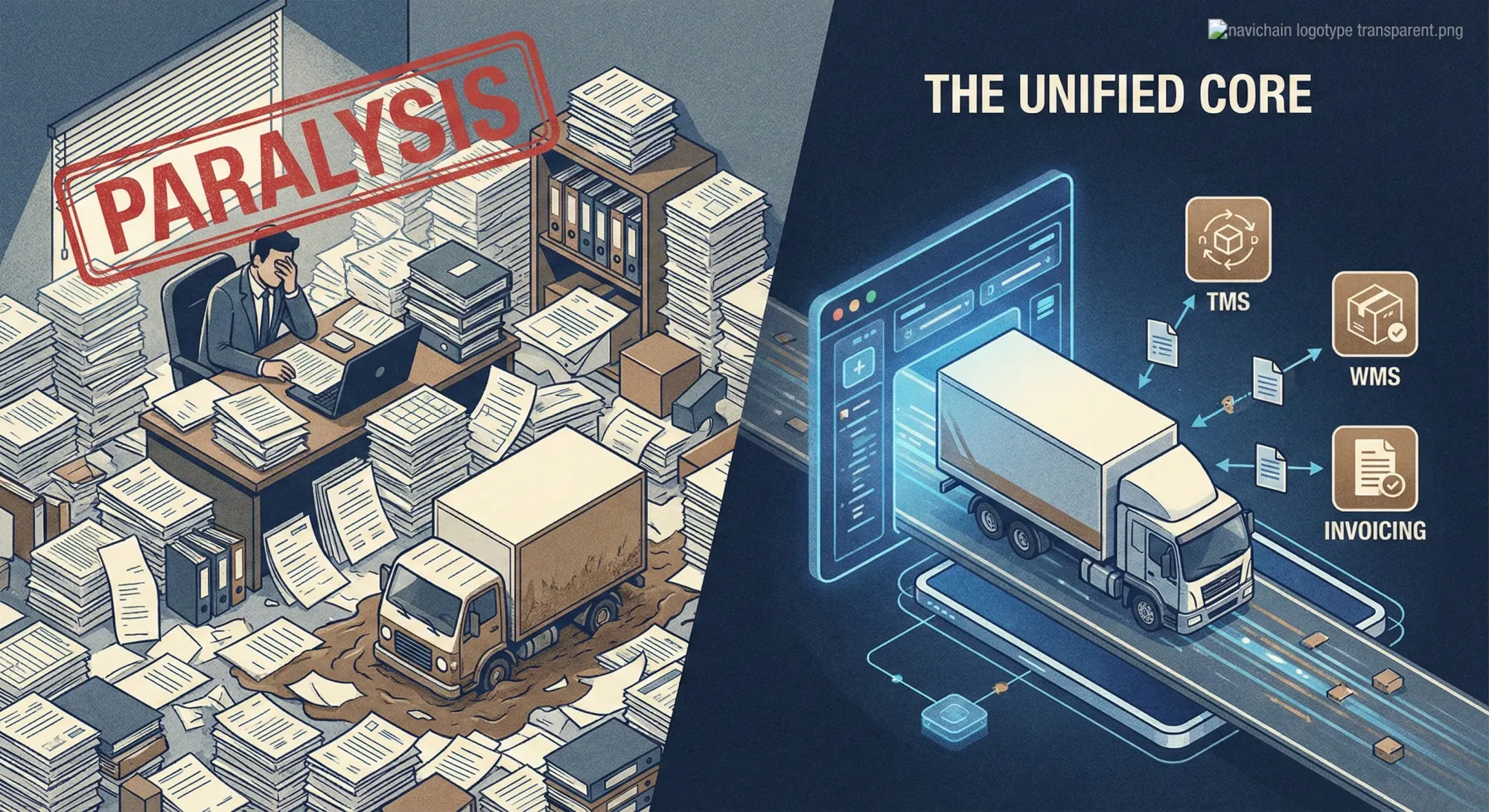
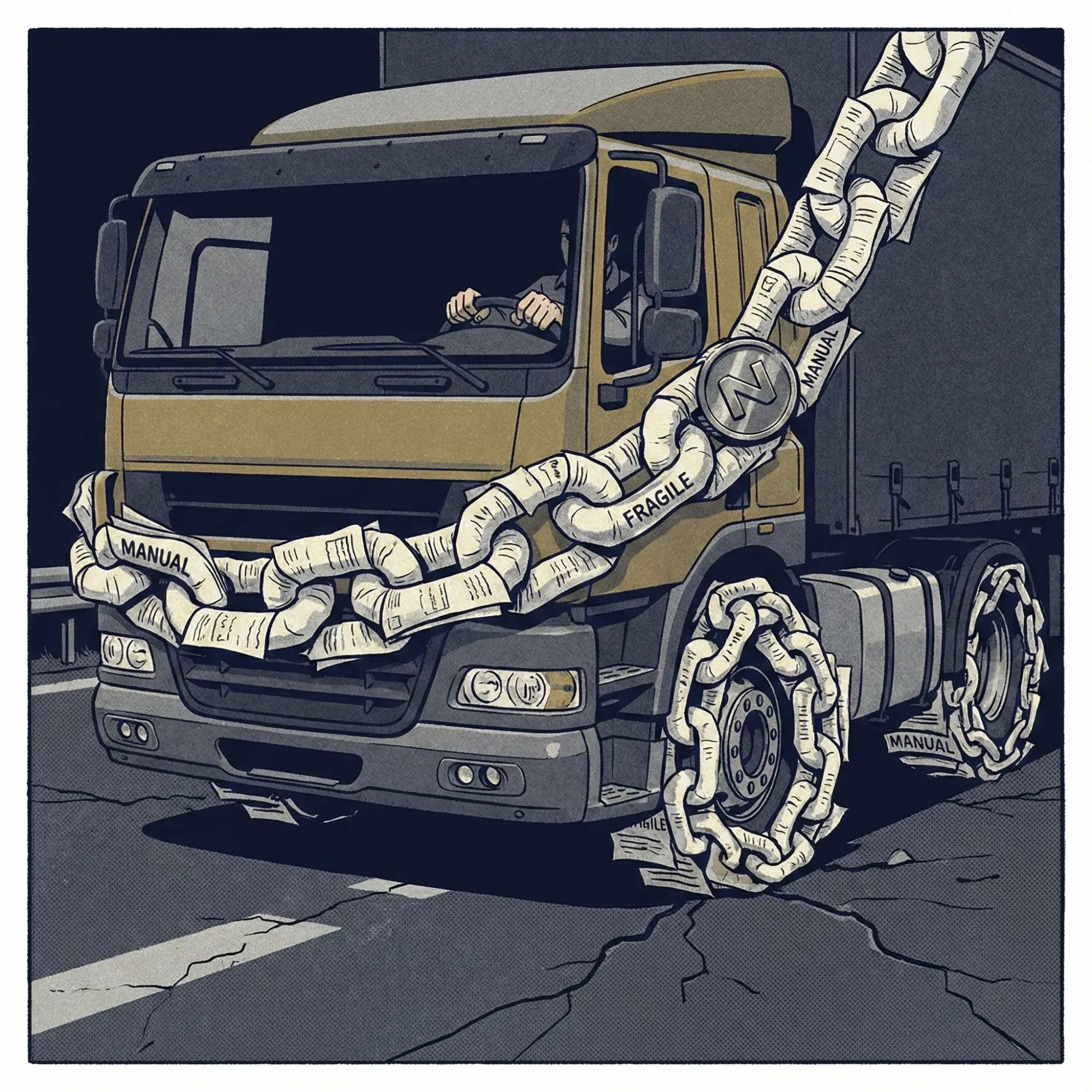
Illustration of operational paralysis: The difficulty of implementing digital tools amidst a mountain of paperwork.
Introduction: The Paradox of Digital Implementation
For the pragmatic logistics manager or SME owner in Scandinavia, the directive is clear: digitize to survive. Margins, already razor-thin at 2–5%, are eaten up by soaring fuel costs, administrative overheads, and intense competition. You are told that digital tools, particularly the electronic consignment note (e-CMR), are the answer. They promise to cut administrative time, reduce errors, and speed up billing cycles. Despite this, a paralyzing paradox has emerged. Your team is 'drowning in paper' – so occupied with handling manual manifests, processing physical proof of deliveries (PODs), and chasing invoices that they have zero capacity to implement the very tools designed to save them.

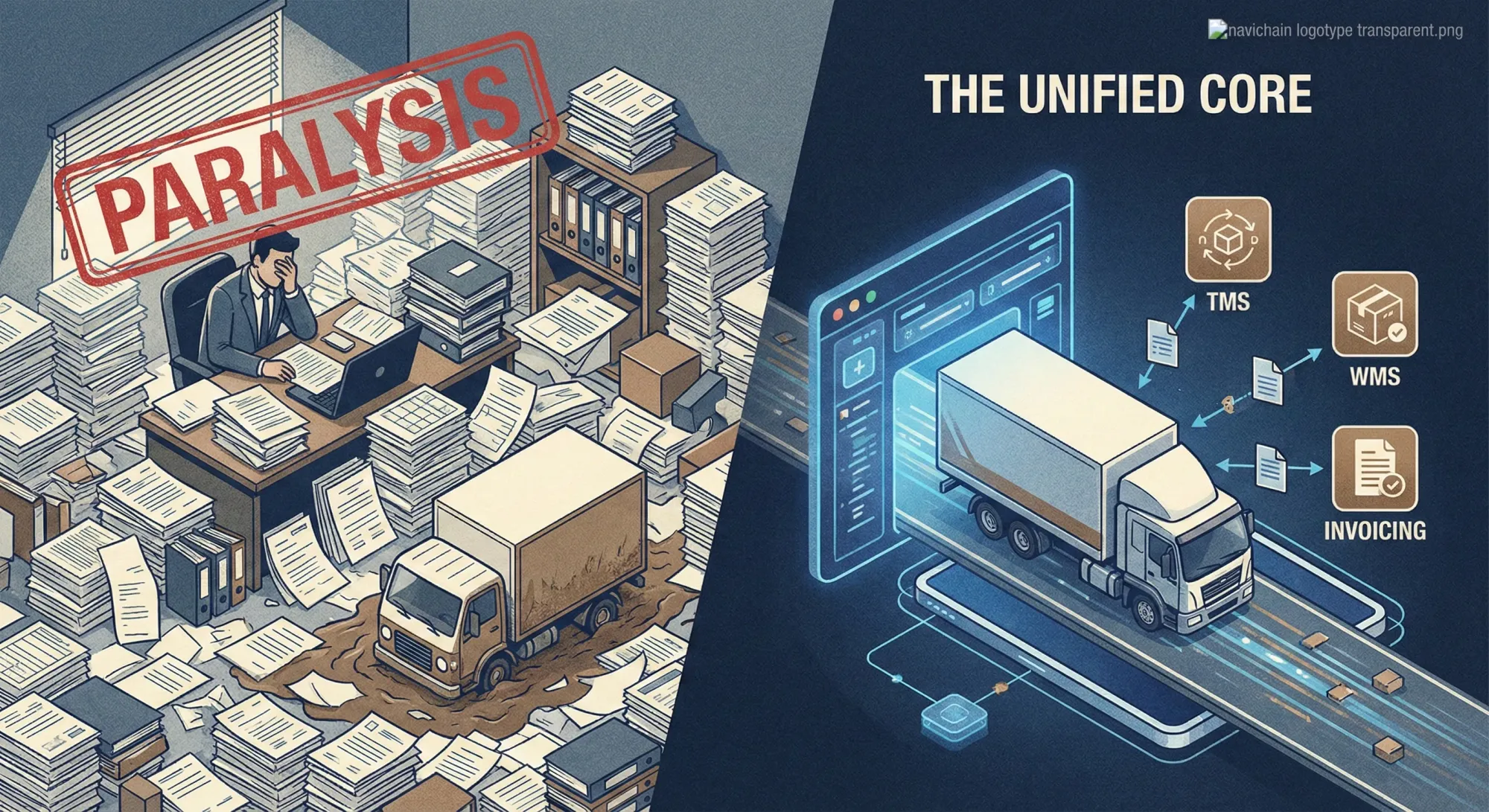
An image of overwhelming paperwork, illustrating the operational paralysis that prevents logistics companies from digitizing.
You are urged to implement e-CMR, but you find it 'hard to get started'.
This is not a technology failure. It is operational paralysis. It is the state of being so overwhelmed by the friction of current processes that the business loses the ability for future improvement. Operational Paralysis: A visual representation of the challenges with digital transformation in logistics. Purchasing a standalone e-CMR solution in this situation is like trying to install a new high-performance engine while the car is speeding down the highway with three flat tires. It is not only difficult; it is doomed to fail, create yet another data silo, and more frustrated staff. This white paper argues for a new strategy. It provides a strategic framework for change management that breaks the paralysis. The solution is not to chase shiny new tools like e-CMR, but to first build a stable, unified operational core. We will demonstrate that by first unifying your core systems, you eliminate paperwork at the source and free your team to implement – and actually benefit from – new digital tools.
Dissecting the Paralysis: Why Change Fails
The feeling of 'drowning in paper' is a symptom. The disease is a combination of fragmented systems, hidden costs, and human change fatigue. To solve this, we must first make a correct diagnosis of the root causes.
The True Cost of Paperwork: More Than Just Trees
We often miscalculate the cost of paper by limiting it to printing and storage. The strategic cost is much greater:
Cost comparison between paper-based and digital consignment note handling.
The time your team spends finding, archiving, and correcting paper-based errors is time they cannot spend on optimizing routes, improving customer service, or implementing change. This is the 'paralysis' – the opportunity cost of inefficiency.
Cost comparison: Paper-based vs. digital consignment note handling.
The Mistake of 'Fragmented Solutions'
When managers are confronted with this, many make what seems like a logical mistake. They see a paper problem (consignment notes) and buy a point solution (an e-CMR app). This 'fragmented solution' is the primary reason implementations fail. Why? Because the new e-CMR app does not talk to the old TMS. And the TMS does not talk to the WMS. And neither of them talks to the billing program. You have not solved the paper problem; you have only moved it. Now your team must manually take data from the e-CMR app and re-enter it into the TMS and billing system. You have not reduced the workload; you have increased its complexity and added 'yet another system' to an already exhausted team. This is the fast track to change resistance, shadow IT (reverting to old spreadsheets), and a failed digital initiative.
The Human Factor: Overcoming Change Fatigue
Your drivers, dispatchers, and accounting staff are not anti-digital. They are anti-friction. They have been burned by previous 'upgrades' that made their jobs harder. When you are 'drowning in paper', your cognitive load is maxed out. You are in a constant state of reactive firefighting. A successful change management strategy must first and foremost reduce the immediate burden. It cannot ask a team that is already drowning to start taking swimming lessons. It must offer a life raft. Any digital tools that require complex integration, manual data transfer, or running parallel paper systems 'just in case' will be rejected – not because the team is stubborn, but because they are rational. They are protecting their own ability to get today's work done.
The Way Forward: The 'Core-First' Framework for Digitization
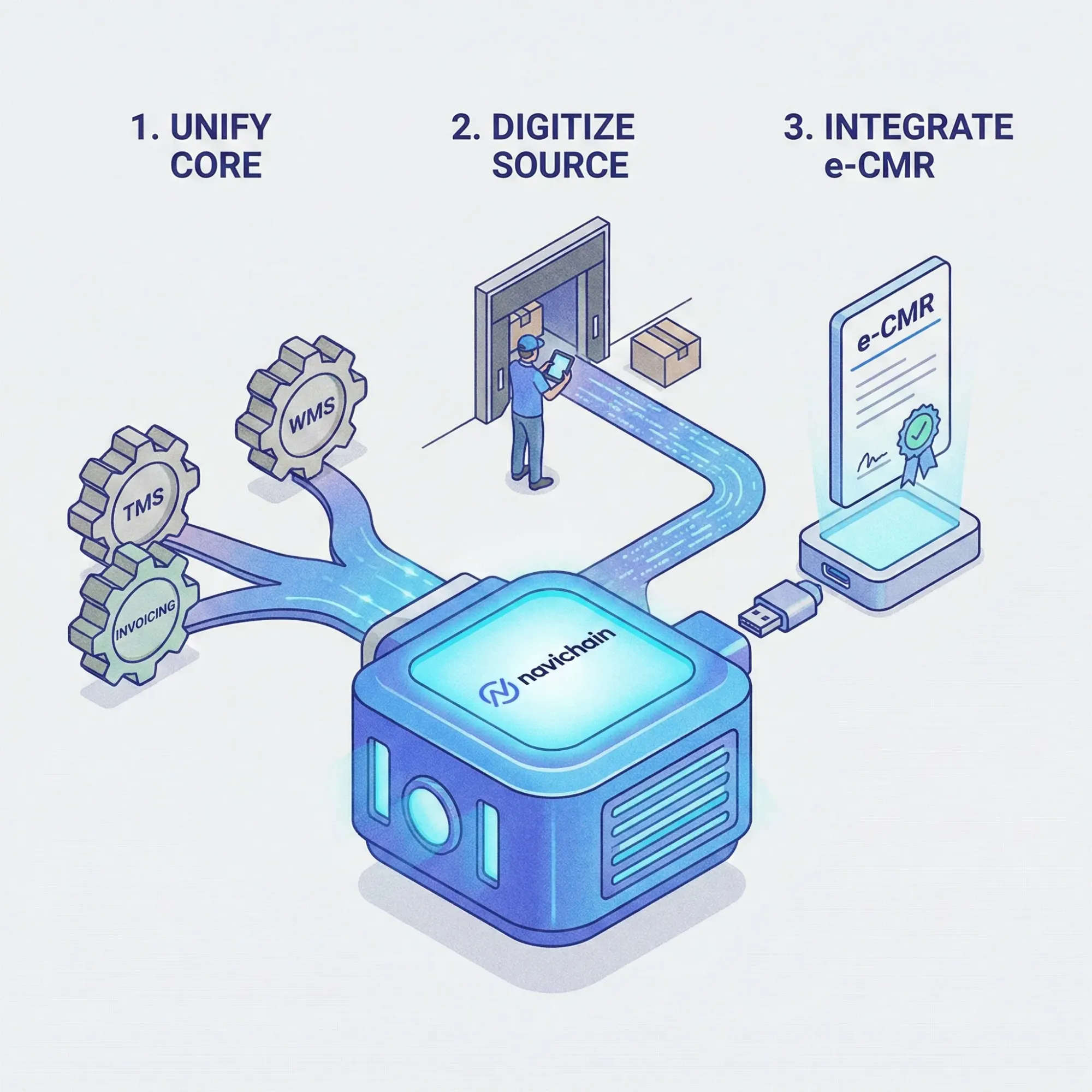
To break operational paralysis, you must flip the implementation logic. Stop trying to digitize the edge (like e-CMR) and stabilize and unify the core first. We propose a 3-step change management framework that builds momentum by delivering immediate, tangible relief.
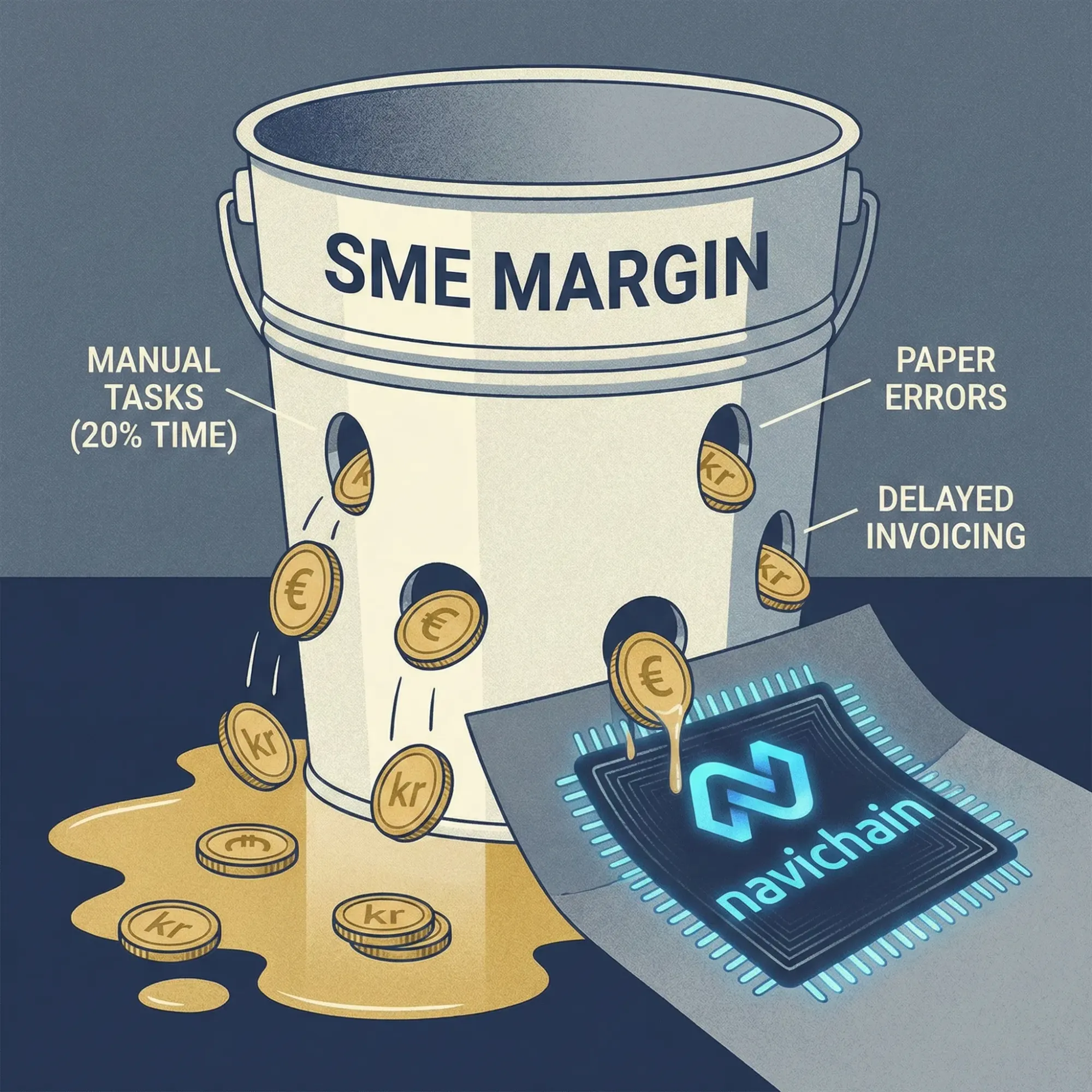
The diagram illustrates the 'core-first' framework, emphasizing the importance of unifying the central operational systems (TMS, WMS, Billing) to reduce friction and facilitate digitization.
Step 1: Unify the Operational Core
The 'core' of every haulage operation is the data flow from Order to Payment. This typically involves three silos: Transport Management (TMS), Warehouse Management (WMS), and Billing/Finance. The friction between these systems is the primary source of all paperwork and manual data entry. The strategic goal: Consolidate these functions into a single, unified operational system. When an order is created, it should flow seamlessly to dispatch (TMS), to the picking list (WMS), to the driver's app, and, upon delivery confirmation, immediately trigger a complete, accurate invoice in the same system. This single act of unification is the life raft. It immediately eliminates the triple data entry. It pulverizes the internal 'paperwork' of passing consignment notes between departments. It creates a single source of truth and ends debates about 'which spreadsheet is correct?'. This frees up the first sliver of time and mental energy your team needs for the next step.
Step 2: Digitize at the Source
With a unified core, you can now attack the external paperwork. The goal is to capture data digitally once, at the source. Instead of a standalone e-CMR app, this means your unified platform's driver app captures the digital proof of delivery (POD). The driver gets a signature, presses 'complete', and that data is immediately available to the accounting team, customer service representative, and customer portal. Notice what has not been mentioned? e-CMR. You achieve 90% of the value of 'paperless' without the complexity of implementing a new, third-party standard. You solve your internal paper problem first. This builds momentum and demonstrates immediate value. Your team's workload decreases. Your billing cycle accelerates. Your data accuracy skyrockets. Change is not a burden; it is a relief.
Step 3: Integrate Peripherals (like e-CMR) Last
Now, and only now, is your organization ready for e-CMR. You have a stable, unified, and internally paperless core. Your team is no longer drowning. You have capacity. At this stage, integrating a formal e-CMR protocol is no longer a complex, standalone project. It is a simple, low-friction integration. It becomes a 'plugin' to your unified platform.
Schematic overview of e-CMR integration into a unified platform.
The data it requires is already in your system. The data it generates flows directly into your existing workflow.
Implementation is now easy because the 'change' is invisible. It is just a new, compatible document format generated by the system everyone already uses and trusts. You have successfully navigated change by making the 'new way' the path of least resistance.
From Diagnosis to Design: The Blueprint for a Resilient Operational System for Logistics
This 'Core-First' framework is not just a theory of change management; it is a design specification. To execute this strategy, every platform you consider must be built on three core principles. These are the non-negotiable foundations for a resilient, efficient, and compliant SME logistics operation in Europe.
Principle 1: Unified Operational Fabric
Your operation must run on a single, integrated system that functions as a central nervous system. This means your TMS, WMS, Equipment Tracking, Billing, and Order Management are not separate software packages that are 'bolted together', but are natural components of one and the same platform. Data entered once – such as an order – must flow without friction or re-entry through dispatch, warehouse, transport, delivery, and billing. This creates the 'single source of truth' that is the only permanent antidote to paperwork and operational silos.
Principle 2: Secure Data Architecture and Data Control
For European SMEs, data is your most valuable asset and your greatest responsibility. True operational resilience requires full control over your data environment. This is non-negotiable. Your platform must ensure that your data is stored and processed under your own region's legal jurisdiction (e.g., within Sweden/EU) on secure, sovereign infrastructure. This is the only way to guarantee simple GDPR compliance and protect your business from the legal complexities and risks of international data transfers. Data control is the foundation of trust – for you and your customers.
Principle 3: Embedded Analytical Intelligence
Efficiency is not a one-time action; it is a continuous process.
Improved outcomes through unified data analysis.
A schematic example of how an integrated system enables unified data analysis and thus improved outcomes within the logistics operation.
When your data is unified (Principle 1) and secure (Principle 2), you must have the ability to analyze it. This requires an embedded intelligence or integrated AI layer that runs within your secure environment. This intelligence must be able to analyze your unified operational data – from fuel consumption and driving times to picking times and billing cycles – to identify unique, actionable efficiencies. This is not about 'big data' in the abstract; it is about getting concrete answers to critical questions like 'What is the true profit/loss on my most important customer?'.
References/Sources
- International Road Transport Union (IRU). (2024). e-CMR: The Digital Future of Transport Documents. https://www.iru.org/what-we-do/facilitating-trade-and-transit/e-cmr
- European Commission. (2023). Regulation on electronic transport information (eFTI). https://transport.ec.europa.eu/transport-modes/road/efti_en
- Ti Insight. (2024). European Road Freight Market Report. (Provides data on margins and operating costs in the European logistics sector). https://ti-insight.com/
- Gartner. (2024). Change Management Models for Digital Transformation. (Discusses the human-centered barriers to technology adoption). https://www.gartner.com/
Enabling the Blueprint: Navichain SaaS Unified Logistics Platform
This white paper has outlined a strategic framework for change and a 3-principle blueprint for a resilient operational system. The Navichain SaaS platform was designed from the ground up to be the engine that drives this blueprint for Scandinavian SMEs. We do not just sell software; we deliver a unified, secure, and intelligent operational fabric.
- For Principle 1 (Unified Operational Fabric): Navichain is not a collection of modules. It is a single, unified logistics operating system. Your Transport Management (TMS), Warehouse Management (WMS), Equipment Tracking, Billing Management, and Order Management function as one unit, from one database, with one login. This is the "Core-First" principle in practice, eliminating data silos and paperwork at the source.
- For Principle 2 (Secure Data Architecture and Data Control): We embody this principle. The entire Navichain SaaS platform is hosted on our own secure infrastructure in Sweden. This is our key differentiator. It guarantees maximum data security, control, and simple GDPR compliance. Your data never leaves Swedish/EU jurisdiction, giving you full operational control and freeing you from the complexity of international data transfers.
- For Principle 3 (Embedded Analytical Intelligence): Because your data is unified and secure on our platform, our integrated AI can start working. By running securely on our Swedish infrastructure, this AI layer performs deep, secure data analysis on your consolidated operational data, unlocking unique efficiency gains in route planning, resource utilization, and profitability that are impossible to see when your data is fragmented.
Navichain: The unified logistics platform for the haulage companies of the future.
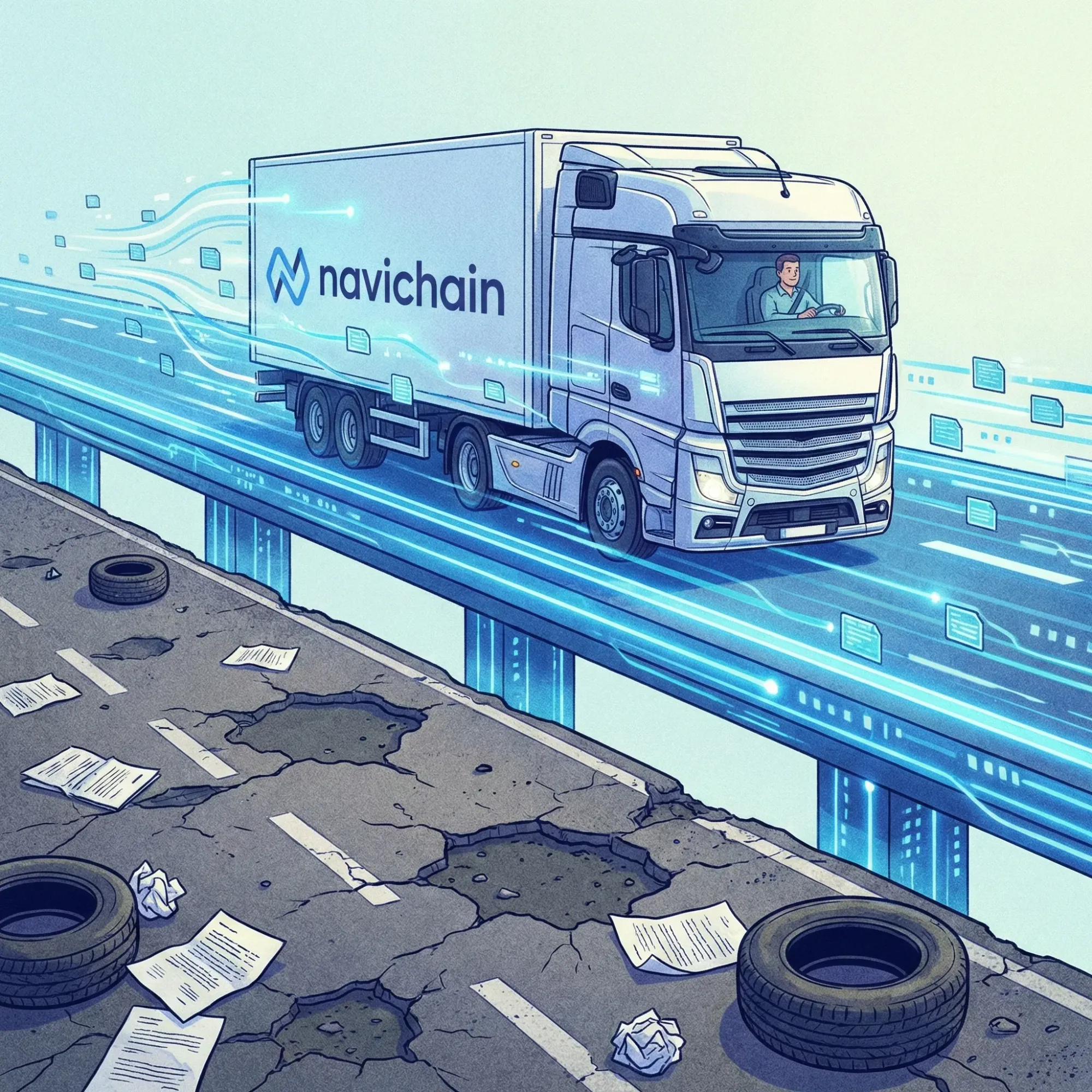
By unifying data and processes, Navichain enables real-time insights and streamlines decision-making, leading to concrete improvements for logistics companies.
Our mission is to democratize logistics technology. We are here to help Scandinavian SMEs break the cycle of operational paralysis, build a resilient foundation, and finally make digitization work.
Navichain: The unified logistics platform securely hosted in Sweden, guaranteeing data control and simple GDPR compliance for Scandinavian SMEs.
Navichain: An overview of the unified platform that enables seamless logistics management for haulage companies, creating transparency and efficiency throughout the value chain.