Your TMS communicates with all the systems you already use - and opens the door to new business

There is a word for the feeling of having a new good system that still doesn't communicate with the rest of the business: frustration. You invoice in the TMS. Then you key in the same invoice in the accounting system. Then you manually reconcile every month. The customer paid — but the payment doesn't show up in the right system. The VAT is wrong because you accidentally categorized a trip. It's not a haulage company problem. It's an integration problem — and it's one of the most common reasons why good systems are abandoned after three months.
But there is a dimension of this problem that is rarely discussed: integration isn't just about the accounting matching. It's about your capacity being visible in the right places at the right time — and being able to receive transport assignments, bid dynamically, and win deals, without having to manually monitor a dozen channels. Navichain is designed so that this doesn't happen.
"It's not enough to have the right system. The systems must talk to each other — otherwise you reinvent the wheel every day."
— Navichain Insights, April 2026 · blog.navichain.seDigital stress: the silent cost of silo systems
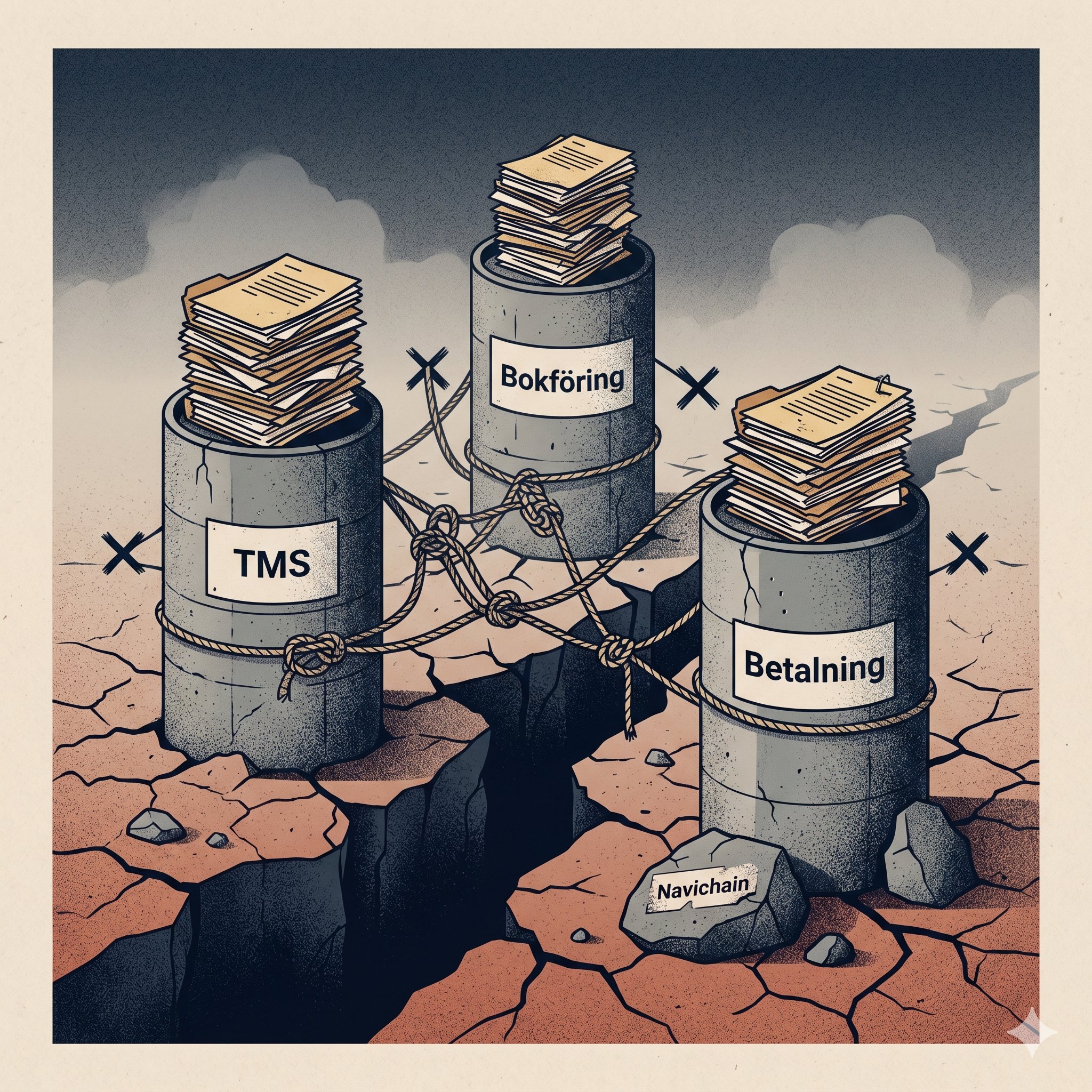
Navichain's blog describes the phenomenon aptly as "digital stress" — the invisible enemy of the modern logistics company. It's not a broken truck that stresses the transport manager in 2026. It's a broken link. A login that doesn't work. An export that doesn't match the import. Five separate systems that all have "the truth" about the deal — but five different versions of it.
Every time data is manually copied from one system to another, there is a risk of errors. Every time a system is not updated in real-time, there is a decision made on outdated information. And every hour spent reconciling and synchronizing is an hour not spent running the business — or actively seeking and winning the next assignment.
Navichain as Sovereign Hub — not just a TMS
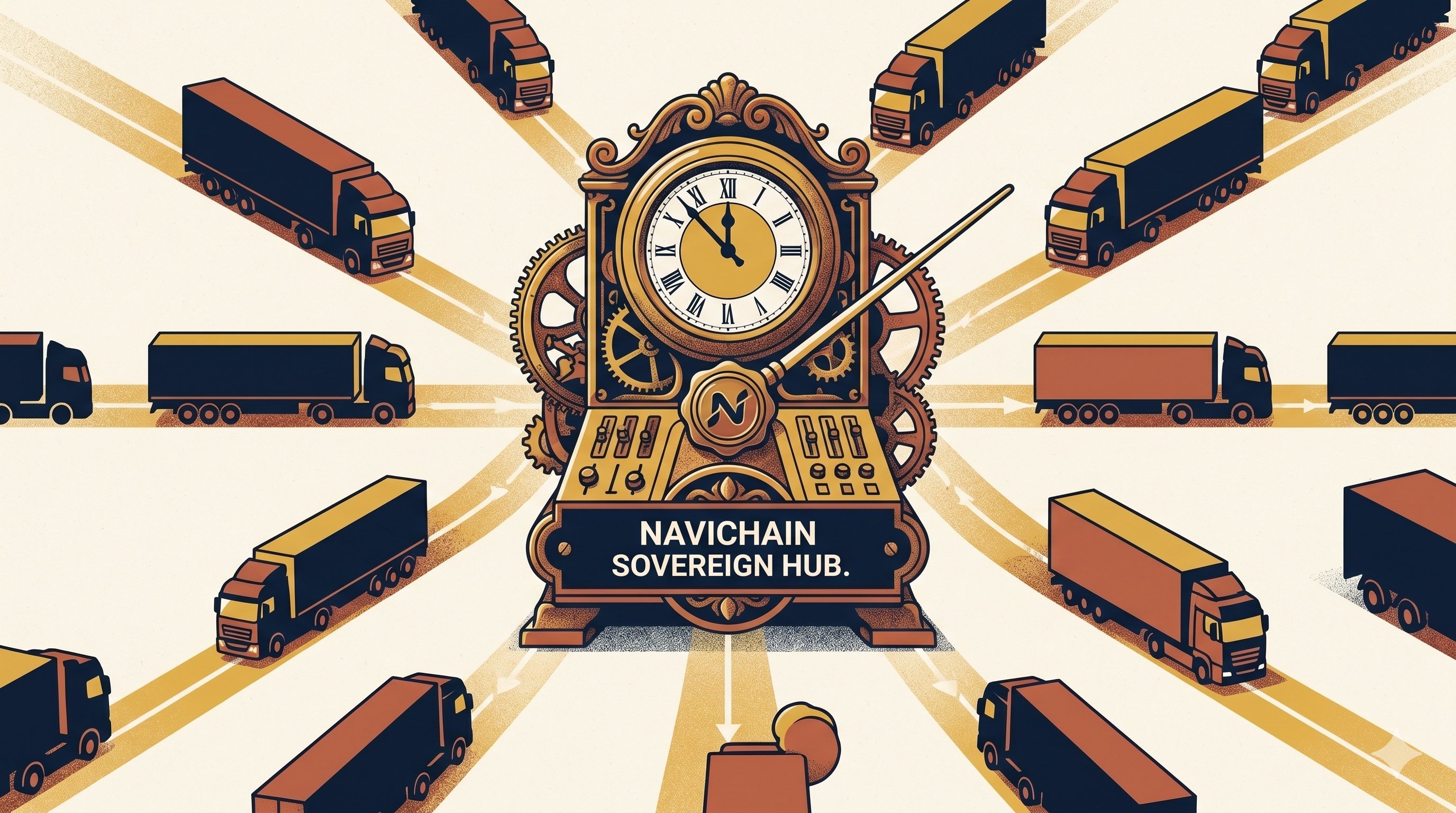
It's no coincidence that Navichain's philosophy is visualized as a clockwork at the center of converging roads. The platform is designed as a sovereign hub — a sovereign node to which all systems, all channels, and all actors in your business connect. This means that you don't replace your accounting system, your payment solution, or your freight tool. You keep them — and let Navichain tie them together.
But "sovereign" is about more than system integration. It's about your data staying on Swedish servers, outside the jurisdiction of the US CLOUD Act. It's about you — not the platform — deciding what information is shared with whom, and on what terms. It's the foundation for the dynamic brokering that sets Navichain apart from a regular transport planner.
The new perspective: integration as a business channel
Here's where it gets interesting — and the perspective that is all too rarely raised in the discussion about TMS integrations. The links to Fraktjakt, LogTrade, Shiplink, Mymo, and similar actors are not just about the accounting matching or freight data flowing correctly. They are about you as a carrier being able to offer your services and automatically receive transport assignments through these channels — without having to be logged in, without having to monitor a stock market-like stream of incoming requests.
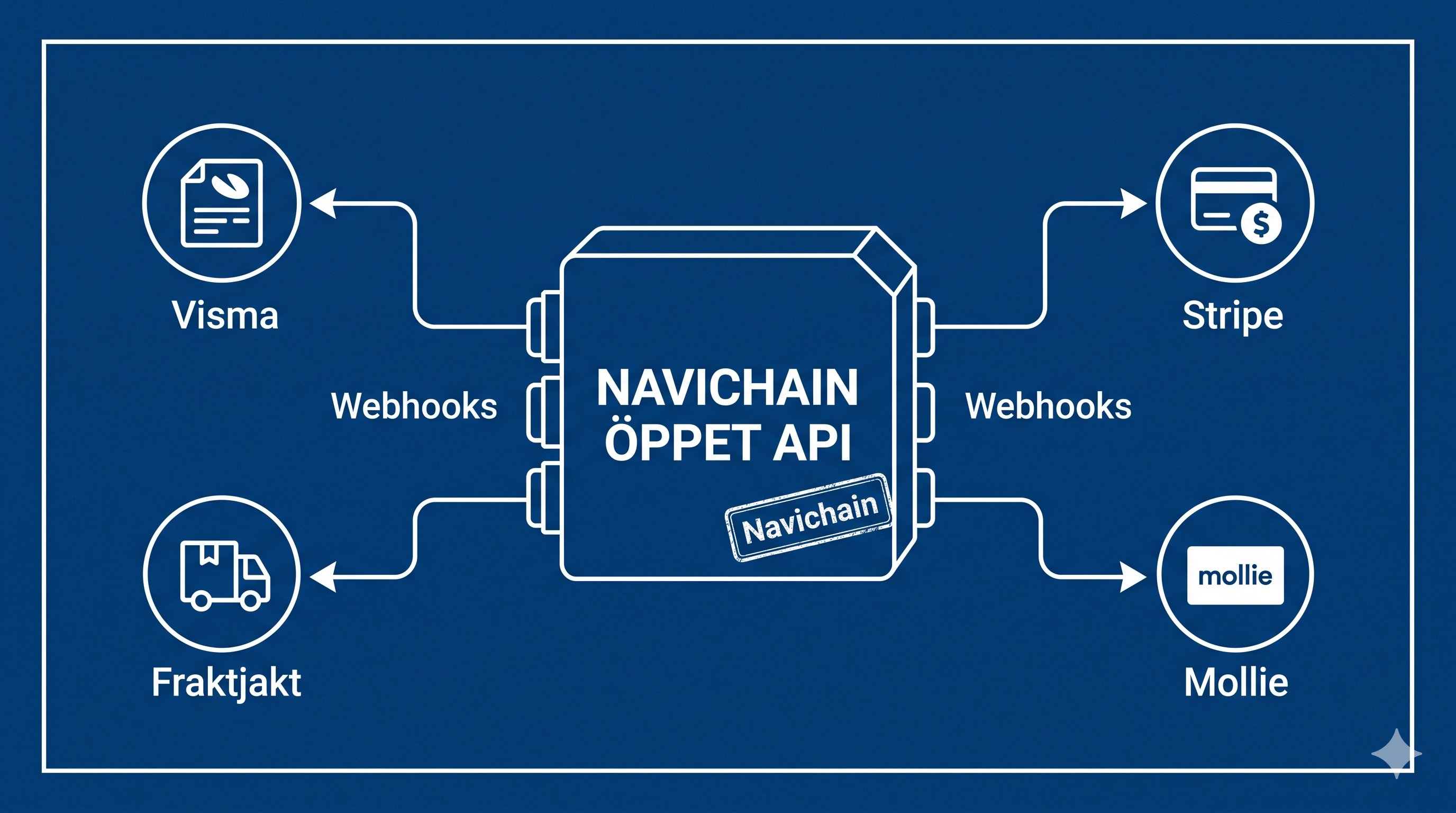
It's a fundamental change in how a haulage company traditionally works with capacity sales. Historically, it has been about relationships, phone, and email. With Navichain's integration layer, you can instead let the system work for you — it exposes your available capacity to the right channels, receives requests, and handles bidding, all with the precision level you define.
Your capacity sells itself — on your terms
The integration with Fraktjakt, LogTrade, Shiplink, and similar platforms means that you as a carrier not only send data to these systems — you receive assignments through them. Navichain handles the entire flow: from incoming request to dynamic bid to confirmed booking.
The critical point: you don't need to expose your full price list. Navichain handles dynamic bidding in real-time — based on the rules and parameters you set — and can place bids automatically without you manually being involved in every request. The system knows when your capacity is free, what the margins allow, and what the market price is right now.
- Automatic bids on Fraktjakt and Shiplink without manual handling
- Capacity exposure via LogTrade EDI to shippers and freight forwarders
- Rule-based dynamic pricing — no full price list exposed
- Real-time brokering with margin control and price parameters
- Mymo integration automatically matches trip data to payroll
- Confirmed booking flows directly into TMS and accounting
Navichain's integration ecosystem — the big picture
Navichain is built with integration as a fundamental principle. This means that the system can be directly connected to the accounting, payment, freight, and personnel management systems already used in your business — without intermediate solutions and without multi-year integration contracts. Invoicing flows directly into accounting. Payments are registered automatically. And capacity is sold dynamically via the right channels.
What flows automatically — event by event
| Event | Flows to | Type | Result |
|---|---|---|---|
| Delivery signed (sign on glass / eCMR) | Accounting (Visma / Wint) | Automatic | Invoice is created and booked with the right account and VAT |
| Invoice approved in Navichain | Stripe / Mollie | Automatic | Payment link is generated and sent to the customer |
| Customer pays via Stripe | Accounting | Automatic | Payment is matched to the invoice and booked directly |
| Capacity available in TMS | Fraktjakt / LogTrade / Shiplink | Automatic | Capacity is exposed in the right channels without manual action |
| Incoming freight request | Navichain Dynamic Brokering | Rule-based | Automatic bid is placed based on your margin rule — no price list exposed |
| Bid accepted / assignment confirmed | TMS + Accounting | Automatic | Trip is scheduled, documentation for invoicing is created |
| EDI message via LogTrade | Navichain TMS | Automatic | Booking data is imported without manual entry |
| Trip completed → Mymo | Payroll & HR | Soon active | Trip documentation is automatically matched to payroll processing |
| Deviation or addition is registered | Accounting | Automatic | Credit note or additional post is created directly |

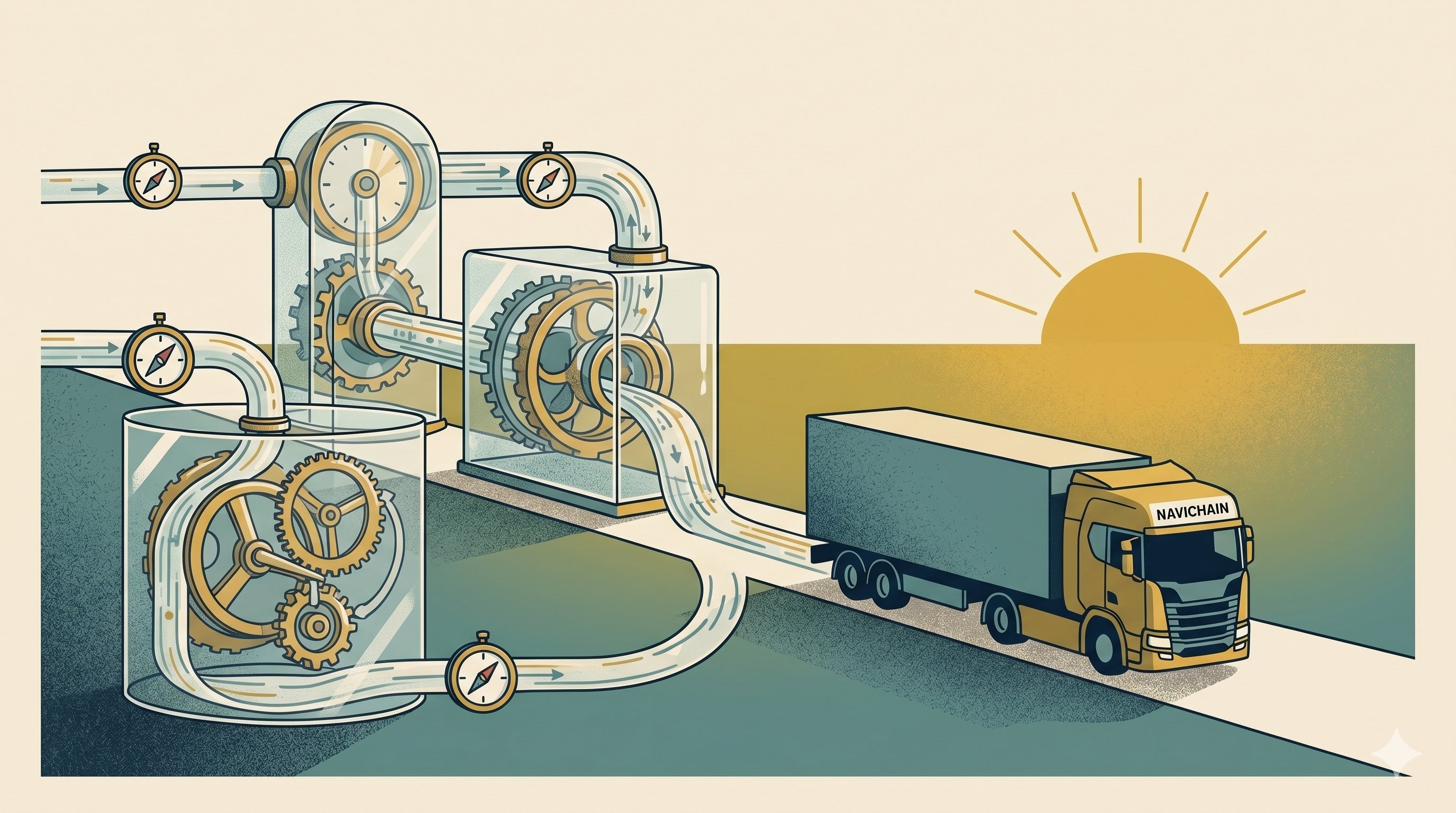
Stripe: paid within hours, not weeks
Navichain is directly integrated with Stripe — the world's leading payment infrastructure. This means that you, directly from an invoice in Navichain, can send the customer a secure payment link. The customer clicks, pays with card or bank transfer, and the money is on its way to your account — without waiting for bank giro, without manual matching, and without reminder rounds.
- Card payment directly from the invoice
- Bank transfer via Stripe Link
- Automatic payment confirmation
- Automatically matched to the invoice
- Flows into accounting directly
- Support for multi-currency
The combination of Navichain's automatic invoicing and Stripe's payment infrastructure makes it possible to go from delivered service to received payment in hours — not weeks. It's not a feature. It's a cash flow revolution.
The open API: connect exactly what you want
No list of built-in integrations is complete for all businesses. You might have an industry-specific ERP. You might run an e-commerce platform that should automatically trigger transport bookings. You might want to build your own reporting tool that pulls data directly from your TMS — or a custom bidding system for a niche freight channel. All this is possible with Navichain's open REST API.
# Get all active bookings via API
GET /api/v1/bookings?status=active
Authorization: Bearer {your_api_key}

# Create a new booking programmatically (e.g. from e-commerce)
POST /api/v1/bookings
Content-Type: application/json

# Configure dynamic brokering rule
POST /api/v1/brokering/rules
Body: { "channel": "fraktjakt", "min_margin_pct": 12, "auto_bid": true }

# Webhook — Navichain tells you when something happens
POST https://your-system.se/webhook/navichain
X-Navichain-Event: bid.accepted | delivery.signed | payment.received
Fraktjakt, LogTrade, Shiplink, and Mymo — business channels, not just connections
Fraktjakt is one of Sweden's leading freight exchange services. The integration means that haulage companies can compare and book freight directly from the TMS interface — but crucially, also that your available capacity is visible on Fraktjakt and that you can automatically receive and respond to requests with dynamic bids. You define margin requirements and parameters. Navichain handles the rest.
LogTrade adds EDI capacity to the ecosystem. In addition to the technical data exchange, the EDI connection means that you as a carrier are visible in LogTrade's network of shippers and freight forwarders — which opens up the possibility of automatically receiving assignments from actors that otherwise require manual contact.
Shiplink is another freight marketplace where Navichain's dynamic brokering makes it possible to automate capacity sales. When you have free capacity on a certain route, the system can actively expose this to Shiplink's buyers and place bids — without you having to expose your regular price list.
Mymo addresses one of the most time-consuming administrative burdens: the link between trips driven and payroll processing. When the integration is launched, trip data flows directly from Navichain to Mymo's payroll and HR platform — without Excel export, without manual matching.
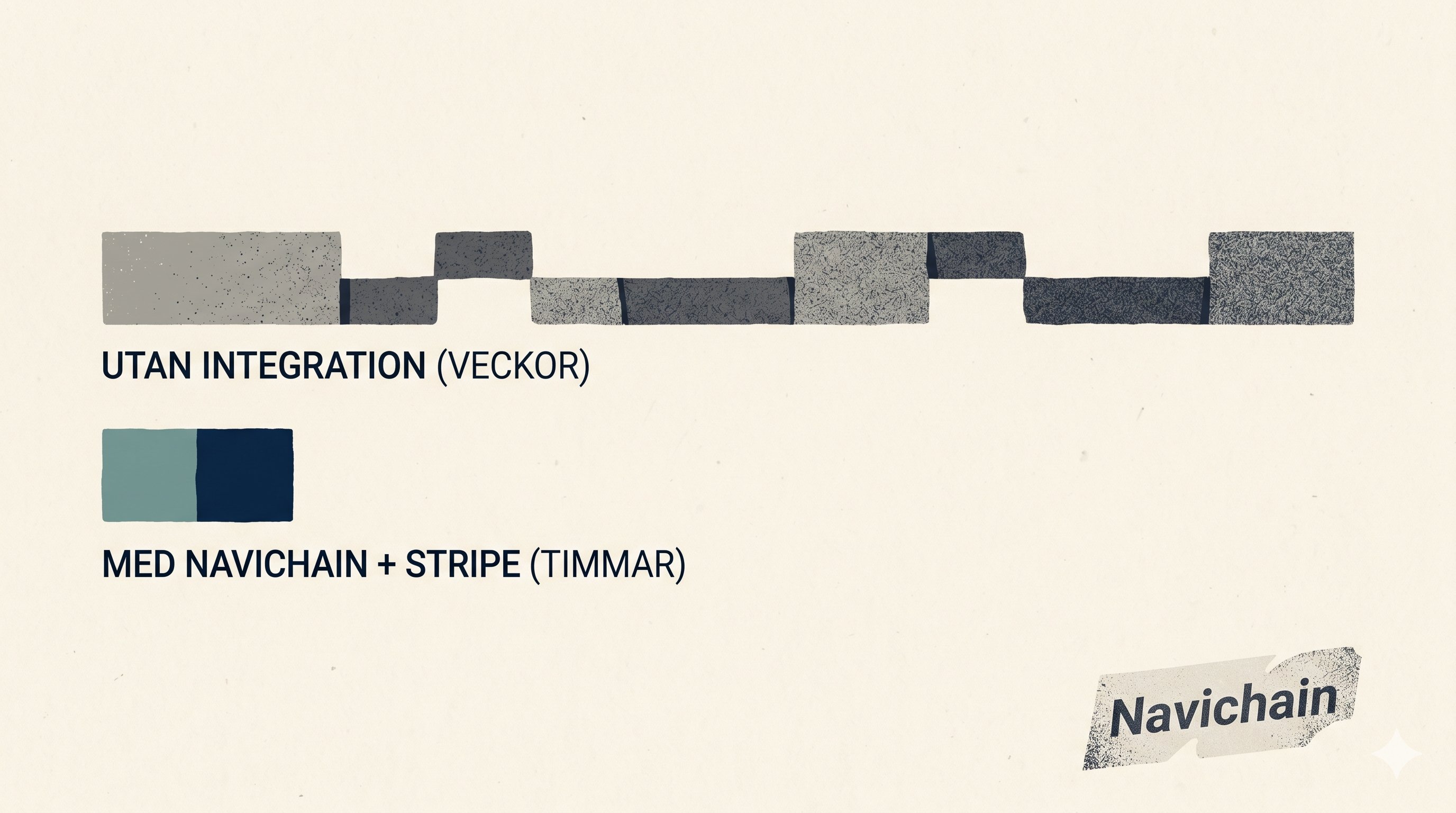
| Dimension | Without integration (today) | With Navichain integrated |
|---|---|---|
| Invoicing after delivery | Manual entry in accounting (15–30 min) | Automatic — 0 min manual work |
| Payment matching | Manual reconciliation monthly | Automatic in real-time via Stripe/Mollie |
| Capacity sales | Phone, email, manual updates in freight exchanges | Automated exposure via Fraktjakt, LogTrade, Shiplink |
| Bidding / brokering | Manual assessment per request, price list exposed | Dynamic, rule-based — no price list exposed |
| Freight booking | Separate login in each freight channel | Directly from Navichain TMS, one interface |
| Payroll processing | Export Excel → import into payroll system | Trip data → Mymo automatically (soon) |
| Time to payment | 14–30 days (bank giro + manual process) | Hours (Stripe direct payment) |
| Data sovereignty | US CLOUD Act risk depending on provider | Swedish servers — outside CLOUD Act |
A system that fits in — and opens doors
The most common objection to changing a TMS is not the price and not the functionality. It's the fear of having to change everything else too. Navichain is designed so that this fear is unfounded. You keep the accounting system you are comfortable with. You keep your payment routine — and make it better with Stripe. You keep your freight channels — and make them more profitable with dynamic brokering.
It's not a system that takes over your business. It's a system that fits into it — and then opens doors you didn't know existed.
Here's how you get started — five steps
-
Create a free account on navichain.se Takes less than two minutes. No credit card required. Permanent free tier up to 2 users and ~50 bookings/month.
-
Connect your accounting system Visma and Wint are activated directly in the settings. Others via the API or soon as built-in integration.
-
Activate Stripe and your freight channels Fraktjakt and LogTrade are connected — and dynamic brokering is activated with your margin rules.
-
Run a test booking From input to signed delivery — and see the invoice land in accounting automatically.
-
Set up your first brokering rule Define the minimum margin, choose channels, and let Navichain start receiving and responding to requests automatically.
Start without a credit card. Connect your accounting. Win deals automatically.
Navichain is free up to 2 users and ~50 bookings per month — more than enough to test the entire integration flow, Stripe payments, and dynamic brokering via Fraktjakt and LogTrade.
Create free account →