The Profitable Haulage Company: How Automated Data Turns Red Figures to Black
🇬🇧 Read this article in English
The margins in the transport industry are ruthless. But why do some haulage companies grow by double digits while others struggle to survive? In this deep dive (Deep Dive), we reveal the difference. It's not about the trucks – it's about the data, and how you use it to stop the invisible profit leaks.
We live in an era of "profit squeeze" unprecedented in modern transport history. According to reports from Transport Intelligence (Ti), Europe's leading logistics analysis house, haulage companies are being squeezed from two sides: costs are exploding due to fuel prices, wage inflation, and increased vehicle taxes, while the revenue side stagnates as freight buyers consolidate their volumes and demand lower prices.
For many Swedish haulage company owners, reality feels like a hamster wheel: you run faster just to stand still. The traditional Swedish "Gnosjö spirit" – working harder, driving more miles, and solving problems manually – no longer works in a digitalized, globalized market. Scaling a business that leaks money on every mile only leads to faster bankruptcy.
However, there is a group of haulage companies that break the pattern. The "Profitable Haulage Companies" have stopped seeing administration as a cost and started seeing it as their primary revenue source. How? By automating data flow and letting the truth – not gut feeling – guide every business decision. This article goes in-depth into how this transformation happens.
Fig 1: The invisible costs ("The Silent Killers") that eat up profits in traditional haulage companies.
Here's where the profit disappears: The three silent leaks
In a traditional haulage company, profit leakage is often invisible to the naked eye. It's not a big disaster, like a crashed truck, but a thousand small cuts that together bleed out the company's margin. Official statistics from Trafikanalys show that the profitability of Swedish haulage companies is often hampered by inefficiency in these small moments.
1. The unbilled waiting time
This is perhaps the industry's biggest black hole. A driver arrives at a terminal in Jönköping. The gate is blocked. He waits 45 minutes. * In the old haulage company: No one registers this. The driver might swear about it, but it doesn't end up on the invoice. The cost of the downtime (driver's wage + vehicle's capital cost) is taken directly from the haulage company's profit. * Result: You pay the customer for the privilege of standing at their loading dock.
2. The manual inefficiency in the control tower
Look at your dispatch/transport management. According to studies from IRU (International Road Transport Union), dispatchers on average spend 20-30% of their day on "non-value-adding communication". This means calling drivers to ask "where are you?", chasing waybills, or manually entering order data from email to TMS. This is not just a waste of time – it's a direct brake on growth. If your dispatch/transport management is saturated with administration, you can't take on more trucks without hiring more administrators, which eats up the margin on the new trucks.
3. The guessing game of pricing
When a customer asks for a price on the route Malmö-Stockholm, how do you respond? Most haulage companies look at what they charged last year, add a bit for the index, and hope for the best. Or they look at what the competitor charges. This is dangerous. Without exact data on your costs – including the specific waiting time with that customer, and fuel consumption for that type of cargo – the risk is high that you win the contract but lose money on every delivery.
Fig 2: The difference in operating margin between manually managed and data-driven haulage companies over 12 months.
Data as a remedy: From intuition to precision
The solution is not to "tighten up" but to change system architecture. The profitable haulage company uses technology to automatically seal the leaks. This requires a transition from active data collection (the human reports) to passive data collection (the system registers).
The power of post-calculation
The core of the profitable haulage company is the automated post-calculation. Instead of guessing what a trip cost, the system knows it. Let's look at how such a calculation is built up in real-time with a modern platform:
- Revenue: 4500 SEK (Fixed price according to agreement).
- Cost (Driver): The app logs exact working time via Geofencing. 3 hours driving, 45 minutes waiting time. Cost: 1400 SEK.
- Cost (Vehicle): The telematics reports exact fuel consumption for the distance (32 liters) as well as wear cost based on miles. Cost: 1800 SEK.
- Cost (Overhead): The system automatically allocates part of the fixed costs (rent, dispatch/transport management) to the order. Cost: 400 SEK.
- Actual Profit: 900 SEK (20% margin).
But what if the waiting time had been 2 hours? Then the profit would have been erased. A modern system flags red immediately. You see patterns that are invisible to the eye: "Every Wednesday afternoon at the Gothenburg terminal, we go backwards due to queues." With this data, you can go to the customer and say: "We need to adjust the price or change the booking window. Here is the data that shows why." This is not a negotiation, it's a presentation of facts.
Fig 3: The process of converting raw data (GPS, Times, Fuel) into strategic decisions.
Navichain: The engine in the profitable haulage company
Building this infrastructure yourself – connecting GPS pucks, payroll systems, invoicing, and vehicle computers – is an IT project that can sink any medium-sized company. This is where Navichain comes in as a "game-changer".
We have built Navichain as a SaaS platform (Software as a Service) specifically designed to eliminate manual work and deliver profitability insights "out of the box".
1. Passive collection via the app
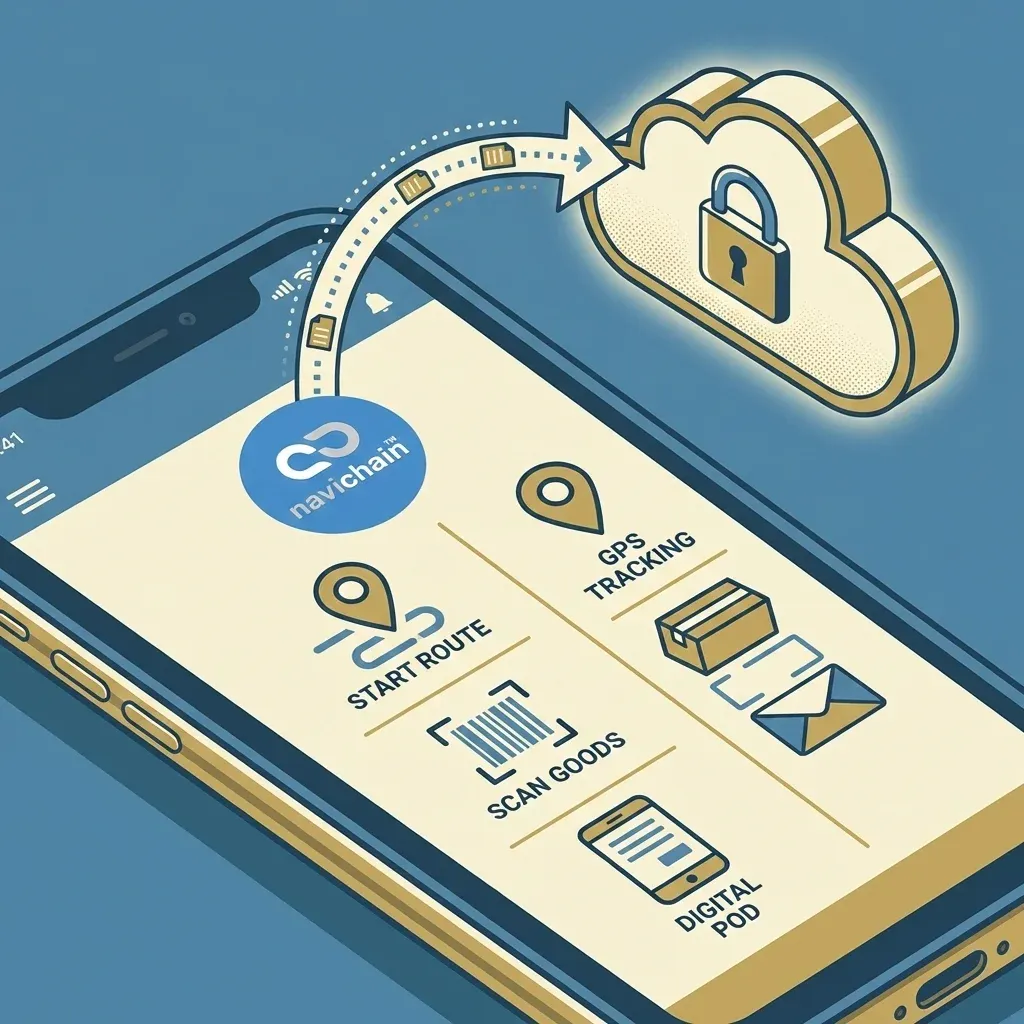
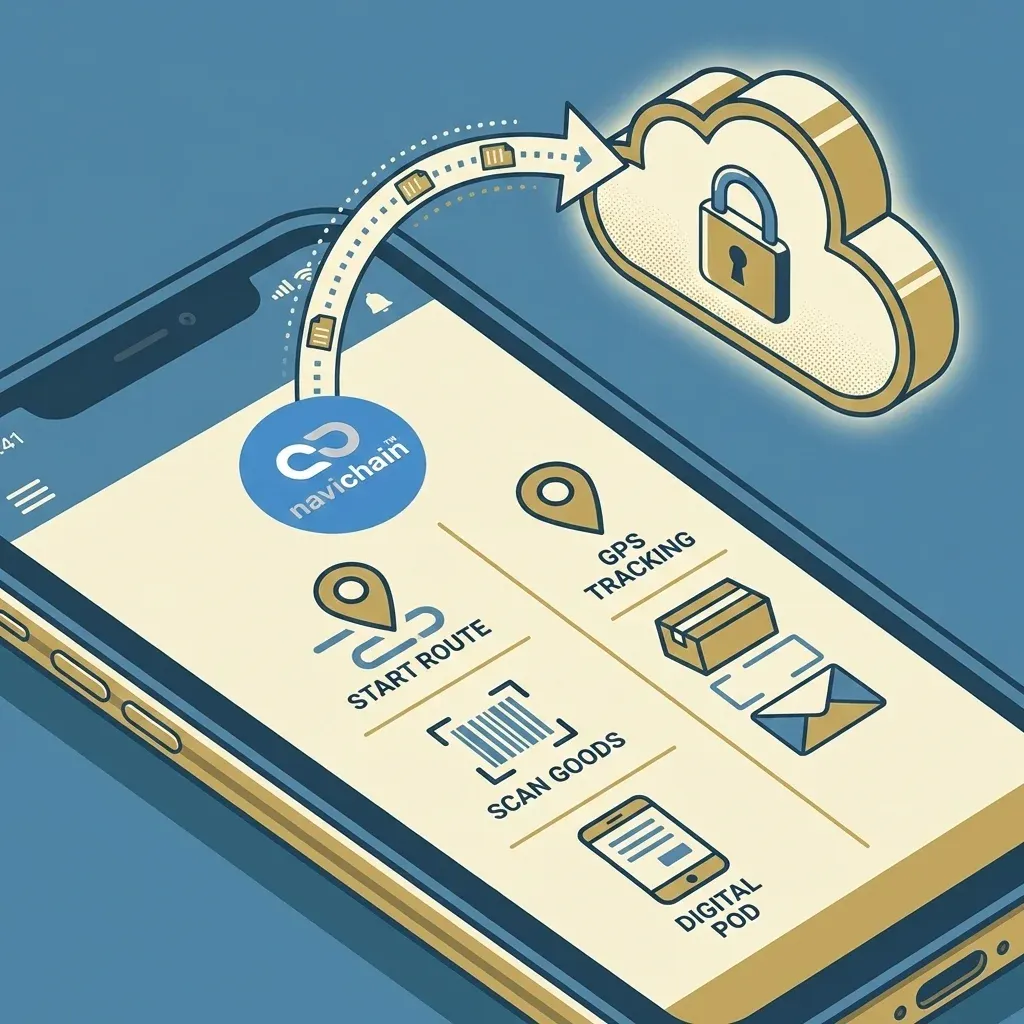
We have moved the complexity from the driver to the cloud. Navichain's driver app is extremely simple. * When the driver drives into a zone (Geofence) at the customer's site, the clock for "Arrival" starts automatically. * When unloading is complete and the driver drives out, the clock stops. * The waiting time is now a fact, logged in the system, ready to be invoiced or analyzed. The driver didn't have to do anything.
2. The unified data model
In Navichain, Order, Transport, and Invoice are the same object in different stages. There is no "gap" where information needs to be manually transferred. When a driver takes a picture of the goods (POD - Proof of Delivery), that picture is immediately available as an attachment to the invoice. Administrative time goes from days to seconds.
3. Strategic security: Data sovereignty
When your haulage company starts being driven by data, the data becomes your most valuable asset. Your prices, your customer registers, your margins – these are trade secrets. Putting this data in American cloud services (like AWS or Azure) involves a risk. According to the US CLOUD Act, American authorities have the right to request data from American providers, regardless of where in the world the servers are located. Read more about the risks at Integritetsskyddsmyndigheten (IMY).
Navichain guarantees full Swedish data sovereignty. We operate everything on our own, Swedish infrastructure. Your business-critical data is subject to Swedish law and GDPR, and is out of reach for foreign inspection. For the profitable haulage company, this is a non-negotiable hygiene factor.
Fig 4: The result – a haulage company that scales sustainably with full control over margins.
Summary: Three steps to turn the numbers around

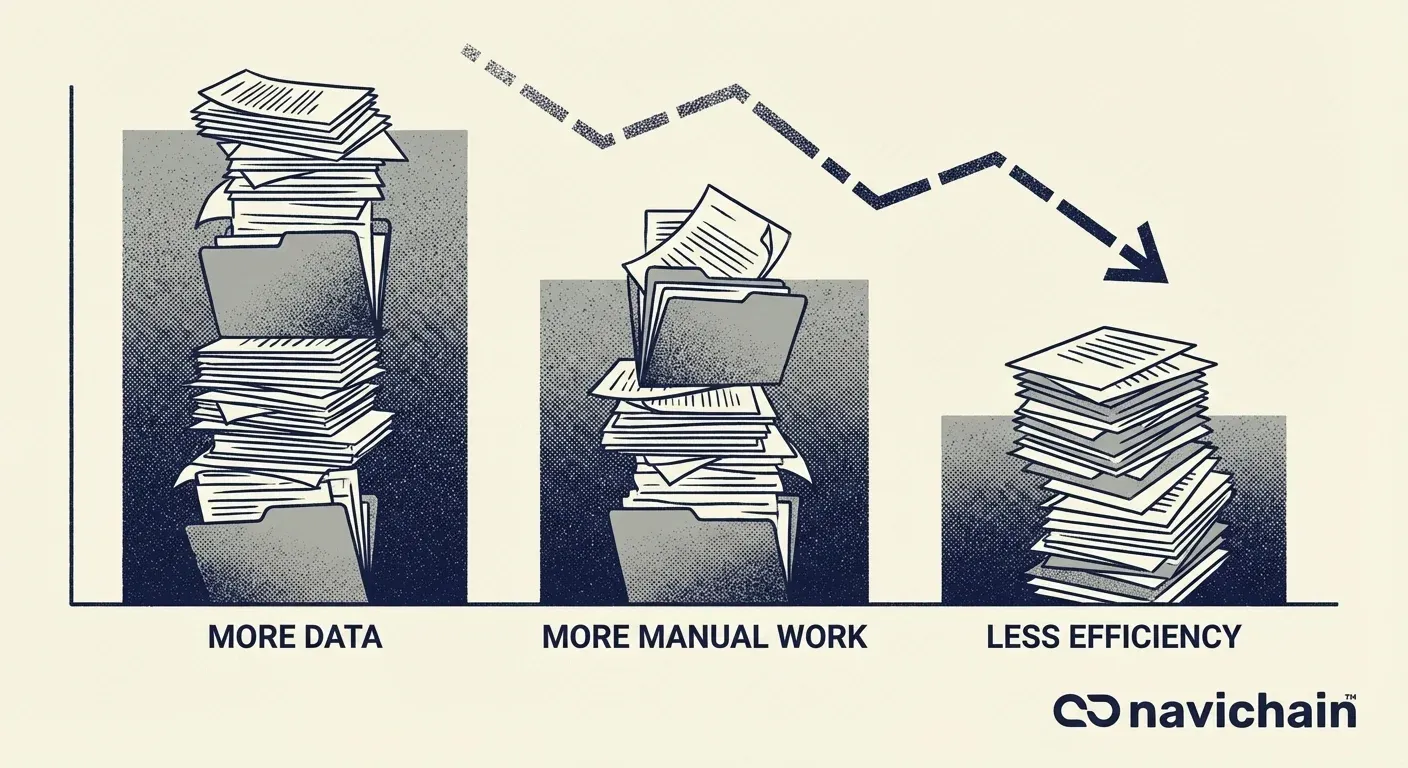
Illustrates the complexity of manual processes in a traditional haulage company, which often leads to incorrect data and missed revenue opportunities.
Moving from a traditional to a profitable, data-driven haulage company is a journey, but the steps are clear:
- Stop the leakage: Implement a system that automatically captures all time and all deviations. Stop giving away waiting time for free.
- Analyze the truth: Use post-calculations to identify which customers and routes actually build your bank balance, and which drain it.
- Act strategically: Use your data to renegotiate agreements, optimize routes, and, if necessary, phase out unprofitable partnerships.
An example of how automated data can identify profitable and unprofitable customers, enabling strategic decisions.
The diagram illustrates how automated data analysis can visualize customer profitability and provide haulage companies with a basis for strategic decisions about routes and agreements.
Tools like Navichain are no longer "nice-to-have" for tech enthusiasts. In today's market, they are the difference between liquidation and development.
References and further reading
Here are the sources that form the basis for the data in this article, as well as recommended reading for those who want to delve deeper.
Schematic overview of Navichain's functionality and how data is transformed into profitability insights.
- Transport Intelligence (Ti): "European Road Freight Market Reports". In-depth statistics on market trends. https://www.ti-insight.com
- Trafikanalys: "The economic development of the haulage industry". Official Swedish statistics. https://www.trafa.se
- IRU (International Road Transport Union): "Driver Shortage and Cost Indices". Global trends affecting local haulage companies. https://www.iru.org
- Integritetsskyddsmyndigheten (IMY): "Third-country transfers and Cloud Act". Important information about where your data is stored. https://www.imy.se
- McKinsey & Company: "Digitizing the Supply Chain". Strategic reports on the future of logistics. https://www.mckinsey.com/industries/travel-logistics-and-infrastructure/our-insights
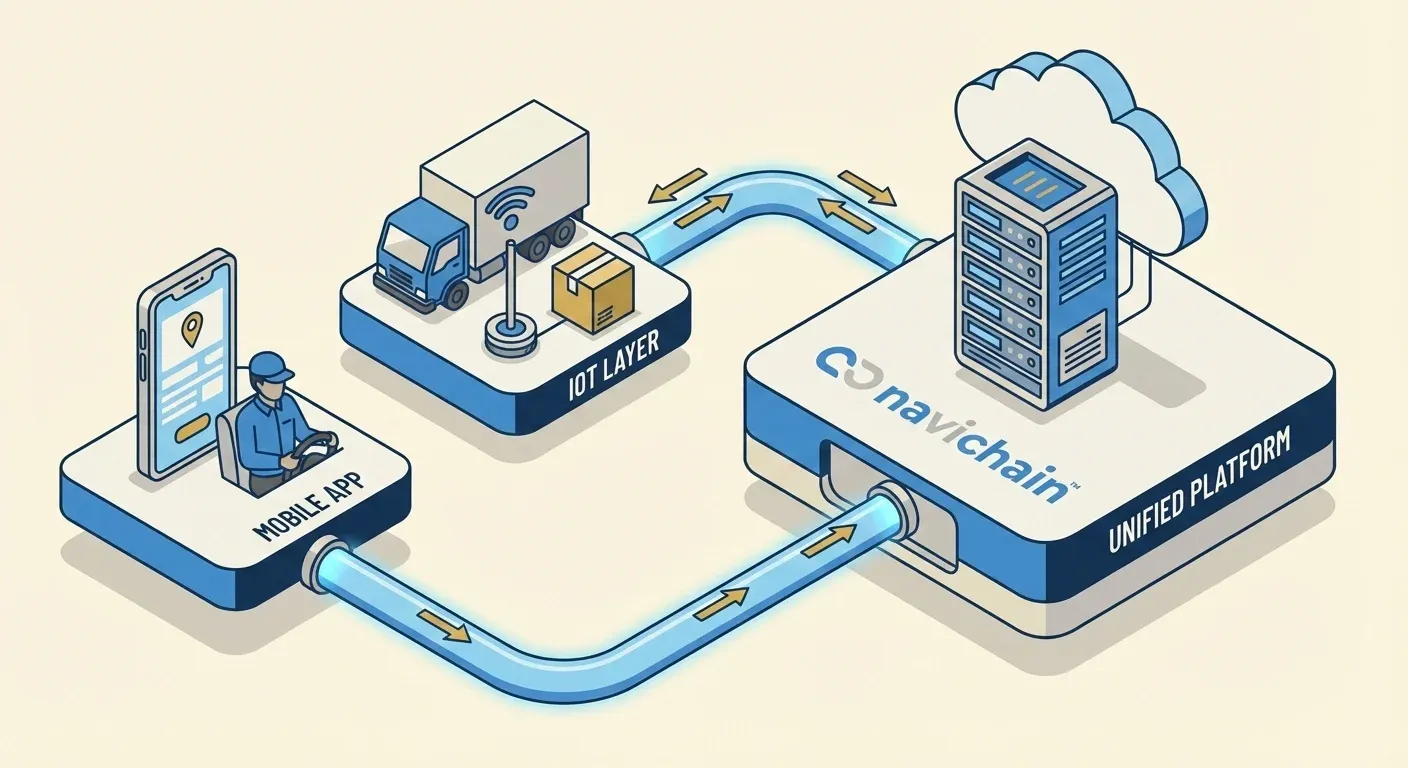
Schematic overview illustrating how Navichain transforms data into insights and optimizes profitability for haulage companies.
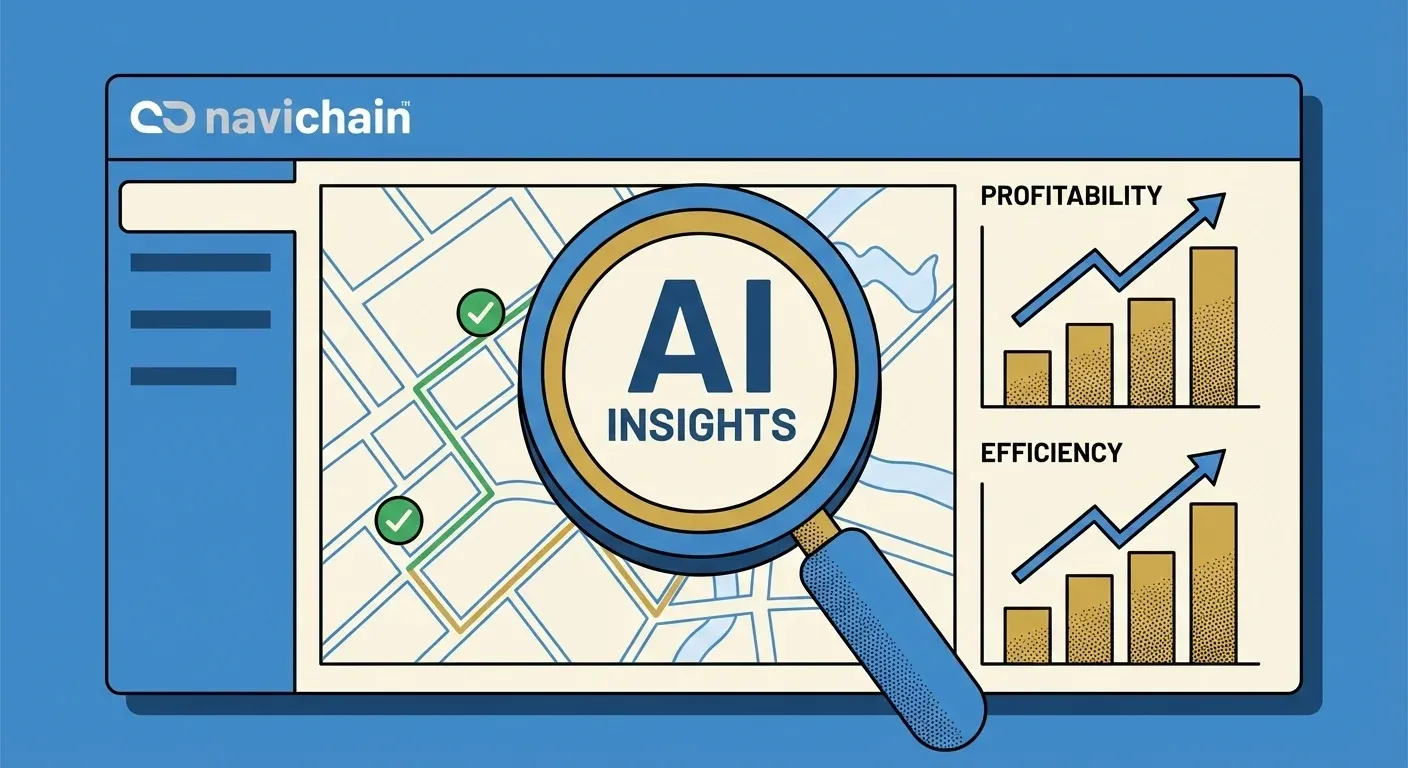
Visualization of potential results from Navichain, showing increased efficiency and reduced costs.
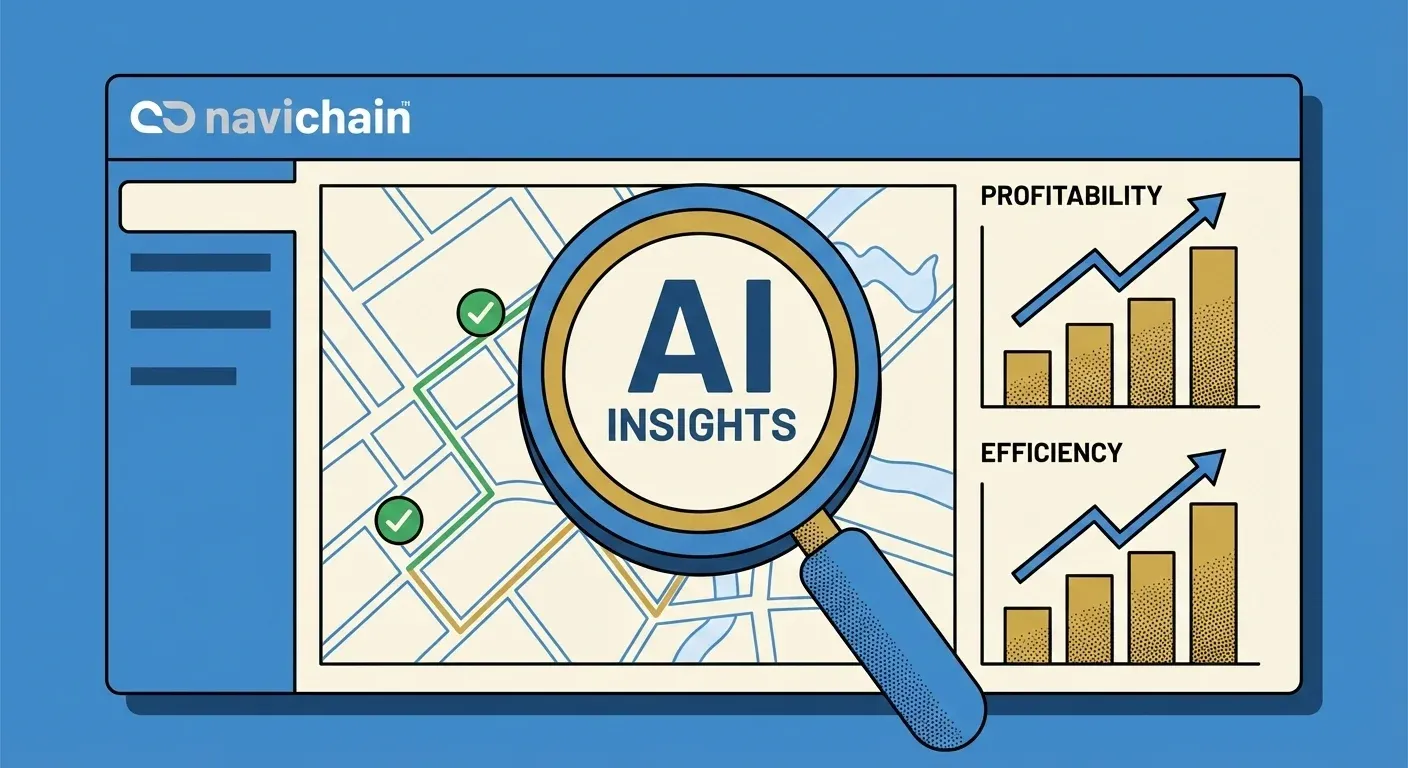
Navichain platform interface exemplifies how real-time data can be transformed into insights for a more profitable haulage company. Booking a demo provides a customized visualization of your own business's potential.