The digital consignment note: Does your e-CMR strategy reveal operational shortcomings or
🇬🇧 Read this article in English
For decades, the European haulage industry has relied on paper-based processes, but this habit is no longer a picturesque detail. It has become a critical vulnerability threatening haulage companies' competitiveness and profitability. Discover why 'keeping up' with e-CMR is the wrong goal – and what you should do instead.
The Digital Mandate: Does your e-CMR strategy reveal operational weaknesses or
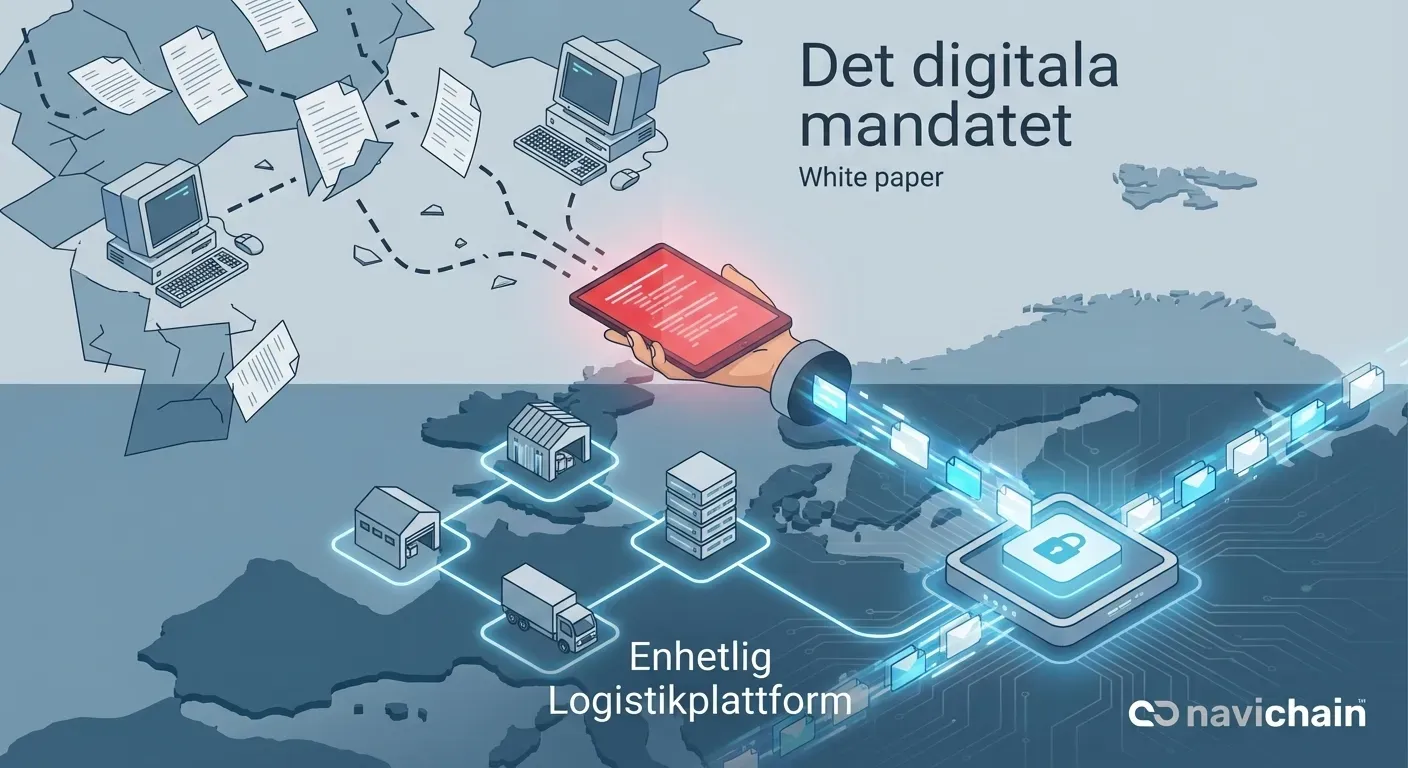
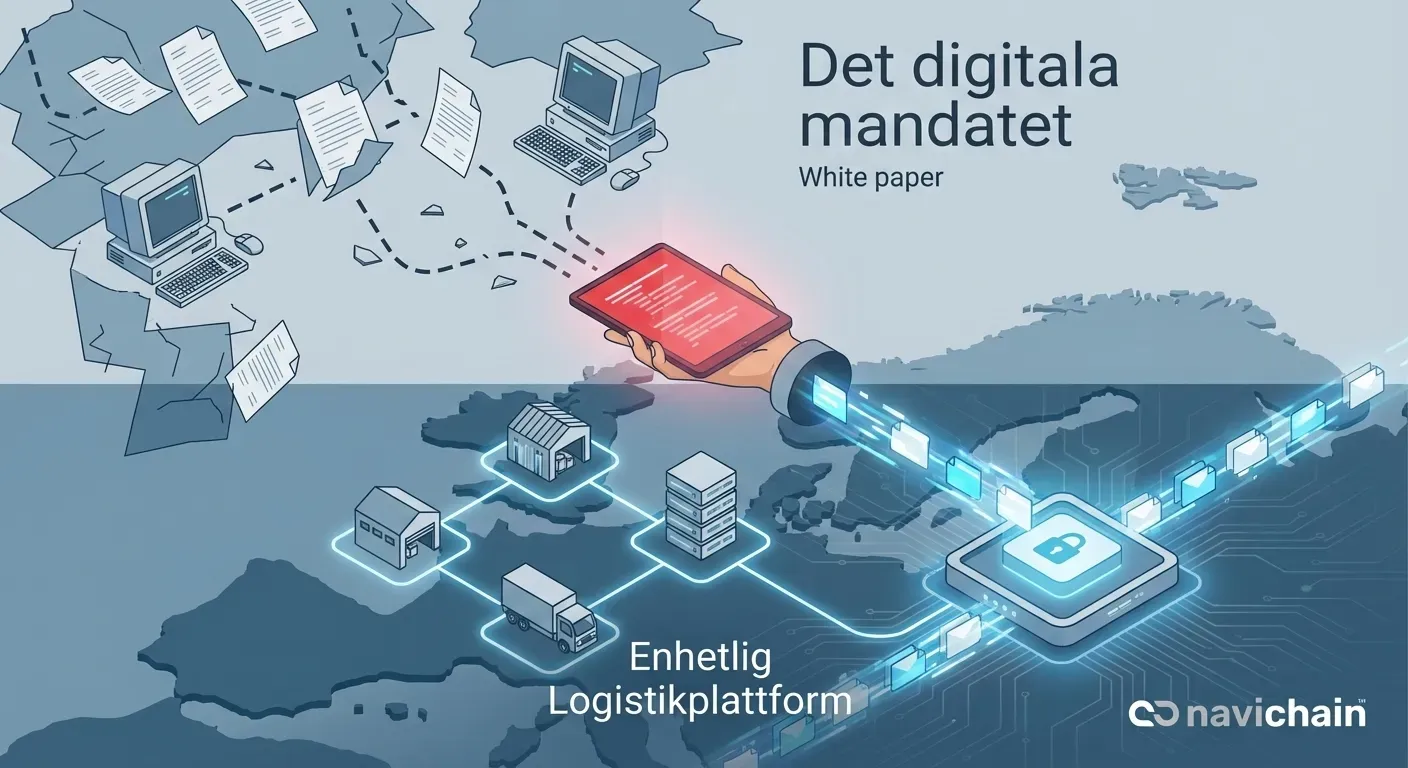
For decades, the European haulage industry has run on paper. The waybill, proof of delivery (POD), invoice – these artifacts are the familiar, tangible evidence of a job well done. But this dependence on paper is no longer a picturesque operational quirk; it is a critical vulnerability. *Paper-based processes constitute a significant vulnerability for modern haulage companies.
Figure 1: Paper-based processes create vulnerability for modern haulage companies.
The Ticking Clock: Why 'keeping up' with e-CMR is the wrong goal
For decades, the European haulage industry has run on paper. The waybill, proof of delivery (POD), invoice – these artifacts are the familiar, tangible evidence of a job well done. But this dependence on paper is no longer a picturesque operational quirk; it is a critical vulnerability. Small and medium-sized enterprises (SMEs) in the logistics sector feel this acutely. You face a daily battle against razor-thin margins, intense competition from larger players, and increasing operational complexity. Now, new customer and regulatory demands, symbolized by the electronic waybill (e-CMR), add enormous pressure. The problem, as many logistics managers express it, is that it's hard to "keep up." But this perspective misses the real threat. The challenge is not implementing e-CMR; it is the way most SMEs are forced to implement it – through fragmented, bolt-on solutions – that cements operational fragility into their business. This fragility is about to be exposed. The EU's eFTI Regulation (Electronic Freight Transport Information), coming into force in the coming years, will require all relevant authorities in member states to accept freight data in digital format. This shift from 'voluntary' e-CMR to 'mandatory' digital acceptance changes the landscape. The question is no longer if your business will go digital, but how you will manage the integrated data flows required to survive. This white paper argues that the e-CMR challenge is not a compliance problem to be solved with yet another software. The transition to e-CMR is more than just compliance; it is an opportunity for data integration. It is a data integration problem. Viewing it this way reveals a powerful strategic opportunity: to use this mandatory transition as a catalyst to build a unified, secure, and intelligent business that permanently lowers costs and builds a resilient foundation for growth.
Fragmented systems and manual data handling represent bottlenecks in modern logistics operations, underscoring the need for an integrated digital strategy.
Deconstructing the Integration Barrier: Why is this so hard for SMEs?
If e-CMR promises lower administrative costs, faster invoicing, and fewer errors, why hasn't it been universally adopted? The answer lies not in the technology itself, but in the fragmented technical landscape of the average SME haulage company.
The Anatomy of a Fragmented Business
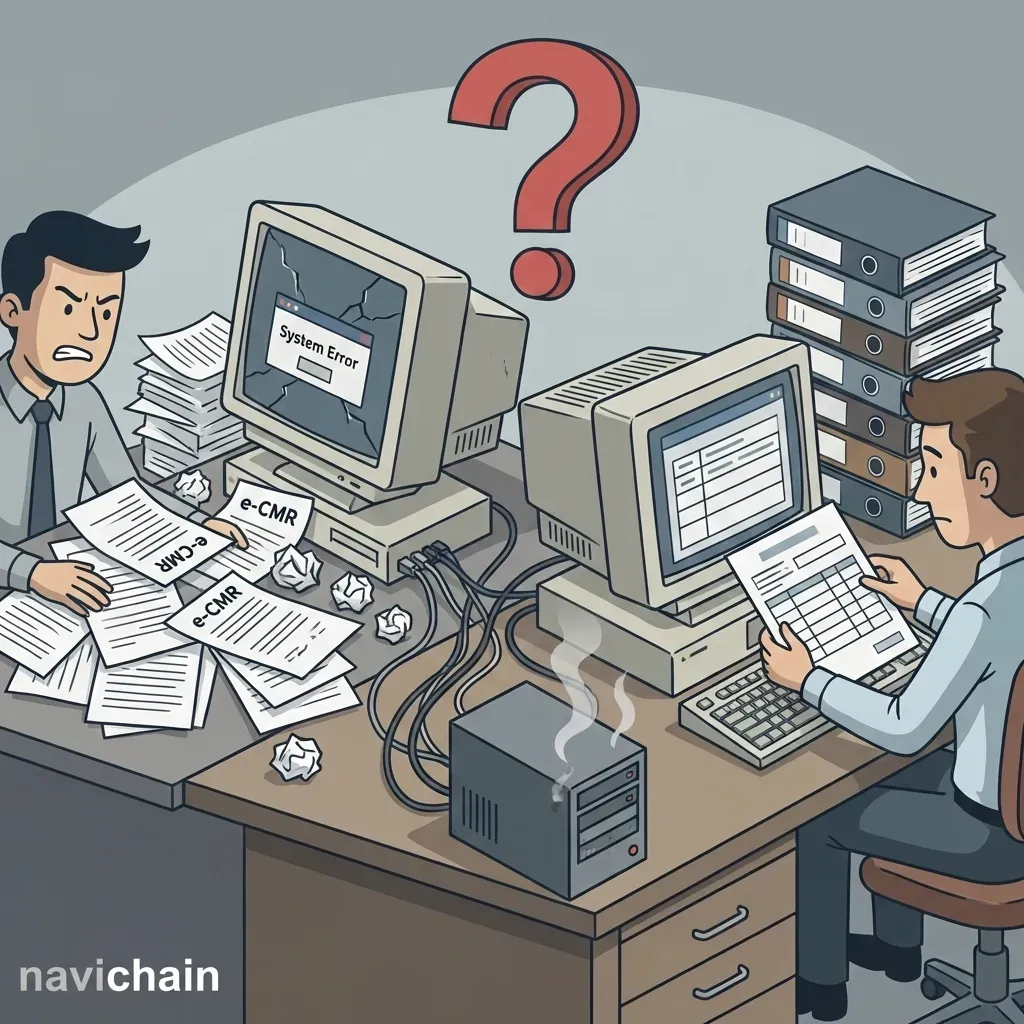
Consider the typical data flow for a single shipment in a non-integrated environment: 1. Order Entry: An order comes via email and is manually entered into a standalone Transport Management System (TMS) or, just as often, an Excel spreadsheet. 2. Planning: The planner assigns the load to a driver, often via phone or a separate app. 3. Execution: The driver picks up the load and receives a paper waybill. Upon delivery, this bill is signed, and the driver must physically transport it back to the office (or take a photo and email it). 4. Invoicing: Days or weeks later, the office receives the paper POD, manually verifies it against the order in the TMS, and then manually creates an invoice in a separate accounting system. Now, insert 'e-CMR' into this process. The typical 'solution' is to buy a standalone e-CMR app for the driver. This app captures the signature digitally. But what happens next? This new digital file just becomes another silo. e-CMR data does not automatically flow into the TMS to mark the job as complete. It does not automatically trigger the invoice in the invoicing system. An employee must still manually download the digital POD from the e-CMR portal and upload it or enter the data into the other systems. The 'digital' solution has failed to solve the core problem: manual data re-entry and process friction. It has merely moved the paper shuffling from a physical desk to a digital one. *Traditional systems hinder data integration and increase the manual workload.
Figure 2: Fragmented systems lead to manual data handling and inefficiency.
The Three Major Barriers
This fragmentation creates three specific barriers that make true e-CMR adoption seem impossible for SMEs: 1. Prohibitive integration costs: Connecting these disparate systems (a 10-year-old TMS, a cloud-based accounting package, a new e-CMR app) requires custom-built APIs. This is a domain for expensive consultants and long IT projects, far beyond the budget of most SMEs. 2. High administrative overhead: Without seamless integration, the administrative burden remains. You are now paying for a new digital tool and paying for the same (or more) manual work to bridge the data gaps between systems. 3. Data security and compliance risk: Where is this new e-CMR data stored? Who controls it? With data flowing between multiple vendors, often on servers outside the EU, it becomes a nightmare to manage and prove GDPR compliance. This complexity creates new risks, just when you are trying to reduce them. This is the trap: SMEs are forced to choose between falling behind competitors and regulations, or implementing fragmented, expensive 'solutions' that actually do not solve the underlying inefficiency. This is a false choice.
The Way Forward: The Unified Framework for Data Integration
The only sustainable solution is to stop treating the symptoms (the need for e-CMR) and start curing the disease (data fragmentation). This requires a shift in thinking, from 'buying an app' to 'building a data strategy.' This framework consists of three strategic pillars:
Pillar 1: Consolidate to a Single Source of Truth
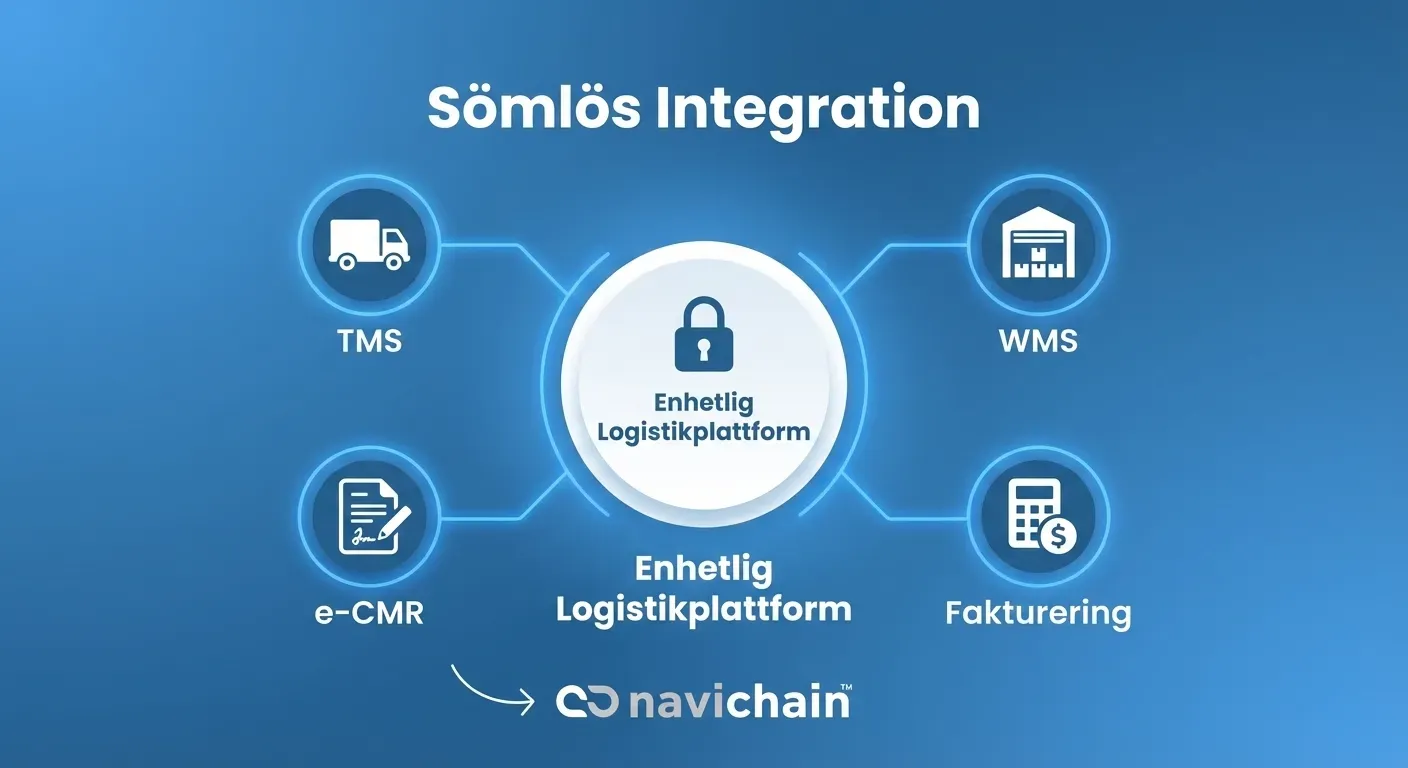
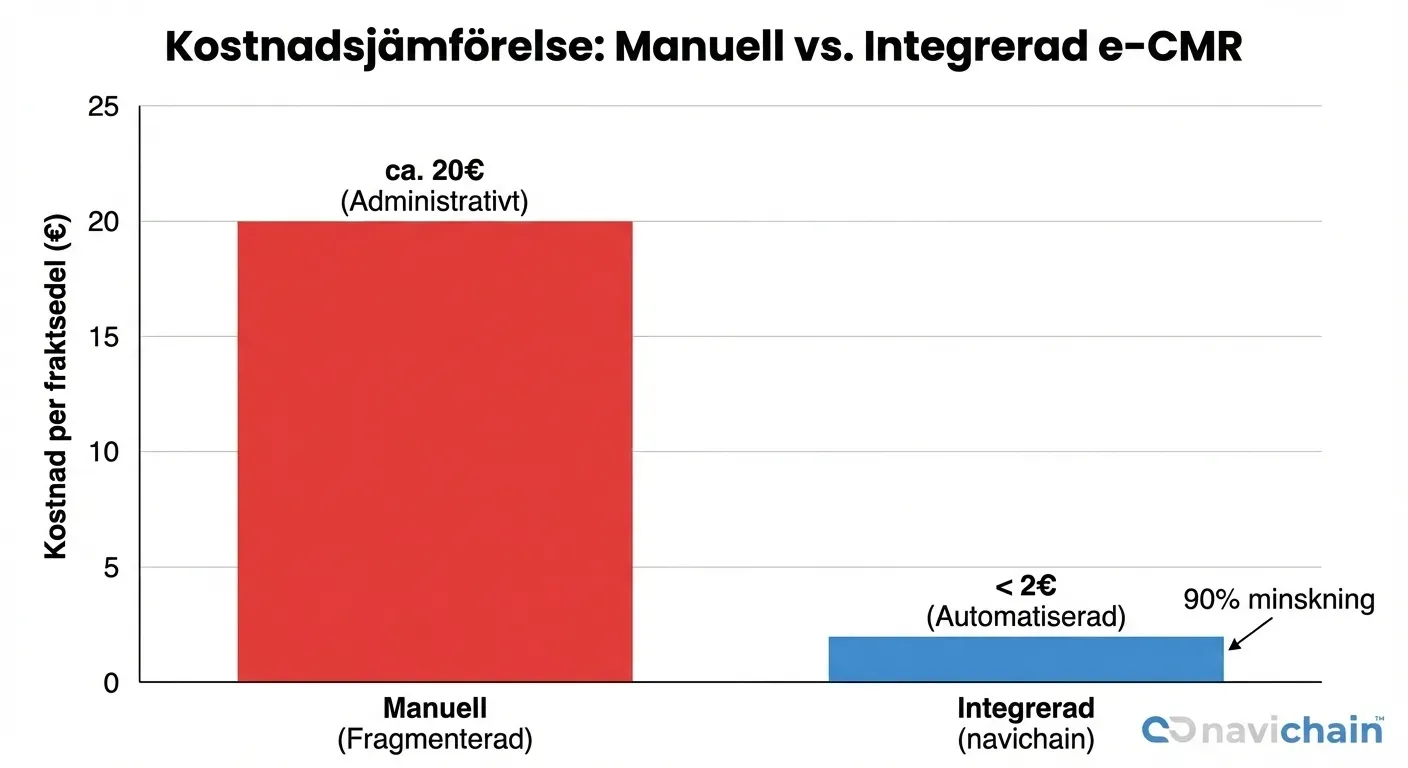
You cannot integrate what you do not control. The first principle is to stop the spread of data silos. Instead of adding yet another standalone tool, the goal must be to migrate core functions to a single, unified platform. What does this look like in practice? It means that your Transport Management (TMS), Warehouse Management (WMS), Vehicle Management, Order Management, and Invoicing should not be separate software. They must be modules within a single, unified operating system. When a new order is created, it should exist in one place. When that order is assigned to a truck (Vehicle Management) and the driver completes the job (TMS), the status update should be immediate. When the e-CMR is signed, the digital proof of delivery should be part of the original order file, not a separate attachment. This single event should then automatically trigger the invoicing module to generate and send the invoice. This 'single source of truth' eliminates 90% of manual data entry, administrative overhead, and error risk. It makes information flow seamless and immediate.
Pillar 2: Prioritize a Secure, Jurisdiction-Controlled Data Architecture
When freight data becomes 100% digital, its value and sensitivity increase exponentially. This data – your customer lists, your pricing, your routes – is your most valuable strategic asset. Protecting it is not an IT department problem; it is a core strategic business necessity. In a fragmented world, your data is spread across multiple cloud vendors with varying security standards and data handling policies. With the EU's eFTI Regulation, you will be sharing this data with partners and authorities. You must have absolute certainty about where your data is, who has access to it, and that it fully complies with GDPR. Therefore, the second principle in your data strategy must be data control. For a European SME, this means prioritizing a platform that operates on secure infrastructure within your own legal jurisdiction (e.g., Sweden or the EU). This self-hosted or regionally hosted strategy is not a technical detail; it is a strategic advantage. It ensures uncomplicated GDPR compliance, protects you from international data transfer complexities (such as the invalidated Privacy Shield), and gives you ultimate control and resilience over your own business.
A unified platform with integrated modules for TMS, WMS, vehicle management, order management, and invoicing creates a 'single source of truth' for data.
Pillar 3: Activate Your Data with Embedded Intelligence
Once you have clean, unified data (Pillar 1) in a secure, controlled environment (Pillar 2), you can finally move beyond reactive operations and toward predictive, optimized strategy. This is where compliance becomes a competitive advantage. The e-CMR is no longer just a digital proof of delivery. It is a real-time data point. It tells you exactly when a delivery was made, how long it took, and if there were any deviations. When combined with all other data in your unified system, you can unlock deep insights. The third principle is to leverage embedded analytical intelligence (or integrated AI) that runs securely within your own data environment. This AI does not analyze a public dataset; it analyzes your business. It can answer critical questions:
Figure 4: The benefits of an integrated data strategy.
This is impossible when your data is fragmented. It is trivial when your data is unified. You have transformed the 'cost' of e-CMR compliance into the 'engine' of your business intelligence. *Unified data transforms compliance into an engine for business intelligence.
Figure 3: Unified data transforms compliance into an engine for business intelligence.
From Diagnosis to Design: The Blueprint for a Resilient Logistics Operational System
Adopting this data integration strategy requires a new type of technology partner. The old model of buying and trying to stitch together dozens of specialized tools is broken. The future requires a platform built on a different philosophy. Based on our analysis, every resilient logistics operational system for European SMEs must be built on three core principles.
Principle 1 - Unified Operational Fabric
The platform must function as a 'central nervous system' for your entire business. It cannot just be a TMS or a WMS. It must be an integrated, unified system where Transport Management, Warehouse Management, Vehicle Management, Invoicing, and Order Management are all native components. Data entered into one module must be immediately and accurately available in all others, creating a single, indisputable source of truth. This is the only way to eliminate data silos and automate cross-functional workflows, such as converting a completed e-CMR directly into a customer invoice.
Principle 2 - Secure Data Architecture and Control
For European SMEs, true operational resilience requires full control over their data environment. The platform must be built on a 'security-first' and 'jurisdiction-first' principle. This means the ability to run on secure, self-hosted infrastructure where your operational data is stored and processed under your own region's legal jurisdiction (e.g., within Sweden/EU). This architecture is non-negotiable. It ensures uncomplicated GDPR compliance, protects your most sensitive commercial data, and minimizes exposure to the complexities and risks of international data transfers.
Principle 3 - Embedded Analytical Intelligence
Finally, the platform must provide tools to use the data, not just store it. This requires an embedded intelligence or integrated AI layer designed to run securely within the controlled environment (Principle 2) and analyze the rich, unified dataset (Principle 1). This intelligence should not be a complicated add-on, but a practical tool that helps you optimize routes, predict maintenance, analyze profitability, and make better strategic decisions using your own, secure operational data.
A schematic view illustrating the three principles for a unified, secure, and intelligent logistics platform, focusing on data flow and control.
References
- International Road Transport Union (IRU). (2024). e-CMR: The Digital Future of Logistics. https://www.iru.org/what-we-do/facilitating-trade-and-transit/e-cmr
- European Commission. (2025). Electronic Freight Transport Information (eFTI). https://transport.ec.europa.eu/transport-themes/intelligent-transport-systems/electronic-freight-transport-information-efti_en
- Ti Insight. (2024). Digital Transformation in the European Road Freight Market. https://ti-insight.com/ (Reports on digitalization barriers and market trends).
- Logistics Gids. (2023). The costs and benefits of the e-CMR. (Analysis of cost savings per waybill). [Note: Specific cost savings figures are often cited by industry organizations such as IRU and national logistics associations.]
- Official Journal of the European Union. (2020). Regulation (EU) 2020/1056 on electronic freight transport information (eFTI). https://eur-lex.europa.eu/legal-content/SV/TXT/?uri=CELEX:32020R1056
Enabling the Blueprint: Navichain SaaS Unified Logistics Platform
This white paper has presented a strategic blueprint for SME haulage companies to turn the mandatory digital shift from a compliance threat into a deep operational advantage. The framework is built on three non-negotiable principles: a unified operational fabric, secure data architecture and control, and embedded analytical intelligence. Navichain SaaS was designed from the ground up to be the engine that drives this blueprint.
- For Principle 1 (Unified Fabric): We provide a single, unified logistics operational system. Our platform is not a collection of separate tools. It is a seamless solution where Transport Management (TMS), Warehouse Management (WMS), Vehicle Management, Invoicing Management, and Order Management function as one. This integrated architecture breaks down the data silos that make e-CMR adoption difficult and automates workflows from order to invoice.
- For Principle 2 (Secure Data Architecture and Control): This is our key differentiator. The entire Navichain SaaS platform operates on our own secure, self-hosted infrastructure in Sweden. This is not a "European cloud region" from a foreign vendor. It means your data stays strictly within Swedish/EU jurisdiction. For our customers, this ensures maximum data security, resilience, and the most straightforward path to GDPR compliance, freeing you from the complexity of international data transfers.
- For Principle 3 (Embedded Analytical Intelligence): Our platform is enhanced with an integrated AI that runs on our own secure Swedish infrastructure. Because your data is already unified on our platform, our AI can perform deep, secure data analysis on your own business. It lets you unlock unique efficiencies and insights, and transforms your recently digitized data into your most powerful strategic asset. Our mission is to democratize logistics technology. We provide an integrated, powerful, and affordable platform that enables SMEs to thrive, making the transition to a digital-first business not only possible, but profitable.
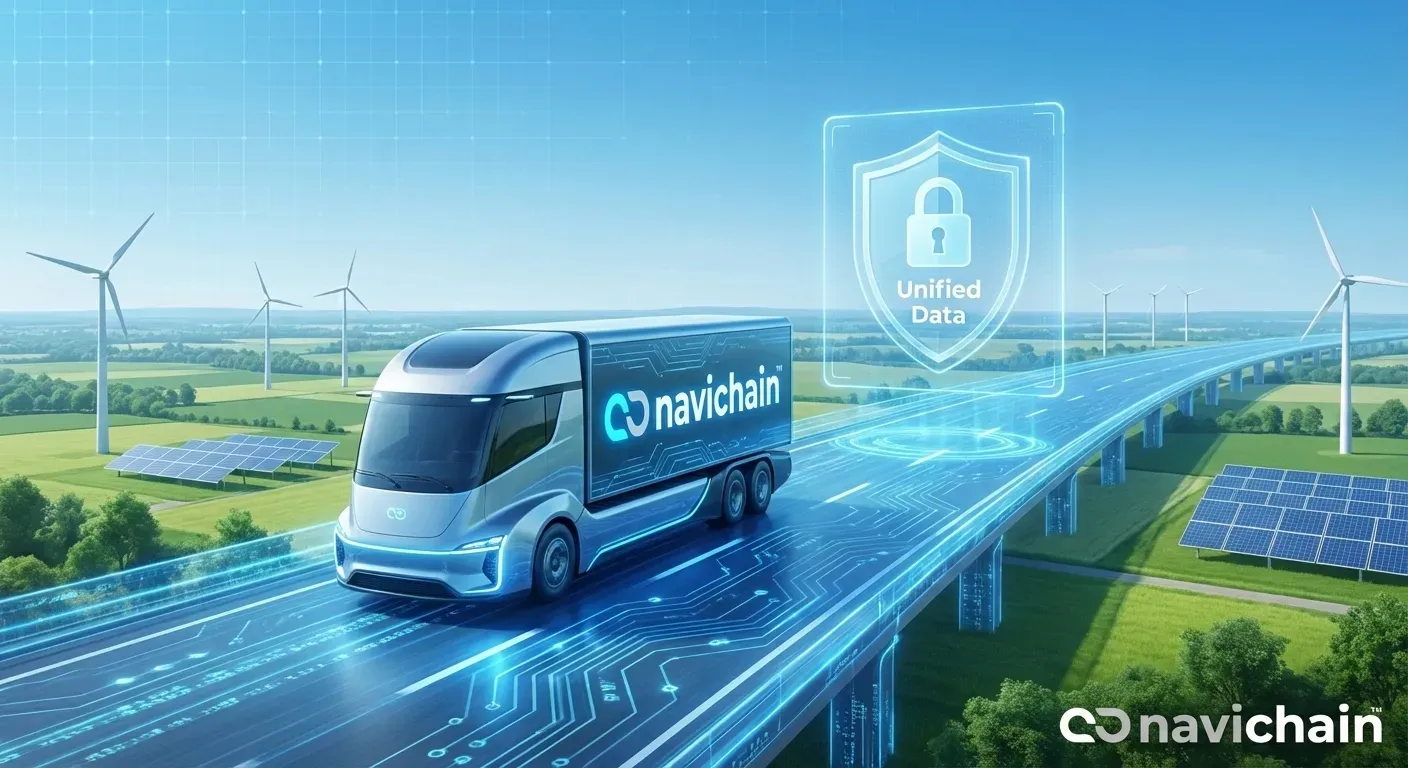
Navichain SaaS simplifies data integration, enabling powerful AI-driven insights directly from your operational data.

Navichain visualizes how data-driven logistics creates transparency and efficiency. This integrated platform enables better decision-making through real-time analysis and optimization.
Want to see how profitable your business can be with Navichain?
Figure 5: Navichain SaaS - Your partner for a resilient and integrated logistics business.