The Hidden Cost: How Fragmented Data Transforms Your Transport Planning
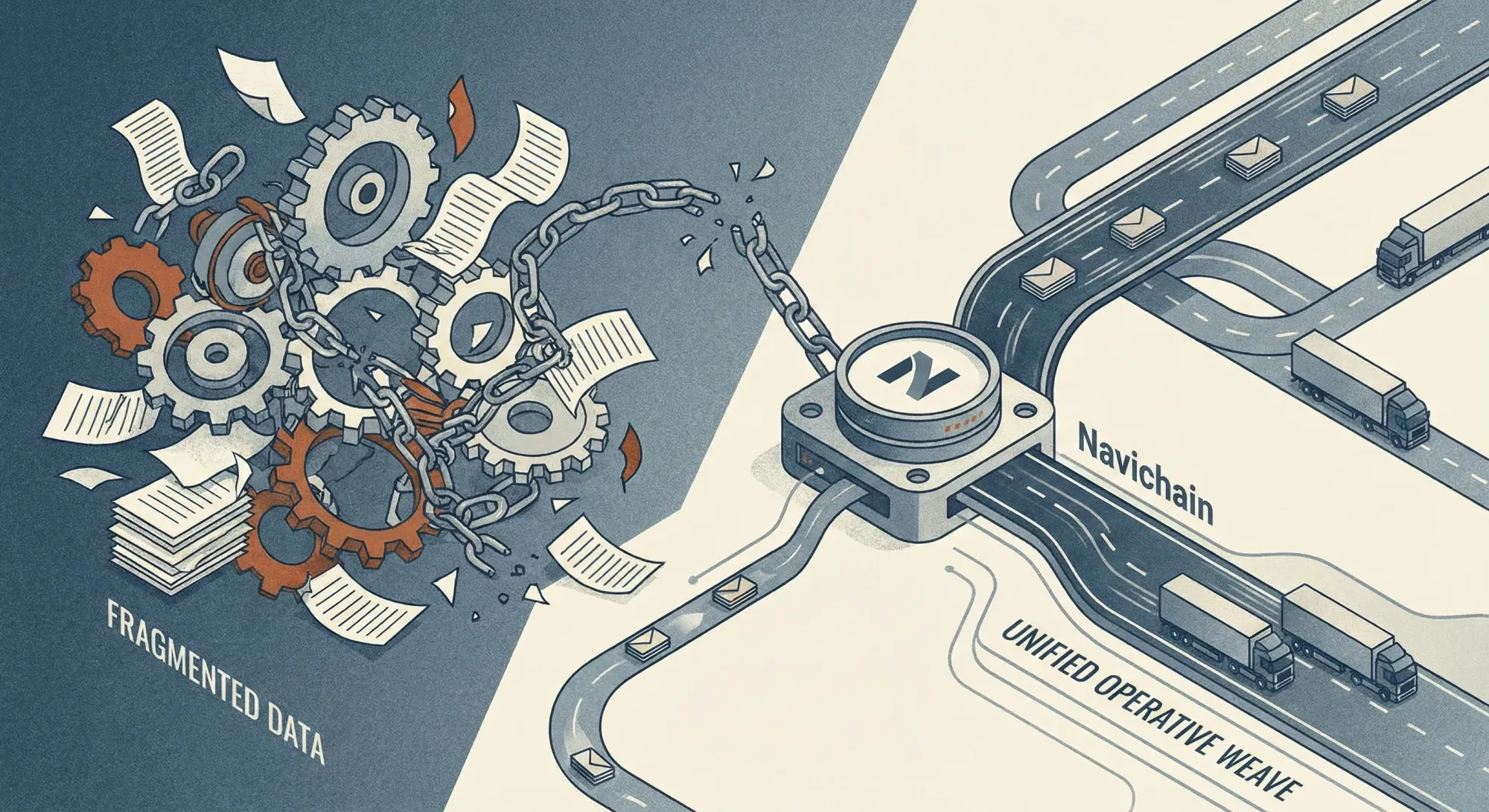
🇬🇧 Read this article in English
The Hidden Cost: How Fragmented Data Transforms Your Transport Planning
For most Swedish small and medium-sized haulage companies (SMEs), the transport planner is the beating heart of the operation. It's also the most stressed part of the organization. The phone rings non-stop. Customers change their orders. A truck gets stuck in traffic. Meanwhile, the planner has to piece together a schedule that not only 'works' but is also profitable.
Introduction: The Daily Struggle for Profitability
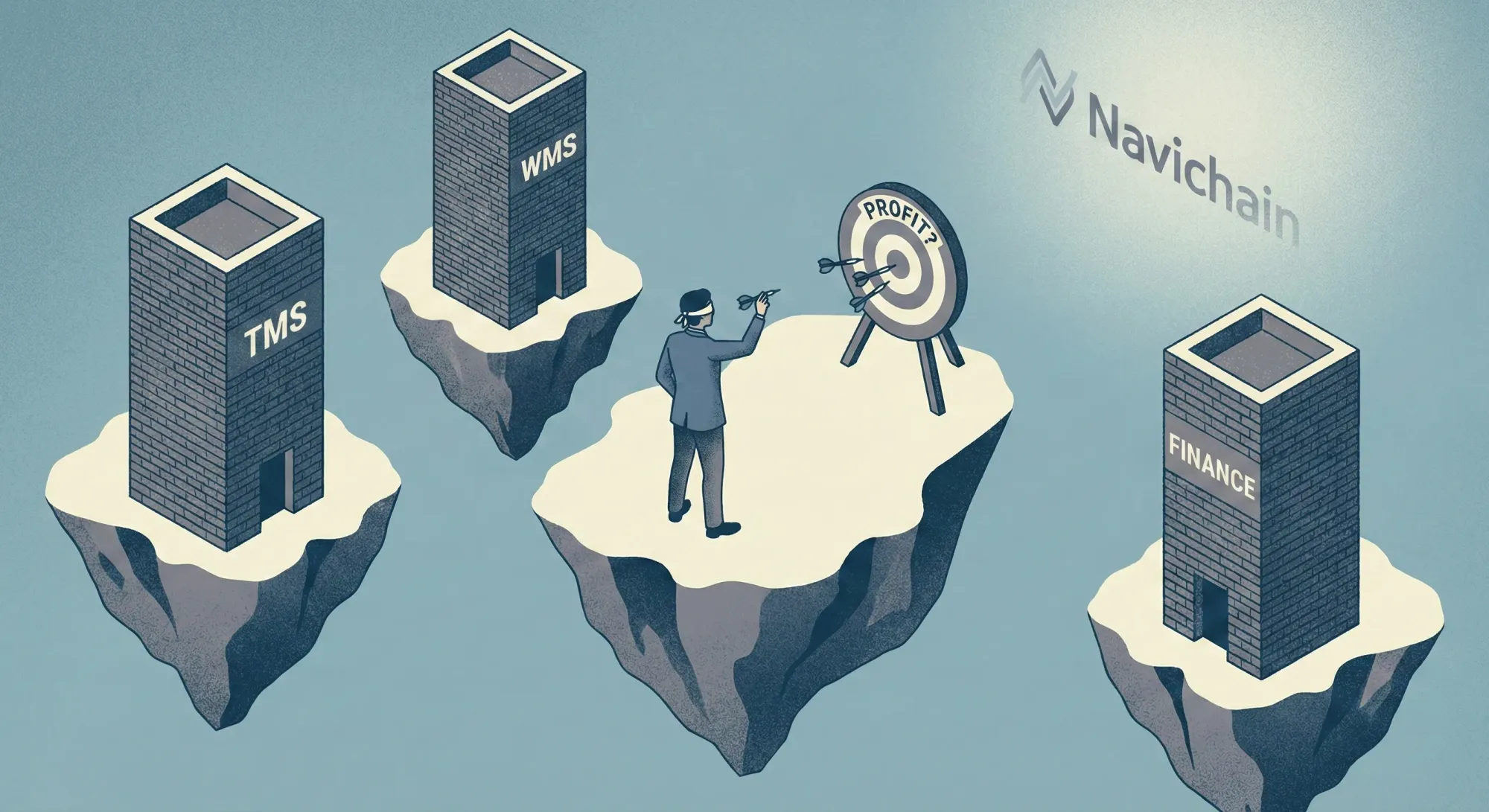
Fragmented data and lack of oversight force the transport planner to juggle information from different sources, increasing the risk of poor decisions and reduced profitability.
For most Swedish small and medium-sized haulage companies (SMEs), the transport planner is the beating heart of the operation. It's also the most stressed part of the organization. The phone rings non-stop. Customers change their orders. A truck gets stuck in traffic. Meanwhile, the planner has to piece together a schedule that not only 'works' but is also profitable.
Here, the first crack in the facade appears. How do you know the trip is profitable?
The harsh reality for many is that they don't know – not really. They have a feeling. They know what they should be charging, but they don't have an immediate link between the specific trip's all costs (wages, fuel, wear and tear, time) and its revenue. A recent report from Transportföretagen shows that over 60% of SME haulage companies still rely on Excel or manual processes for critical parts of their planning and administration.
Result? The transport planner is forced to 'put out fires' and make decisions based on gut feeling and incomplete information.
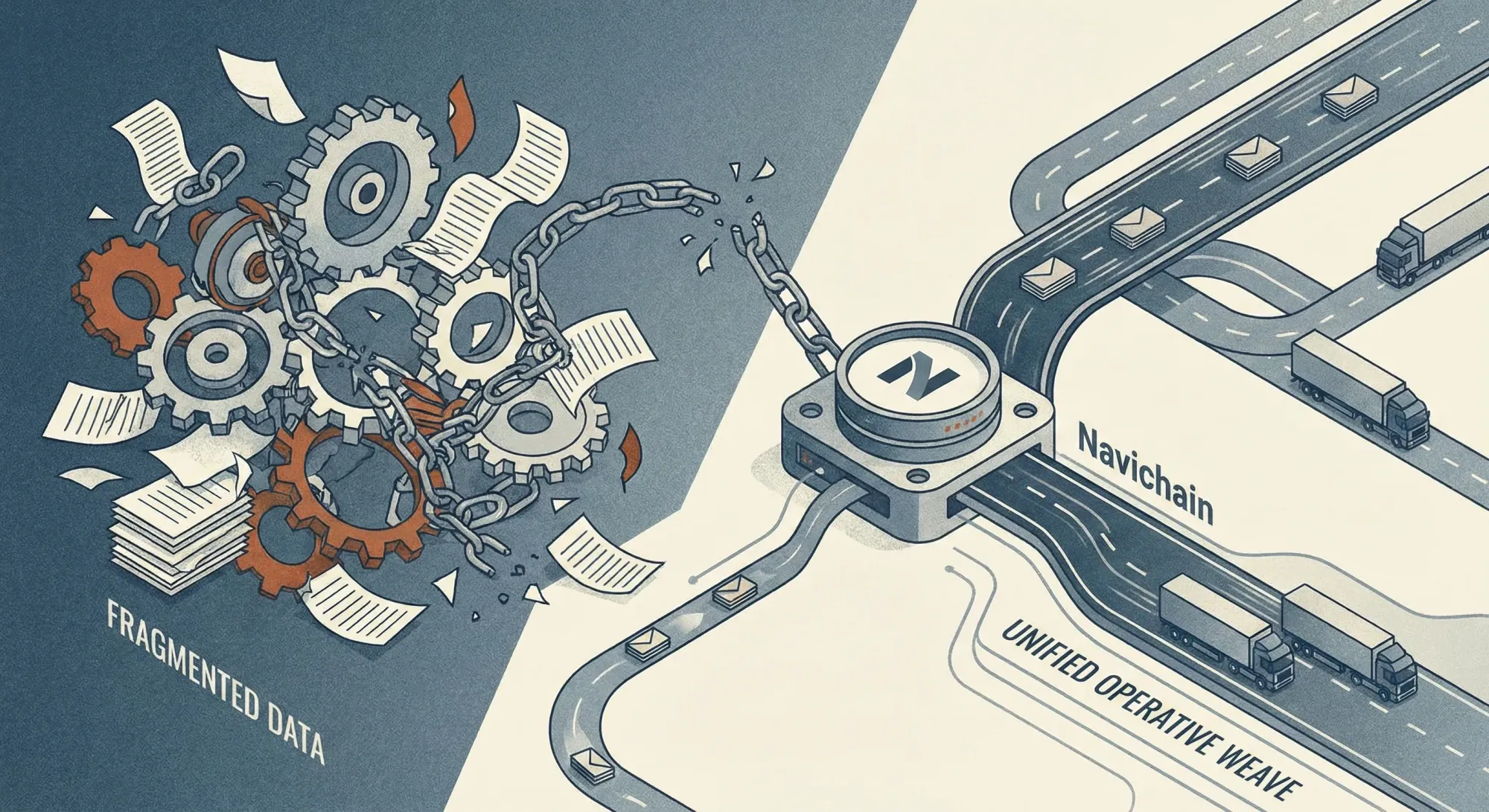
Figure 1: Illustration of how fragmented data leads to inefficiency and lost profitability in transport planning.
The company leaks profitability in every gap between the systems. This white paper argues that the biggest threat to Swedish haulage companies' profitability is not diesel prices or competition, but the internal 'process friction' created by fragmented data. We present a framework to move from reactive guessing to proactive profit optimization.
Revealing the Problem: The Real Cost of 'Process Friction'
When the management of a haulage company is asked "how can you make life easier for your transport planners?" the answer is often linked to the symptoms: "a better TMS" or "less stress". But this is treating the symptoms, not the disease. The underlying disease is data in silos.
In a typical SME haulage company, the data flow looks like this:
- The order comes in via email or phone and is entered (manually) into an order system.
- The transport planner looks at the order and uses a separate TMS (Transport Management System) – or a spreadsheet – to assign a truck and driver.
- The driver receives the order via an app or a printed paper.
- The trip is carried out. Data about time, distance, and deviations are (perhaps) captured in the truck's system or in the driver's app.
- The invoicing happens days or weeks later, when the waybill (perhaps signed) returns to the office and is entered (manually) into an accounting system.
How can the planner, in step 2, know the profitability? The revenue is in the order system (step 1), but the actual costs (wages, fuel consumption, deviations) are in step 4, and the final invoice in step 5. The systems don't talk to each other.
Figure 3: Schematic overview of the data flow in a traditional haulage company with fragmented systems.
We call this gap 'process friction'. Industry analysts estimate that this friction – the cost of double work, data entry errors, administrative mistakes, and missed optimization opportunities – can cost logistics companies as much as 5-8% of their total revenue. For a haulage company with 50 million in turnover, that's a hidden cost of 2.5 to 4 million SEK per year.
This friction turns your transport planning into a reactive administrative task, instead of the strategic asset it should be.
Examples of costs for process friction in a typical haulage company.
Obstacles on the Way: Why Is It So Hard to Solve?
Most haulage company owners recognize the problem, but the path to a solution is blocked by three common obstacles:
- Fragmented technology: They have invested in a 'best' TMS, a 'best' accounting system, and perhaps a 'best' WMS. Each system is good at its job, but getting them to talk to each other is expensive, complex, and requires constant maintenance. The integrations are fragile.
- Fear of 'Big Bang': The idea of replacing all systems at once is daunting. It involves high initial costs, risk of downtime, and the need to retrain all staff.
- Data control and security: In an increasingly complex world of international data laws (such as GDPR and Schrems II), it becomes a risk to put their most sensitive operational data with a global cloud provider. Where is the data stored? Who has access to it? Ensuring GDPR compliance becomes a bureaucratic burden in itself.
The Way Forward: The Framework for Profitable Transport Planning
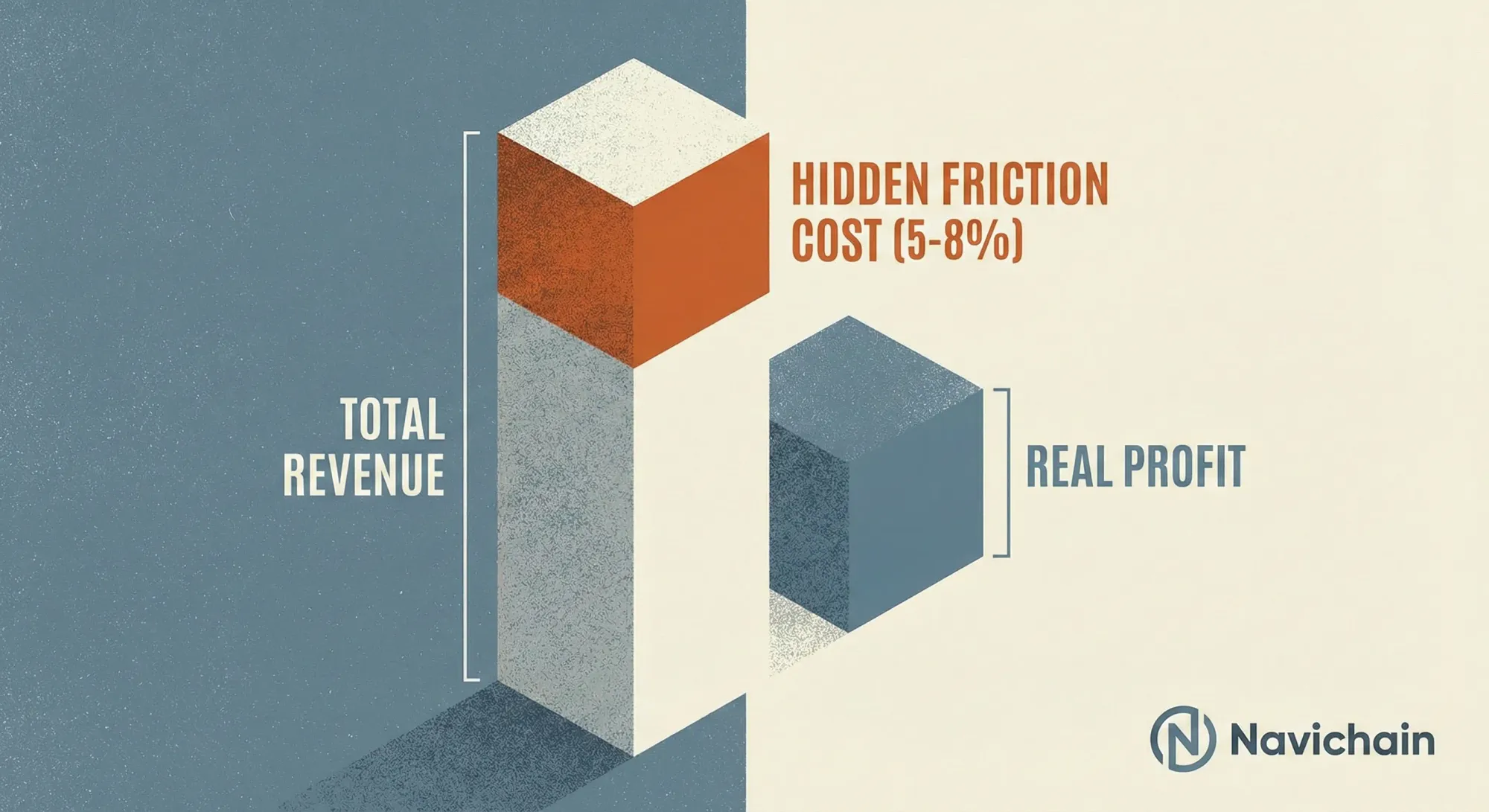
The diagram illustrates how poor transport planning can turn potential assets into liabilities for haulage companies.
To solve the profitability puzzle and truly make life easier for transport planners, a new tool is not enough. A new way of thinking is required. We propose a strategic framework with three pillars that shifts the focus from 'managing trips' to 'managing profitability'.
Pillar 1: Total Visibility (From Order to Invoice)
A transport planner cannot optimize what they cannot see. The first pillar is to create a single source of truth (Single Source of Truth). This means that data from order placement, planning, execution (vehicle data), warehouse, and invoicing must live in one and the same, unified system.
When the planner looks at a new order, they must immediately see: * Revenue: What is the agreed price?
- The estimated cost: What does the truck cost per kilometer? What is the estimated wage cost for this route? What is the total estimated cost?
- The margin: What is the expected contribution margin for just this trip?
This removes the guesswork. The planner can now make an informed decision: Should we take the trip? Can we combine it with another to increase the margin? Does the customer have too low a price?
Pillar 2: Surgical Precision (From Calculation to Follow-Up)
Visibility is worthless if the data is not correct. The second pillar is to ensure real-time precision. It is not enough to see the profitability in a report a month later. The planner must see it before the trip is booked, and be able to follow it while it is ongoing.
This requires that the system can automatically: * Calculate: Dynamically calculate costs based on route, vehicle type, driver agreement, and current fuel prices.
- Track: Compare the planned route and cost with the actual route and cost in real-time (via GPS and vehicle data).
- Warn: Immediately flag deviations that threaten the margin (e.g., unexpected stops, wrong route, too long loading time).
This turns the planner into a proactive operator.
Example of improved profitability through data-driven transport planning.
If a trip suddenly becomes unprofitable due to a deviation, they can act directly – not weeks later when the invoice is to be sent.
Figure 4: Illustration of how real-time data and automatic warnings can improve profitability in transport planning.
Pillar 3: Strategic Proactivity (From Optimization to Intelligence)
When visibility and precision are in place, you can move to the final and most valuable pillar: proactivity. With all operational data collected in one place, in a secure format, you can stop 'firefighting' and start optimizing.
This is the step where you transform your transport planning from a cost to an asset. Instead of just piecing together today's trips, the planner (and management) can now: * Analyze profitability: Which customers are your most/least profitable? Which routes are you losing money on?
- Optimize the network: Based on historical data, how can you design your routes smarter to minimize empty running?
- Use intelligence: With a unified and secure database, you can apply AI tools (Artificial Intelligence) to find patterns and optimization opportunities that a human would never see. This can be anything from predicting service needs for your vehicles to suggesting the most profitable trip combinations.
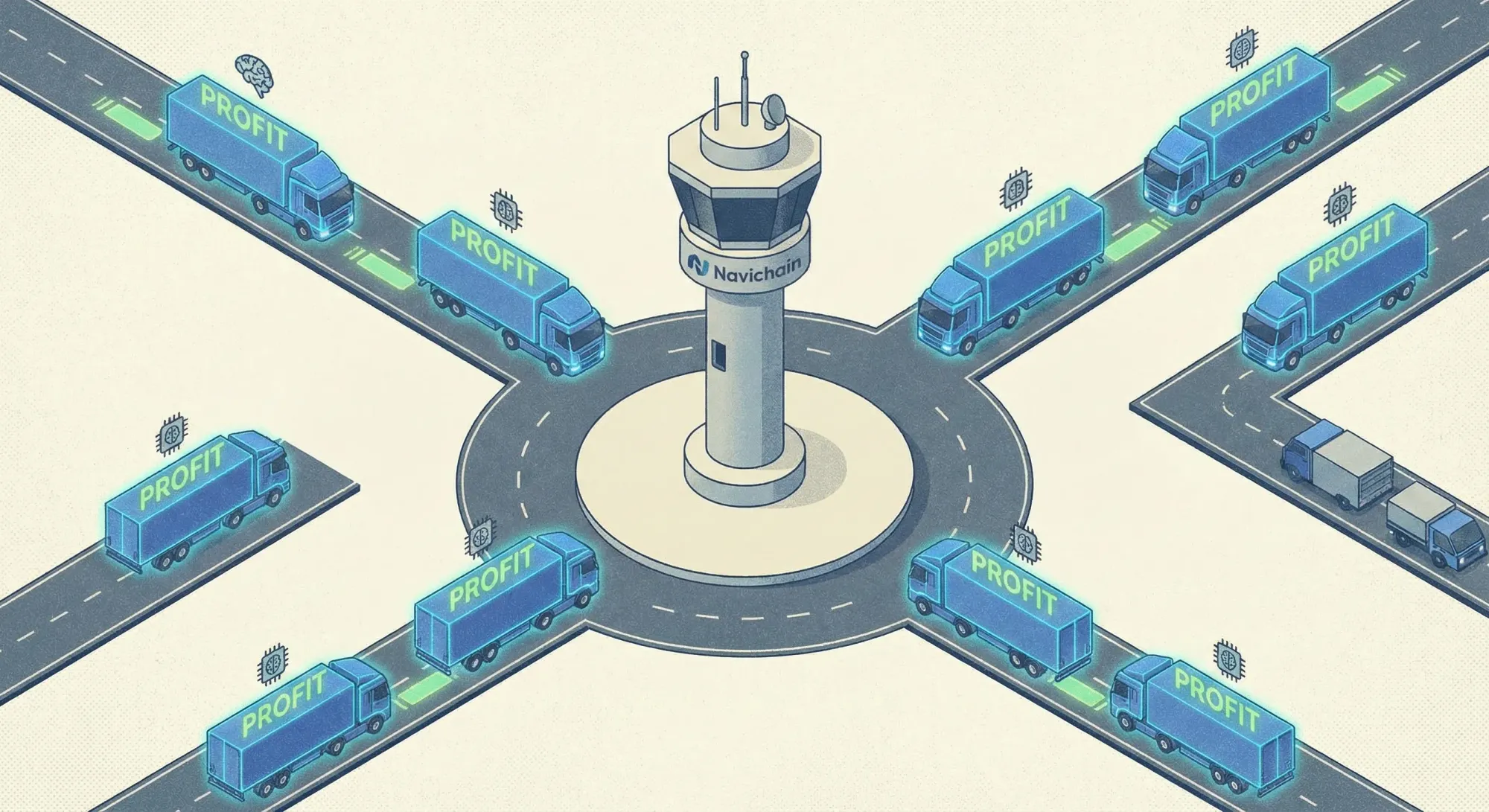
Schematic overview illustrating how transport planning can be transformed from a cost to an asset through analysis, optimization, and intelligence.
From Diagnosis to Design: The Blueprint for a Resilient Logistics Operating System
The framework we have described – Visibility, Precision, and Proactivity – is not just a theory. It is a blueprint for a new type of logistics operating system. For Swedish SME haulage companies to be able to implement this framework, the underlying technology must meet three fundamental principles.
Principle 1: Unified Operational Fabric
Forget the idea of separate systems for TMS, WMS, order, and invoicing that are 'integrated'. The future is a unified operational fabric – a single platform where all functions share the same database and the same logic. This is the operation's 'central nervous system'. When an order is created, it is immediately available for planning, execution, and invoicing without manual transfer. This is the only true solution to 'process friction'.
Principle 2: Secure Data Architecture and Control
This is critical. For European and Swedish companies, data control is not a bonus; it is a legal requirement and a strategic necessity. Putting all your operational data with a cloud provider that is subject to non-European legislation (such as the US Cloud Act) is a business risk. True operational resilience requires full control over your data. This means a platform that is built on secure infrastructure (Self-Hosted) within Sweden/EU jurisdiction. This not only ensures uncomplicated GDPR compliance but also ensures that your most valuable asset – your operational data – remains your own.
Principle 3: Embedded Analytical Intelligence
AI is not a separate tool you buy. It must be an embedded intelligence that acts directly on your operational data. For this to be effective and secure, this AI must run on the same secure infrastructure as your data (Principle 2) and analyze the unified data from your entire operation (Principle 1). Only then can an AI provide meaningful, secure, and tailored insights to optimize your profitability – without risking your data leaking to third parties.
References/Sources
- Ti Insight (2025). "European Road Freight Transport 2025 Report." https://www.ti-insight.com/reports/european-road-freight-transport-2025
- Transportföretagen (2024). "Digitaliseringens möjligheter och hinder för svenska åkerier." https://www.transportforetagen.se/rapporter/digitalisering-akerier-2024
- Logistics Management (2024). "The True Cost of Data Silos in Supply Chain." https://www.logisticsmgmt.com/article/cost-of-data-silos-supply-chain
- IRU (2025). "Driver Shortage Report Europe." https://www.iru.org/resources/driver-shortage-reports
Enabling the Blueprint: Navichain SaaS Unified Logistics Platform
This white paper has presented a blueprint for a resilient and profitable operating system. Navichain SaaS is the platform built from the ground up to realize this blueprint for small and medium-sized logistics companies.
We understand that SME haulage companies cannot afford complex integrations, data risks, or systems that don't talk to each other. Our solution is designed to directly address the three core principles:
- Unified Operational Fabric (Principle 1): Navichain SaaS is not a collection of modules; it is a single, unified operating system. Transportation Management (TMS), Warehouse Management (WMS), Asset Management, Order Management, and Invoicing work as one unit, on one database. This eliminates process friction, breaks down data silos, and gives your transport planners the total visibility they need to see profitability in real-time.

Navichain SaaS unified platform provides real-time insight into transport planning, enabling data-driven decisions for increased profitability and efficiency.
- Secure Data Architecture and Control (Principle 2): This is our core differentiation. The entire Navichain SaaS platform is operated on our own secure infrastructure (Self-Hosted) in Sweden. Your data never leaves Swedish/EU jurisdiction. This gives you maximum data security, full control over your information, and the easiest, most direct path to GDPR compliance – freed from the complexity of international data transfers.
- Embedded Analytical Intelligence (Principle 3): Because your data is unified (Principle 1) and secure (Principle 2), our integrated AI can work directly on your data within our secure Swedish infrastructure. This allows you to perform deep, secure data analyses on your combined operational data to unlock unique efficiencies and optimize profitability – without ever exposing your data to external parties.
Our mission is to democratize logistics technology for the SME sector. We offer a powerful, integrated, and affordable platform that gives you the control, security, and intelligence needed not just to survive, but to thrive.
Figure 5: Navichain SaaS - A unified logistics platform for secure and efficient transport planning.
The Navichain SaaS platform, operated in Sweden, ensures data security and control, enabling integrated AI analysis for optimizing profitability.

Illustration of the Navichain SaaS platform, designed to give small and medium-sized companies control over their logistics data and enable AI-driven optimization.