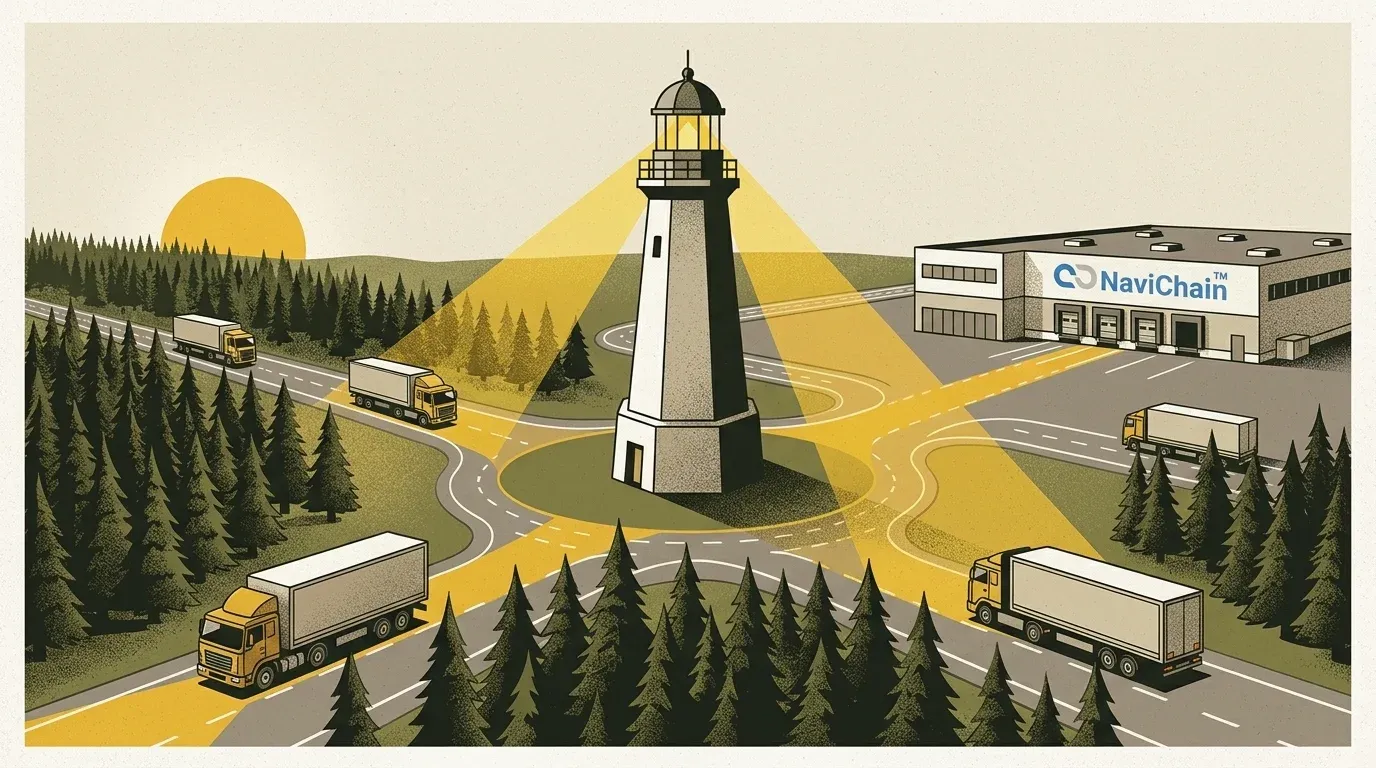
The Hidden Cost of Modular Transport Systems: How HaaS and Sovereign AI Reduce Your TCO
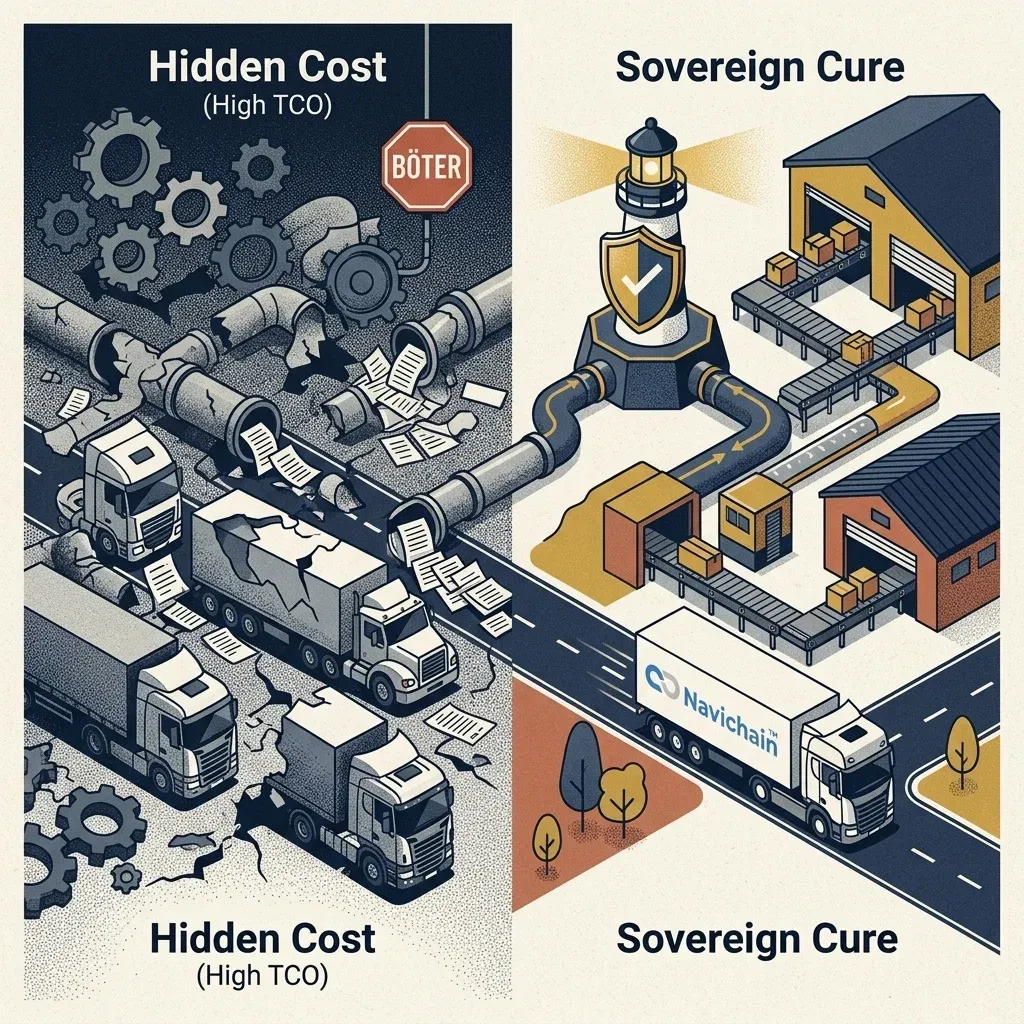
In today's fast-paced logistics industry, traditional business systems that stop at the loading dock are no longer sufficient. By replacing outdated, fragmented solutions with a fully integrated ecosystem – powered by HaaS and Sovereign AI – haulage companies and freight forwarders can eliminate costly driver form violations, automate e-CMR, and significantly reduce their Total Cost of Ownership (TCO). As a disruptive player, Navichain offers a comprehensive solution without hidden consulting costs, where you have full control and connect transport, warehouse, and vehicles in a single seamless information flow.
Summary: How the rules of the game are changing for haulage companies
- A broken ecosystem is a cost trap: Traditional systems from older players often focus only on the road and create a gap between transport, terminal, and driver.
- Full control of driving and rest times: Through built-in integration with advanced telematics (FMC650), unnecessary and expensive compliance fines are avoided.
- Sovereign AI protects your business-critical data: Automation takes place entirely on your own infrastructure with Open Source LLM:er, guaranteeing 100% data sovereignty.
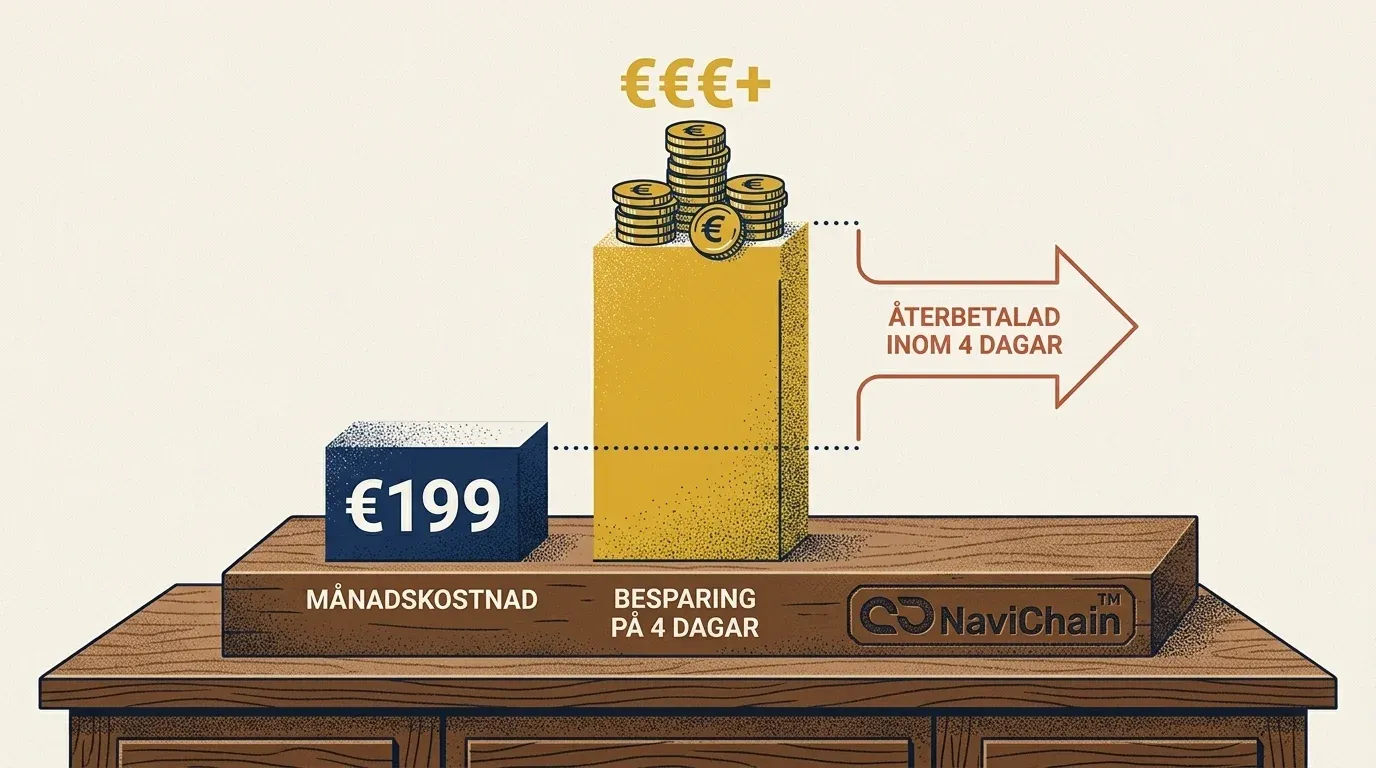
- Unbeatable ROI: A subscription of 199€/month is typically earned back in just four days thanks to minimized administration and eliminated fines.
- Seamless flow with e-CMR: Automatic invoicing is generated the moment the goods are signed, without any paper handling or manual registration.
Why does your current transport management system stop at the loading dock?
Many of today's established logistics platforms are strong on the roads but fail when the truck docks at the terminal. The result for transport managers (COO and Fleet Managers) is an extremely fragmented daily routine. You are often forced to handle one system for the transport booking itself, another for the warehouse or terminal, and at the same time have a frustratingly poor visibility into the driver's actual driving and rest times.
Instead of functioning as a support system, this type of modular, older enterprise solutions becomes a black hole of hidden integration costs and high consulting fees to get the platforms to even communicate with each other.
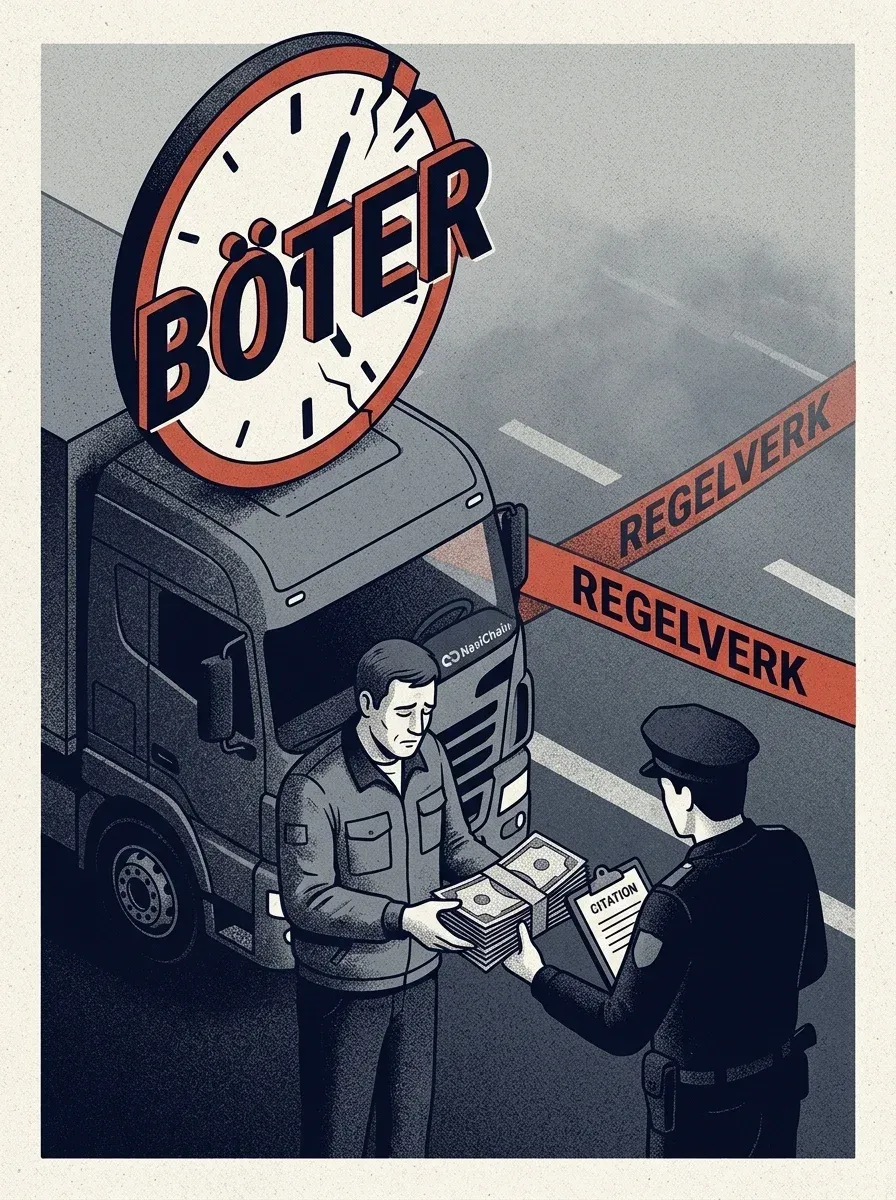
What is the real hidden cost of modular transport systems?
Subscribing to "only what you need" sounds good in theory, but in practice, separate modules often mean you pay a hidden tax in the form of administrative overlap, lost data, and manual double work. Worst of all is the lack of integration between the vehicle and the office. Paper handling and late reports delay invoicing by several days or even weeks.
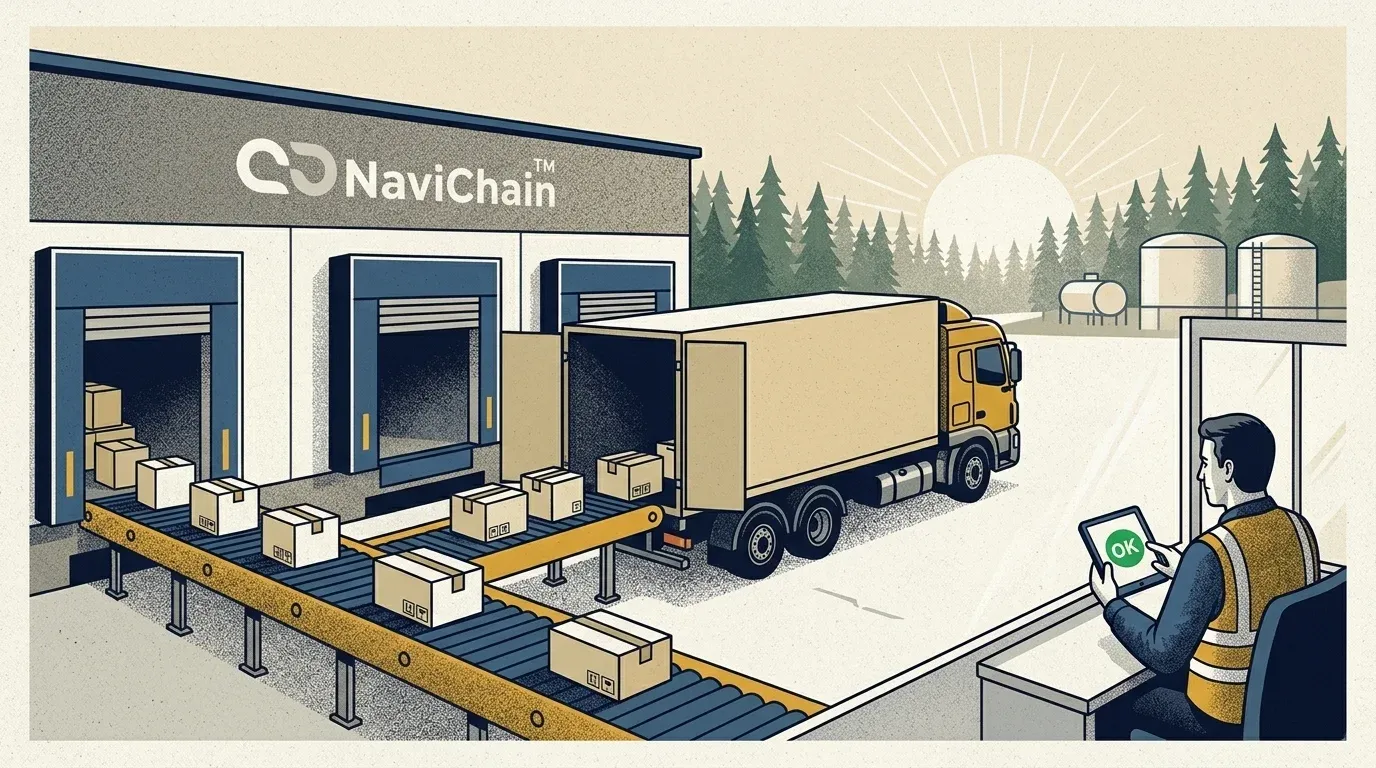
What is e-CMR? An electronic consignment note that digitalizes the entire proof chain for deliveries. With Navichain, a signature in the driver app immediately triggers an automatic invoice to the customer, without any paper handling.
A modern ecosystem is about owning the entire chain – from the moment the freight forwarder registers an order, through warehouse management, and all the way into the truck cabin.

How can integration with FMC650 eliminate your driver form violations?
One of the absolute biggest concerns for haulage companies is compliance and adherence to regulations. Lack of oversight results all too often in unnecessary driver form violations and breaches of driving and rest times. Modern, disruptive platforms do not treat this as an afterthought.
What is FMC650? A professional and advanced telematics unit from Teltonika, specifically developed to be able to extract live data and files deep inside the vehicle's driver form and CAN-bus.
By deeply integrating FMC650 directly into the Navichain platform, transport management gets live access to the driver form's status. The system warns proactively before a violation occurs, which drastically minimizes the risk of compliance fines and maximizes the utilization of existing resources.
How do HaaS and Sovereign AI reduce your Total Cost of Ownership (TCO)?
For a transport operation to be able to scale without administrative costs exploding, modern technology is required where hardware and software work in symbiosis.
What is HaaS? Hardware as a Service means that instead of heavily investing in your own telematics equipment (and being responsible for maintenance), you subscribe to the hardware's functionality integrated as a seamless part of your system.
Equally important for the future of haulage companies is the handling of business-critical security and automation.
What is Sovereign AI? Navichain's Sovereign AI exclusively utilizes Open Source LLM:er that are operated entirely on your own infrastructure. Through a proprietary RAG architecture, it is guaranteed that no third party, and absolutely no foreign surveillance laws such as the US CLOUD Act, will ever gain access to your transport data, invoices, or customer registers. All data processing takes place locally and sovereignly with us.
This approach outperforms traditional, unclear consulting costs. By integrating machine learning and advanced interfaces without enormous startup projects, the playing field is finally redrawn in favor of the user.
How quickly does an automated transport management system pay for itself?
When you examine the bottom line, it's all about return on investment (ROI). With older players, you are often buried in incomprehensible module costs and annual price increases. Instead, we use transparent pricing as a direct weapon for your efficiency.
Through our built-in ROI calculator, you can see the effect in black and white: A platform cost of 199 SEK per month typically pays for itself in just 4 days.
How? 1. Eliminated risk of regulatory violations and driver form fines thanks to live tracking. 2. Radically reduced administration with e-CMR and immediate invoicing. 3. No endless consulting hours to tie the terminal to transport.
Does your current TMS stop at the loading dock? Take the step into a cohesive, intelligent ecosystem.
About the Author: Manusha is Integration & Automation Specialist at navichain.se. He focuses on designing secure, automated data flows and AI solutions that increase efficiency and reduce TCO for European logistics operations.