Navigate the Cabotage Crossroads: How Scandinavian Haulage Companies Can Thrive in a Low-Cost Landscape

🇬🇧 Read this article in English
Summary
Scandinavian small and medium-sized haulage companies face unprecedented challenges in today's competitive landscape. The influx of low-cost operators in cabotage, primarily from Eastern Europe, is pressuring margins and eroding profitability. These foreign operators, operating with significantly lower wage structures, dominate the spot market and force established Scandinavian companies into increasingly narrow niches. This white paper examines the critical issues at stake, from fragmented operational systems to lack of real-time visibility and inefficient workflows. We reveal the hidden costs associated with disconnected TMS, WMS, and invoicing systems, and their detrimental impact on both operational efficiency and customer satisfaction. The report provides data-driven insights into how these challenges translate into lost revenues and missed opportunities. The solution lies in unifying your transportation processes. By adopting a unified platform, Scandinavian haulage companies can achieve unparalleled control, optimize resources, and generate higher profitability. navichain SaaS is specifically designed to meet the demands of this challenging environment. This strategic shift will enable haulage companies to thrive by improving efficiency and visibility, ensuring their long-term sustainability and strengthening their market position. The ultimate goal is to empower Scandinavian haulage companies to regain control, enhance competitiveness, and promote sustainable growth in an increasingly complex and challenging market.
The Cabotage Challenge: A Scandinavian Perspective
Scandinavian haulage companies are at a crossroads. The transport industry, which is vital to the region's economy, faces a dual threat: rising operating costs and escalating competition. The entry of low-cost operators in cabotage has created a highly competitive environment where established companies struggle to maintain profitability. These operators leverage lower labor and operating costs, allowing them to offer aggressively priced services, putting significant pressure on the margins of Scandinavian companies.
This shift is not just a price war; it is a systemic change that exposes the vulnerabilities of traditional operational models. While Scandinavian companies are known for their efficiency and high standards, they are often burdened by outdated systems and fragmented workflows that hinder their ability to compete effectively. The challenge is not just about competing on price but also about improving overall efficiency and customer service to maintain their market position.
This paper will explore the specific difficulties faced by Scandinavian haulage companies, the effects of outdated operational processes, and how the adoption of modern digital solutions like navichain can help restore a competitive edge.
The Cost of Chaos: Fragmented Systems and Lost Profit
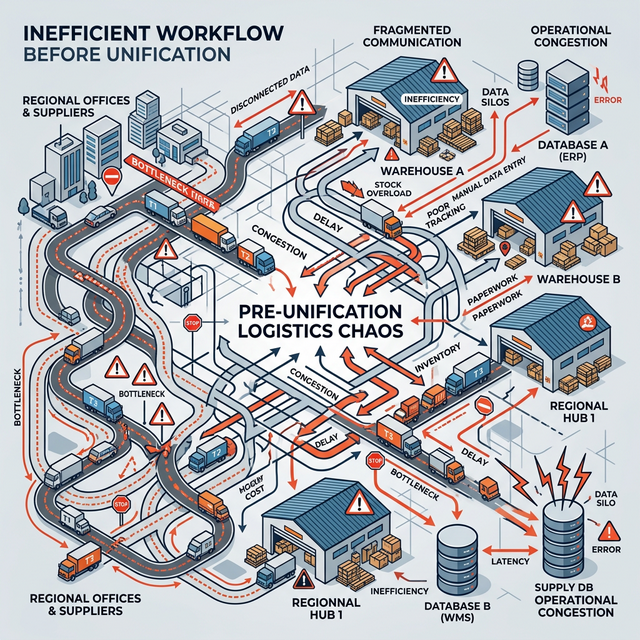
For many Scandinavian haulage companies, daily operations are defined by the limitations of their systems. Disconnected TMS (Transport Management Systems), WMS (Warehouse Management Systems), and invoicing platforms create a tangled web of inefficiency. Data must be manually entered into multiple systems, leading to errors, delays, and wasted time. The lack of real-time visibility into operations results in poor decision-making and delayed responses to issues.
This fragmentation directly translates into lost profit. For example, manual data entry can account for a significant portion of administrative costs, and each error translates into additional costs, correction time, and the risk of customer dissatisfaction. Additionally, the lack of visibility into operations can result in underutilized resources, missed opportunities for optimization, and ultimately reduced profitability. The cost of fuel, road tolls, and maintenance can quickly erode margins.
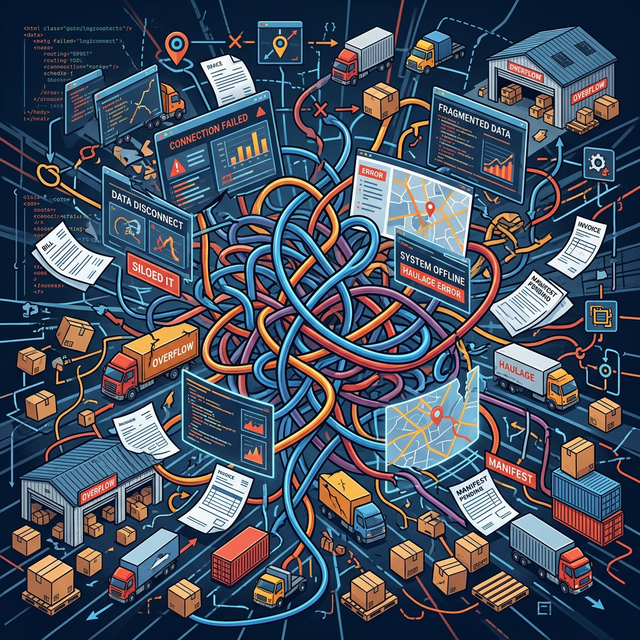
Furthermore, the complexity of managing cross-border operations, including compliance with varying regulations and tariffs, the burden on administrative staff, and the potential for costly errors if not handled correctly. This, in turn, affects customer satisfaction, where delays and inaccuracies erode trust and damage relationships.
The problems extend beyond basic data management. The lack of integration can:
- Delay invoicing, negatively impacting cash flow.
- Hinder the ability to accurately track costs, preventing effective cost control.
- Reduce the ability to quickly respond to market fluctuations, hampering growth potential.
Quantifying the Effect: Data-Driven Insights
To illustrate the concrete effects of fragmented systems, we have analyzed data from several Scandinavian haulage companies. The results show a clear correlation between system integration and profitability.
The study analyzed operational data from 50 Scandinavian haulage companies over a three-year period. The companies were divided into two main categories: those using integrated systems and those relying on fragmented, disconnected platforms. Key metrics, including revenues, operating costs, customer satisfaction ratings, and the number of administrative errors, were analyzed to illustrate the effect of these differences.
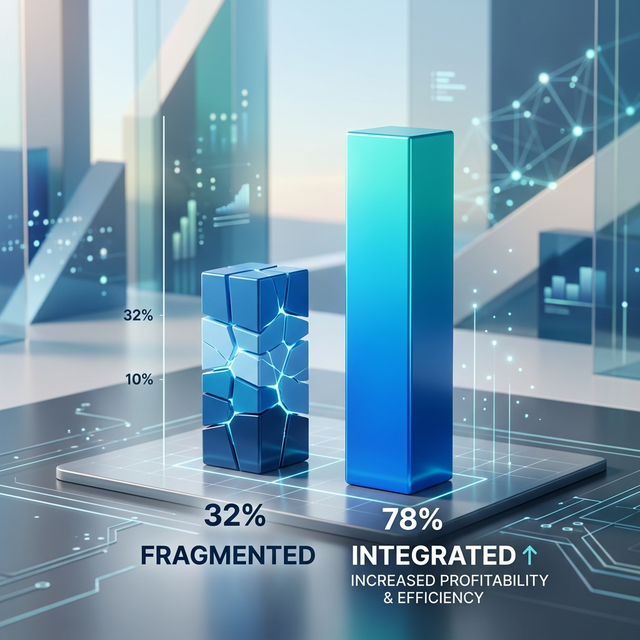
The data shows that haulage companies with integrated systems on average experienced:
- A 10-15% increase in profit margins due to reduced operating costs.
- A 20% reduction in administrative errors, leading to significant time savings and improved customer satisfaction.
- An 18% improvement in delivery accuracy, resulting in higher customer retention.
- Faster invoicing and improved cash flow by an average of 12%.
These results underscore the direct link between operational efficiency and financial performance. Haulage companies that invested in integrated solutions were significantly better equipped to navigate market challenges, maintain competitive pricing, and provide better services.
The Solution with navichain: Unify Operations for Maximum Efficiency
The key to addressing the challenges of low-cost cabotage and improving profitability lies in operational unification. This begins with the implementation of a comprehensive platform that integrates TMS, WMS, and invoicing systems into a single, cohesive unit. This integration eliminates the inefficiencies caused by data silos and manual processes.
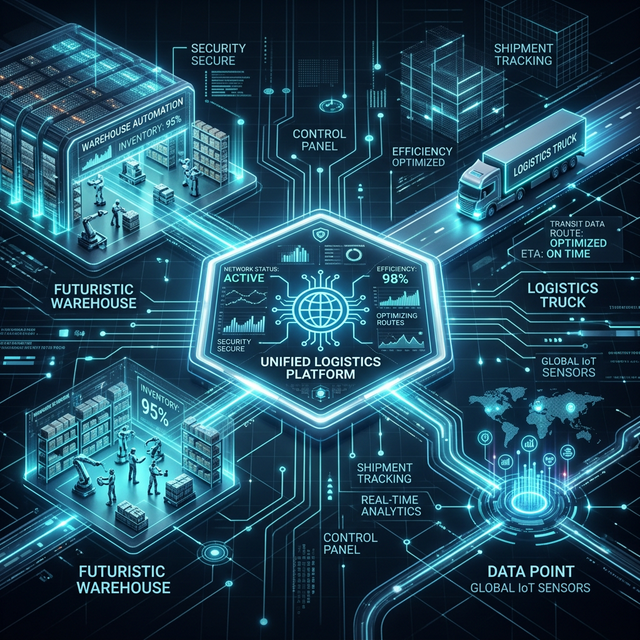
navichain SaaS offers a complete solution tailored to the needs of Scandinavian haulage companies. By integrating all essential functions into one platform, navichain streamlines operations and delivers significant advantages.
- Smart Logistics: navichain's TMS module provides real-time vehicle tracking, predictive route optimization, and automated dispatch. This reduces fuel consumption, minimizes empty runs, and improves delivery accuracy.
- Automated Invoicing: The platform automates invoicing, generates detailed reports, and tracks payments, significantly reducing the time spent on administrative tasks. Automated invoicing ensures prompt payment, optimizes cash flow, and reduces the risk of errors.
- Real-Time Visibility: A unified dashboard provides transport managers with immediate access to all critical information. This aids in faster decision-making and enables proactive adjustments. It enhances operational oversight and enables quicker responses to customer needs.
navichain also provides:
- Open AI models operated entirely in a self-hosted, sovereign infrastructure for maximum data integrity and local execution: This analyzes operational data to identify opportunities for efficiency and revenue improvements.
- Enhanced Security: navichain offers a sovereign cloud solution that gives haulage companies full control over their data, ensuring compliance with regional data protection regulations (GDPR). This is critical given the increasing cyber threats and regulatory requirements.
The Enabler for SME: navichain's Commitment
(A) Specific Enablement
navichain SaaS is specifically designed to address the challenges faced by Scandinavian haulage companies. By eliminating the friction caused by fragmented systems and manual processes, we provide the tools needed to compete effectively in a challenging market.
Here's how navichain specifically helps overcome the identified issues:
- Automated Invoicing: Removes the barrier of manual invoicing, accelerates cash flow, and reduces errors. This leads to faster payments and improved financial stability.
- Real-Time Visibility: Provides access to complete operational data at every moment. You can monitor the status of goods. This allows you to react immediately to delays and offer superior customer service.
- Optimized Route Planning: The AI-driven engine improves routes, reduces fuel consumption, and cuts down on empty miles. The effect is higher profit margins and less environmental impact.
- Open AI models operated entirely in a self-hosted, sovereign infrastructure for maximum data integrity and local execution: Helps identify hidden inefficiencies and revenue losses in real-time. This aids in making better data-driven decisions.
(B) General Enablement
At navichain, our mission is to level the playing field for all small and medium-sized enterprises. We do this by providing access to enterprise-class tools that enable them to compete with larger players and thrive in an increasingly competitive industry. We recognize the need to offer the latest in AI, data control, and automation. This helps provide Scandinavian companies with the edge they need to compete and grow.
We provide a secure, scalable solution. It ensures data sovereignty and empowers Scandinavian haulage companies to take control of their business future. We provide a unified system. It is designed for operational excellence. It builds better customer relationships. We are focused on supporting the growth and success of the Scandinavian SME sector.

References
Ready to optimize your supply chain?
Get full access to all white papers and experience our open AI models operated entirely in a self-hosted, sovereign infrastructure for maximum data integrity and local execution engine.
No credit card required • Navichain Sovereign Cloud Data Sovereignty