Beyond the report: From costly data chaos to strategic operational control

🇬🇧 Read this article in English

Beyond the Report: From Costly Data Chaos to Strategic Operational Control
The Service Paradox: Why Manual Reporting is Your Hidden Marginal Killer
The phone rings. It's your most important customer asking for a detailed report on last month's shipments, including delivery accuracy, storage costs, and invoice correctness. Your heart sinks. You know this isn't a five-minute task. It's an "all hands on deck" mission. Your operations manager has to pull data from the Transport Management System (TMS). Your warehouse manager needs to export warehouse data from the Warehouse Management System (WMS). And your financial officer has to manually cross-reference everything with spreadsheets and invoicing systems. The final report, delivered two days later, is a patchwork of manually copied data. You hope it's correct. For small to medium-sized enterprises (SMEs) in the European haulage sector, this scenario is painfully common. We hear that "good service" means bending over backwards for every customer's data request. But what if this "good service" is a trap? This is the Service Paradox: the belief that fulfilling ad-hoc reporting requirements is good for business, when in reality it's the most visible symptom of a deep, structural inefficiency that silently drains your resources, erodes your margins, and exposes your business to significant risks. This report argues that the high cost of manual reporting isn't just an administrative burden. It's a critical warning sign of a fragmented, insecure, and incompatible data architecture that blocks growth. We'll deconstruct the true cost of this data chaos and present a strategic 3-step framework to move from reactive firefighting to proactive, unified operational control.
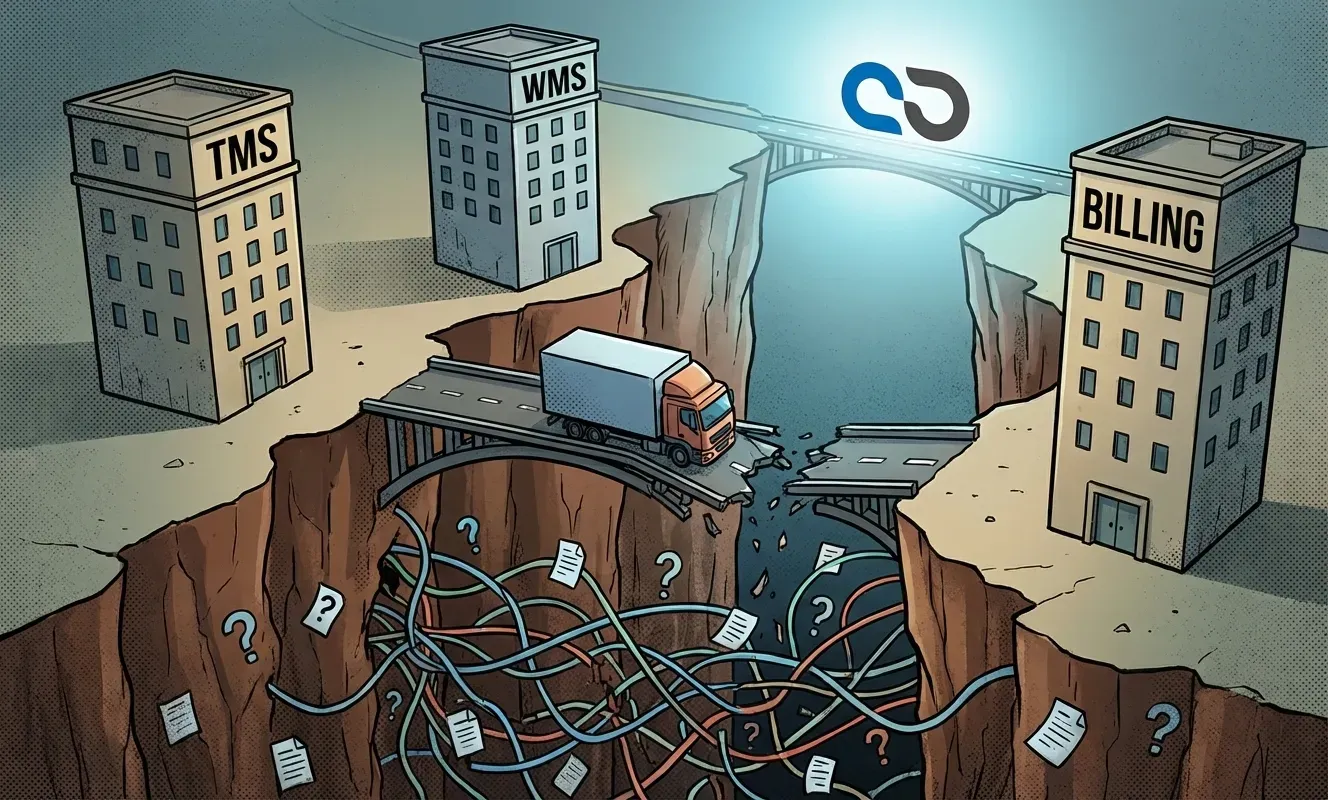
Manual data handling: A time-consuming and error-prone process that increases the risk of incorrect reports and dissatisfied customers.
Deconstructing the True Cost of Data Chaos
The time spent compiling that single customer report is just the tip of the iceberg. The real costs are hidden, systemic, and far more damaging than just a few lost administrative hours.
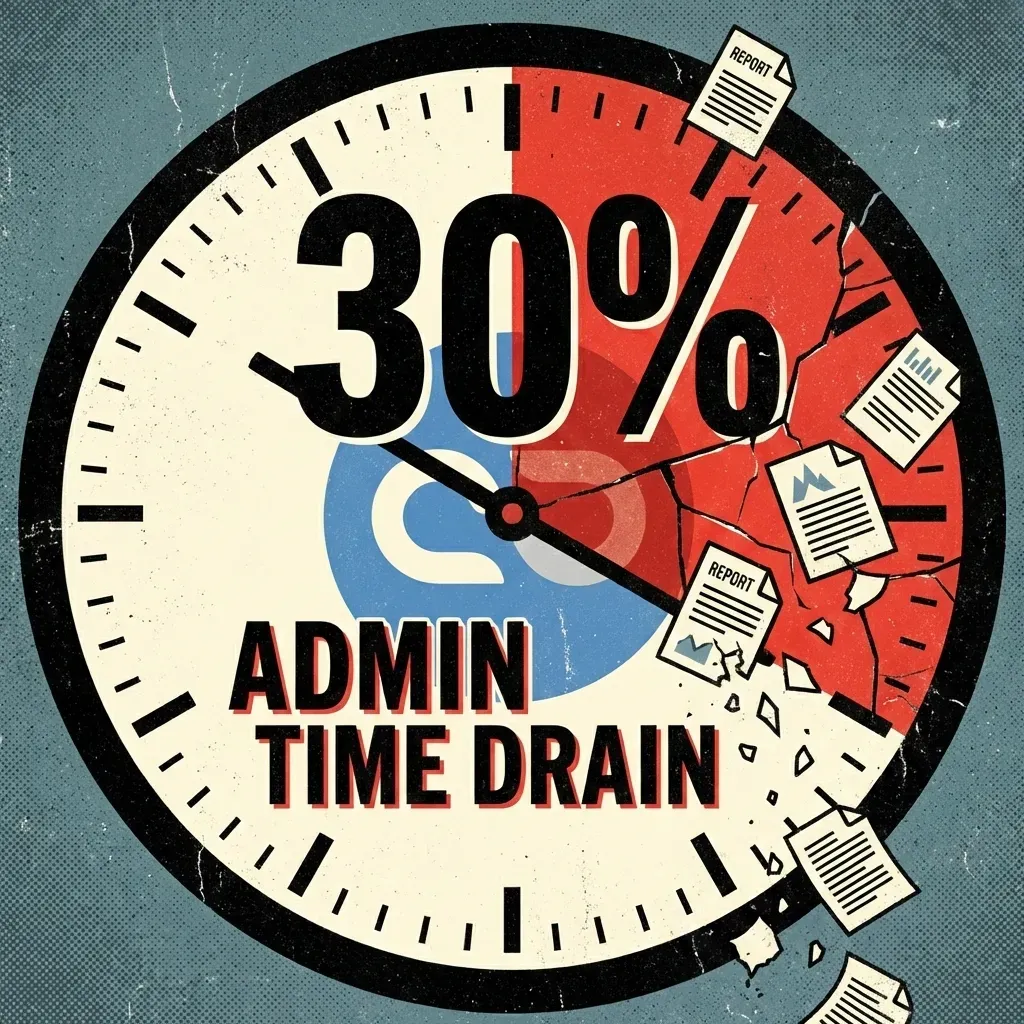
Fig 1: Industry studies show that manual data handling can take up to 30% of an administrator's time and have an error margin of up to 4% – errors that directly...
Industry analyses suggest that manual data handling can consume up to 30% of an administrator's time and carry an error rate as high as 4% – errors that directly translate into invoice disputes and dissatisfied customers.
1. The Financial Drain: Direct and Indirect Costs
The most obvious cost is direct labor. Every hour your skilled logistics managers, dispatchers, and financial staff spend chasing data and filling out spreadsheets is an hour not spent on optimizing routes, negotiating with suppliers, or winning new business. It's a direct subsidy from your profit margin to operational inefficiency. The indirect costs are even higher. A single data entry error in a manually compiled report can lead to an incorrect invoice. This triggers a cascade of costly consequences: * Invoice Disputes: The customer disputes the invoice, freezing payment.
- Increased Days Sales Outstanding (DSO): Your cash flow tightens while you wait for a resolution.
- Revenue Leakage: To "resolve" the dispute, you may have to offer credit or a discount on a service you delivered perfectly. This isn't a reporting problem; it's a problem of the lack of a "single source of truth". When your TMS, WMS, and invoicing systems aren't one, you don't have a single source of truth.
2. Operational Friction: Strategic Stagnation
When your leadership team is constantly in reactive mode, the business can't move forward. Strategic planning becomes impossible. You can't answer basic questions about your own business: * Which of my routes are actually the most profitable, all costs considered?
- What is my true "cost-to-serve" for my most demanding customers?
- Where are the hidden bottlenecks in my workflow from warehouse to delivery? Instead of analyzing these high-value questions, your best employees are stuck in the low-value task of validating data. The business becomes operationally "stuck", unable to innovate or scale, while larger competitors leverage their integrated data to optimize every move.
3. Black Hole for Security & Compliance
This is the risk that pragmatic Scandinavian and European business owners can no longer ignore. When data is fragmented across multiple systems, spreadsheets, and email chains, you lose control.
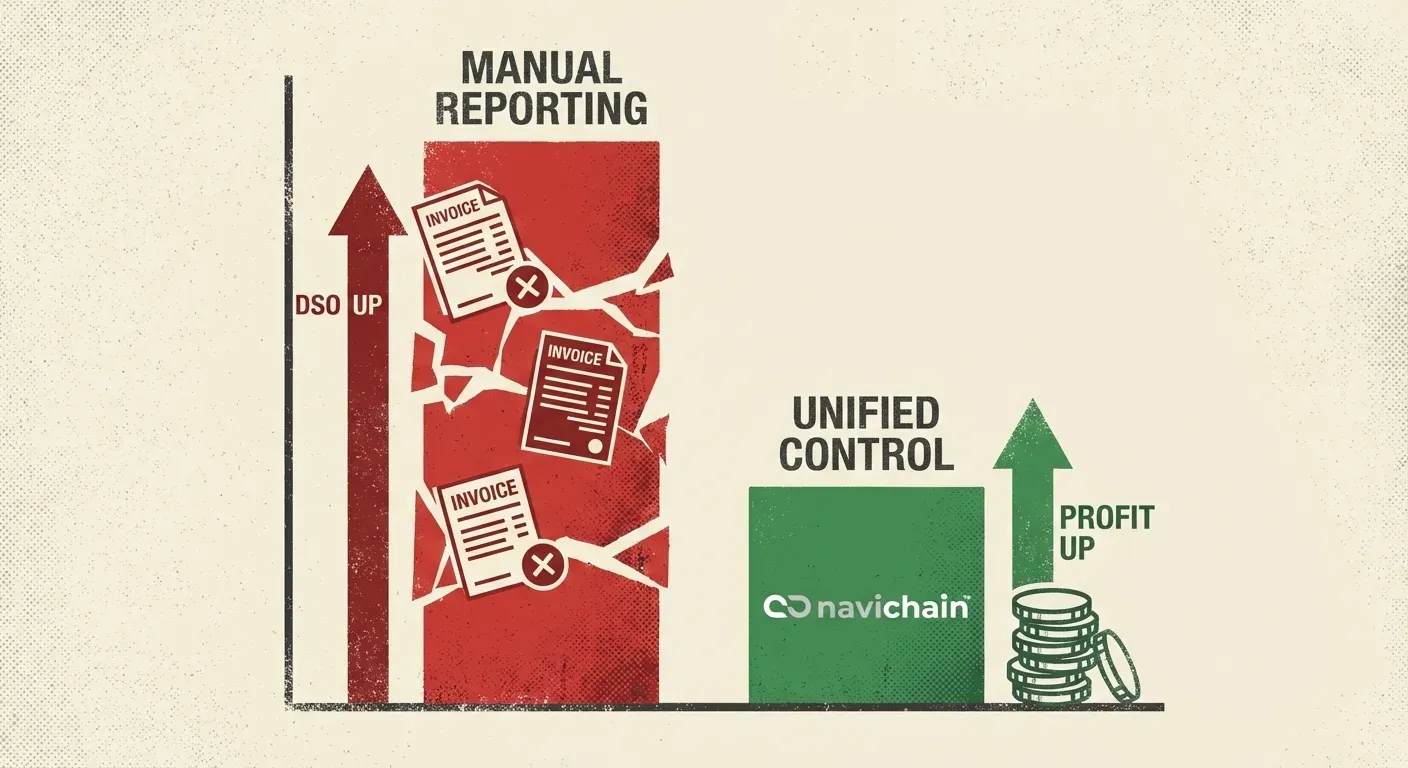
Fig 1: Visualizing data silos and the increased risk of data breaches and non-compliance when data is scattered.
- Where is your customer's data? Is it on a local server? In a US-based cloud application? On an employee's laptop?
- Who has access to it?
- Can you prove it's correct and secure? For all companies operating under GDPR, this fragmented "spreadsheet-and-email" data architecture is a nightmare for compliance. It's not a question if you will have a data breach or a compliance issue, but when. The manual report isn't just a time-waster; it's a physical manifestation of your data governance gap. You're manually moving and copying sensitive data, increasing its attack surface and error risk with every click.
The Way Forward: A 3-Step Framework for Operational Efficiency
The solution isn't a "better spreadsheet" or to "work harder". The solution is a fundamental change to your operational model. You need to transform your data from a fragmented liability to a unified, secure, and intelligent asset. This framework describes the way.
Fig 3: The solution isn't a "better spreadsheet" or to "work harder".
Step 1: Unite the Core with an Operational Fabric
You can't build a house on a cracked foundation. For a logistics SME, the foundation is your core business data. You need to stop thinking in terms of separate "tools" (a TMS and a WMS and an invoicing system) and start thinking in terms of a single Unified Operational Fabric. This means implementing a platform where Transport Management, Warehouse Management, Asset Management, Order Management, and Invoicing aren't "integrated" or "connected" with fragile APIs, but are built-in components of the same system. When an order is created, its data flows seamlessly to dispatch (TMS) and the warehouse (WMS). When the delivery is complete, the same data foundation is the invoice (Invoicing). There's no double entry, no copying, no manual validation. This creates a single, immutable source of truth for your entire business.
Step 2: Automate the Obvious (and the Profitable)
With a unified fabric in place (Step 1), the problem of "creating reports" simply disappears. A report is no longer a task to be performed; it's simply a view of data. You can now automate the obvious. Customer reports can be generated and even emailed automatically on a schedule. Invoices can be created and sent in the same moment a proof of delivery is signed. This immediately frees up hundreds of administrative hours. More importantly, you can automate the profitable. You can set up alerts that flag unprofitable routes in real-time. You can automate vehicle maintenance schedules based on actual usage data. You can proactively identify customers approaching their credit limits. Automation, built on a unified data core, moves your team from data entry clerks to operational analysts.
Step 3: Transform Data from a Liability to an Asset
This is the final, decisive step. For years, your fragmented data has been a costly liability. A unified system turns them into your single most valuable asset. But having data isn't enough; you need the ability to securely analyze them. This is where an Embedded Analytic Intelligence becomes crucial. When an "integrated AI" runs securely on top of your own unified data, it can unlock insights that were previously impossible to find. Instead of asking your team to figure out what happened, you can ask the AI why it happened and what is likely to happen next: * Reactive Report: "Show me all late deliveries from last month." * Proactive Insight: "Analyze the last six months of data and identify the top three root causes of late deliveries. What is the economic impact of each, and what route changes would yield the greatest improvement?" This is the end goal: to use your own operational data, securely and intelligently, to make better, faster, and more profitable decisions.
From Diagnosis to Design: The Blueprint for a Resilient Logistics Operational System
To implement this 3-step framework, your technology choices become paramount. Every modern platform for a European logistics SME must be built on three non-negotiable principles.
Fig 2: Every modern platform for a European logistics SME must be built on three fundamental principles.
Principle 1: Unified Operational Fabric
The platform must function as a "central nervous system" for your business. It can't be a collection of disparate apps. It must be a single, integrated system that provides a single source of truth for all core functions: Transport Management (TMS), Warehouse Management (WMS), Order Management, Invoicing, and Vehicle Management. This eliminates data silos and manual double entry, laying the foundation for all efficiency.
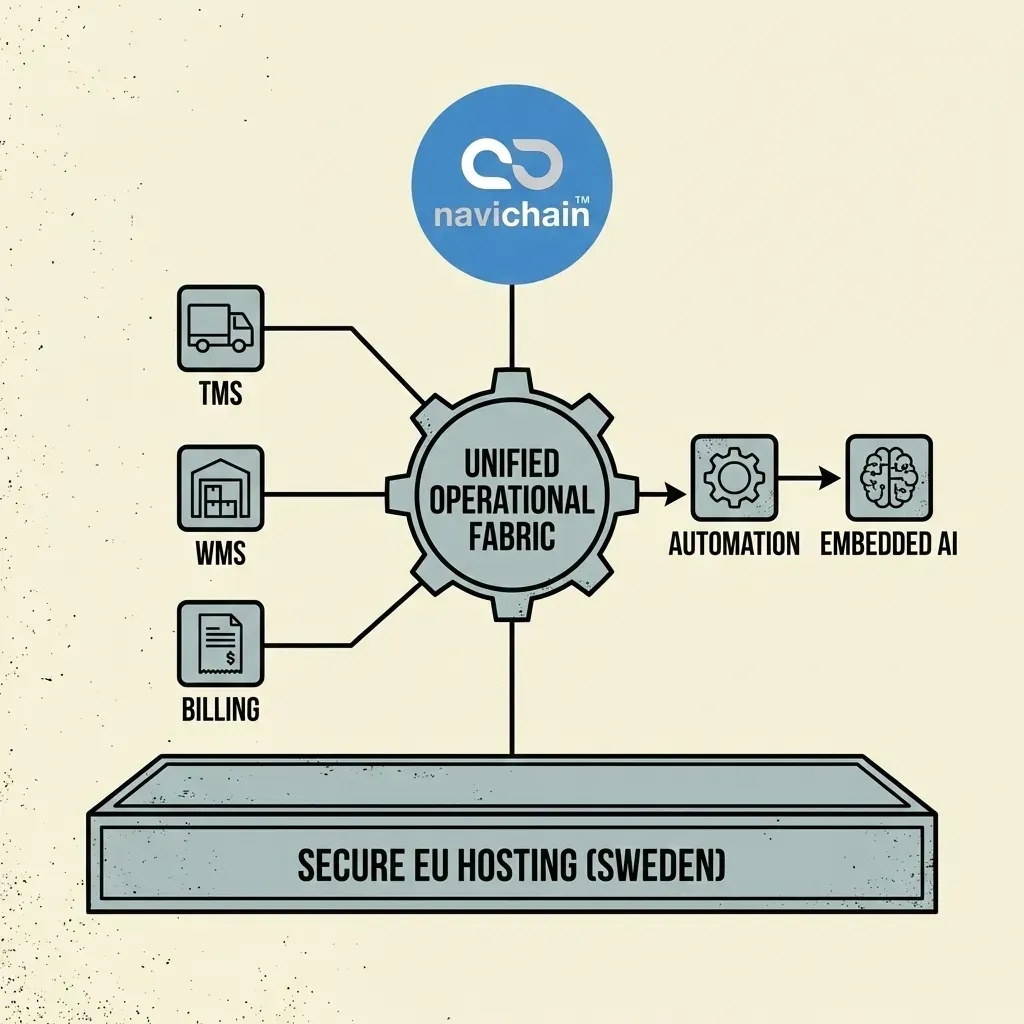
Schematic illustration of a unified logistics platform that integrates TMS, WMS, and order management to create a central nervous system for the business.
Principle 2: Secure Data Architecture and Control
This is the critical principle for European SMEs. True operational resilience and compliance require full control over your data environment. Your operational data and customer data must be stored and processed under your own region's legal jurisdiction (e.g., within Sweden/EU) on secure, self-hosted infrastructure. This ensures uncomplicated and verifiable GDPR compliance, protects your data from foreign jurisdiction (such as the US CLOUD Act), and minimizes exposure to the complexity of international data transfers. Control over your data architecture is no longer "nice to have"; it's fundamental for trust and security.
Principle 3: Embedded Analytic Intelligence
Finally, the platform must have an embedded, proprietary intelligence layer (AI) that can analyze the unified data from Principle 1, within the secure environment from Principle 2. This AI must be designed for logistics, capable of understanding your unique operational data to generate not just reports, but predictive insights, optimization scenarios, and deviation detection. This intelligence must run on the same secure, local infrastructure, ensuring that your most sensitive business logic and insights never leave your control.
References/Sources
- International Road Transport Union (IRU). (2025). European Road Freight Market Trends. https://www.iru.org/resources/iru-reports/european-road-freight-market-trends
- Transport Intelligence (Ti). (2025). European Road Freight Market Sizing and Forecasts. https://www.transport-intelligence.com/report-category/market-sizing/
- Eurostat. (2025). Transport Statistics Database. https://ec.europa.eu/eurostat/web/transport/data/database
- McKinsey & Company. (2024). Digitization in logistics: The future is now. https://www.mckinsey.com/capabilities/operations/our-insights/operations-blog/digitization-in-logistics-the-future-is-now
- Supply Management (CIPS). (2024). Data silos 'costing supply chains billions'. https://www.cips.org/supply-management/news/2024/january/data-silos-costing-supply-chains-billions/
Enable the Blueprint: Navichain SaaS Unified Logistics Platform
This white paper has presented a strategic framework to solve the "Service Paradox" and move from data chaos to operational control.
Navichain SaaS: A unified logistics platform for the haulage companies of the future.
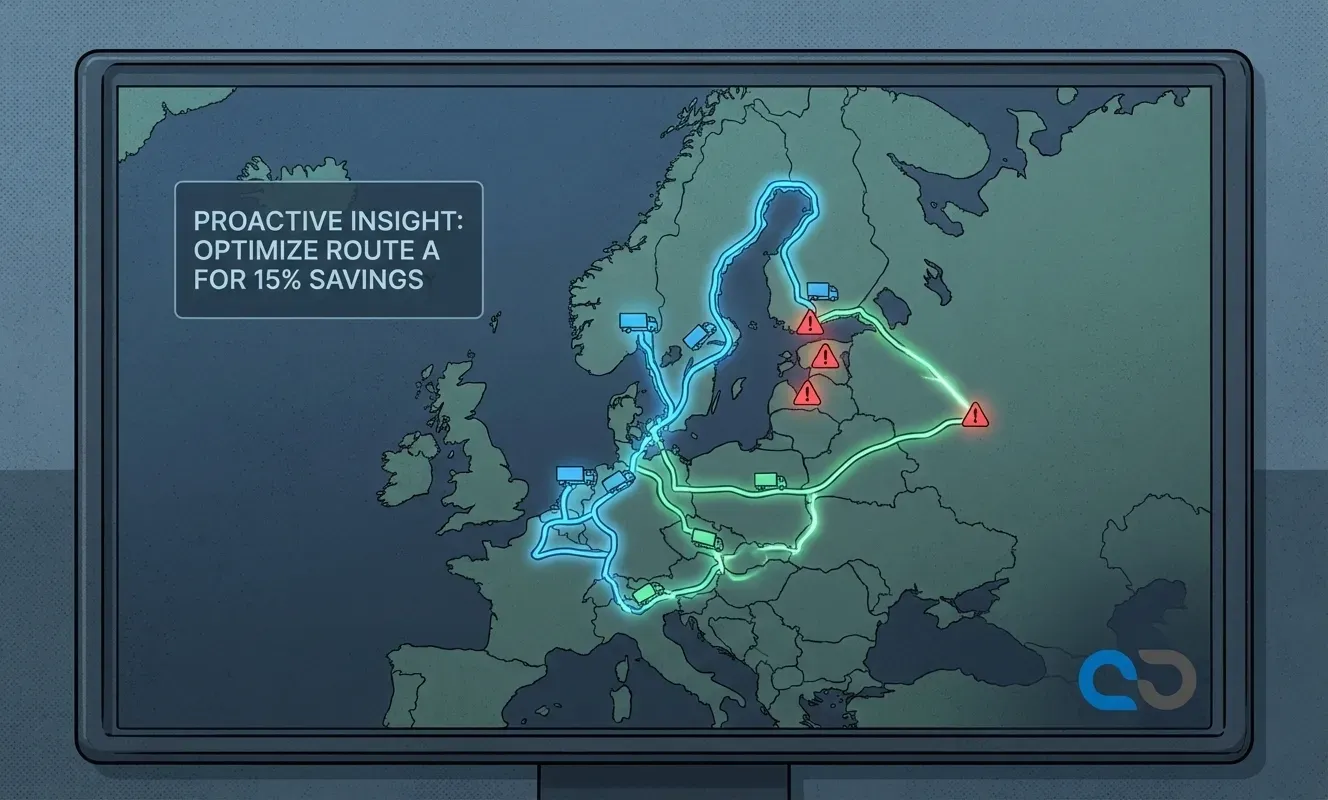
Visual representation of the Navichain SaaS platform, illustrating its unified functions to optimize logistics operations and improve data control.
The Navichain SaaS platform was designed from the ground up to be the engine of this transformation. We're built to embody the three core principles of a modern, resilient logistics operational system for SMEs: 1. A Unified Operational Fabric: Navichain SaaS isn't a collection of tools. It's a single, integrated platform where your Transport Management (TMS), Warehouse Management (WMS), Invoicing, and Order Management work as one. This creates the single source of truth needed to eliminate manual data entry and automate reporting, directly addressing the core challenge. 2. Secure Data Architecture and Control: This is our key differentiator. The entire Navichain SaaS platform is hosted on our own secure, self-hosted infrastructure in Sweden. This isn't a shared public cloud. This architecture gives our clients maximum data security and control. By keeping your operational data strictly within Swedish/EU jurisdiction, we ensure uncomplicated GDPR compliance and give you full control over your information, free from the complexity of international data transfers. 3. Embedded Analytic Intelligence: Our platform is enhanced with an integrated AI that also runs on our own secure Swedish infrastructure. This enables our clients to perform deep, secure data analysis on their unified operational data. Instead of just building reports, you can unlock unique efficiency gains, optimize routes, and gain strategic insights – all within the same secure, data-compatible environment. Our mission is to democratize logistics technology, offering a seamless, powerful, and affordable solution that finally breaks down data silos and lets SMEs build truly efficient, secure, and resilient businesses.
Navichain SaaS: a unified logistics platform that integrates TMS, WMS, invoicing, and order management to create a single source of truth and optimize operations.
Navichain SaaS brings critical logistics functions – TMS, WMS, invoicing, and order management – together in a secure, Sweden-based platform, creating unified data and improved control.