Beyond the Supplier: How Operational Data Becomes Your Most Powerful Sales Tool

🇬🇧 Read this article in English

Beyond the Subcontractor: How Operational Data Becomes Your Most Powerful
The Subcontractor Trap: When "Good Service" Isn't Good Enough
If you're a small or medium-sized haulage operator, the phrase "we're just subcontractors" is likely a source of daily frustration. You own the assets, you manage the drivers, you navigate the complex regulations, and you deliver the goods. Yet, you're a "price taker," not a "price setter." You're trapped in the subcontractor trap: pressured by the large main contractors who own the customer relationship, and bearing the full weight of rising fuel costs and driver shortages, working with net margins that industry reports place as low as 2-3%. Your reputation for reliability and good service is your badge of honor, but it's invisible to the market. You know you can provide better service to direct customers, but breaking away seems impossible. The standard strategy is to "hire a salesperson" and "make more calls." This strategy fails. It fails because you're trying to sell a service to a market that has started buying something entirely different.
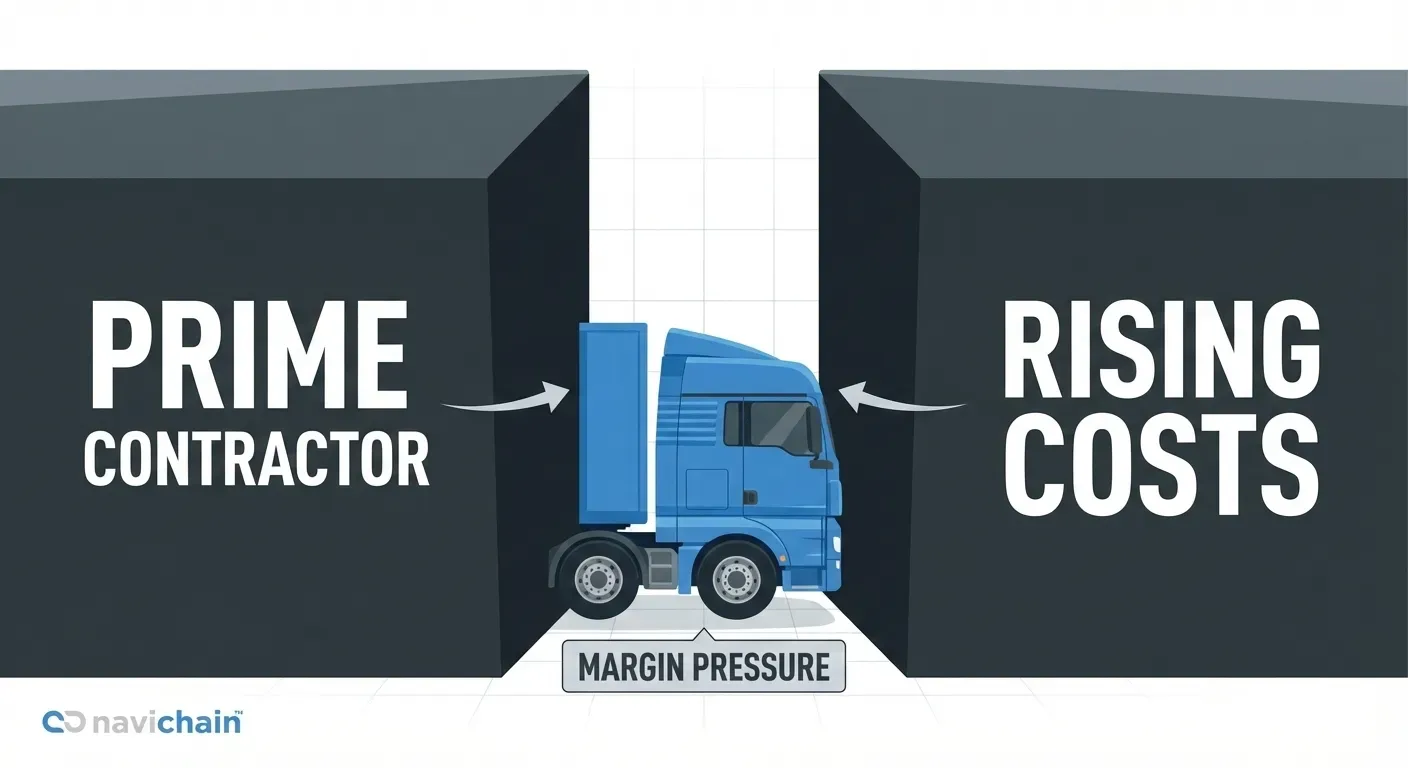
The traditional sales strategy of "just selling more" isn't enough when customers are actually demanding information and transparency in the transport process.
The Myth of "Just Selling More"
The fundamental problem is a mismatch between what most subcontractors think they're selling (transport) and what direct shippers actually buy (information). A direct customer – another SME, perhaps a manufacturer or distributor – isn't just looking for a truck. They're looking for a partner who can reduce their own operational friction. Their core questions are no longer just "How much?" but: * "Where is my shipment right now?" * "When will it actually arrive at my customer's loading dock?" * "Can I get an immediate, accurate invoice that matches the quote?" * "Can you prove that my sensitive commercial data is handled in compliance with GDPR?" If your answer is "I have to call the driver and get back to you" or "My invoicing is done in Excel at the end of the week," you're not just failing to meet their expectations; you're presenting yourself as a strategic risk. Your "good service" is operationally invisible and therefore commercially valueless.
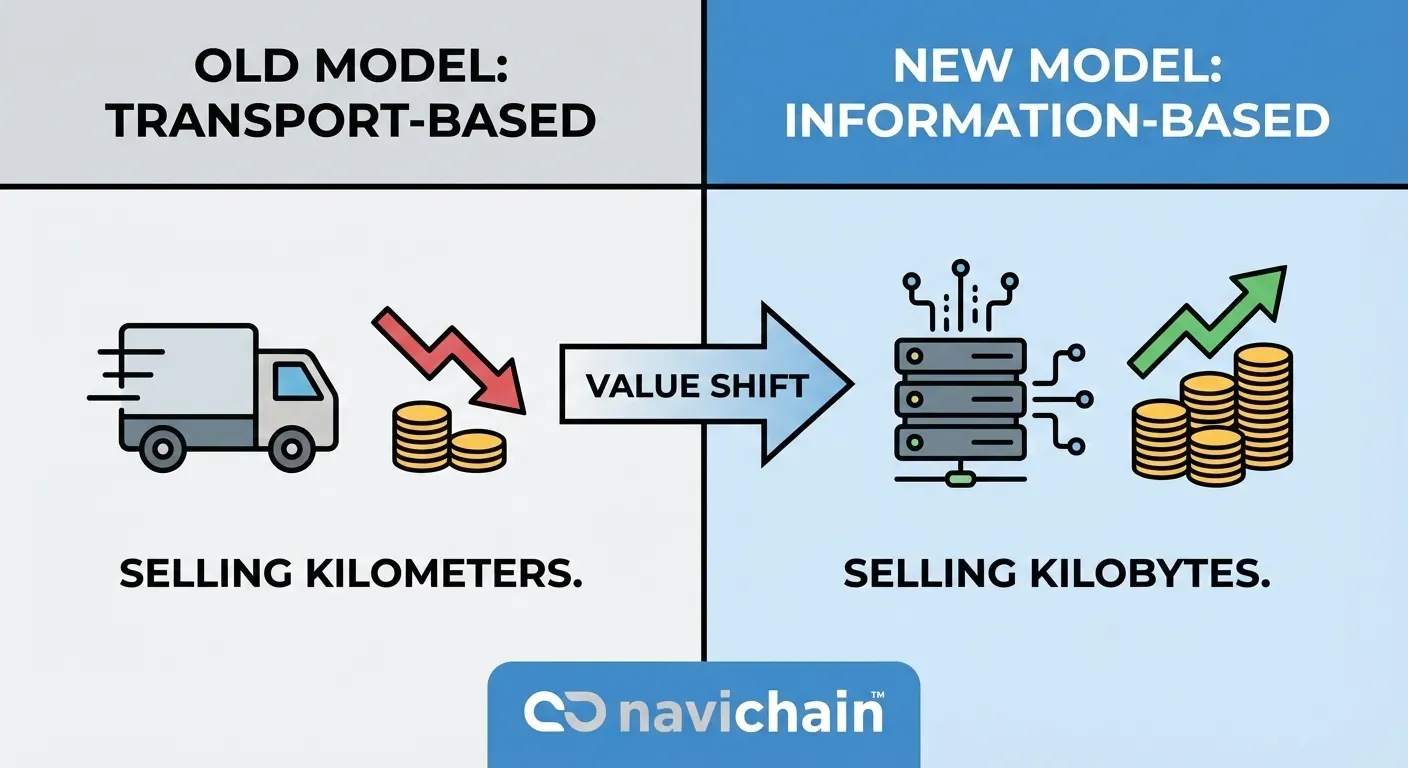
The New Customer's Demands: From Kilometer to Kilobyte
To win direct customers in today's market, you must renew your business model to compete on the new battlefield: data. Recent analyses of the logistics industry highlight a massive shift.
Fig 2: A 2024 study by the European Logistics Association showed that "real-time visibility" and "data security compliance" are now top three selection criteria for over 60% of...
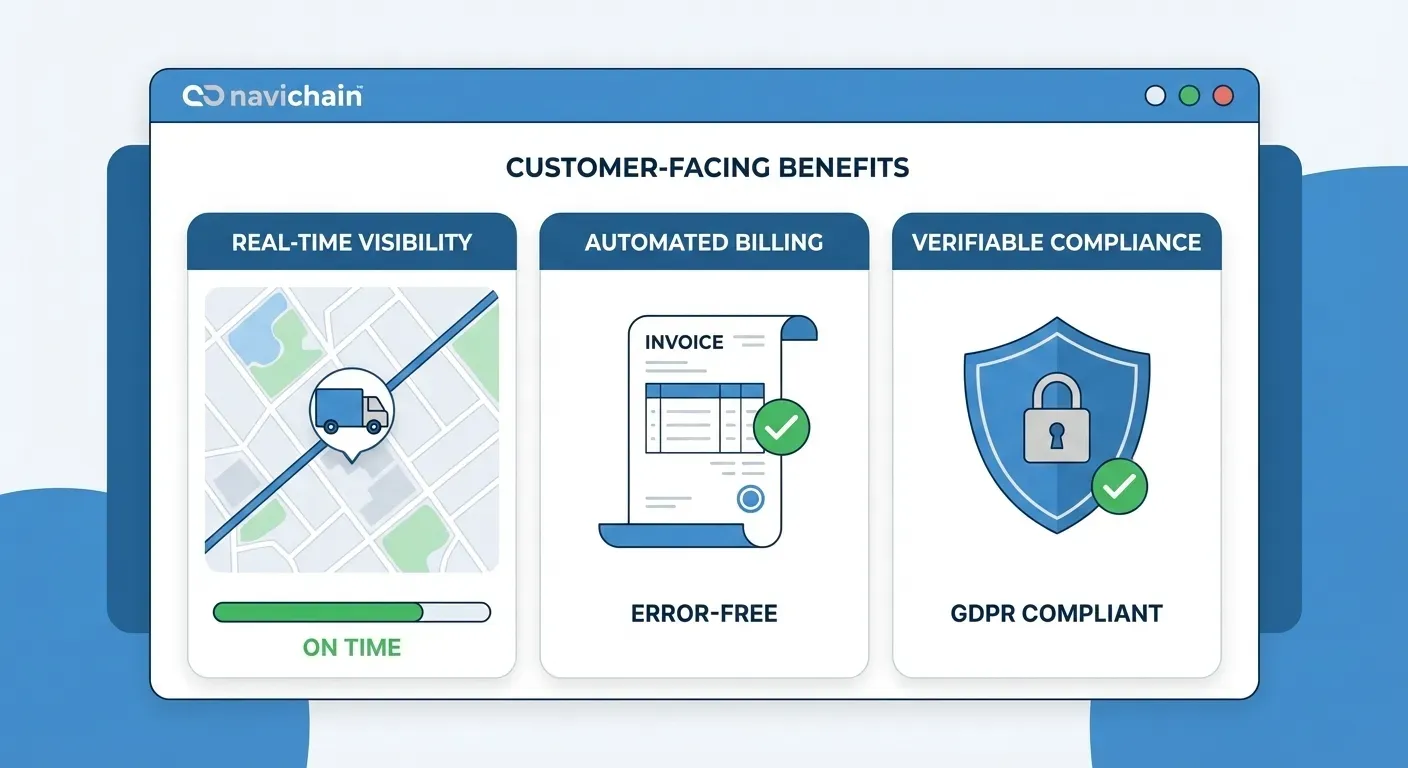
A 2024 study by the European Logistics Association found that "real-time visibility" and "data security compliance" are now top three selection criteria for over 60% of European shippers when choosing new transport partners. They're moving away from partners that function as "black boxes" and actively seeking those who can provide digital integration and transparency. What this means in practice is a demand for: 1. Proactive visibility: Not just a tracking link, but predictive ETAs, immediate notifications of delays, and immediate digital proof of delivery (e-POD). 2. Economic transparency: Error-free, automated invoices that can be generated at the same moment a job is complete, directly from order and TMS data. No more "surprise" fuel surcharges or disputed waiting times. 3. Verifiable compliance: This is non-negotiable in Europe. Customers need proof that your operations comply with GDPR. They need to know that their sensitive waybills and customer lists are secure. This isn't a "nice-to-have"; it's a legal necessity and a matter of good reputation.
The Operational "Black Box": Why You Can't Compete Today
For most subcontractors, the inability to meet these demands isn't due to a lack of will. It's a result of a fragmented technological landscape. Your business likely looks something like this:
Figure 3: Schematic overview of a fragmented technological landscape in logistics.
This "patchwork" system creates data silos. It's a "black box" operation. When a customer calls for an update, you have to manually compile information from three different systems. When it's time to invoice, you have to cross-reference multiple spreadsheets, leading to errors and delays. You can't provide visibility because you don't have it. You can't prove compliance because your data is scattered, unsecured, and impossible to audit. You're not just stuck as a subcontractor; you're trapped by your own operational complexity.
The diagram illustrates how a fragmented technological landscape leads to data silos and lack of visibility in logistics operations, hindering competitiveness.
From Diagnosis to Design: The Blueprint for a Robust Logistics Operational System
To escape the trap and renew your business model, you must stop focusing on selling your service and start focusing on designing your service to be sellable. The main argument in this document is that the most powerful sales tool you can have is a unified, transparent, and secure operational platform. This isn't about buying dozens of new apps. It's about adopting a strategic blueprint that's built on three core principles. Every solution you consider must embody these characteristics.
Principle 1: The Unified Operational Fabric
The foundation of this new model is the elimination of data silos. You must go from a patchwork of separate tools to a single, integrated "central nervous system" for your entire operation. Your transport management (TMS), warehouse management (WMS), invoicing, and order management must not just "connect"; they must function as a cohesive unit. When an order is created, it should flow seamlessly to dispatch, to the driver, to the warehouse, and to the invoicing module without re-entering new information. This creates a single source of truth. When a customer asks "Where is my order?" there's only one place to look and one, correct answer. This fabric is what transforms your chaotic data into a clean, provable record of your reliability.
Principle 2: Sovereign Data Architecture
This is the most critical and overlooked differentiator for European small and medium-sized enterprises. In a post-GDPR world, "where" your data resides is a strategic question. Many cloud platforms – especially those hosted by US-based companies – are subject to extraterritorial laws such as the US CLOUD Act. This law can force American companies to hand over your data (and your customers' data) to American authorities, regardless of where in the world this data is stored. For a European shipper, this is an unacceptable risk. A truly robust logistics platform for an EU-based company must be built on a sovereign data architecture. This means that your operational data is stored and processed on infrastructure within your own jurisdiction (e.g., within the EU, such as Sweden), in full compliance with GDPR, and protected from foreign legislation. This isn't just a security function; it's a powerful sales promise. It shifts your compliance from a cost center to a potent tool for building trust.
Principle 3: Embedded Analytical Intelligence
Once you have a unified data stream (principle 1) in a secure, sovereign environment (principle 2), you can unlock the final piece: intelligence. Instead of just storing data, your platform must be able to analyze it.
Fig 4: This AI layer analyzes your operational data to find unexpected efficiency gains – optimize routes, predict vehicle maintenance, or...
This embedded intelligence or AI layer can analyze your unified operational data to find efficiency gains you never knew existed – optimize routes, predict vehicle maintenance, or identify your most (and least) profitable customers. Even more importantly, it lets you provide predictive insights to your customers, such as high-precision ETAs and automated status updates. You're no longer just a carrier; you're an information partner.
References/Sources
- International Road Transport Union (IRU). (2024). European Road Freight Market Outlook 2024-2025. https://www.iru.org/resources/intelligence-reports
- Eurostat. (2025). Freight transport statistics - main modal split. https://ec.europa.eu/eurostat/statistics-explained/index.php?title=Freight_transport_statistics_-_main_modal_split
- Ti Insight. (2024). European Road Freight Market Report. https://ti-insight.com/reports/european-road-fraud-market-2024
- Official Journal of the European Union. (2018). Clarifying cross-border access to electronic evidence in criminal matters (CLOUD Act). https://eur-lex.europa.eu/legal-content/EN/TXT/?uri=CELEX:52018PC0225
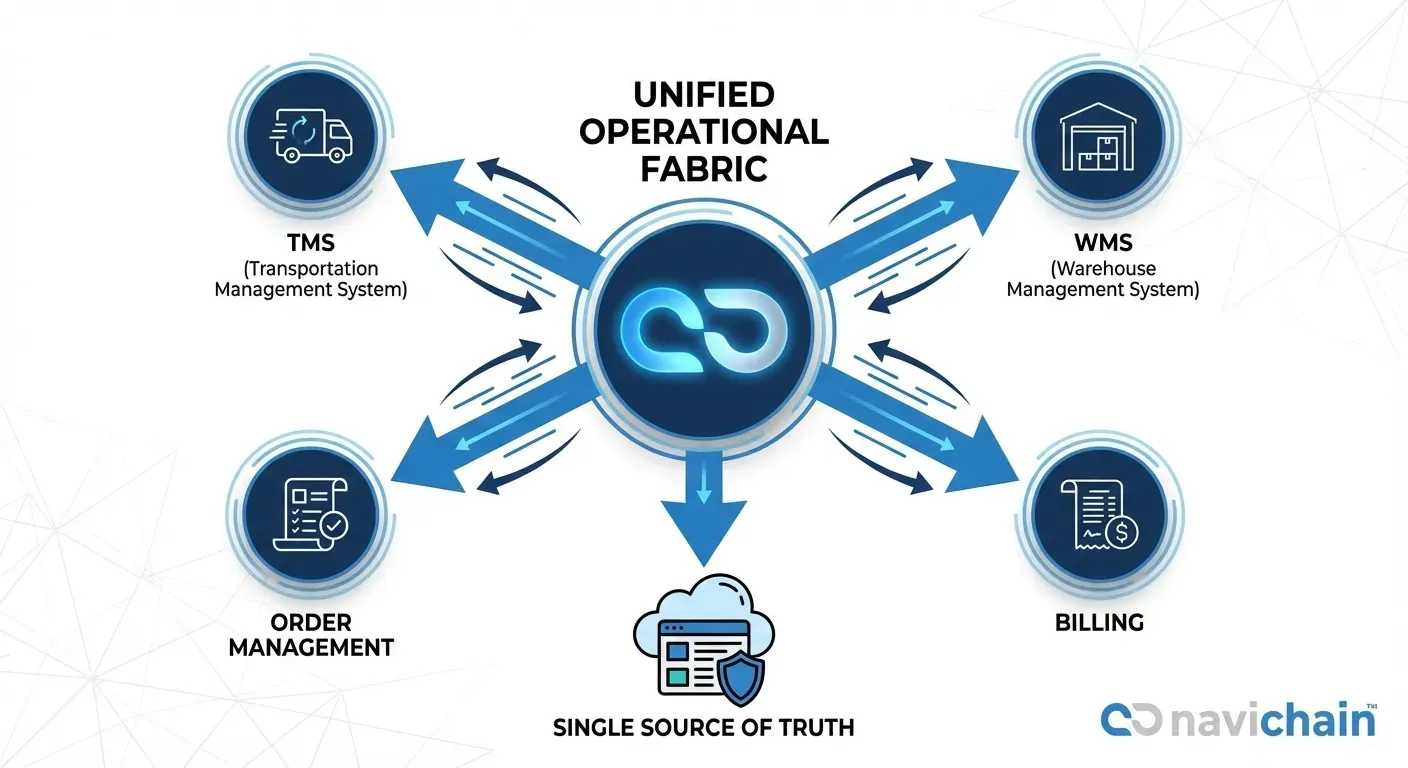
Figure 5 illustrates the Navichain SaaS platform, which unifies logistics data and enables predictive insights for both carriers and customers.
Enable the Blueprint: Navichain SaaS Unified Logistics Platform
This white paper has described a strategic blueprint for business model innovation.
Figure 5: Navichain SaaS - The unified logistics platform for the future of haulage companies.
The principles of a unified operational fabric, sovereign data architecture, and embedded analytical intelligence are the essential requirements for all SME haulage companies looking to escape the subcontractor trap. Navichain SaaS is a platform designed from the ground up to embody this blueprint.
- For the "unified operational fabric": Navichain SaaS is not a collection of loosely integrated apps. It's a single, unified logistics operational system where transport management (TMS), warehouse management (WMS), asset management, invoicing management, and order management work as one unit. This provides the single source of truth needed to prove your reliability.
- For the "sovereign data architecture": This is our most important differentiator. The entire Navichain SaaS platform is hosted on our own integrated infrastructure in Sweden. Your data and your customers' data never leave Sweden. It remains under Swedish jurisdiction, guaranteeing full GDPR compliance and making it immune to foreign legislation such as the US CLOUD Act. You can offer your customers a verifiable guarantee of data sovereignty that most competitors can't.
- For "embedded analytical intelligence": Our platform is enhanced by an integrated AI that runs on the same secure Swedish infrastructure. This allows you to perform in-depth, secure data analysis on your unified operational data, unlocking efficiency gains in your own operations and providing the predictive insights that your new direct customers demand. Our mission is to democratize logistics technology for small and medium-sized enterprises. We provide the strategic platform you need to stop being just a subcontractor and start being the trusted, transparent, and secure logistics partner that your future customers are looking for.
Navichain SaaS: A unified platform that combines transport management, warehouse management, and data analysis to create an overview and unlock efficiency gains.
Navichain combines transport management, warehouse management, and data sovereignty in a single platform, enabling optimized and secure logistics processes.